REVIEW · BISHKEK
Bishkek Street Art & Kyrgyz Nomadic History (Walks & Talks)
Book on GetYourGuide →Run by TDP · Bookable on GetYourGuide
Street art in Bishkek comes with real stories. I like the way the guide turns USSR-era mosaics and murals into a readable timeline of Kyrgyz celebrations and nomadic values, and I also love the built-in time for Kyrgyz souvenir shops so you can actually bring something meaningful home. One thing to watch: if you expect wall-to-wall street art the whole time, the mix of monuments, parks, and building art may feel lighter than you hoped.
I found the pacing refreshingly human. You start at the big landmark flag spot, get oriented at Ala-Too Square, then move on through central Bishkek with stops that make it easier to ask questions and connect what you’re seeing to what life has been like across eras.
The route is designed for walking, and it’s not a good fit if you have altitude issues or prefer very slow movement. The tour is wheelchair accessible, but there are also clear limits: no alcohol or drugs, and it’s not suitable for people over 95.
In This Review
- Key highlights (worth centering your expectations)
- Getting oriented at Bishkek’s biggest flag moment
- Ala-Too Square: where the city gives you its bearings
- USSR mosaics in Bishkek: art that records an anniversary
- Street art and building murals: listen for the “why”
- Kyrgyz souvenir shops: buy with meaning, not just novelty
- The “talk” part: Kyrgyz life, past and present
- Timing and pacing: how 3.5 hours can feel
- Price and value: what $38 gets you in Bishkek
- Who should book, and who should skip it
- Should you book Bishkek Street Art & Kyrgyz Nomadic History?
- FAQ
- How long is Bishkek Street Art & Kyrgyz Nomadic History?
- How much does the tour cost?
- Where does the tour start?
- What languages does the guide speak?
- What’s included in the price?
- What isn’t included?
- Is the tour wheelchair accessible?
- Are there rules during the tour?
- Who should not book this tour?
Key highlights (worth centering your expectations)
- Ala-Too Square as the orientation point for the whole city walk
- USSR mosaics tied to Kyrgyz identity and major anniversary celebrations
- Street art with explanations, not just photos and passing glances
- Kyrgyz souvenir shops that help you shop with context
- A talk-forward vibe with chances to ask questions during the walk
- Guides like Sofia and Alex bring different angles, from personal color to careful history
Getting oriented at Bishkek’s biggest flag moment
This tour starts at the Paramount Kyrgyz Republic Flag, which is a smart choice if you’re arriving in Bishkek and want a quick mental map. You don’t just begin “somewhere central.” You begin at a place that signals the national story, then your guide walks you into the city’s art trail with that framing in mind.
You’ll get a short safety setup and then you’re moving. That matters because this isn’t a sit-and-stare museum format. It’s a walking conversation, so you want to feel comfortable from minute one.
If your guide is Sofia, Alex, or Andrew, you’ll likely notice the same theme: they connect what you see on the street to how people live, celebrate, and remember.
Ala-Too Square: where the city gives you its bearings
Ala-Too Square is the first major stop, and it works as more than a photo backdrop. It’s the place where you can start reading the city. Once you see how the square anchors the space around it, the rest of the walk makes more sense—buildings, statues, and public art become part of a bigger plan instead of random sights.
In practice, this is also where the guide usually sets expectations for the stories you’ll hear later: how Kyrgyz culture shows up in public symbolism, and how Soviet-era design left its own layer. Even if some of the art seems more “decorative” at first glance, you learn what to look for.
Why I think this stop is valuable for you: it helps you avoid the common travel mistake of treating street art like wallpaper. Here, you’re learning to see it as communication.
USSR mosaics in Bishkek: art that records an anniversary
Bishkek’s USSR mosaics are one of the strongest reasons to book this walk. The guide frames them as part of a major milestone tied to Kyrgyz state celebrations and Russian imperial influence—so the art isn’t floating in time. It’s connected to an event people were marking, and that changes how you read the images.
Here’s what I’d pay attention to during the mosaic explanations:
- the idea that public art can function like a “statement wall”
- how styles and symbols can reflect power and identity at the same time
- how the guide links Soviet visuals to Kyrgyz cultural values instead of treating them as separate stories
This is where the tour’s title starts to make sense. Even though you’re walking modern streets, you’re being shown how nomadic history and Kyrgyz cultural pride can be expressed through public forms—then overwritten, reshaped, or reinterpreted by later eras.
A small consideration: some people come hoping for a heavy concentration of modern street art alone. If that’s you, keep an open mind. The Soviet mosaic layer is a big part of what you’re buying.
Street art and building murals: listen for the “why”
After the square, you move into the heart of Bishkek’s art walk. What you’ll like most here is the difference between seeing street art and understanding it. The guide doesn’t treat murals as random cool colors. They explain what’s behind the choice—what it’s responding to, what it celebrates, and what it tries to preserve.
This is also where the personal touch matters. One guest noted that a guide blended personal experience with a balanced, respectful viewpoint. That approach helps you avoid the extremes: either turning everything into propaganda, or turning everything into “cute street art.”
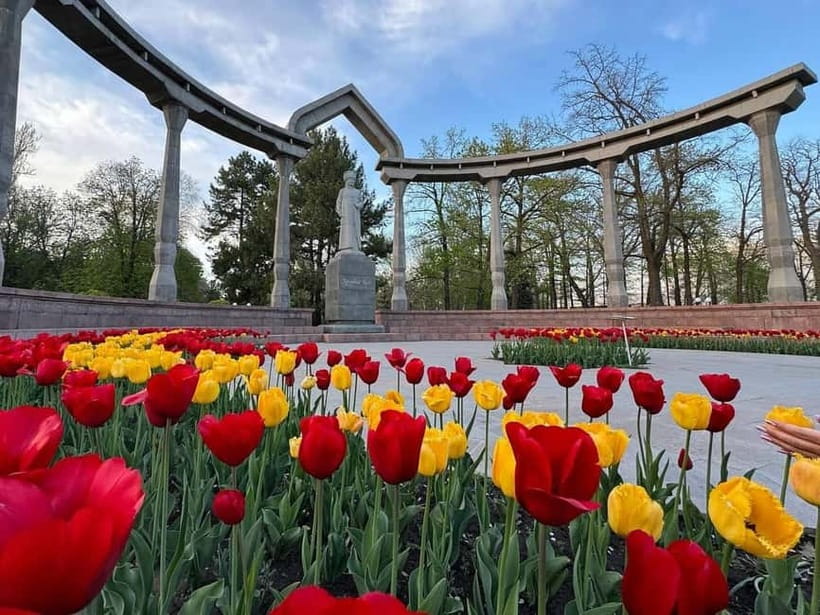
You’ll also likely pass parks and statues along the way. Those moments are useful because they add context: Kyrgyz public memory isn’t only painted on buildings. It’s also placed in spaces where people gather.
If you’re the type who loves stopping to ask questions, this tour is built for that. More than once, guides are described as patient and willing to answer follow-ups without rushing you out of the story.
Kyrgyz souvenir shops: buy with meaning, not just novelty
A big win on this walk is the time set aside for souvenir shops and a Kyrgyz culture shopping stop. This is not just a “browse if you want” sidebar. It’s part of the route, which means you can actually decide what fits you—without scrambling later.
Here’s how you’ll get value:
- you can match what you bought to the stories you heard
- you can shop for things that reflect Kyrgyz traditions rather than generic mass items
- you get guidance from someone who understands the cultural context
I’d suggest having a realistic budget in your head before you reach the shops. Since food and drinks aren’t included, you may want to keep your spending focused so you’re not tempted to buy first and think later.
Also, if you see something you love, don’t wait too long. Central Bishkek walks move at a steady pace, and you may not get a second chance once you’re back out on the main route.
The “talk” part: Kyrgyz life, past and present
This is a history-and-culture walk, but it’s not stuck in dusty dates. Guides described it as covering both the distant past and the more recent past, plus plenty of questions about life today. That balance is practical. You finish the tour not only knowing what’s painted or built, but also understanding how people make sense of it.
One guest specifically appreciated how the guide’s stories shaped impressions compared to the same sights without explanations. That’s a key point for you: street art and mosaics can look like decoration unless someone helps you connect them to Kyrgyz identity and celebrations.
If you want maximum value, ask questions that connect the art to everyday life, such as:
- what symbols mean in Kyrgyz culture
- how Soviet-era design influenced public spaces
- what people today think about these artworks
Guides such as Sofia and Alex were praised for being both informative and calm with questions, which tells me the best results come when you treat this as a guided conversation, not a lecture.
Timing and pacing: how 3.5 hours can feel
The tour is listed at 3.5 hours, and it moves on foot. In the real world, walking tours can stretch or tighten depending on questions, photo stops, and how quickly people decide in shops.
There is one clear caution from the experience: one participant felt it was shorter than the advertised time and noticed less street art than expected. That doesn’t mean the tour is “bad,” but it does mean you should book it with the right mindset: expect a guided walk through the city’s art-and-memory layer, not a street-art-only sprint.
Practical tips for you:
- wear comfortable shoes (you’re on foot for the whole experience)
- bring a small water plan even though food and drinks aren’t provided
- if you’re serious about shopping, come with a bit of cash and time to browse
If it’s your first day in Kyrgyzstan, this is the kind of tour that can help you get your bearings fast.
Price and value: what $38 gets you in Bishkek
At $38 per person, you’re paying for an English-speaking guide, a walking tour focused on arts and culture, and a stop at souvenir shops. That price can feel fair or high depending on how you travel.
Here’s the value math I’d use:
- If you like explanations and want to understand what you’re seeing, the guide is the core value.
- If you just want photos and don’t care about the stories, you might prefer cheaper self-guided walking.
- The included shop time adds value if you actually plan to buy something Kyrgyz and not just window-shop.
Also, you get a longer cultural orientation than many “quick sights” tours, which matters if you’re new to Central Asia and want a cleaner entry point.
Who should book, and who should skip it
This tour fits best if you:
- want a first-day introduction to Bishkek’s public art and cultural storytelling
- enjoy learning how different eras overlap in the same streetscape
- like guided time in souvenir shops with cultural context
It’s not suitable if you have altitude sickness or if you’re over 95. Alcohol and drugs are not allowed, which is standard for tours but still worth noting.
If you’re traveling with limited mobility, the tour is listed as wheelchair accessible. Still, walking routes can vary in comfort depending on how the guide handles transitions and how smooth the sidewalks are.
Should you book Bishkek Street Art & Kyrgyz Nomadic History?
Book it if you want more than decoration. This is a guided walk where USSR mosaics, public art, and Kyrgyz cultural values connect into one story, and you get enough time to browse Kyrgyz souvenirs without feeling rushed.
Skip it (or adjust expectations) if your main goal is heavy concentration of modern street art only. The mix includes monuments, parks, and building art, and timing can vary based on the flow of the group.
If you’re unsure, I’d still lean yes for first-time Bishkek visitors. It’s a focused way to understand a city quickly, and the conversation aspect is exactly what turns a walk into learning.
FAQ
How long is Bishkek Street Art & Kyrgyz Nomadic History?
It’s listed as a 3.5-hour walking tour.
How much does the tour cost?
The price is $38 per person.
Where does the tour start?
The starting point is the Paramount Kyrgyz Republic Flag.
What languages does the guide speak?
The guide provides live interpretation in English and Russian.
What’s included in the price?
You get an English-speaking guide, a walking tour focused on arts and culture, and a visit to souvenir shops.
What isn’t included?
Food and drinks are not included, and health insurance is not included.
Is the tour wheelchair accessible?
Yes, it’s listed as wheelchair accessible.
Are there rules during the tour?
Alcohol and drugs are not allowed.
Who should not book this tour?
It’s not suitable for people with altitude sickness, and it isn’t suitable for people over 95 years old.