REVIEW · BORDEAUX
Bordeaux: Street Art Guided Tour
Book on GetYourGuide →Run by My Urban Experience · Bookable on GetYourGuide
Murals meet wine streets in Chartrons. This 1.5-hour guided walk links the Garonne quays to the heart of Chartrons, with context for both art and neighborhood.
I love how the tour points out Clet and other known street-art names on real walls, so you’re not just admiring images in a vacuum. I also like that it stays family friendly and is led in French, which makes the stories feel local instead of touristy.
One thing to consider: the experience hinges on the guide showing up on time, and there is at least one reported case where a guide didn’t arrive and people waited. Arrive a few minutes early at the Les Chartrons tram stop and keep an eye on any updates you receive before you leave.
In This Review
- Key highlights you will actually feel on the walk
- Walking From the Garonne to the Chartrons: the route that makes sense fast
- Rue Notre Dame and the antique-quarter vibe you get on the way
- The street art “hit list”: Clet, A-MO, Mr Poulet, and Alber
- Chartrons as a wine-trading quarter: why the art feels logical here
- Family friendly and French-led: how to enjoy it even if your French is rusty
- Timing and duration: why 1.5 hours is the sweet spot
- Weather reality: rain doesn’t ruin the plan, it changes how you dress
- What you should bring (so you don’t waste the best parts)
- Price and value: $18 for a guided art-and-city story
- Should you book this Bordeaux street art tour?
- FAQ
- Where do I meet for the tour?
- How long is the Bordeaux Street Art Guided Tour?
- What is the price?
- What language is the tour guide?
- Is the tour family friendly?
- What street art and neighborhood areas will we see?
- What should I bring?
- Is the tour wheelchair accessible?
- Can I cancel or pay later?
Key highlights you will actually feel on the walk
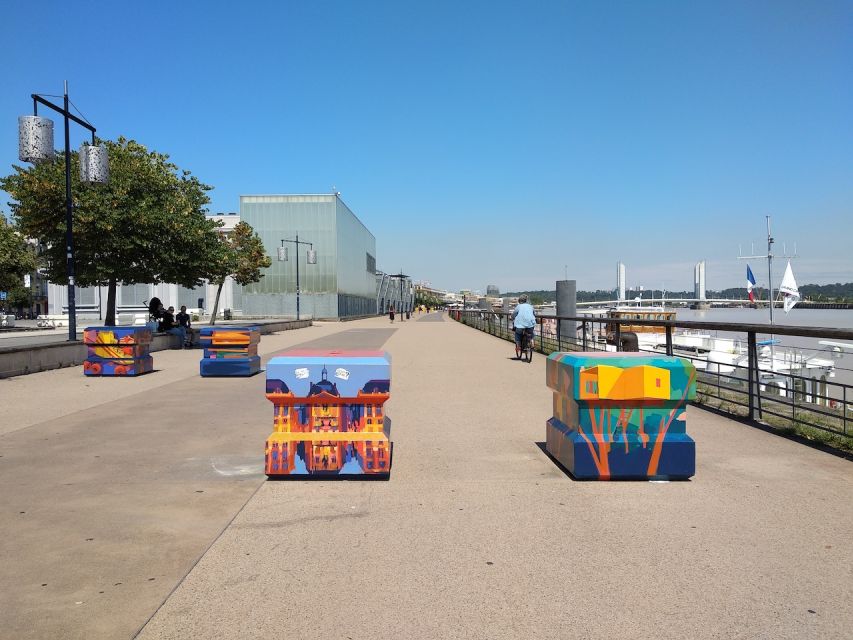
- Garonne quays to Chartrons: Start by the water, then head into the former wine quarter.
- Street art with names attached: You’ll track artists like Clet, A-MO, Mr Poulet, and Alber.
- Rue Notre Dame antique atmosphere: The route threads through classic streets and storefront vibe.
- Old wine storehouses as backdrops: You’ll see how the neighborhood’s past still shapes what you notice today.
- Built for families and first-timers: Explanations are paced for mixed groups, not just hardcore art fans.
Walking From the Garonne to the Chartrons: the route that makes sense fast
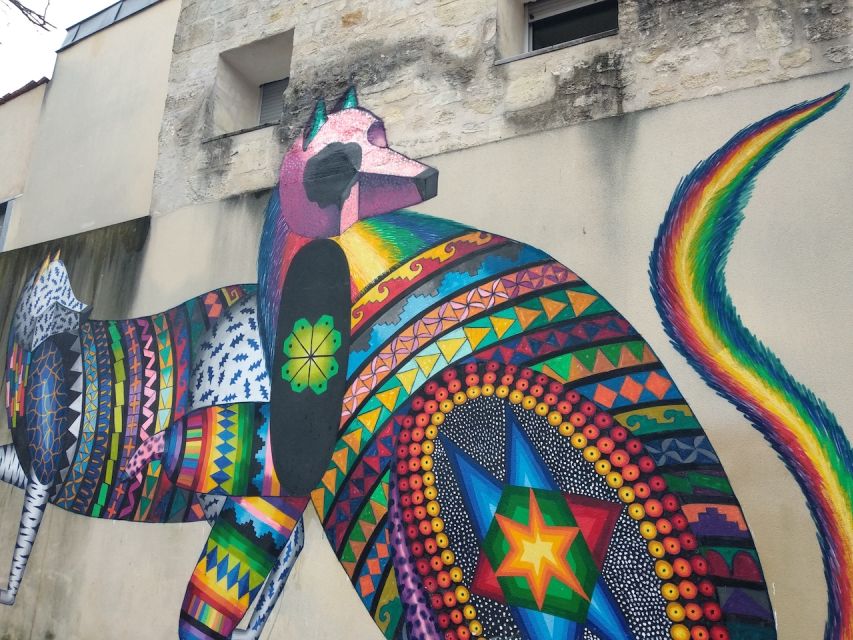
This tour is short enough to fit into a busy Bordeaux day, but it still gives you a satisfying “from A to B” arc. You start at the tram stop Les Chartrons, then you’re off on foot toward the heart of Chartrons. The smart part is the flow: you begin along the quays of the Garonne, then move inland into the streets where the neighborhood identity gets clearer.
What you’re really doing on this walk is getting your bearings. Bordeaux has these pockets of character, and Chartrons is one of them. Once you understand how the district sits near the port quays, the street art doesn’t feel random. It feels like it belongs to a place with a trading past, a lively crowd history, and lots of surfaces that invite creativity.
As you go, expect a steady rhythm of looking, stopping, and learning. The tour doesn’t treat the murals like museum pieces behind glass. Instead, it uses them as visual clues. The guide ties what you see to why the neighborhood developed when it did, which makes the walk more memorable than just chasing photos.
Rue Notre Dame and the antique-quarter vibe you get on the way
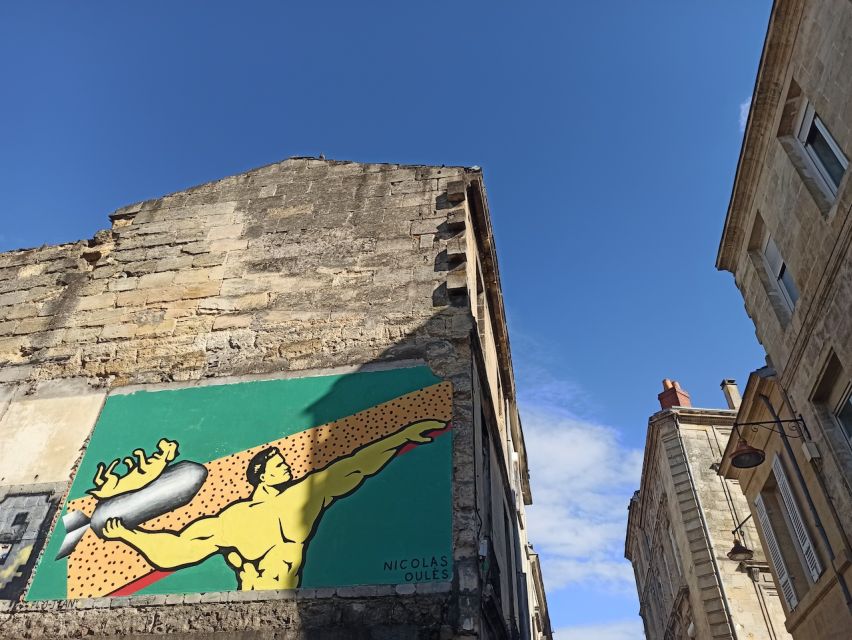
A big payoff is how the street art walk doesn’t end in an art district bubble. You move through the everyday Chartrons atmosphere, including the area around Rue Notre Dame, known here for its antique-dealer feel. That matters because Chartrons is one of those districts where the past is visible without you having to hunt for it.
The route also passes by older wine storehouses, which is a key detail. You’re not only seeing painted walls; you’re moving past architecture and street scale that were shaped by the wine trade. When you later look at murals, you start noticing placement: where artists chose walls that can be seen, where they layered onto long-established surfaces.
Practical note: bring your eyes, not just your phone. Even if you’re here for street art, you’ll likely walk away with a better sense of Bordeaux streets and the logic of how districts grew outward from the city center.
The street art “hit list”: Clet, A-MO, Mr Poulet, and Alber
Street art gets more fun when you can name what you’re seeing. This tour does that in a straightforward way, pointing you toward works by Clet, A-MO, Mr Poulet, and Alber. You’ll have the feeling that the guide is using the murals as landmarks.
Here’s why that’s worth your time. Without names and context, street art can look like a moving target: cool now, forgotten later. With specific artists in the mix, you start learning patterns. You get better at noticing styles, themes, and the way artists use text, characters, shapes, or bold composition.
Also, the guide’s job is to slow you down. At street level, it’s easy to miss the tiny decisions: how a mural fits an architectural corner, how a piece interacts with a doorway, or how the placement changes how you read it as you walk past.
If you’re a first-timer to street art, this is a friendly on-ramp. If you already like it, you’ll still appreciate the chance to connect famous names to a neighborhood with a specific story—Chartrons.
Chartrons as a wine-trading quarter: why the art feels logical here
Chartrons didn’t just appear. The area started developing north of Bordeaux’s city center in the 17th century. At first, it was more separate than connected, and over time it became wealthy—enough to attract different sorts of visitors and activity. That background helps explain why you see so many “layers” here: street life, historic function, and later creative expression.
A simple way to think about it: wine trade equals movement and money. Movement brings people. People bring attention. Attention creates surfaces and audiences for new kinds of expression. Once street artists arrived, the district offered what they need—walls that can carry messages and images, in streets where people actually walk.
That’s where the guide’s history-and-anecdotes approach pays off. The tour frames the art as part of a broader neighborhood transformation rather than a one-off trend. You walk through the story of a district that started as a practical port-adjacent wine trading place and became something more character-driven over time.
And since Chartrons is described as charming and approachable, it helps you relax. You’re not overwhelmed by a giant “must-see” list. You’re moving through a place that feels like it has room for both antiques and murals, both port quays energy and quieter streets.
Family friendly and French-led: how to enjoy it even if your French is rusty
This tour is family friendly and runs in French with a live guide. That means the pacing and explanations are likely aimed at keeping everyone engaged, not only adults who already know street art vocabulary.
If your French is basic, you’re still in good shape. Street art tours have a lot of nonverbal teaching built in—pointing, walking, showing details on walls, and repeating the main idea as you move. You can follow the story even if every word isn’t clear.
Also, the tour’s tone is built around “learning the city” rather than lecturing. That’s what makes it easier for kids, and it also helps adults who don’t want a two-hour lecture disguised as sightseeing.
One more benefit: the French language can be a plus if you’re trying to practice real city talk. You’ll hear the neighborhood described in the way locals do, not the simplified, generic language you get from some audio guides.
Timing and duration: why 1.5 hours is the sweet spot
At 1.5 hours, you’re not committing to the kind of long walk that turns into a foot race. You’ll spend enough time moving from the quays area into Chartrons, but you won’t feel trapped if your day is packed.
That duration also matches the way street art works. Murals aren’t only something you glance at. You need a minute to read composition and location, and you need a second look once the guide adds context. This tour’s length gives you that rhythm without dragging on.
From a practical standpoint, do yourself a favor and wear comfortable shoes. The tour is a walking experience through neighborhood streets, and you’ll be happier if your legs stay fresh for photo stops.
Camera time is also a natural fit here. If you bring a camera, you’ll likely use it at multiple points: quays-to-street transitions, close-ups of particular murals, and wider shots that show where the pieces sit within the street scene.
Weather reality: rain doesn’t ruin the plan, it changes how you dress
Bordeaux weather can be moody, and you might get rain. The good news is that street art doesn’t wait for sunny skies. Even if the weather shifts, you’re still doing a walking route where the goal is to see and understand works on walls.
So think practical. Bring what keeps you comfortable for 1.5 hours outside. If it’s wet, you might want a light rain layer and something to protect your camera. If it’s hot, plan for slow stops and water between segments.
One more reason this tour stays smart in any weather: you’re not dependent on timed entry into a building. You’re moving neighborhood to neighborhood, wall to wall.
What you should bring (so you don’t waste the best parts)
This is a simple list, but it matters because the tour is all about seeing details:
- Comfortable shoes: You’ll walk and stop often.
- Camera: For murals, street corners, and the contrast between quays and Chartrons streets.
If you’re the type who likes to remember things later, also consider using a notes app for artist names or themes as the guide explains them. That way, the next time you see the same artist elsewhere, you’ll recognize their style faster.
Price and value: $18 for a guided art-and-city story
At $18 per person, this is priced like a neighborhood experience, not a major museum day. The value comes from the guide: you’re paying to have someone connect what you see to the district’s development and to street-art names you might otherwise miss.
It’s also good value because the tour is short. You get a focused experience without spending half a day on transportation or queue-driven sightseeing. You start at a tram stop that keeps it easy to plug into your broader day.
If you’re choosing between a generic city highlights walk and this street art route, I’d pick this when you want something more specific. The murals give you a visual reason to pay attention, and the history context gives your photos a story.
Should you book this Bordeaux street art tour?
Book it if you want:
- A 1.5-hour guided walk that changes how you see Chartrons
- Street art with recognizable artist names such as Clet, A-MO, Mr Poulet, and Alber
- French-led city learning that works for families and first-timers
Skip or think twice if:
- You’re extremely sensitive to delays or no-shows and want a highly foolproof plan. On rare occasions, people have reported a guide not arriving, so treat it like an outdoor activity: arrive early, check updates, and don’t schedule it as the only thing you’ll do in that time window.
Overall, this is a solid way to spend an afternoon in Bordeaux. You get art, you get context, and you walk through a neighborhood that feels built for wandering.
FAQ
Where do I meet for the tour?
Meet at the tram stop Les Chartrons.
How long is the Bordeaux Street Art Guided Tour?
The tour lasts 1.5 hours.
What is the price?
It’s $18 per person.
What language is the tour guide?
The tour is conducted in French.
Is the tour family friendly?
Yes, it’s described as family friendly.
What street art and neighborhood areas will we see?
You’ll explore Chartrons and see street art around the area, including stops from the Garonne quays toward the heart of Chartrons and around Rue Notre Dame, passing old wine storehouses. The tour mentions artists such as Clet, A-MO, Mr Poulet, and Alber.
What should I bring?
Wear comfortable shoes and bring a camera if you want photos.
Is the tour wheelchair accessible?
Yes, it’s wheelchair accessible.
Can I cancel or pay later?
You can cancel up to 24 hours in advance for a full refund, and you can reserve now and pay later.