REVIEW · SARAJEVO
SARAJEVO STREET ART TOUR (art, history & mystery) – sARTajevo!
Book on Viator →Run by Art and Tours Sarajevo · Bookable on Viator
Street art here feels like a live city conversation. In this Sarajevo Street Art Tour (art, history & mystery) by sARTajevo!, you follow murals and art spaces through neighborhoods you’d otherwise skim past, with each stop explained in plain language. I like that the tour stays focused on how the artwork connects to Sarajevo’s past and present, not just what the walls look like.
What I really enjoyed is the way the guide ties visuals to context as you walk. You get clear stories at each mural, plus stops like the Academy of Fine Arts, where you also see how artists use simple materials like stickers to communicate.
One thing to consider: this is a short, moving tour (around 2 to 3 hours), so if you prefer long time sitting with one piece, you might wish the pacing had more breathing room.
In This Review
- Key things I found most useful about sARTajevo!
- Why Sarajevo’s street art feels like a city diary (and what you’ll learn fast)
- Meeting point on Đulagina 2 and how the small group changes everything
- Stop 1: Bentbaša and the mural about preserving monuments
- Stop 2: Copy Papagajka and the story behind the Perrot festival connection
- Stop 3: The Academy of Fine Arts and sticker art as a street tool
- Stop 4: Aria, Mr. Chat, the Mural Singer (Pjevač), and Gallery Boris Smoje
- Stop 5: Ferhadija Pedestrian Street and the mural Srebrenica 1992/1995
- Price check: is $30.04 worth it for a 2–3 hour street art walk?
- How to get the most from the tour (without overthinking it)
- Who should book sARTajevo! and who might not love it
- FAQ
- FAQ
- How much does the Sarajevo Street Art Tour cost?
- How long is the tour?
- What time does the tour start?
- Where do I meet the guide?
- Is the tour in English?
- Is there a mobile ticket?
- Are there any admission fees for the stops?
- How big is the group?
- Can service animals join the tour?
- What is the cancellation policy?
- Should you book sARTajevo! Sarajevo Street Art Tour?
Key things I found most useful about sARTajevo!
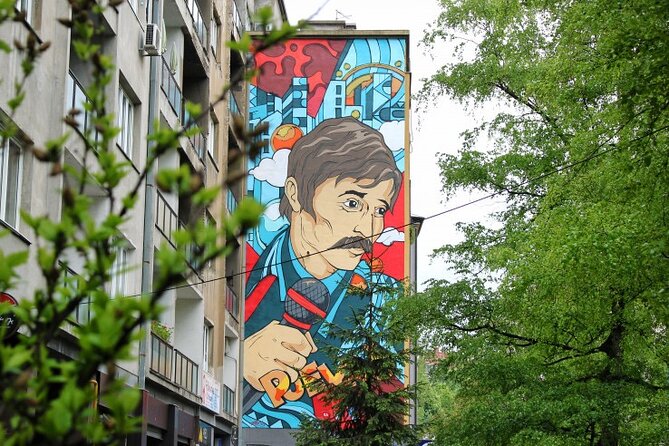
- Maximum 5 people means you’re more likely to get real back-and-forth instead of a lecture sprint
- English mobile ticket keeps it easy to show up and start walking at 6:00 pm
- Murals with named themes like monuments preservation and Srebrenica 1992/1995 add weight, not just style
- Art stops beyond murals, including the Academy of Fine Arts and Gallery Boris Smoje
- Sticker art is shown, so you leave knowing street art tools, not only street art images
- Two focused pedestrian areas (Bentbaša and Ferhadija) make the walk feel like a themed loop
Why Sarajevo’s street art feels like a city diary (and what you’ll learn fast)
Sarajevo street art doesn’t sit on the sidelines. It talks back. It argues. It remembers. And it shows you that the city’s identity isn’t locked in old stone buildings alone—it’s also on walls, in community creativity, and in modern symbols you can spot if someone teaches you what to look for.
This tour is built around that idea. You’re not just chasing random murals for photos. Each stop comes with an explanation, so you start noticing patterns: how artists reuse past references, how street art can carry social commentary, and how design choices can shift the mood of a neighborhood. The tour also leans into mystery without becoming vague. You get enough background to make the next wall make sense.
If you’re coming to Sarajevo for a classic sightsee list, you’ll still see major scenes indirectly. But you’ll also get a different angle: street art as a guide to living culture, not only a side hobby.
Meeting point on Đulagina 2 and how the small group changes everything
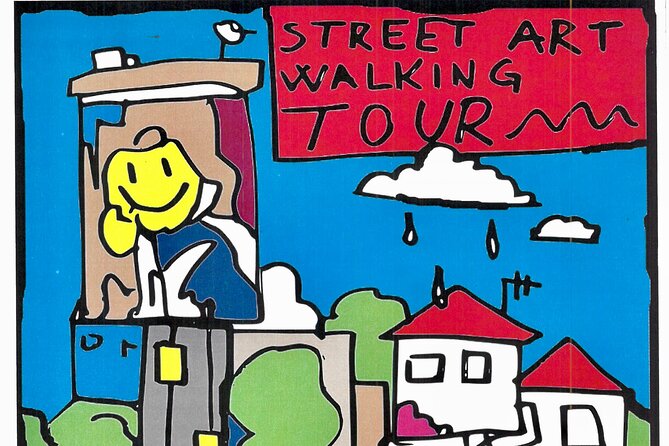
The tour starts at 6:00 pm at Đulagina 2, Sarajevo 71000. It ends back at the meeting point, so you’re not stuck figuring out your next move while your legs are already negotiating with you.
One practical win: the group size is capped at 5 travelers. That small number matters. With fewer people, your guide can slow down when a question pops up, and you’re less likely to feel like you’re being rushed from one wall to the next. The itinerary is also time-balanced (about 20–30 minutes per stop), so the pacing stays friendly for a wide range of visitors.
You also get a mobile ticket and confirmation at booking. And it runs in English, which makes the explanations easy to follow without needing a translation app. If you’re traveling with service animals, the tour allows them. And since the meeting area is near public transportation, you can usually work it into an evening plan without too much stress.
Stop 1: Bentbaša and the mural about preserving monuments
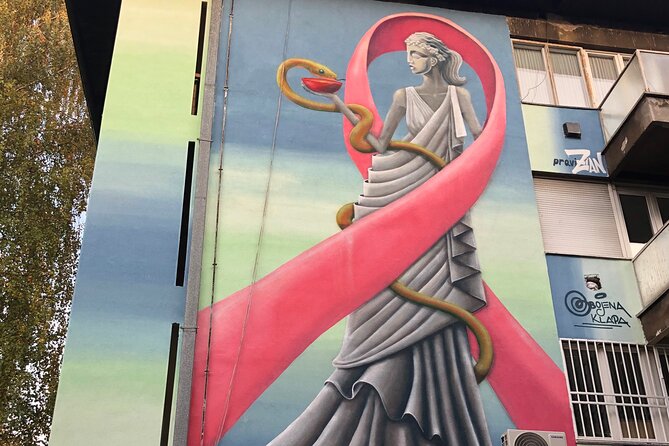
You kick things off in the Bentbaša area, where you’ll find the mural In the preservation of monuments of the past. This is a strong first move because it sets the tone: street art here isn’t treated as decoration. It’s treated as messaging.
What makes this stop click is that the mural’s meaning is explained in detail. You’re not left guessing whether a symbol is political, commemorative, or purely aesthetic. Instead, you’re shown how the message connects to the idea of memory—how the city treats what came before, and how artists use walls to keep that conversation going.
A possible drawback: if you arrive with limited patience for context, this first explanation can feel dense. The tour is designed for understanding, so you’ll get more out of it if you’re willing to listen for a few minutes before you start snapping photos.
Stop 2: Copy Papagajka and the story behind the Perrot festival connection
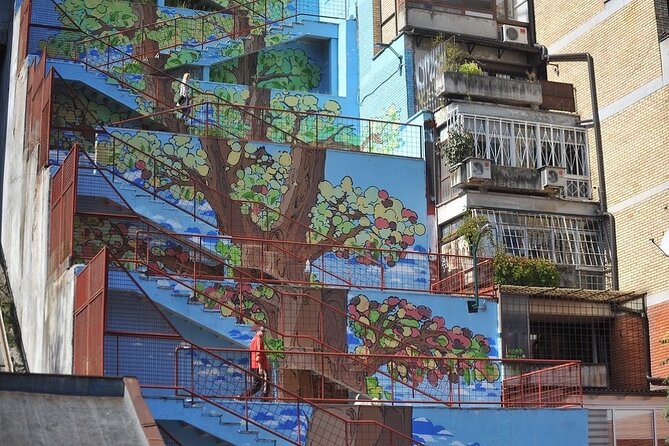
Next up is Copy Papagajka, also tied to Papagajka (Perrot), an art building where the first street art festival was held. Even if street art festivals aren’t on your normal travel radar, this matters. It places Sarajevo’s street scene into a timeline: these walls didn’t appear from nowhere. There’s a development story.
Here, you’ll see wall art examples and learn what made that festival moment a turning point. The value of this stop is that it gives you a sense of how street art moved from informal expression into recognized cultural activity. You’re still walking outside, but your understanding grows like you’ve stepped into the city’s informal archive.
This is also a good mental reset after Bentbaša. The Bentbaša mural asks you to think about the past. Copy Papagajka starts to show how that thinking becomes a living art practice.
Stop 3: The Academy of Fine Arts and sticker art as a street tool
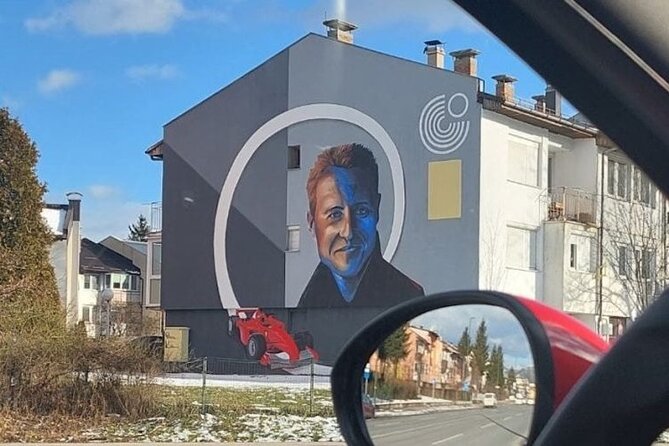
The Academy of Fine Arts stop is where the tour gets extra interesting for people who only think of street art as graffiti. You’ll use art examples to learn more about Sarajevo’s history through the lens of artistic expression.
Then comes the part I think is especially practical: sticker art demonstration and explanation. Stickers might sound small and simple, but the tour frames them as a serious communication tool. Once you understand what sticker placement, style, and repetition can do, you’ll start spotting that logic across the city during the rest of your trip.
This stop is also described as a chance to visit the most beautifully designed object in Sarajevo. Even if you take that as marketing language, it hints at what you’re likely to notice: design details and a sense of artistic care that contrasts with the rougher textures you may have seen on murals.
Possible consideration: this stop can be more “inside art-thinking” than “outdoor wall hunting.” If you came mostly for murals, you’ll still enjoy it, but go in expecting more explanation and less just-looking.
Stop 4: Aria, Mr. Chat, the Mural Singer (Pjevač), and Gallery Boris Smoje
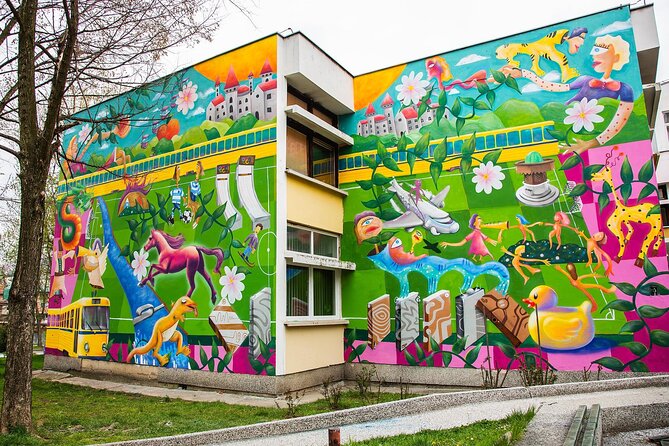
Now you move into Aria, and this is where you start meeting street art ideas by name. You’ll encounter references connected to Mr. Chat, the mural Singer (Pjevač), and Gallery Boris Smoje.
This stop is valuable because it connects style to specific creatives and spaces. Instead of treating street art as anonymous, you’re shown how personalities and institutions shape what you see on the street. Mr. Chat’s concepts help you recognize recurring themes and visual language. The Singer (Pjevač) mural gives you another example of how a single image can carry a message without needing a long story attached.
And then there’s Gallery Boris Smoje. Even if you’re not planning a full museum day, a gallery stop reminds you that street art and formal art spaces aren’t always separate worlds. They trade influence. Artists borrow methods, and public taste shifts over time.
A small practical note: because this stop combines multiple named references, it’s easy to miss small details if you keep your eyes only on the big mural. Keep your attention spread out—your guide is likely pointing to more than one element per location.
Stop 5: Ferhadija Pedestrian Street and the mural Srebrenica 1992/1995
The final stop hits harder. Behind the Ferhadija Pedestrian Street, you’ll find the mural Srebrenica 1992/1995. This is not street art as playful rebellion. It’s street art as memory.
The guide introduces the broader graffiti scene along the street, but the mural sets the emotional gravity. This is a place where context matters. Without it, you might see marks and paint. With it, you start understanding why these works stay in public space and why they matter to people living with that history.
This is also where the tour’s “history & mystery” part feels real. Mystery doesn’t mean secrecy. It means the city holds layers—some visible at first glance, some only understood when someone explains why the artwork exists there.
Possible consideration: if you’re sensitive to memorial themes or heavy historical content, this final stop may take more energy than the earlier ones. That’s not a flaw—just a heads-up on pacing for your emotions.
Price check: is $30.04 worth it for a 2–3 hour street art walk?
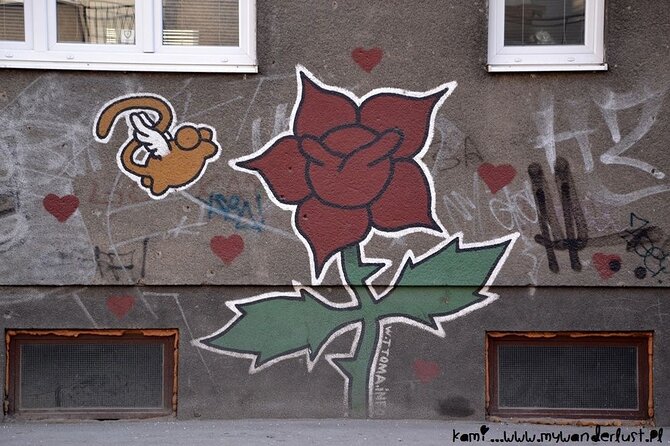
At $30.04 per person, this tour is priced like a mid-range walking experience, and the value depends on what you want out of Sarajevo.
Here’s why I think it holds up: you’re paying for interpretation, not only access. The tour includes detailed explanations at each stop, plus multiple sites tied to named artists, murals, and art institutions. You’re also getting a small group size (max 5), which usually means better attention and a smoother pace.
Another practical value point is that admission at the stops is ticket-free, based on the tour details provided. That means your money is mainly supporting the guide’s time and the structured route, not a pile of extra entrance fees.
So if your goal is to leave with a sharper way of seeing the city—looking at walls and understanding why they were painted—this price feels reasonable. If your goal is only photos with minimal talking, you might feel like you’re paying for explanation more than scenery. Choose based on your style.
How to get the most from the tour (without overthinking it)
This isn’t a “march at full speed” kind of walk, but it still moves. You’ll cover several locations, and each stop has a focused time window. My advice is simple: arrive on time, listen for the context, and don’t try to photograph every second. Pick a few key pieces to capture, then give your eyes a chance to notice the details your guide points out.
Also, mentally switch from tourist mode to neighborhood mode. Once the tour shows you how the artwork connects to local life, you’ll start looking at Sarajevo like you’re seeing a conversation happening across streets, not a set of landmarks waiting for a checkmark.
If you’re a non-art person, this tour works well because it treats street art as understandable. It explains, it shows examples, and it gives you tools—like the sticker art demonstration—that help you interpret what you see later.
Who should book sARTajevo! and who might not love it
This tour is a great fit if you want:
- Street art with real context, not just a photo run
- A balanced mix of murals and art spaces like the Academy of Fine Arts and Gallery Boris Smoje
- A small group format where you can ask questions without feeling ignored
- An evening plan that starts at 6:00 pm and ends where you began
You might consider another option if:
- You dislike tours with detailed explanations and prefer self-guided walking
- You want more time at each location rather than moving through five stops
- You’re not ready for memorial-themed artwork like Srebrenica 1992/1995
FAQ
FAQ
How much does the Sarajevo Street Art Tour cost?
The price is $30.04 per person.
How long is the tour?
The duration is approximately 2 to 3 hours.
What time does the tour start?
The start time is 6:00 pm.
Where do I meet the guide?
The meeting point is Đulagina 2, Sarajevo 71000, Bosnia and Herzegovina.
Is the tour in English?
Yes, it is offered in English.
Is there a mobile ticket?
Yes, the tour includes a mobile ticket.
Are there any admission fees for the stops?
The tour details list ticket admissions as free at each stop.
How big is the group?
The maximum group size is 5 travelers.
Can service animals join the tour?
Yes, service animals are allowed.
What is the cancellation policy?
You can cancel for a full refund up to 24 hours in advance. Free cancellation is available, and if you cancel less than 24 hours before the start time, the amount paid is not refunded.
Should you book sARTajevo! Sarajevo Street Art Tour?
Book it if you like Sarajevo best when you’re learning how people think and remember through everyday places. This tour is built to make street art readable—through context, named murals, and stops that connect art to city life. With a small group and a tight route, it’s a strong evening plan for first-timers who want a sharper view fast.
Skip it if you only want scenery and minimal talking. Street art here is the story, and the route moves with purpose. If you’re ready to listen for those connections, you’ll likely leave Sarajevo feeling like you understand more than you would from the usual highlights.