REVIEW · OSAKA
Urban Canvas: Osaka Street Art Bike Tour
Book on GetYourGuide →Run by InKansai Ltd · Bookable on GetYourGuide
Osaka’s street art feels built for bikes. This street art bike tour threads through Tenma and Juso, with urban neighborhoods that are way more you-than-tour-book. You’ll also get guide commentary that explains what you’re seeing and why this side of Osaka matters.
I especially like how the tour blends art with real city life. You’re not just looking at murals and tags; you’re hearing about Osaka’s underground life and the local street art culture, while zipping past rivers, bridges, and train lines.
One heads-up: you will bike roughly 23 km over about 4.5 hours, so comfortable shoes and steady energy matter, especially if rain clouds show up.
In This Review
- Key things I’d make time for
- Tenma to Juso: Osaka’s street art lives between the lines
- Getting started near Tenmabashi Station and learning the rhythm
- Tenma’s gritty neighborhoods and the “look longer” art habit
- The Yodo River crossing into Juso: where the city changes tone
- Juso’s coffee and standing bar pause: fuel that fits the vibe
- Nakazaki-cho’s hipster edge and galleries between the practical stops
- The 100-year-old pizza slice stop: a small meal with a big payoff
- Price and value: what $87 buys you in Osaka time
- Guide energy: Ruben and Eric make the explanations stick
- What to bring (and what will make your day easier)
- Who should book this Osaka street art bike tour
- Should you book Urban Canvas: Osaka Street Art Bike Tour?
- FAQ
- How long is the Urban Canvas Osaka Street Art Bike Tour?
- Where do I meet for the tour?
- What’s the price per person?
- What’s included in the ticket?
- Is the tour guided in English?
- What happens if it rains?
- Is it suitable for children and mobility limitations?
Key things I’d make time for
- Small group of 6 keeps the pace friendly and makes it easier to stop for photos
- Street art from local and international artists means the walls don’t all look the same
- Yodo River crossing into Juso gives you a clear “neighborhood shift” mid-ride
- Coffee and a standing bar break help you catch your breath without killing the momentum
- Pizza slice in a 100-year-old building turns food into part of the story, not an afterthought
Tenma to Juso: Osaka’s street art lives between the lines
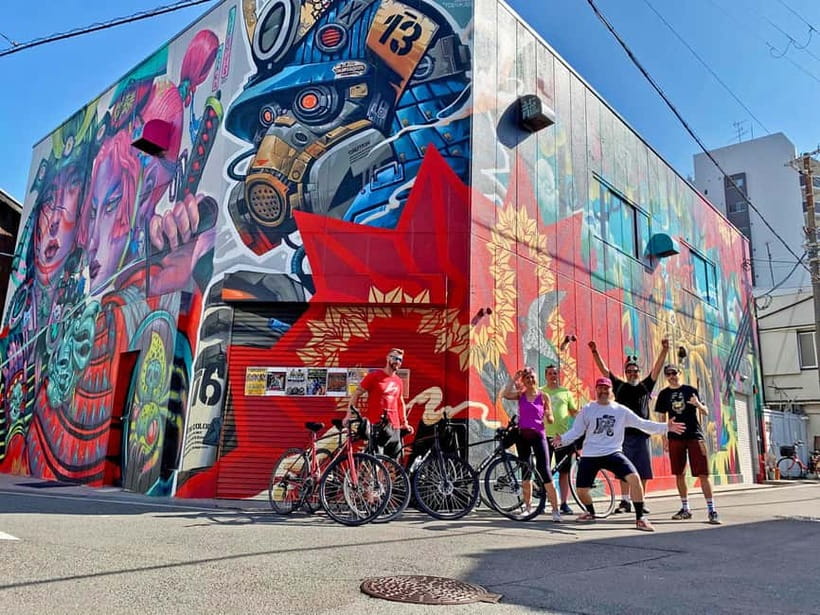
This tour is built for people who like cities with texture. Instead of hopping between famous sights, you’ll ride through Tenma, Juso, and Nakazaki-cho and see the kind of wall art you only notice when you’re actually moving through the neighborhoods.
A big part of the appeal is that Osaka’s street scene isn’t treated like a side show. You’re guided toward the growing street art world, including work by local and international artists, and you get context from a guide who talks about what you’re seeing on the urban canvas.
If you’re expecting pristine viewpoints and photo ops in one tidy loop, this might feel too gritty for your taste. But if you want Osaka with grit, this format pays off fast.
You can also read our reviews of more tours and experiences in Osaka.
Getting started near Tenmabashi Station and learning the rhythm
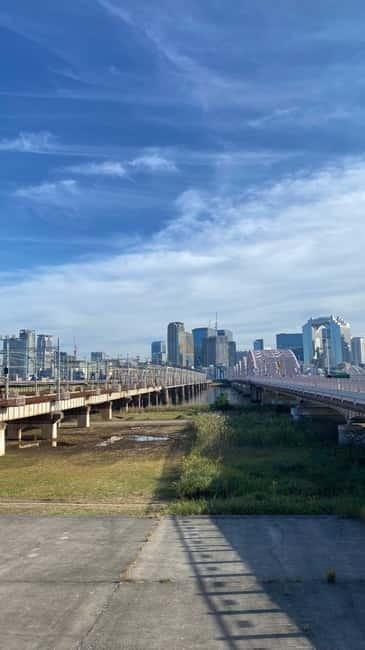
The meeting point is a quick walk from Tenmabashi Station (Osaka Metro / Keihan Line). From there, the tour settles you into the rhythm: helmet on, bike rolling, and a plan that mixes riding with stop-and-look time.
You’re in good shape if you can walk a bit and stand around for short breaks. The tour runs about 270 minutes, and the pace is designed so you can photograph murals and not feel rushed the whole time.
Because it’s a small group limited to 6, the guide can slow down when someone wants to frame a shot or ask a question. That matters in street art, where the interesting details are often in the background layers, not just the center of the wall.
Tenma’s gritty neighborhoods and the “look longer” art habit
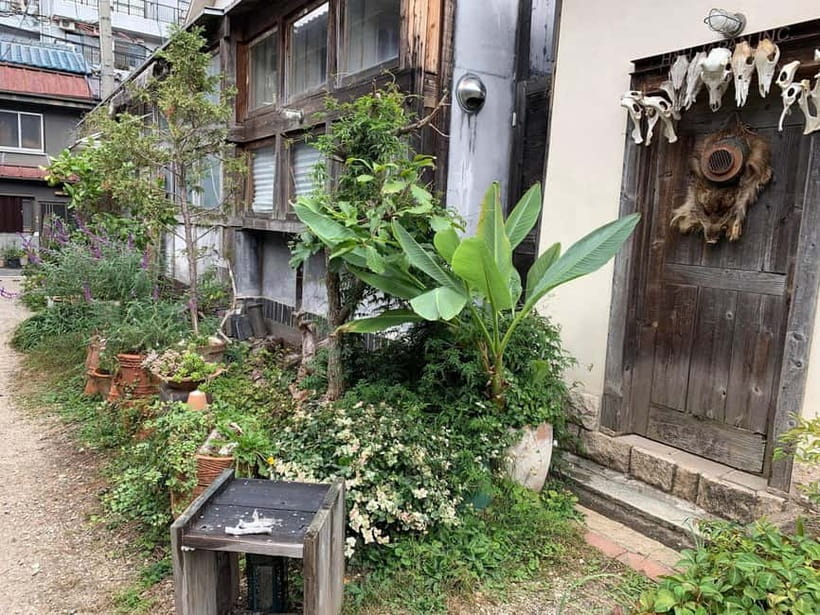
Tenma is where the tour really starts feeling like Osaka-as-a-city, not Osaka-as-a checklist. You’ll ride through streets that feel lived-in, with plenty of graffiti, street art, and urban architecture moving past your eyes in layers.
What I like about this part is the push to look longer. Street art often rewards patience: you catch more meanings when you’re not only glancing as you pass. With the guide’s commentary, the stops feel purposeful instead of random.
There’s also a practical upside. Riding bike-to-bike is easier than standing in one spot for too long, and it keeps your photos varied. You’ll get close-up angles, wider street context, and the sense of scale that you lose when you only watch murals from across the road.
The Yodo River crossing into Juso: where the city changes tone
Crossing the Yodo River is one of the best “you’re in a new zone” moments on this tour. It’s not just a scenic transition; it’s part of how the neighborhoods are framed, and it sets you up for what Juso is known for.
Juso is described as a center of the Osakan street art scene, and you can feel that shift in the streets. The area has that Osakan pulse—dense urban texture, lots of signage and structures, and enough wall space for artists to keep working.
This is also where the tour adds its neighborhood storytelling. You’ll hear from a local resident and get commentary about underground life in Osaka—how people move, where culture hides, and why street art shows up the way it does in places that aren’t on every tourist route.
One caution: if you dislike public-bike handling in traffic-y street patterns, you’ll want to focus on comfort and control from the start. You’re biking through a real city grid with rails, bridges, and moving streets, so pay attention early and settle into your line.
Juso’s coffee and standing bar pause: fuel that fits the vibe
The tour doesn’t treat breaks like a reset button. The idea is to keep you in the atmosphere while you recharge, and it works well.
Expect chances to grab specialty coffee and an old-school style standing bar stop. These aren’t just for sugar and caffeine. They give you the feeling of being part of the neighborhood flow, where people pop in, stand, talk, and keep going.
If you’re the type who gets cranky when a tour becomes all motion and no recovery, this is a smart inclusion. Short pauses keep the ride enjoyable, and they also give you time to review your photos before you head back into the next wall.
Nakazaki-cho’s hipster edge and galleries between the practical stops
After the Juso energy, the tour heads toward Nakazaki-cho, described as a hipster enclave with boutique shops and galleries. The visual tone shifts, and you start noticing a different kind of street identity—more gallery-adjacent, more shopfront character, and a calmer pace compared to the densest grittier streets.
This isn’t an art district tour in the tidy, curated sense. It still has the street texture—train lines, bridges, graffiti, and those urban layers that make Osaka feel like Osaka. The difference is that the route gives you contrast, so the street art doesn’t blur into one long wall.
You’ll still have guide context along the way, and the small-group size helps you hear it clearly without getting drowned in background noise. If street art history matters to you, this is the part where the guide’s explanations can really stick.
The 100-year-old pizza slice stop: a small meal with a big payoff
The food stop is one of the most memorable parts, because it’s not a chain concession. You’ll get a pizza slice in a 100-year-old building, which means you’re eating in a place with its own presence.
For $87, the pizza slice and water aren’t just “included snacks.” They help justify the total value of the day because you’re getting a guided ride plus a meal-sized break without hunting for food mid-route.
One practical note: if you’re sensitive to eating at specific times, plan to eat when the stop happens rather than assuming you can easily grab something later. You’re on a schedule that works for the biking time, and the route is designed as one connected experience.
Price and value: what $87 buys you in Osaka time
At $87 per person, you’re paying for a very specific bundle:
- bike and helmet
- English-speaking local guide
- guided street art route through multiple neighborhoods
- pizza slice and water
That’s a fair deal when you think about what it costs to rent a bike, buy a helmet, and then pay for a guide who knows where the street art is and how to explain it. Plus, the tour lasts 270 minutes, which gives you enough time to actually enjoy stops instead of treating them as quick photo grabs.
The small-group limit—6 participants—is part of the value too. With fewer people, the guide can keep the pace smooth and spend time answering questions without the usual herd-herding feeling.
Is it worth it if you only want a quick taste? Maybe not. But if you want a half-day that feels like Osaka’s under-the-radar side, this is priced like an experience, not a ride-and-finish.
Guide energy: Ruben and Eric make the explanations stick
The experience gets extra points from the guide style. In past tours, guides like Ruben and Eric have been praised for taking time with questions about street art and Osaka, not just reciting a script.
I like this approach because street art is visual, but understanding it can be practical. A good guide helps you notice style, placement, and the way local artists respond to their surroundings. It also makes it easier to photograph, because you know where the interesting bits tend to be.
If you’re the type who likes learning on the go, you’ll probably enjoy the way the tour combines art talk with neighborhood talk. If you’d rather keep things strictly sightseeing, you can still enjoy the ride—you’re never forced into a lecture mode.
One small downside mentioned by someone who did the tour: it can be hard to remember artwork facts later. If that matters to you, bring a notes app habit and jot down a couple names or themes when the guide talks.
What to bring (and what will make your day easier)
This tour is simple, but you’ll have a better time if you show up prepared.
Bring:
- comfortable shoes for biking and brief standing around
- a camera (street art photography is a big part of the fun)
- comfortable clothes (Osaka weather can shift, and you’ll be moving for hours)
Also, plan for basic stamina. The route covers about 23 km at a pace designed for the group, so you’ll want to feel comfortable riding before you commit.
Not allowed: smoking.
Who should book this Osaka street art bike tour
This works best if you:
- love street art and want it explained in context
- like biking through real neighborhoods
- want a small-group day that feels like it’s going somewhere beyond the main tourist corridors
It’s not the right fit if:
- you need wheelchair access or have mobility limits that affect biking
- you’re looking for a mostly indoor, low-effort activity
- you’re traveling with younger kids—children under 13 are not recommended, and it’s not suitable for children under 10
It’s also weather-dependent. If the chance of rain is higher than 60% during the tour time, the tour is canceled and you’ll be offered another date or a full refund. If you’re booking with tight plans, keep your contact details updated so you can be reached quickly.
Should you book Urban Canvas: Osaka Street Art Bike Tour?
Yes, I’d book it if your idea of a great Osaka day is street-level city energy—murals, graffiti, bridges, rivers, and neighborhoods you don’t stumble into by accident. The combination of bike time, guided storytelling, and the pizza stop in a 100-year-old building makes it feel like a real experience, not just a sightseeing add-on.
I’d skip it if you want famous landmarks above all else, or if biking 4.5 hours sounds like too much. Also be honest with yourself about comfort in an active urban area.
If you’re a street art fan or you just want to see Osaka in a way that feels local, this is one of the better ways to spend a half-day.
FAQ
How long is the Urban Canvas Osaka Street Art Bike Tour?
It lasts 270 minutes (about 4.5 hours). Starting times depend on availability.
Where do I meet for the tour?
You meet 10 minutes on foot from Tenmabashi Station (Osaka Metro / Keihan Line).
What’s the price per person?
The price is $87 per person.
What’s included in the ticket?
Included are bike, helmet, the bike tour with a local guide, a pizza slice, and water.
Is the tour guided in English?
Yes. The tour includes a live guide in English.
What happens if it rains?
If the chance of rain is higher than 60% during the tour time, the tour is canceled and you’ll be offered a different date or a full refund.
Is it suitable for children and mobility limitations?
Children under 13 are not recommended, and it’s not suitable for children under 10. It’s also not suitable for people with mobility impairments or wheelchair users.