REVIEW · MONTREAL
Montreal: The Original Locally Owned Street Art Walking Tour
Book on GetYourGuide →Run by Spade & Palacio Non-Touristy Tours · Bookable on GetYourGuide
Street art turns Montreal into an outdoor gallery. On this locally owned walking tour, you trace murals along Saint-Laurent Boulevard and the Main that splits Montreal’s east and west, with a guide focused on what you’re actually looking at—artists, techniques, and meaning.
Two things I like a lot: the small group (max 10) keeps it interactive, and the tour’s connection to the MURAL festival means you’re not just seeing pretty walls—you’re getting context for what’s happening in Montreal right now. You’ll also get a list of personal restaurant and bar recommendations at the end, which is handy when you’re ready to eat and not keep walking.
The one drawback: it’s still a real walking tour with a zigzag route through streets and alleys, so if you get tired fast, plan for time on your feet and dress for the weather.
In This Review
- Key things to know before you go
- Finding 3526 Saint-Laurent and getting oriented quickly
- Saint-Laurent Boulevard and the Main: learning to read Montreal murals
- Techniques you’ll spot up close: wheat paste, installations, and huge walls
- The MURAL festival stop: why this tour feels current
- The route rhythm: comfortable walking pace with real time to look
- Price and value: why $32 feels fair for what you get
- Who should book this street art walk (and who might not love it)
- Should you book this Montreal mural tour?
- FAQ
- How long is the Montreal street art walking tour?
- How much does it cost?
- Where is the meeting point?
- How do I get there from Saint-Laurent Métro Station?
- Is the tour in English?
- How big is the group?
- Is there a moderate amount of walking?
- Is the tour wheelchair and stroller accessible?
- What’s included and what’s not included?
- Is there free cancellation and pay later?
Key things to know before you go
- Max 10 people keeps the pace human and the Q&A real
- Saint-Laurent Boulevard + the Main give you a strong east/west neighborhood framework
- Local and international artists show up on both small pieces and massive walls
- MURAL festival time turns the walk into a live snapshot of Montreal street art
- English live guide so you can focus on the story, not guessing what things mean
Finding 3526 Saint-Laurent and getting oriented quickly
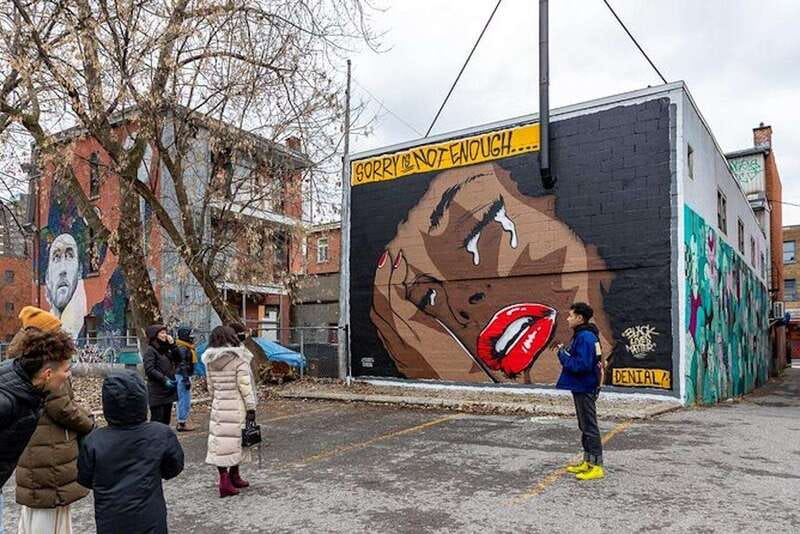
This tour starts at 3526 Boul. Saint-Laurent, right on the street next to a red fire hydrant. Don’t ring the bell or try to go inside—just meet your guide outdoors. You’ll be greeted there about 10 minutes before the tour begins.
Getting there is easy once you know the angle. From Saint-Laurent Métro Station, it’s about a ten-minute walk uphill. If you like bus routes, take the 55 bus north and get off at rue Prince-Arthur, then walk back toward the address for about two minutes.
In the first stretch of the tour, you’re not just dumped onto a sidewalk with a mural map. You get a short guided intro to how the route works and what to watch for. That matters, because street art can look random until someone shows you how artists think—where symbols repeat, how techniques change the message, and why some walls feel like they’re talking to each other.
You can also read our reviews of more tours and experiences in Montreal.
Saint-Laurent Boulevard and the Main: learning to read Montreal murals
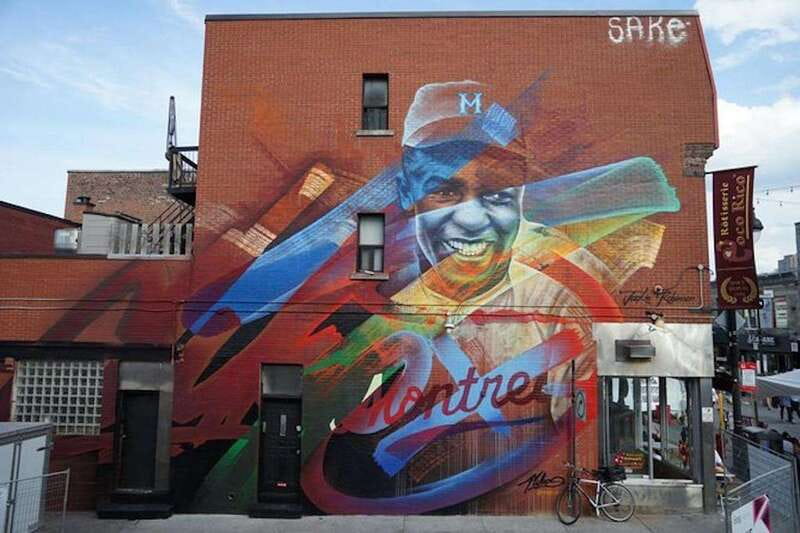
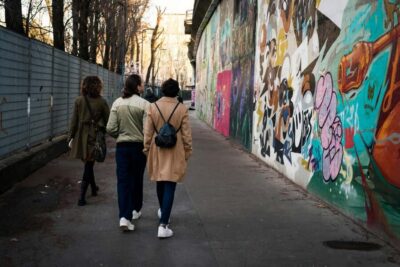
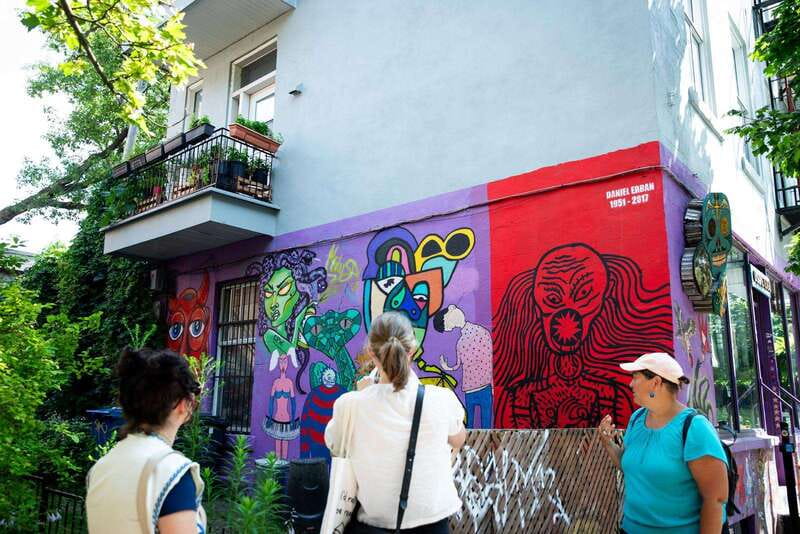
Once you’re moving, the big idea is that you’re walking an “outdoor art gallery.” Saint-Laurent Boulevard is the backbone, but the tour also crosses along the Main, the line that divides Montreal’s east and west. I like this approach because you don’t just collect photos—you start noticing how the street art scene shifts as the neighborhoods shift.
You’ll see murals created by both local and international artists, and the guide uses that mix to explain Montreal’s place in the wider street art world. One of the themes you’ll hear is that Montreal has a large concentration of artists in the country, and you’ll get a sense of why that energy shows up on walls instead of staying in studios.
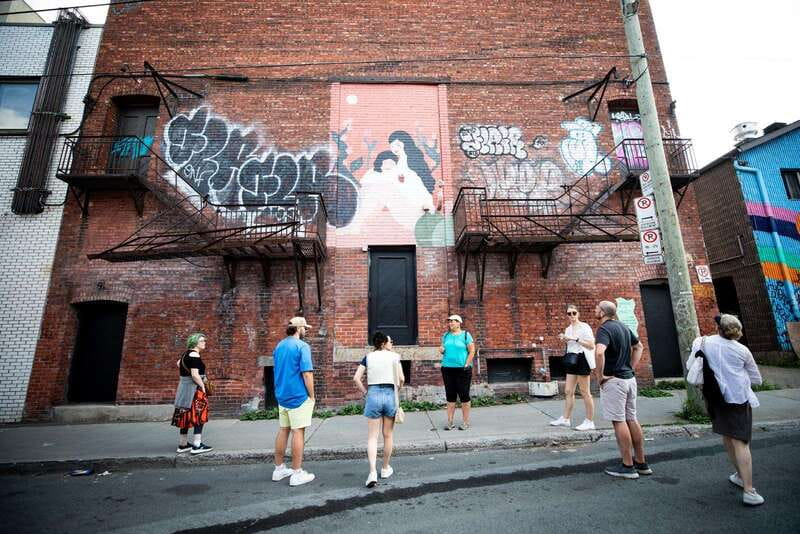
Expect a guided pace that leaves room to look up. The walk is designed as a zigzag through streets and alleys, so you’re constantly switching angles. That’s not just for variety—it’s how you catch different scales, different textures, and different “voices” in the same neighborhood.
If you tend to rush through cities, this is a good tour to slow you down. Street art rewards attention to details: a tag that becomes a character, a pasted texture that looks like paper scraps but carries a political or personal meaning, or a mural that looks different once you’re closer.
Techniques you’ll spot up close: wheat paste, installations, and huge walls
One of the best parts of this tour is the practical way the guide explains technique. You’re not stuck with vague descriptions like Art is powerful. Instead, you learn how specific styles work and what they tend to communicate.
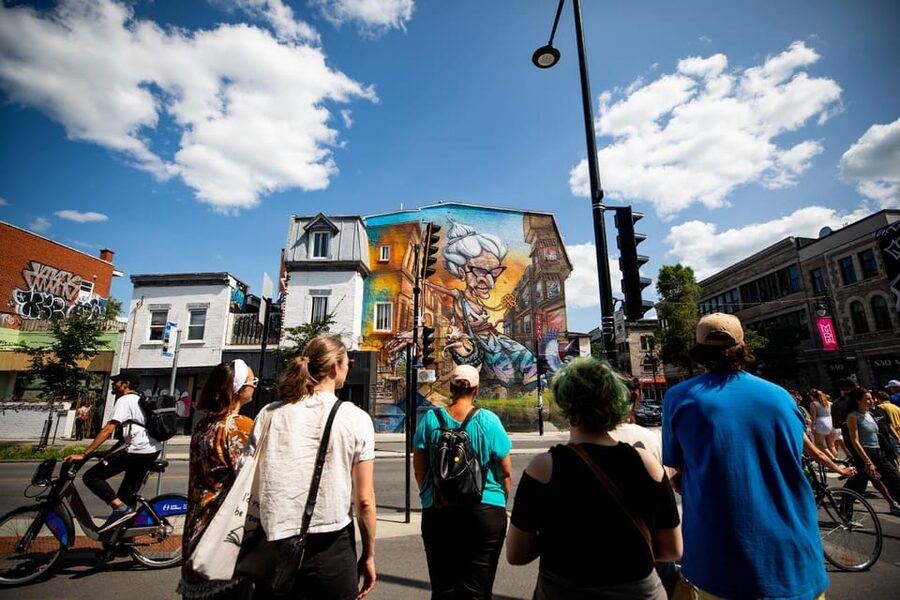
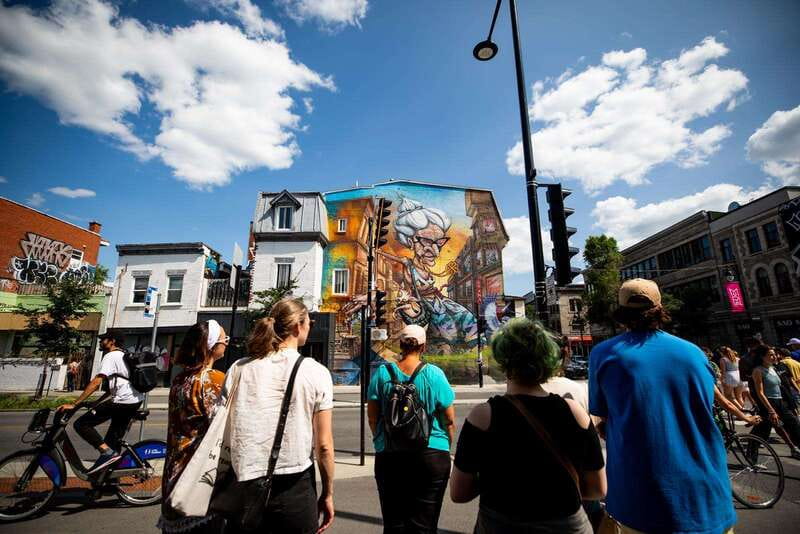
You’ll cover street art styles like wheat pastes (paper-and-glue street imagery) and you’ll see the “small and clever” pieces next to the “wow, that’s tall” works—up to massive murals that can reach around 10 storeys tall. When you’re standing at street level, scale changes everything. A small installation can feel intimate; a huge wall can feel like public storytelling.
The guide also points out small installations you might otherwise miss—works the city hides in plain sight. That’s where a guided walk pays off. Even if you’re not a street-art expert, you’ll start noticing patterns in how artists build meaning: repetition, contrast, wordplay, symbolism, and the way materials affect emotion.
And because the route keeps zigzagging, you’re constantly re-framing what you saw. You’ll come around a corner expecting one thing, then catch a wall that changes the whole context of what’s around it. That’s the fun: Montreal street art doesn’t sit still on one sidewalk. It’s a moving conversation.
The MURAL festival stop: why this tour feels current
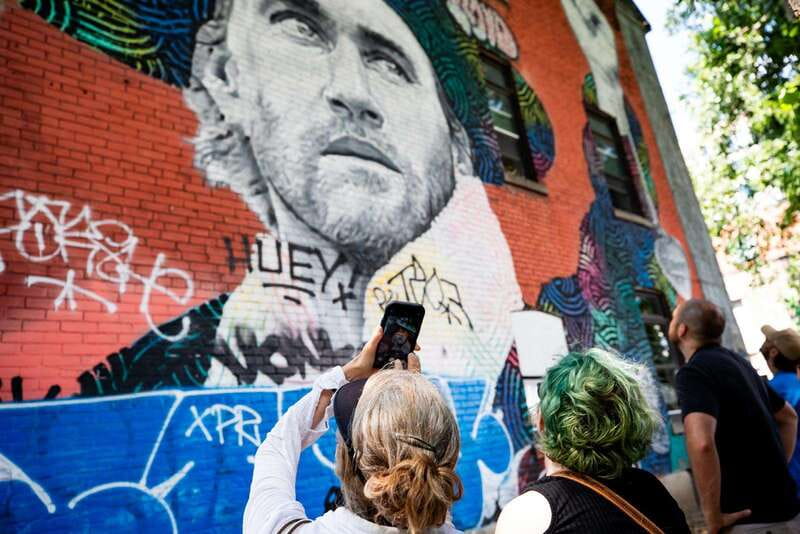
The longest portion of the walk is tied to MURAL festival time. This is one reason the tour feels different from the “same set of murals, every day” style of street walking tours.
During that extended festival period, the guide’s focus shifts toward what’s happening in the public art scene right now—why new work shows up when it does, how festival energy affects artists and visibility, and how mural culture in Montreal connects to the broader city.
I appreciate this because it gives you a more useful souvenir than just photos. When you understand the festival context, you can look at a wall later and know how to read it: Was it made for a specific moment? Is it part of a larger conversation? Does it reference Montreal culture, or does it bring in global styles?
It also helps you avoid the common trap of treating street art as only decoration. Here, you get language for the meaning behind pieces, and you’ll hear stories about the artists that make the work feel less anonymous.
The route rhythm: comfortable walking pace with real time to look
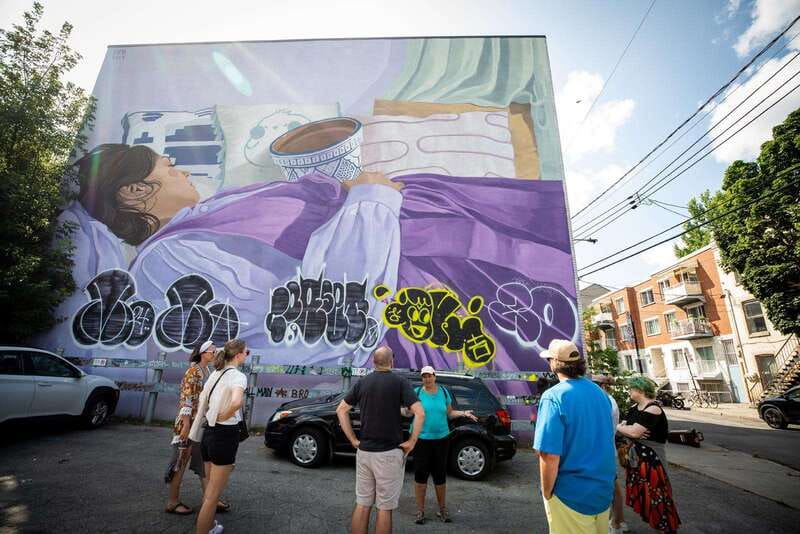
The tour is described as a moderate walking experience, and you should plan for that. It’s not a “stand in one place and watch” tour. You will move through streets and alleys, and the pace is designed so you can stop, ask questions, and take photos without feeling like you’re sprinting to the next stop.
There are also short guided moments built into the flow—brief stretches where the guide sets up what you’ll see next and then moves you onward. That helps keep the tour from feeling like one long blob of wandering.
On chilly days, you might also get little practical breaks. One of the most practical pieces of feedback I’d take from past experiences is that having time for a warm-up or a quick coffee stop can make the difference between enjoying a walk and just surviving it. Even if the exact timing varies day to day, it’s smart to bring a layer and be ready for Montreal weather to change plans.
The final stretch brings you to Park of Portugal. That’s a nice place to land if you want to keep exploring without feeling trapped back at the start. And since you’ll get a list of restaurant and bar recommendations, you’ll have something ready when you’re done staring at walls.
Price and value: why $32 feels fair for what you get
At $32 per person for a 2-hour English guided walk with a small group capped at 10, this is a value play in Montreal.
Here’s why it’s worth thinking about:
- You’re paying for guided interpretation, not just access to murals. The guide explains meaning and techniques, including how pieces are made and what they’re saying.
- The group size matters. In a crowd, you’re mostly listening from the back and taking pictures. With a cap of 10, you’re more likely to hear details and ask questions.
- The MURAL festival portion adds time and relevance. A festival stop isn’t just extra walking; it’s a chance to see the scene as it’s evolving.
If you’re the type who likes walking tours but hates feeling like you’re being marched through a checklist, this one is built to feel more like a conversation. The guide’s energy seems to be a big part of the appeal, and multiple people highlight that it stays engaging while still being informative.
Who should book this street art walk (and who might not love it)
I’d point you toward this tour if you want:
- A street art primer that teaches you how to interpret murals and graffiti-style work
- A solid way to understand Montreal’s public art scene beyond the tourist highlights
- An experience with English live guidance and time for questions
- A small-group walk that doesn’t feel chaotic
It might be less ideal if you:
- Struggle with moderate walking or don’t like zigzag routes through alleys
- Prefer fully indoor experiences, since you’ll be outside most of the time
If you’re visiting Montreal for the first time, this tour is also a smart way to learn how the neighborhoods speak—east versus west, and how the art scene carries that difference on its walls.
Should you book this Montreal mural tour?
Yes, I’d book it if you like your street art with context. This tour is built around interpretation: techniques like wheat paste, the difference between smaller installations and huge murals, and the current energy tied to MURAL festival.
I’d also choose it if you care about meeting a real guide and not just collecting stops. The small-group size and the guide-led explanations make the $32 feel like a straightforward trade: your time walking, plus meaningful insight in return.
If you’re unsure, think about this simple question: do you want to see murals, or do you want to understand them? If the second one sounds more like you, this is the right kind of tour to spend your afternoon.
FAQ
How long is the Montreal street art walking tour?
The tour lasts about 2 hours.
How much does it cost?
It costs $32 per person.
Where is the meeting point?
Meet at 3526 Boul. Saint-Laurent next to the red fire hydrant. The guide will be on the street. Do not ring or try to go inside.
How do I get there from Saint-Laurent Métro Station?
It’s about a ten-minute walk uphill from Saint-Laurent Métro Station. You can also take the 55 bus north and get off at rue Prince-Arthur, then walk back toward the address for about two minutes.
Is the tour in English?
Yes, the live tour guide speaks English.
How big is the group?
The group is limited to a maximum of 10 participants.
Is there a moderate amount of walking?
Yes. This is a walking tour with a moderate amount of walking involved.
Is the tour wheelchair and stroller accessible?
Yes. The tour is wheelchair accessible, stroller accessible, and service animals are allowed. Surfaces are listed as wheelchair accessible.
What’s included and what’s not included?
Included: the street art walking tour, a local guide, and a list of personal recommendations. Not included: hotel pickup and drop-off.
Is there free cancellation and pay later?
Yes. Free cancellation is available up to 24 hours in advance for a full refund, and you can reserve now and pay later.