REVIEW · BELGRADE
Private Belgrade Street Art and Adventures Walking Tour
Book on Viator →Run by Snurk.Travel · Bookable on Viator
Belgrade’s street art is a history lesson on walls. What makes this tour click fast is the historical context behind the murals and the way you’re led into alternative spaces most visitors miss. One thing to keep in mind: beer, snacks, and drinks are not included, so you’ll want a little extra cash if you want to sample what’s on offer.
I like tours that don’t treat street art like decoration. Here, the guide connects it to everyday life—alternative culture, squatters, underground art, and how people claim the city with paint, design, and community.
You’ll walk for about 3 hours on a private route that starts and ends near Terazije Fountain, with a steady rhythm of short stops. It’s built for people who enjoy stories in plain sight and want to read Belgrade from street level, not from a bus window.
In This Review
- Key highlights worth your time
- Why Belgrade’s walls are the best tour guide
- Price and what you’re really paying for ($219.94)
- Practical logistics: how the 3-hour route feels on the ground
- Start at Terazije Fountain: getting your bearings fast
- Stop 1: Magacin and its open-calendar culture
- Stop 2: Karađorđeva 31 and a 2008 mural with deep references
- Stop 3: Belgrade Design District in a former 90s mall
- Stop 4: Street Gallery and the art in a hidden passage
- Stop 5: Cetinjska 15, a former brewery turned alternative hub
- What makes the guide work here
- How to get the most from this walk (quick tips)
- Who this tour suits best
- Should you book this private Belgrade street art walk?
Key highlights worth your time
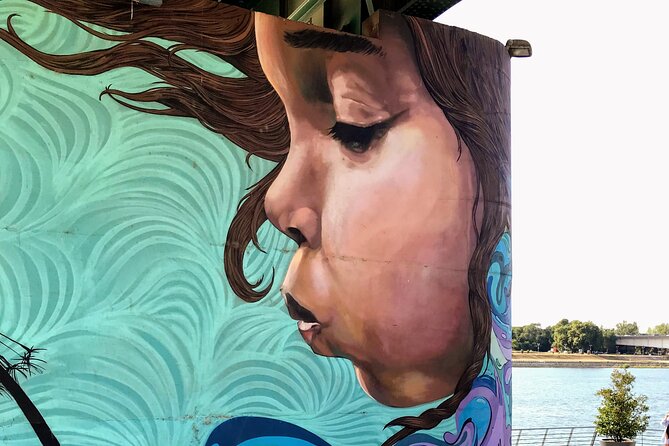
- Street art with context: Murals are explained through Belgrade’s history and the wider art scene.
- Off-the-main-path venues: Abandoned and underground spaces show up again and again.
- Named murals and real artists: You visit a specific 2008 festival mural by Guillaume Alby (REMED).
- A walk that feels like a mini circuit: Multiple major street art areas in roughly three hours.
- Design and art mixed together: You move from galleries to an occupied former mall.
- Beer and sweets opportunities: You can try local craft beer and handmade sweets, but you pay for them.
Why Belgrade’s walls are the best tour guide
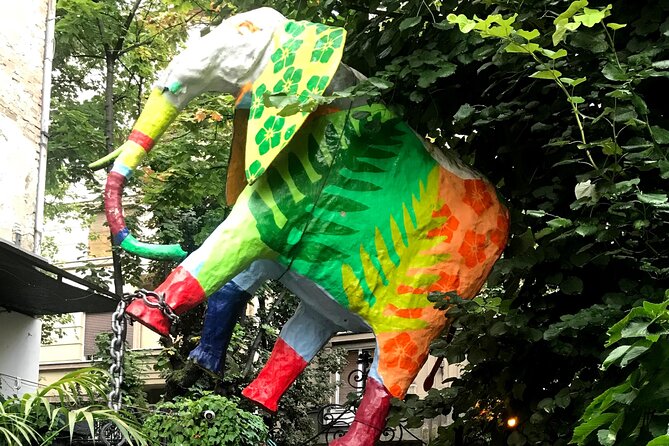
Belgrade treats the city surface like a public bulletin board. Street art here isn’t only about style. It’s about identity, politics, grief, humor, and what people want their neighborhoods to say out loud.
On this tour, I like that the guide frames the murals and spaces as part of how the city works. You’re not just looking at art—you’re learning how people use urban space. That changes how you see everything afterward: sidewalks, alleyways, building corners, even the plain walls that look boring at first glance.
You can also read our reviews of more tours and experiences in Belgrade.

Price and what you’re really paying for ($219.94)
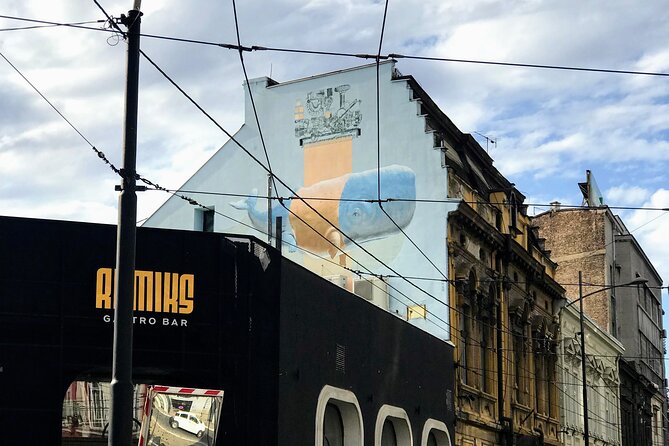
At $219.94 per person for a roughly 3-hour private outing, this isn’t the cheapest way to see Belgrade. The value comes from three things: a dedicated guide, a tight route that hits multiple street art zones, and access to places that work like culture hubs rather than random photo stops.
Admission tickets at the listed stops are free, so you’re mainly paying for the guide and the “right order” of the route. Also, you get a private group, which usually means less waiting, more time for your questions, and a better pace for walking plus looking closely.
What’s not included matters: snacks and alcoholic beverages aren’t part of the price. The tour does include chances to try craft beer and handmade sweets, but you should budget for those on the spot.
Practical logistics: how the 3-hour route feels on the ground
The meeting point is Terazije Fountain (Terazijska česma, Terazije), and the tour ends back at the same area. Each of the main stops is about 30 minutes, so you get time to walk, read, and ask questions without feeling dragged along.
Because it’s near public transportation, it’s easy to fit into a normal day. And since it’s private, you’re not sharing the guide’s attention with strangers who might move at a different speed.
The tour is marked as suitable for most travelers, and the walking is the main physical requirement. I’d still plan comfortable shoes—street art tours are all about standing back, stepping closer, and circling viewpoints.
Start at Terazije Fountain: getting your bearings fast
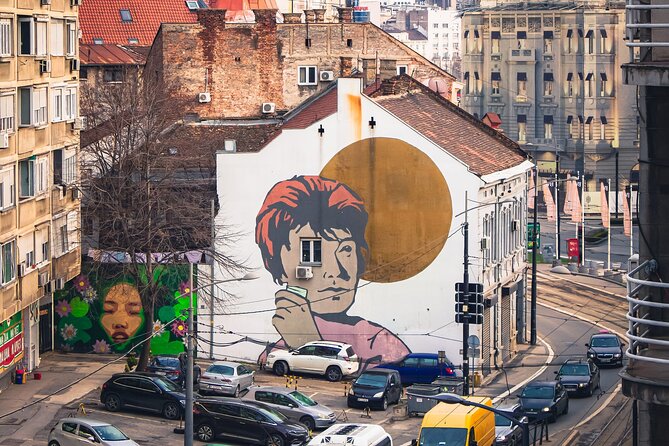
Terazije is a strong starting point because it puts you in the middle of the city’s daily rhythm. Before you even reach the first art venue, you’ll get context on what street art is doing here and why it matters.
This is also where the tour’s tone sets in: casual, curious, and focused on meaning. The guide’s job isn’t to lecture. It’s to help you notice what you’d normally miss, like how styles repeat, how themes show up across neighborhoods, and how different communities shape the visual language.
Stop 1: Magacin and its open-calendar culture
Magacin is an alternative cultural center and one of the oldest in Belgrade. It’s described as a street art hotspot and a place for culture and social activities, running on an open calendar model.
What you can expect here is more than a quick look at walls. This is a community space, so the art feels like part of ongoing life rather than a staged display. It’s also a good first stop because it helps you understand the “why” behind what comes next: this scene grows from people using spaces together.
A small watch-out: since it’s built around an open schedule, what you see during your visit can be different from another day. That’s not a problem—just don’t go in expecting a single fixed exhibit.
Stop 2: Karađorđeva 31 and a 2008 mural with deep references
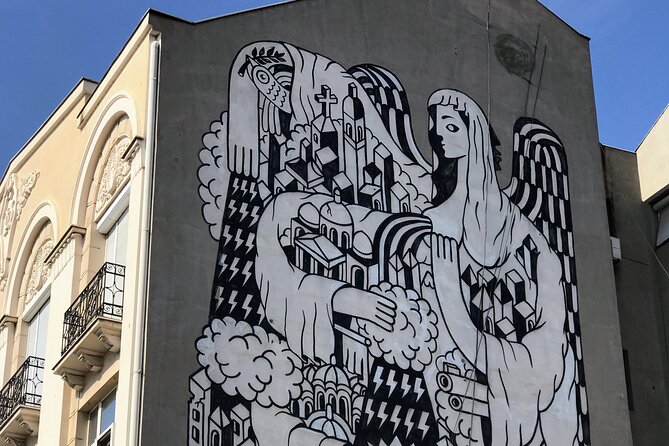
At Karađorđeva 31, you’ll see a mural painted in 2008 during the BELEF festival. The artist is French painter Guillaume Alby (REMED), and the work is inspired by Belgrade history and sacral art.
This stop is where the tour earns its “read the city” reputation. When you know what a mural is referencing—history, religious symbolism, festival culture—you start spotting layers everywhere else. The street art stops becoming isolated images and turning into a conversation between eras.
One consideration: if you’re only half paying attention, the artwork can look like another mural. Go in ready to look slowly. This is the place where that “read it like a story” approach pays off.
Stop 3: Belgrade Design District in a former 90s mall
The Belgrade Design District is a former shopping mall from the 90s, now occupied by young designers and artists. This is one of those transformations that makes street art feel practical, not just artistic.
What I like about this stop is the mix. You’re in an abandoned structure, but the energy isn’t dead. It’s repurposed. You’re seeing how creators take leftover architecture and turn it into workspace, display area, and a kind of street-level design statement.
Possible drawback: because it’s an occupied space, it can feel busy in parts. The tour time here is still about 30 minutes, so it’s best to keep moving with the group while you take in details—then do a second look later on your own if something really catches your eye.
Stop 4: Street Gallery and the art in a hidden passage
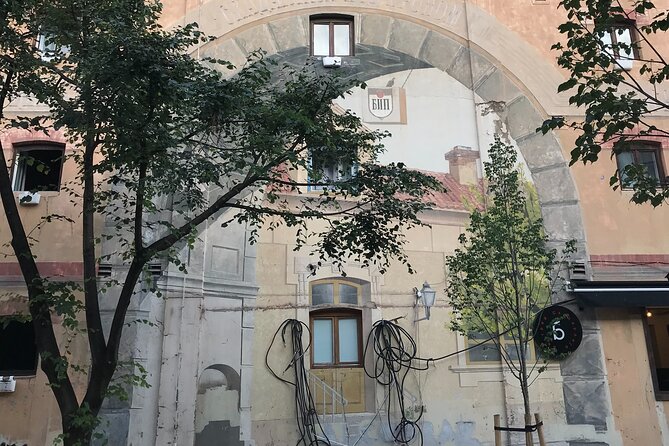
Street Gallery is an outdoor independent art gallery tucked into a hidden passage. The focus is on critical works from young artists.
This is a favorite type of stop for me because it changes your camera angle and your awareness. You’re not just walking past a wall—you’re moving through a corridor of intention. And since it’s an independent space, it often feels sharper and more opinionated than mainstream art displays.
Don’t expect it to be “major landmarks” energy. It’s more about ideas, tone, and what young artists are pushing back on. Take your time here if you like the feeling of art as commentary.
Stop 5: Cetinjska 15, a former brewery turned alternative hub
Cetinjska 15 is where the tour’s social side shows up. The former brewery has been transformed into an alternative hub with bars, clubs, galleries, and street art.
If you’ve wondered how street art ties to nightlife and daily community, this stop answers that. The point isn’t only to see art, but to see where people gather around culture—through music, conversation, and creative spaces.
Also, this is where the craft beer and handmade sweets opportunities tend to land. The tour says you’ll get a chance to try very fine craft beer and delicious handmade sweets, but remember: alcoholic beverages and snacks are not included in the tour price. Treat it like sampling—plan to pay if you want a beer, a sweet, or both.
A small practical thought: if you plan to drink alcohol, keep it light. You still want clear attention for the final stretch back to Terazije Fountain.
What makes the guide work here
The most praised part of the experience is the guide’s approach: energetic, informative, and heavy on historical background. The goal isn’t only to point at murals. It’s to explain meanings—how street art fits into urban space, and how themes connect across different places.
In a tour like this, that matters. Without context, street art can turn into a quick photo scavenger hunt. With context, it becomes a map of what people care about, what they resist, and how they remember.
I also like that questions get handled on the spot. If something feels confusing—why a symbol is used, why a style looks a certain way—this tour format is set up for you to ask and get straight answers.
How to get the most from this walk (quick tips)
You’ll cover several important sites in about three hours. To make that time count, I suggest:
- Look for recurring symbols and styles as you move between stops.
- Spend extra seconds on the mural details the guide names, not just the overall image.
- Wear shoes you can stand in comfortably for 30-minute windows of looking.
- Bring curiosity. If you’re the type who likes asking why something exists, this tour will reward you.
And if you like tasting local flavors, keep a small budget for a craft beer or handmade sweets at the end. That’s part of the atmosphere here, even if it’s not included.
Who this tour suits best
This works especially well if you:
- Prefer stories over checklists.
- Like alternative culture and want to see it in real locations.
- Enjoy street art that has a message, not only decoration.
- Want a private, guided route so you can ask questions and set your pace.
If you only want big classical sights, this won’t match that mood. This tour is about Belgrade’s creative undercurrent—how the city thinks and talks through walls, design spaces, and reclaimed buildings.
Should you book this private Belgrade street art walk?
Yes—if your idea of a great day in Belgrade involves looking closely and learning what you’re seeing. The price is steep compared with group tours, but the private format plus a guided route through multiple meaningful stops makes it feel fair for the time and access you get.
I’d especially book it if you want the history behind the murals and the cultural scene behind the art spaces. Just go in with the right expectations: you’ll be doing a walking tour, and beer/snacks are opportunities, not included extras.
If you’re flexible, curious, and ready to read the city from street level, this is the kind of experience that makes Belgrade feel personal fast.