REVIEW · AARHUS
Street Art and Rooftops of Aarhus, Denmark
Book on Viator →Run by Aarhus City Guide · Bookable on Viator
Street art in Aarhus feels personal. This small-group walk turns public murals, sculptures, and installations into a story you can read as you go, with street-art storytelling and rooftop views led by Marina. One heads-up: it’s a walking tour, and you’ll want moderate physical fitness for the time on streets and stairs.
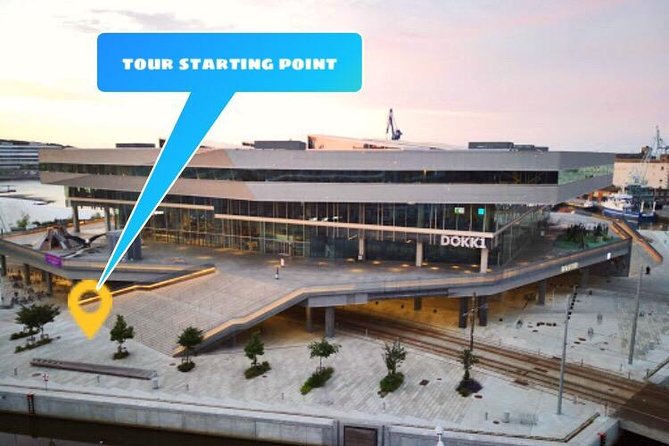
It starts at Dokk 1 (Europaplads 3) at 10:00 am and ends back at the same meeting point, with a mostly outdoor route and a few indoor moments along the way. You won’t need any paid entry tickets for the stops, and the guide keeps it in English—plus you can ask questions without feeling rushed (max 10 people).
In This Review
- Key things to know before you go
- Street Art and Rooftops: What You’re Really Getting
- Price, Time, and Group Size: Fast Facts That Matter
- Starting at Dokk 1: Harbour-to-City Momentum
- Latin Quarter to Rooftop Coffee: The Creative Side of Aarhus
- Old Industrial Site Turned Art Space: When the City Recycles
- City Hall Monuments and the Stories Behind Public Art
- The 2017 Viewpoint: A Rooftop Payoff With Serious Perspective
- How Marina Makes the City Make Sense
- What to Bring and How to Get the Most Out of It
- Who Should Book This Aarhus Street Art Walk
- Should You Book This Aarhus Street Art Walk?
- FAQ
- Where does the tour start?
- What time does the street art and rooftops tour begin?
- How long is the experience?
- Is the tour in English?
- How big is the group?
- Is it entirely outdoors?
- Do I need entry tickets for the places you visit?
- What’s included in the price?
- Are food and drinks included?
- Does it go back to the meeting point?
Key things to know before you go

- Max 10 people means a calmer, more personal pace.
- Marina often leads the tour, and people consistently praise her art-and-city context.
- Harbor → Latin Quarter → modern art spaces → city center → back to the water, so you see several Aarhus “faces” in one loop.
- Street art, graffiti, murals, and installations are explained as messages, not just decoration.
- A viewpoint opened in 2017 is part of the route, and it’s timed for a big payoff at the end.
- Some stops are not fully outdoors, so you’re not stuck in one weather situation the entire time.
Street Art and Rooftops: What You’re Really Getting
This is an art walking tour with a clear purpose: you’re not just seeing murals—you’re learning how artists use the city as a canvas and how Aarhus responds to that.
The best part is the guide’s “how to look” lens. You’ll hear context as you move—what a piece is doing, how it fits local neighborhoods, and why public art often carries more than one layer of meaning. That matters, because street art can look random if you only glance while walking. With the commentary, you start noticing details like style choices, recurring themes, and how installations interact with the buildings around them.
Then there are the rooftops. Aarhus has a way of mixing old streets with modern creative energy, and the tour uses that contrast on purpose. When you climb for a view, you’re not just sightseeing—you’re getting a different scale on the same neighborhoods you just walked through.
If you like your travel experiences to be more than photos—if you enjoy “why is that there?”—this tour clicks quickly.
Price, Time, and Group Size: Fast Facts That Matter

The tour costs $63.20 per person and runs about two hours. Some people report a longer stroll at a relaxed pace, so mentally plan for roughly that window plus a little room for questions.
Value-wise, I think the price makes sense because you’re paying for a professional guide who can connect art to place. Street art is everywhere, but it’s not always easy to interpret. This tour gives you that “decoder ring,” plus it’s limited to 10 travelers max, which keeps the group moving at a human pace.
You’re also not paying extra for attractions along the route. The tour notes that no entry tickets are required for what you visit, though the tour isn’t fully outdoors. That combination—guided context plus no ticket add-ons—usually feels fair.
Timing check: it departs at 10:00 am. Morning tours can be ideal for photos and for keeping your energy steady before lunch plans take over.
Starting at Dokk 1: Harbour-to-City Momentum
You begin at Europaplads 3, Dokk 1, the city’s multimedia center. It’s a good start point because you’re immediately near the water and in the modern part of Aarhus where new and old start sharing the same frame.
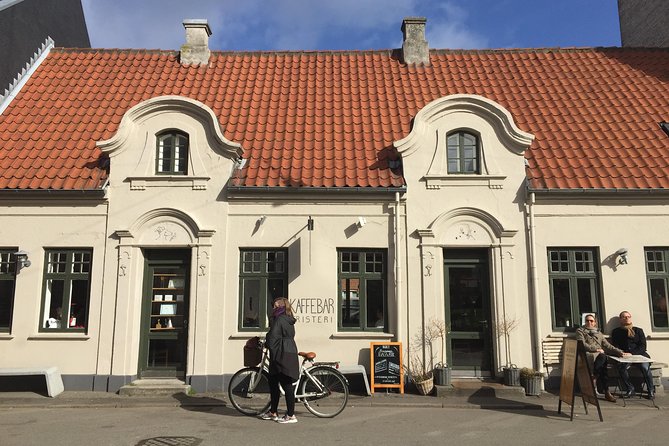
From there, the walk runs toward the Latin Quarter area with its older, charming houses. That shift is part of the point. You’ll see how public art behaves differently depending on the street character around it—narrower streets and historic facades change what murals feel like, and the stories you hear can follow that mood.
Practical tip: put on shoes you trust. The tour is designed for walking between stops, including viewpoints and rooftops. If you’re the type who stops to read every sign and then looks back at the map, you’ll still be fine—you just might enjoy the pace even more.
Latin Quarter to Rooftop Coffee: The Creative Side of Aarhus
As the route moves through the Latin Quarter, you get a change in texture: less “museum route,” more neighborhood wandering. One stop is a hipster hangout built around freelancers and creatives—where the tour includes a rooftop coffee vibe (even if you skip the drink, you’ll understand the reason for the moment).
Why this matters: rooftop stops aren’t random breaks. They’re a chance to see how people use space differently in the same city. Street art often gains power when you look at it from multiple angles—up close for details, then from above to understand placement and flow.
Also, rooftops help you get oriented quickly. Aarhus can feel like it has a few distinct “zones,” and this tour uses the climb to stitch them together in your mind.
If you’re doing Aarhus for the first time, this is where the city starts to feel like a place you could return to—not just a schedule you pass through.
Old Industrial Site Turned Art Space: When the City Recycles
After the Latin Quarter energy, the tour heads to an old industrial site that’s been transformed into a modern art space. That contrast—industrial bones becoming cultural rooms—is a theme you’ll keep seeing in Aarhus.
This stop is a big deal for two reasons:
- Street art meets institutions. You’re moving from outdoor works like graffiti, sculptures, and murals into a space that carries art culture inside its walls.
- The setting tells a story. Industrial buildings often make art feel more “grounded,” because the structure was built for work first. When it becomes an art venue, the old purpose and the new purpose overlap.
For art lovers, it’s a satisfying mid-tour pivot: you go from “reading the city” to “stepping into the part of the city where art lives.”
A small consideration: industrial-to-art venues can involve uneven ground or a bit of walking between areas. Nothing extreme is indicated, but if you’re sensitive to stairs or cobbled paths, plan extra care with footwear.
City Hall Monuments and the Stories Behind Public Art
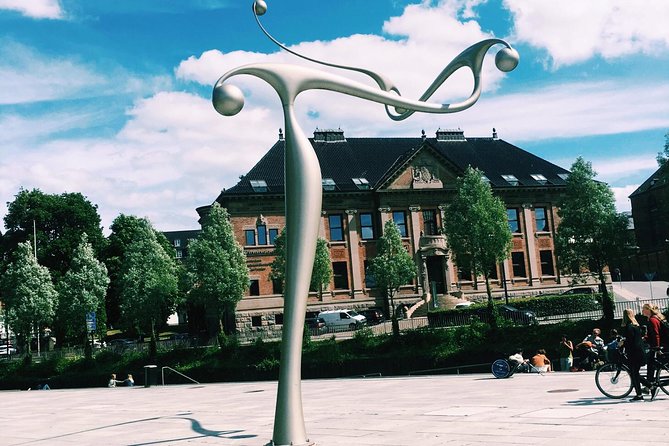
As you reach the official city centre, the guide ties public art into landmarks and monuments—especially around City Hall. This is where the tour helps you move from “what did I see?” to “what does it mean in this city?”
You’ll hear commentary about monuments and the city’s layout, and you’ll keep spotting different kinds of art along the route:
- sculptures in public spaces
- graffiti and murals with clear messages
- installations that invite you to look again
The twist is that you’re not only observing the artwork itself. You’re learning how artists communicate in shared spaces—how they respond to community, and how a piece can change how you interpret a familiar street.
This part is also great for people who don’t consider themselves “street art experts.” You don’t need background knowledge; the guide helps you read the city through the artists’ choices.
The 2017 Viewpoint: A Rooftop Payoff With Serious Perspective
One highlight comes near the end: a viewpoint that opened in 2017. The tour specifically points out that it’s already drawn millions of visitors, and you’ll see why once you’re up there.
Why this viewpoint works in the flow of the walk:
- You’ve spent the earlier part looking at art at eye level.
- Now you’re looking down and out, which changes how you understand where those pieces belong.
- You can connect the harbor, the city center, and the older streets into one bigger picture.
It’s also a nice emotional payoff. A good walking tour doesn’t just end with a stamp—it ends with a feeling. This viewpoint gives you that.
Practical note: view points can mean stairs and exposed angles depending on the setup. The tour isn’t sold as a full outdoor endurance hike, but it does sound like you should be ready to climb a bit to reach the best angle.
How Marina Makes the City Make Sense
A strong theme across the tour feedback is the guide’s storytelling—especially around art details and the history/culture that supports them. Marina is named often, and people highlight how she helps you spot subtleties: style choices, messages behind the pieces, and the way building design and street context shape what you see.
That’s not just pleasant. It’s the practical difference between:
- seeing a mural and moving on
vs.
- leaving knowing why it exists and how to recognize similar work elsewhere.
The tour also seems to be built for questions. In a small group, it’s easier to pause without slowing everyone down. If you like learning in motion—asking, listening, then looking again—this tour supports that style of travel.
And it’s not only art. Several comments mention the guide adding extra context about Aarhus itself—buildings, quirks, and cultural details that make the city feel more legible.
What to Bring and How to Get the Most Out of It
Because this is a walking tour with rooftop and viewpoint components, you’ll get more from it with simple prep:
- Wear comfortable shoes with good grip.
- Bring a camera or phone for murals and rooftops, but also keep time for looking without filming.
- If you’re sensitive to weather, bring a light layer; the tour is not described as fully outdoors.
- Bring curiosity. The tour is structured so the guide’s commentary matters most when you’re paying attention.
Food and drinks aren’t included, but the rooftop stop suggests you’ll have a natural moment where a café option could fit the mood if you want one.
Who Should Book This Aarhus Street Art Walk
I’d send you if you match any of these:
- You love public art and want the stories behind it.
- You enjoy architecture and want context tied to what you see.
- You like smaller-group tours where you can ask questions.
- You’re short on time and want multiple parts of Aarhus in one loop: harbor, Latin Quarter, city center, and a high viewpoint.
You might reconsider if:
- Long walks and a moderate level of mobility are an issue for you.
- You prefer totally indoor experiences (this one includes outdoor walking, even if it’s not exclusively outdoors).
- You only want “iconic sights” and not the slower, interpretive kind of art wandering.
Should You Book This Aarhus Street Art Walk?
Yes—if your goal is to see Aarhus through the lens of artists, not just through a list of landmarks. The price feels fair for what you get: a professional guide, small group size, no extra entry tickets, and a route that connects harbor neighborhoods, Latin Quarter charm, an industrial-to-art transformation, city-center monuments, and a viewpoint opened in 2017.
If you’re an art lover, the guidance is the real product here. And if you’re trying Aarhus for the first time, the route structure gives you a strong “map in your head” by the time you reach the top.
If I had to give one practical booking tip: choose this tour when you have energy for walking and when you can actually slow down to look. This is one of those experiences where paying attention turns into the main souvenir.
FAQ
Where does the tour start?
The tour meets at Europaplads 3, 8000 Aarhus, Denmark (Dokk 1 area).
What time does the street art and rooftops tour begin?
It starts at 10:00 am.
How long is the experience?
The duration is listed as about 2 hours.
Is the tour in English?
Yes, it is offered in English.
How big is the group?
The tour has a maximum of 10 travelers.
Is it entirely outdoors?
No. The tour includes outdoor walking, but it’s not fully outdoors.
Do I need entry tickets for the places you visit?
No. No entry tickets are required for the attractions visited.
What’s included in the price?
The price includes a professional guide.
Are food and drinks included?
No. Food and drinks are not included.
Does it go back to the meeting point?
Yes. The tour ends back at the same meeting point.