REVIEW · BELFAST
Belfast Troubles Murals Street Art and Peace Wall Walking Tour
Book on Viator →Run by belfastology walking tours · Bookable on Viator
Belfast murals tell stories with teeth. This 3-hour walk connects street art with the big, complicated history of the city, then points you toward the peace work happening right now. I like that you’re not stuck looking at one style of wall art, you get community murals, international street artists, and political murals in a single route. I also like the local-guide approach, with a focus on how people live through trauma and try to rebuild. One thing to consider: the subject matter is heavy, and the guide’s style can feel intense if you’re hoping for a gentle, laid-back stroll.
You’ll cover a good chunk of West Belfast on foot, moving briskly between spots tied to the Troubles and to Belfast’s current healing efforts. The group stays small (up to 8), and there’s no microphone mentioned in guidance, so if you’re hard of hearing, bring your own patience and keep close. This is adults only (no under-18s), which helps keep the tone appropriate for the neighborhoods and stories you’ll hear.
In This Review
- Key things to know before you walk
- Why Belfast street art is a map of the Troubles
- Exchange Street West to the city’s mural spine: where you start and finish
- Stop 1: Cathedral Quarter murals, re-imaging, and the turn toward Peace
- Stop 2: Shankill Road Loyalist murals and local street art side-by-side
- Stop 3: Divis Street’s International Mural Wall and the global causes thread
- Stop 4: The Peace Wall viewing moment (and the ticket you must plan for)
- Stop 5: Bobby Sands mural in West Belfast and why it gets photographed
- The rest of the walk: more murals, more context, and small detours that matter
- Marti’s small-group style: fast pace, no microphone, and questions on a hard topic
- Price and value: is $36.11 worth a 3-hour Troubles-and-murals walk?
- Weather, shoes, and that practical Belfast packing list
- Who this walking tour suits best
- Should you book the Belfast Troubles Murals and Peace Wall tour?
- FAQ
- How long is the Belfast Troubles Murals Street Art and Peace Wall walking tour?
- Where does the tour start and where does it end?
- Is the tour offered in English?
- Are tickets mobile?
- Is the Peace Wall admission included?
- Is this tour suitable for children?
- How big is the group?
- What should I wear or bring?
Key things to know before you walk
- Small group (max 8): easier listening, more personal pacing, and less foot traffic in sensitive areas.
- Brisk walking pace: you should plan on staying with the guide; comfort matters more than fashion.
- Peace Wall isn’t included: you’ll need your own ticket for that specific stop.
- Hard history, framed by murals: the art is used as a guide to the past and the city’s recovery.
- English only: the tour is offered in English, with a clear local tone.
- Rain and cold can happen: layers and a waterproof outer layer will make the whole experience easier.
Why Belfast street art is a map of the Troubles
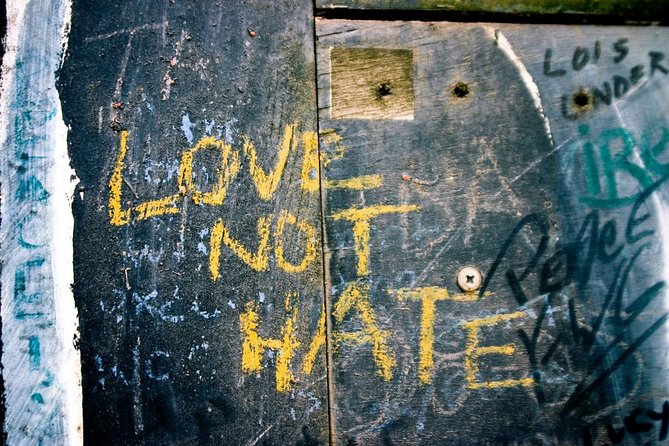
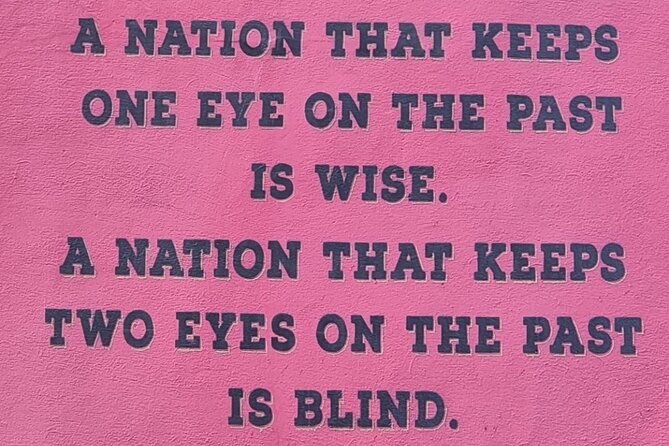
This isn’t a tour where you just spot impressive paint and call it a day. The whole point is that Belfast’s murals are like a public language. They mark identity, loyalty, loss, and survival. They also mark change, because the city has kept producing new murals that communities want to see—often with a hopeful edge.
That’s why this kind of walking tour works. You’re seeing the art where it lives, not in a museum. And you’re learning how murals can be both memorial and message board: sometimes political, sometimes community-driven, and sometimes international in influence.
I also like that the tour links the Troubles to the present. Instead of pretending the past is over, it treats peace as work—something that has to be maintained, not just achieved once.
You can also read our reviews of more tours and experiences in Belfast.


Exchange Street West to the city’s mural spine: where you start and finish
You begin near Exchange Street West (Exchange St W, Belfast BT1 1), then your route winds across the city center and out toward West Belfast. Expect a finish back near the center, with options depending on where the tour ends for you: Kellys Cellers (32 Bank St, Belfast BT1 1DA), or a short continued walk toward City Hall at 2 Royal Avenue in a local community center.
Starting in a central area is practical. You can usually get there easily by public transport and then keep your day moving afterward without guessing complicated transfer plans.
Stop 1: Cathedral Quarter murals, re-imaging, and the turn toward Peace
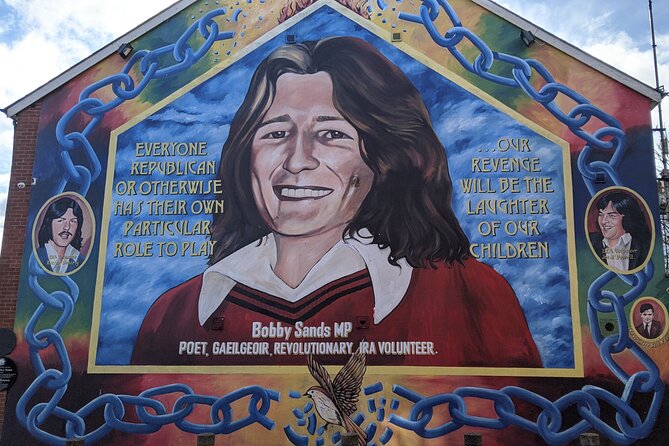
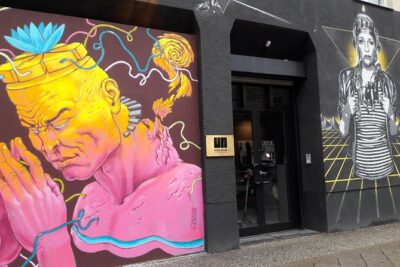
Your first major area is the Cathedral Quarter, a good place to start because it gives you contrast right away. You’ll see modern street art that includes international artists, then you’ll start heading toward the more controversial political murals in West Belfast.
This stop also includes a project called re-imaging. The idea (in plain terms) is simple: put up street art or murals that local communities want, so the walls reflect what residents choose to share with the people passing by. That matters because it reframes the question from What happened here? to What are people choosing to show now?
One practical advantage of starting in this zone: it helps you train your eye. Early on, you can spot patterns—styles, symbols, recurring themes—before you hit the more emotionally charged walls later.
Stop 2: Shankill Road Loyalist murals and local street art side-by-side
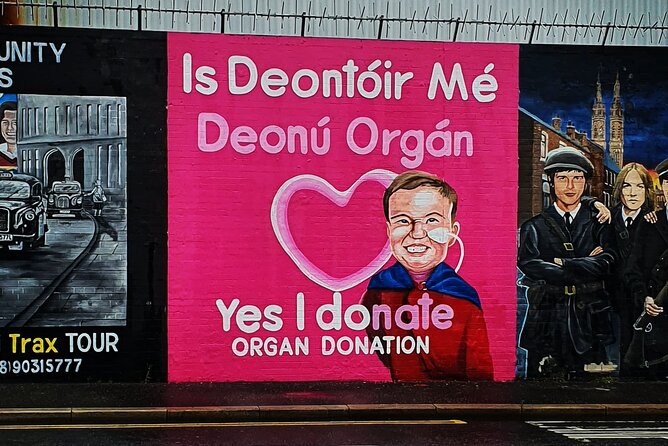
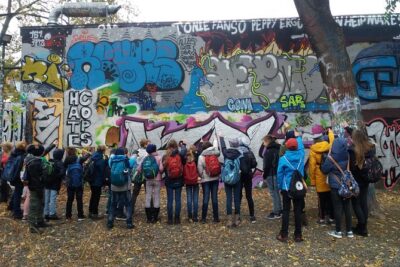
Next comes Shankill Road, focused on Loyalist murals alongside local street art. This part is where you start noticing how neighborhoods speak through images. You’ll be looking at walls that carry strong meaning for the people who live nearby, and you’ll also see how street art can sit next to political mural traditions.
The value here is balance in the route. You’re not only seeing one side. The tour is designed so you walk through multiple perspectives tied to the city’s conflict—and you do it on foot, which helps you understand the neighborhood scale. You’re not just viewing art behind a fence; you’re seeing it in the rhythm of real streets.
Stop 3: Divis Street’s International Mural Wall and the global causes thread
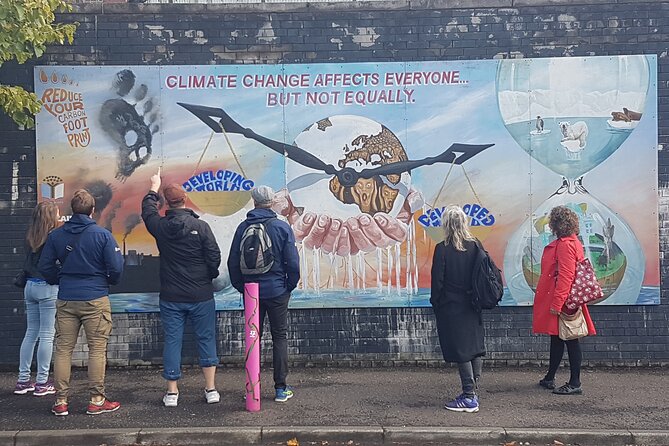
At Divis Street (International Mural Wall), the focus shifts outward. Here, you’ll view murals for causes from around the world. That global lens matters because it shows how Belfast’s local story connects to broader movements and shared human themes: injustice, solidarity, memory, and change.
This is also a nice breather spot in the narrative. After Shankill Road’s strong political visuals, Divis Street gives you a chance to look at the murals as part of a wider conversation. You may not agree with every message (nobody expects agreement on a topic like this), but you’ll understand the way art becomes a tool for public belief.
Stop 4: The Peace Wall viewing moment (and the ticket you must plan for)
The route includes a look at the Peace Wall, which separates communities. The timing on this stop is short—about 10 minutes—so don’t expect a long, sit-down explanation. The goal is visibility: you’ll stand where the separation is physically present and hear what that means in day-to-day life.
Important detail: the Peace Wall ticket is not included. So if you want this part to go smoothly, plan ahead and budget for it. Also, dress for weather. Even in mild months, walls and open viewing areas can feel colder or windier than you expect.
This is one of those moments where street art stops being just art. It turns into a checkpoint for understanding. The wall isn’t a symbol; it’s a reality that shaped lives and still influences how people move and communicate.
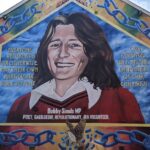
Stop 5: Bobby Sands mural in West Belfast and why it gets photographed
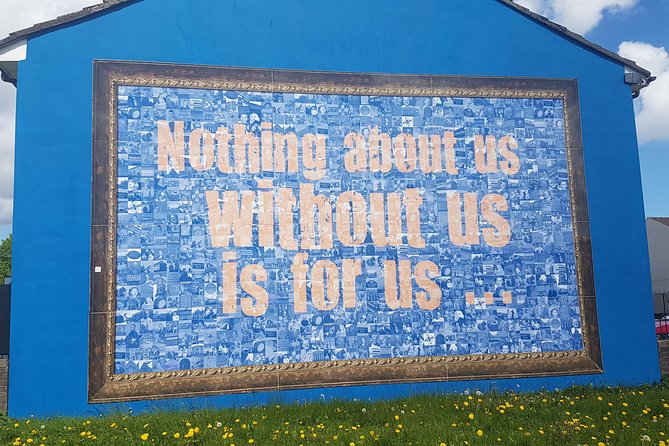
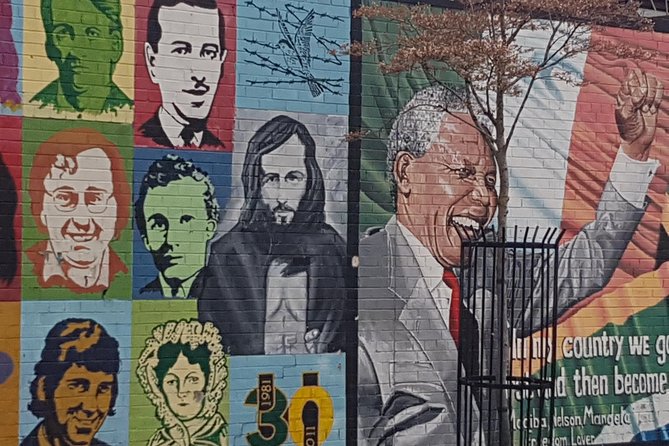
Your last mural anchor is the Bobby Sands mural in the Republican area of West Belfast. It’s described as the most photographed mural in that area, and you’ll likely understand why as soon as you’re there. The image has become a recognizable emblem—one that visitors photograph for its symbolism as much as for its visual impact.
Even if you come in with limited knowledge, the tour frames why this mural carries weight in the community. It’s not just naming a person; it’s talking about history, identity, and how memory gets painted into the city.
If you’re sensitive to emotionally intense content, this stop is where you’ll feel it most. Give yourself time to look and not rush the moment. The mural is powerful because it compresses a long story into one wall.
The rest of the walk: more murals, more context, and small detours that matter
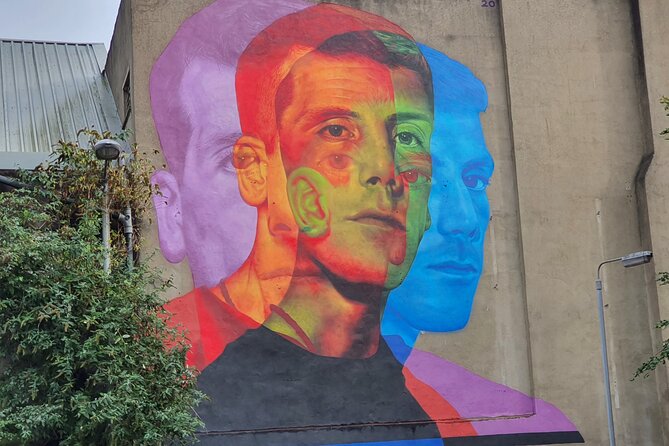
After the main stops, the walk finishes back in the city centre and you’ll pass additional street art and political murals along the way. That extra material is more than filler. It helps you connect the dots you heard earlier and lets you compare how different walls tell stories in different styles.
You also get the practical benefit of walking: neighborhoods make sense when you’re moving through them. A mural can look like a stand-alone artwork from a distance, but close-up, it shows details—text, symbols, placements—that only become clear when you slow down on foot.
Marti’s small-group style: fast pace, no microphone, and questions on a hard topic
The tour runs with a local guide (commonly identified as Marti), and group size is kept at up to 8 travelers. That tends to improve the feel of the tour. You’re not drowned by noise and you can often hear explanations more easily when you’re close.
Now for the real-world considerations. Multiple notes describe a brisk pace and a need to keep up. One detail to take seriously: there’s no microphone mentioned in guidance. So if you rely on amplification, plan to stay near the guide and be ready for a higher-than-average walking tempo.
Also, the subject matter is complex and sensitive. The tour is designed as an introduction, not a courtroom debate. Still, some people might experience the guide’s approach as direct or opinionated. If you tend to want lots of open discussion, it helps to come in ready to listen first, then ask follow-up questions at natural breaks.
Price and value: is $36.11 worth a 3-hour Troubles-and-murals walk?
At $36.11 per person for about 3 hours, this is priced in the realm of a solid guided walking experience. What helps justify it is the mix of included elements:
- A local guide who connects murals to the lived history and peace-building work
- Multiple stops across West Belfast rather than one bubble neighborhood
- Community murals plus international and political street art
- Shopping and restaurant discounts are provided (even if you don’t cash them in, it’s a nice bonus)
The main value trade-off is that the Peace Wall viewing needs its own ticket. Also, because this is an adults-only, heavy-topic route, you should expect a more serious tone than a casual street-art hunt.
If you want a basic photo tour, this may feel like more than you asked for. If you want to understand why the walls look the way they do, and why the Peace Wall exists in the first place, this price feels fair.
Weather, shoes, and that practical Belfast packing list
This tour is outdoors and the guidance is straightforward: it can rain, and it can be colder than you’re used to in that part of the world. Come layered, and bring a waterproof jacket if you’ll be out in the elements.
Also bring comfy walking shoes. Expect plenty of walking—one note describes a route around a bit more than 6 km in 3 hours, though your exact distance can vary based on how the group moves and route flow. Either way, treat it like a real walking outing.
Sunglasses are optional since there can be strong sunlight at times, and sunscreen in summer is smart. The more you’re prepared, the more you can focus on learning instead of bracing against weather.
Who this walking tour suits best
This is a great fit if you:
- Want a real neighborhood walk instead of bus-only sightseeing
- Like to understand the story behind what you see on walls
- Are comfortable with heavy history presented in an explanatory, narrative way
- Prefer small groups and a guide who speaks directly to the topic
It may not be the best fit if you:
- Want a fully lighthearted street-art tour with no serious context
- Get frustrated by a brisk pace and lots of information packed into a few hours
- Need constant flexibility for mid-walk breaks (the tour’s stops are timed and designed as a route)
Should you book the Belfast Troubles Murals and Peace Wall tour?
I’d book it if your goal is to understand Belfast beyond headlines. The big strength is the pairing of murals + neighborhood context + peace-building framing, all on foot. You’ll leave with clearer mental maps: where different symbols come from, why the city still carries visible boundaries, and how people are trying to reshape public space with new community art.
I’d think twice if you hate intense topics, dislike fast walking, or want long pauses at each stop. This tour is structured for movement and learning, not for slow strolling.
If you’re ready for a guided walk that treats art as evidence of real life, this is a strong choice for a first serious look at Belfast.
FAQ
How long is the Belfast Troubles Murals Street Art and Peace Wall walking tour?
It runs about 3 hours (approximately).
Where does the tour start and where does it end?
It starts at Exchange Street West (Exchange St W, Belfast BT1). It ends at 32 Bank St, Belfast BT1 1DA, with an alternative short walk toward 2 Royal Avenue in a local community center.
Is the tour offered in English?
Yes, it is offered in English.
Are tickets mobile?
Yes, it includes a mobile ticket.
Is the Peace Wall admission included?
No. The Peace Wall ticket is not included for that stop.
Is this tour suitable for children?
No. It is adults only (not suitable for under 18s).
How big is the group?
The tour has a maximum of 8 travelers.
What should I wear or bring?
Dress for possible rain and cooler temperatures. Comfortable shoes are important since the walk is brisk and covers a fair distance. Sunglasses are optional, and sunscreen can help in summer.