REVIEW · MELBOURNE
Melbourne Street Art Quest: Self-Guided Urban Story Game
Book on Viator →Run by Questo · Bookable on Viator
Melbourne walls become a real-time puzzle. This self-guided game has you use your phone to follow clues and reveal the story behind some of the city’s best street artworks, without needing a map or a tour guide.
What I like most is the 15 street-art-inspired puzzle challenges built into the route, with a story thread tied to Melbourne’s graffiti scene. I also like that the walk connects well-known laneways to meaningful public art, including AC/DC Lane, Meyers Place, and Parliament Gardens.
The one thing to watch: if you want everything to be perfectly straightforward, this can feel harder than expected. A couple people flagged that one clue may not match what they saw, so bring patience and keep your eyes on small details.
In This Review
- Key things to know before you go
- Street-art treasure hunt, no map needed
- Starting at 3 Hosier Lane and AC/DC Lane’s music walls
- Meyers Place and the Green Your Laneways clue trail
- Parliament Gardens and Coles Fountain’s three-metre water frame
- Collingwood’s Haring mural and why survival matters
- RONE’s Never Enough and Wonderlust text: spotting the details
- Price, pace, and when this self-guided format shines
- Practical tips to keep the clues moving
- Finishing in Fitzroy: plan your ride home
- Should you book the Melbourne Street Art Quest?
- FAQ
- How long does the Melbourne Street Art Quest take?
- Do I need a map or GPS to do the quest?
- Where does the quest start?
- Where does the quest end?
- What’s included with the price?
- Is there a physical tour guide?
- Is it private for my group?
- What are the opening hours?
- Can I cancel and get a refund?
- Are service animals allowed and is it near public transportation?
Key things to know before you go
- A phone-led street-art quest where you solve questions at each stop rather than just look around
- 15 puzzle challenges mixed into a simple storyline through Melbourne’s graffiti scene
- No map or GPS required, since the app guides you step by step
- A route with variety, from music-themed laneways to public-art landmarks like Coles Fountain
- Self-paced with pause and resume, so you can slow down if you spot extra details
- One-way walking route that finishes in Fitzroy, not back where you started
Street-art treasure hunt, no map needed
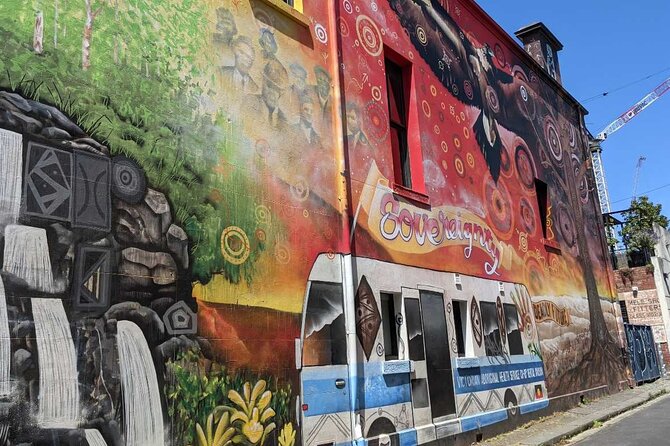
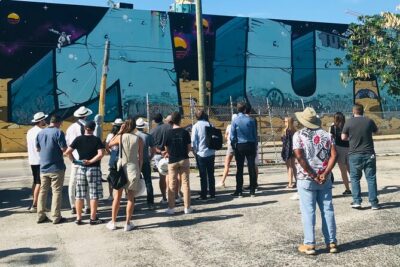
This isn’t a standard guided walk where you follow someone and listen. It’s more like a city game: you walk from stop to stop, and at each one you answer a question, solve a challenge, or make an informed guess based on what you’re seeing.
You do it all from your phone. The experience is designed so you do not need GPS, a map, or a live guide. Instead, the app handles the directions and the timing of each clue. You also get the ability to pause and resume, which is a big deal in real life, since street art depends on lighting, crowds, and whether you’re in an explore mood.
At 1 hour 15 minutes (approx.), it’s short enough to fit into a day already packed with sights. And at $7.28 per person, it’s also priced like an activity you can take a chance on—especially if you like problem-solving as you travel.
You can also read our reviews of more tours and experiences in Melbourne.

Starting at 3 Hosier Lane and AC/DC Lane’s music walls
You start at 3 Hosier Ln, Melbourne VIC 3000. From there, the flow is handled by the Questo app, which guides you step by step to a point called the Ceramic seats. When a tour starts with app-led wayfinding like this, you’ll want two things ready: your phone fully charged and the access code you use to begin the quest.
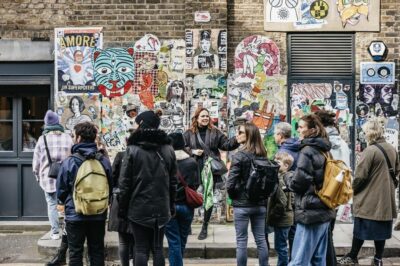
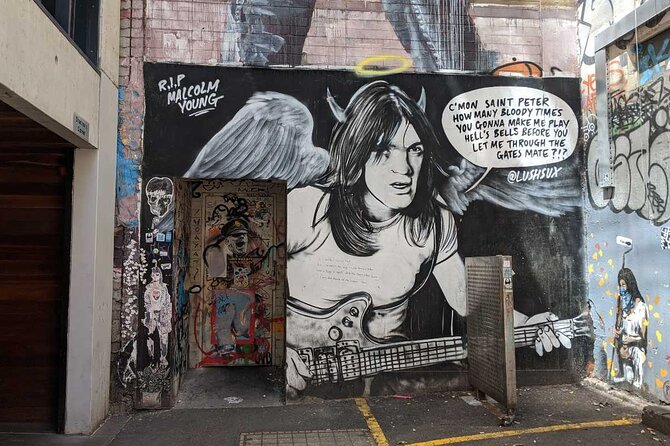
One of the first standout stops is AC/DC Lane, a laneway dominated by music legend street art. The lane was named for the band in 2004, and it also connects you to a famous music pocket in the area—Cherry Bar. For me, that kind of context matters. You’re not just hunting for paint; you’re hunting for meaning tied to Melbourne’s music culture and the way audiences linger around icons.
What you’ll do here: look around closely and find the answer to the challenge question. That means you’ll naturally slow down and scan the walls instead of walking past them like background decoration. If you enjoy reading visual clues—like specific lettering, colors, or small references—this kind of first stop sets the tone nicely.
Meyers Place and the Green Your Laneways clue trail
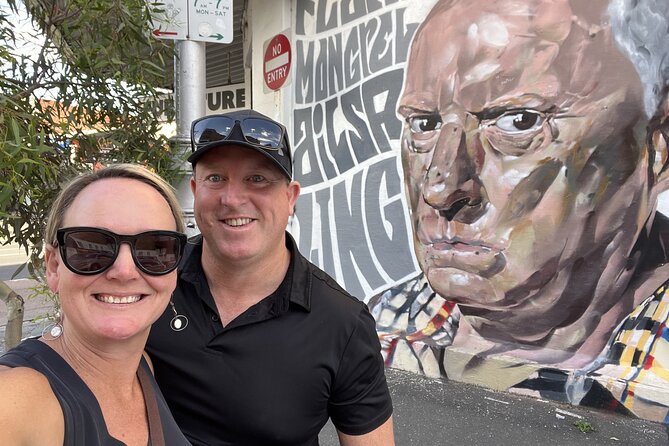
Next up is Meyers Place, connecting Little Collins and Bourke up near the top end of town. The laneway has also been tied into the city’s Green Your Laneways campaign as one of the pilot projects, which gives you a different lens on street art: it’s not only about expression, but also about how cities shape and manage laneways.
This stop works well if you like a bit of contrast. You get an urban-art wall scene, but you’re also aware that the laneway itself is part of an ongoing public initiative. In other words, the art is living inside an active streetscape, not sitting in a museum container.
For the quest component, you’ll again search the area for the detail needed to answer the prompt. Since the goal is to solve, not just look, you’ll probably start noticing things you might otherwise skip, like how text is placed, how certain elements frame the main imagery, or how parts of a mural connect visually across the lane.
A small practical note: if the day is hot, your eyes can get tired faster. One piece of advice that came up is simply to pick a cool day, because keeping up with clue hunts is easier when you’re not rushing and sweating.
Parliament Gardens and Coles Fountain’s three-metre water frame
Then the route shifts into Parliament Gardens, where you’ll find Coles Fountain. This is a striking change of pace because it’s not just wall-based street art. The fountain uses stainless-steel tubing to create a geometric frame about three metres high, with water cascading from it into the fountain area.
Why this matters for the quest: even though street art is the theme, the experience is really about training you to look for specific answers in the built environment. A geometric fountain gives you strong visual cues—lines, angles, and height references—that can help your brain stay in clue-solving mode.
You’ll pause and focus on what’s in front of you, then respond to the challenge tied to this location. If you prefer street art that’s more sculptural and public-facing, this stop is a good balance point. It also makes the walk feel less repetitive, since not every moment is a wall-to-wall mural moment.
Collingwood’s Haring mural and why survival matters
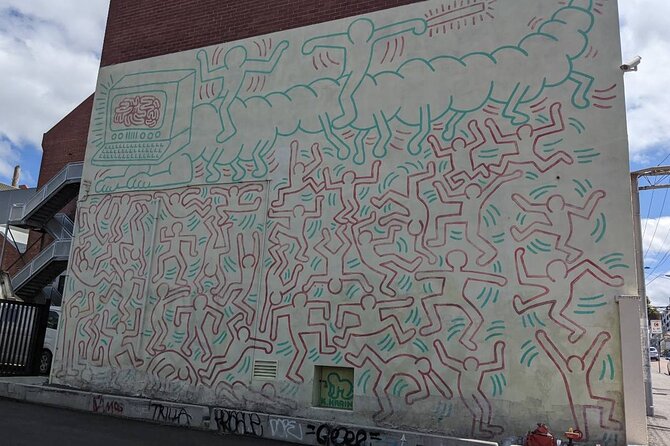
From public gardens, the story shifts into the kind of street art that has collectors and historians paying attention. You’ll reach the Collingwood mural, connected to Keith Haring.
Here’s the detail that makes this stop more than just a photo moment: the mural is described as one of only 31 known Haring murals worldwide that have survived, and one of only three that hasn’t been significantly over-painted. That’s huge. It means the artwork you see today is not only recognizable—it’s also unusually intact compared to what typically happens to large-scale street pieces over time.
If you like art that carries a record of what happened to it, you’ll probably enjoy this stop. You’ll slow down and look for what’s still there, which fits perfectly with a clue-based format: you’re forced to notice elements you might not catch in a quick glance.
At this point in the quest, you’ll answer a challenge tied to the mural. The experience encourages you to look closely enough to extract the information needed, which is exactly what you want when a mural’s survival is part of the story.
RONE’s Never Enough and Wonderlust text: spotting the details
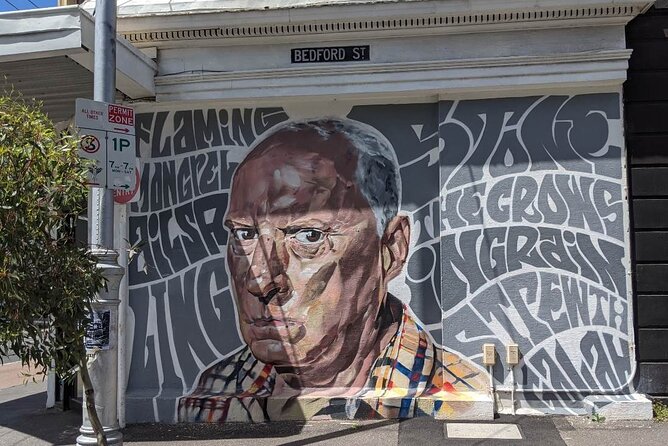
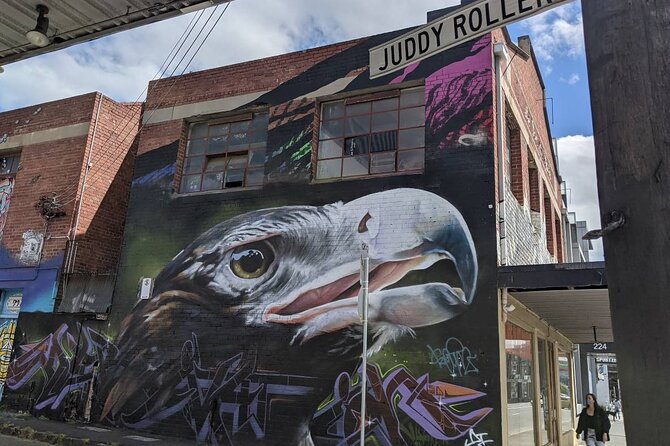
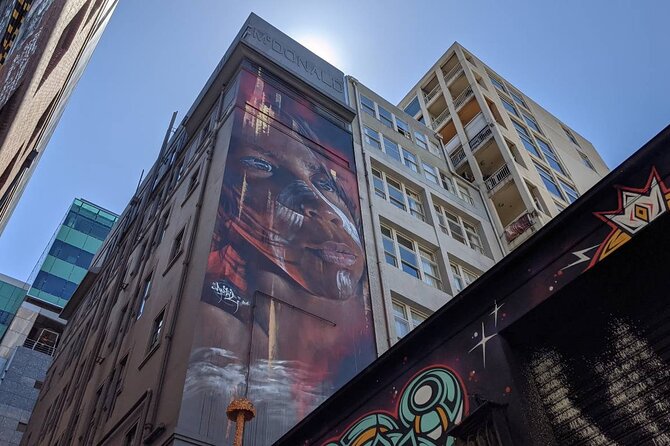
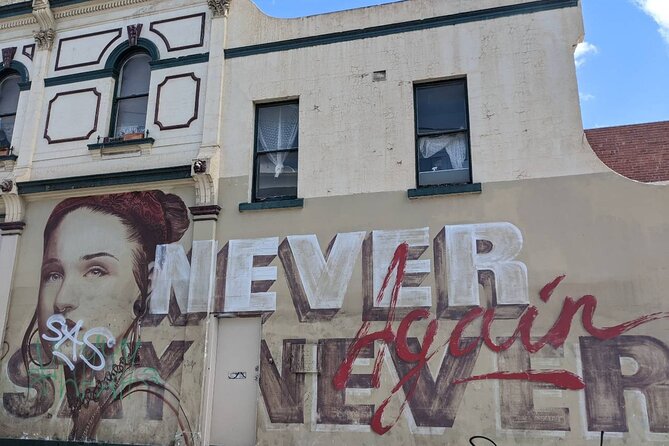
Another major mural stop is a work titled Never Enough, featuring a portrait-style piece by RONE. The experience also notes that the mural includes text painted by Wonderlust, so you’re not only looking at one artist’s image—you’re looking at a collaboration or layered contribution within the same visual scene.
This kind of stop is ideal for the way the quest is designed. Text is often the easiest clue to miss if you’re just scanning for the main portrait. But because the challenge asks you to find specific answers in the surroundings, you naturally read the wall the way you’d read a sign: letter by letter, placement by placement.
What to expect: you’ll look around to find the detail that matches the prompt, then submit or respond as the app asks. If you’re the type who likes to solve puzzles through observation, this stop is a strong payoff.
And since one review mentioned trouble when a later clue seemed inconsistent with what was present, I’d treat any text clues here as the moment to be extra careful. Take a breath, compare what you see to what the prompt is asking, and do not rush past the small stuff.
Price, pace, and when this self-guided format shines
At $7.28 per person for about 1 hour 15 minutes, this is one of the most budget-friendly ways to structure a street-art outing. You’re paying for the puzzle format: the app provides the mobile access code, the storyline content, and the 15 challenges that shape how you walk and look.
Is it good value? For many people, yes—because street art alone can turn into a scatter of random photos. This turns it into a sequence of moments where you’re rewarded for paying attention. It also gives you flexibility. You can pause and resume, which means you can stop for a coffee or regroup without losing the whole thread.
Where it might not fit as well:
- If you hate phone-based instructions while walking
- If you need a fully explained experience with a human guide correcting confusion in real time
- If you’re easily frustrated by puzzles that depend on exact details in the environment
A couple people did mention that the quest can be hard to keep up with and that one clue seemed to have a different answer than expected. That doesn’t mean the whole experience is broken, but it does suggest you should go in with calm expectations: this is interactive, not scripted perfection.
Practical tips to keep the clues moving
This experience is light on logistics and heavy on observation. So your best tools are simple.
First, prep your phone. Bring a charger or a power bank if your battery runs low, since you’ll want stable access as you move between stops. The route depends on the app flow, not on you figuring out your own navigation.
Second, give yourself time to read. The puzzle model is built around finding answers hidden in plain sight—often in text, symbols, or placement choices. If you skim too fast, you’ll miss what the prompt expects.
Third, when something feels off, do not panic. One of the concerns raised is that a clue might not match what someone sees at a later point. If that happens, slow down and double-check you’re looking at the right element. If it still seems inconsistent, the provider offers support through care at [email protected].
Lastly, choose the right weather. One practical suggestion from the experience feedback is to pick a cool day, which makes it easier to concentrate for the full 1 hour 15 minutes without rushing or getting drained.
Finishing in Fitzroy: plan your ride home
You start in the city center area at 3 Hosier Ln and end at 275 State Route 45, Fitzroy VIC 3065. That matters because this is not a loop. You’ll want to plan your next step before you begin—at least decide how you’re getting back after you finish.
The experience is also listed as near public transportation, which is helpful. You’ll likely find it straightforward to connect onward once you’re in Fitzroy, but you still want to avoid ending somewhere you didn’t plan for.
If you’re pairing this with other sightseeing, consider adding something nearby for after. Fitzroy is a different vibe than the central laneways, so your end time can feel like a natural shift to another part of the day.
Should you book the Melbourne Street Art Quest?
If you like street art and you also enjoy games, this is a smart low-cost way to see more than just the obvious murals. The big strengths are the puzzle-driven format, the short, self-paced duration, and the variety from laneways like AC/DC Lane to iconic public space like Coles Fountain. It’s also great for groups because it’s structured but flexible, with the option for group discounts and a private setup for just your group.
I’d skip it if you want a fully guided, no-questions-asked experience, or if you hate phone apps while walking. Also, given the limited feedback showing potential clue mismatch or difficulty keeping up, go in ready to slow down and solve rather than expecting the quest to be flawless at every step.
Overall, for $7.28, it’s worth trying—especially on a cooler day when you can focus and enjoy the hunt.
FAQ
How long does the Melbourne Street Art Quest take?
It takes about 1 hour 15 minutes.
Do I need a map or GPS to do the quest?
No. You don’t need a map, GPS, or a guide. You use your phone to follow clues.
Where does the quest start?
It starts at 3 Hosier Ln, Melbourne VIC 3000, Australia.
Where does the quest end?
It ends at 275 State Route 45, Fitzroy VIC 3065, Australia.
What’s included with the price?
You get a mobile access code to unlock the quest, 15 street-art-inspired puzzle challenges, storyline content woven through Melbourne’s graffiti scene, and the ability to pause and resume.
Is there a physical tour guide?
No. A physical tour guide is not included; it’s a self-guided activity.
Is it private for my group?
Yes. It is listed as a private tour/activity, so only your group will participate.
What are the opening hours?
It’s listed as open Monday through Sunday from 12:00 AM to 11:30 PM.
Can I cancel and get a refund?
Yes, there is free cancellation. You can cancel up to 24 hours in advance for a full refund.
Are service animals allowed and is it near public transportation?
Service animals are allowed, and it’s near public transportation. It also lists that most travelers can participate.