
Street art feels different when it comes with local stories. This New Orleans Culture Street Art & Mural Walk uses a tight route to show you Treme through real landmarks, not just photo ops. I like the personal touch of a private local guide (Hollis comes up in feedback), and I love that the tour includes photo help so you can actually frame the city you came for.
One possible drawback: this walk is time-focused (about 1 hour 20 minutes) and it depends on good weather, so plan around a forecast-friendly window and wear shoes you can move in.
In This Review
- Key Stops and What You’ll Get From Them
- Why This Street Art and Mural Walk Works in New Orleans
- A Practical Look at the Route: What Each Stop Adds
- Circle Food Market: Food, Memory, and a City That Keeps Rewriting Itself
- Charbonnet-Labat-Glapion Funeral Home: How New Orleans Remembers
- Kermit Ruffin’s Mother-in-Law Lounge in Treme: Jazz Culture With Real Context
- St. Augustine Church in Treme: Religion as Neighborhood Backbone
- Price, Value, and Why $20 Can Make Sense Here
- What “Private Tour” Means on the Sidewalk
- Weather, Timing, and How to Make the Walk Feel Easy
- Who This Tour Is Best For
- The Bottom Line: Should You Book This New Orleans Mural Walk?
- FAQ
- How long is the Nola Culture Street Art & Mural Walk Tour?
- What does the tour cost?
- Is this a private tour?
- Where does the tour start?
- Does the tour include admission tickets?
- What language is the tour offered in?
- Is the meeting point near public transportation?
- What happens if the weather is bad?
Key Stops and What You’ll Get From Them
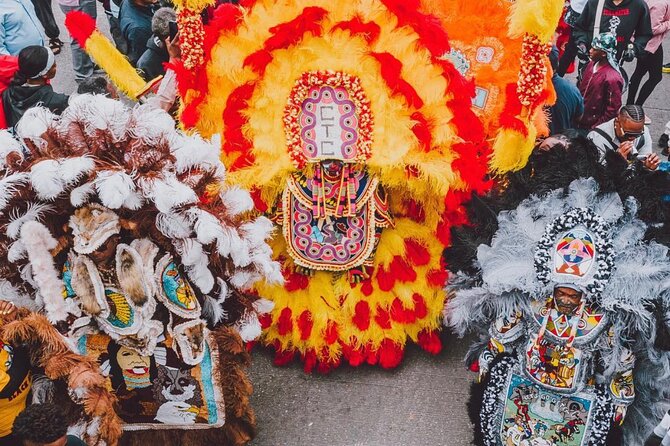
- Circle Food Market (ticket included): Food, community, and how a changing city leaves marks.
- Charbonnet-Labat-Glapion Funeral Home (ticket included): One of the oldest funeral homes, tied to politicians and celebrities.
- Kermit Ruffin’s Mother-in-Law Lounge in Treme (ticket included): Weekly jazz energy plus cultural context for what you’re seeing.
- St. Augustine Church (ticket included): Religion’s deep roots in the Treme neighborhood.
- Private guide with photo assistance: Clear pointers for angles, timing, and what’s worth focusing on.
Why This Street Art and Mural Walk Works in New Orleans
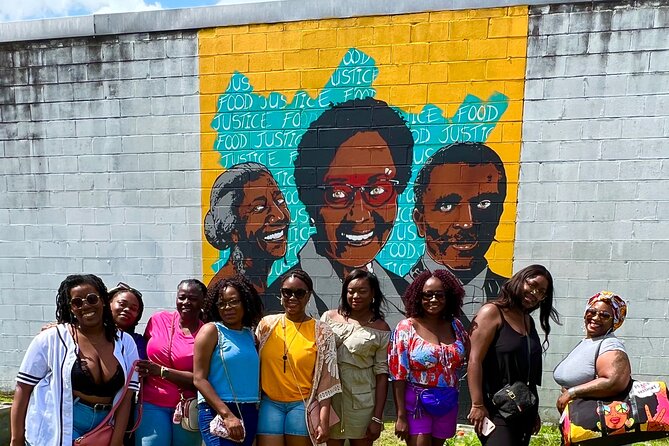
New Orleans has plenty of murals and plenty of tours that point at walls. This one feels different because it ties the visuals to places where the neighborhood’s daily life (and memories) still show up. You’re not just chasing artwork. You’re learning the “why” behind what’s on the street, and that changes how you notice details.
I also like the structure: four stops, each timed at about 20 minutes, with tickets included. That pacing matters in New Orleans, where heat, humidity, and sudden showers can turn a long walk into a cranky one. Here, you get a guided route that aims to keep things moving—without feeling rushed to the point you miss the point.
And because it’s private, you’re not sharing the guide with a huge group. That means you can ask quick questions on the sidewalk, get help adjusting your phone camera, and get local suggestions while you’re already in the neighborhood.
You can also read our reviews of more tours and experiences in New Orleans.



A Practical Look at the Route: What Each Stop Adds
This walk is built like a guided circuit. You start at 1137 Esplanade Ave and return there at the end, so you’re not stranded halfway through your own sightseeing plan.
The four stops do a neat job covering different sides of culture:
- community life and food memory,
- how the city handles death and public remembrance,
- music as identity (jazz in Treme),
- and faith as a neighborhood anchor.
That mix is a big part of the value. Street art can be visual poetry, but culture also lives in institutions. You get to connect the murals to the real-world places they sit beside.
Circle Food Market: Food, Memory, and a City That Keeps Rewriting Itself
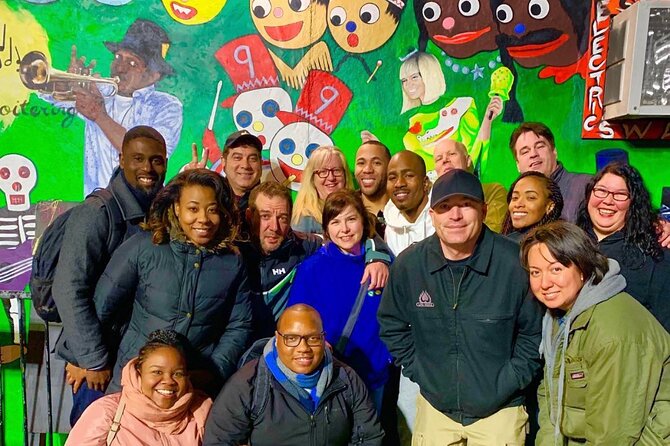
Your first stop is the Circle Food Market, a place tied to New Orleans’s past as a local food spot. The story here isn’t static. This location moved through phases: it was once vibrant, later marked by tragedies, and then shaped again through renovations as the city changed.
Why this matters for your street-art experience: murals don’t appear in a vacuum. When a neighborhood survives loss and keeps rebuilding, the walls often carry that emotional timeline. Even when the artwork isn’t telling a literal story, the setting teaches you to look for layers: what’s been repaired, what’s been replaced, and what residents still want remembered.
What to expect from the visit: about 20 minutes with the ticket included. You’ll likely get guidance on what kind of context to keep in mind as you move from this site toward the more musical and religious stops later on.
A small caution: if you’re hoping for a relaxed, long hangout, this opening stop is brief by design. It’s a “set the lens” moment, not a museum day.
Charbonnet-Labat-Glapion Funeral Home: How New Orleans Remembers
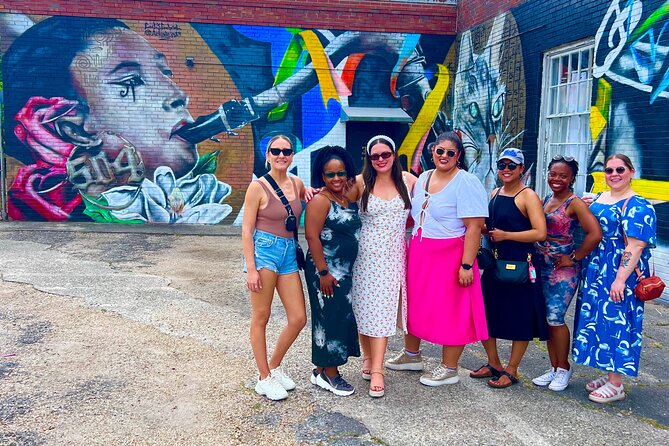
Next up is the Charbonnet-Labat-Glapion Funeral Home, described as one of New Orleans’s oldest funeral homes. The most useful detail here is that it’s not just a building—it’s a historical thread. It served politicians, celebrities, and people across the full range of New Orleans life.
This stop can surprise first-time visitors. Many cities treat death like a private event. In New Orleans, it’s often public, deeply ritualized, and tied to community identity. When you connect that with street art, you start to see how public memory shows up in unexpected places—on walls, in ceremonies, and in the way neighborhoods speak.
For photography: funeral homes often have strong architectural lines and exterior details that look great in different light. Since the tour includes help with taking great photos, you should be able to get practical guidance on angles and timing instead of guessing.
The drawback to keep in mind: if you prefer only upbeat stops, this one may feel heavier than you want on a walking tour. But it’s also exactly the kind of context that makes street art meaningful instead of random.
Kermit Ruffin’s Mother-in-Law Lounge in Treme: Jazz Culture With Real Context
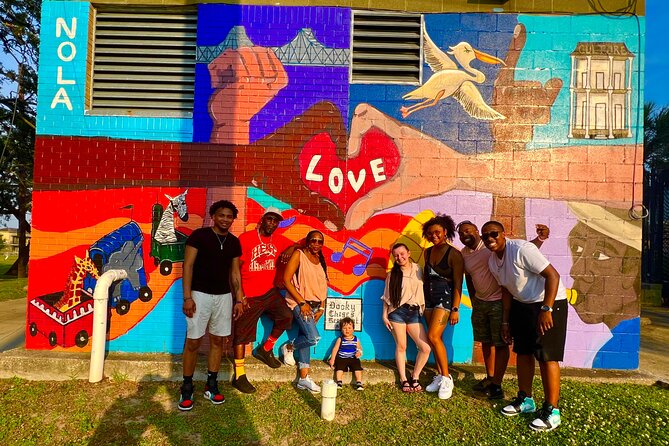
Then you move into Treme, with a stop at Kermit Ruffin’s Mother-in-Law Lounge. The big idea here is that music isn’t separate from daily life. Treme’s cultural past and its ongoing rhythm show up in the lounge space, where weekly jazz bands perform.
Even if you’re not there for a live set at that exact time, you’re still learning how the neighborhood’s identity stays alive through music. This is one of the best places on the route to connect art and sound. Street art in New Orleans often feels like music in visual form—rhythm, repetition, character, and personality all packed into a surface.
You also get more “how to look” help. With photo assistance included, you can ask for quick tips on what to capture: street corners versus building details, faces versus murals, and how to avoid distractions in your frame.
Time-wise, this stop is 20 minutes. It’s enough for context and a few photos, but not enough for a full lounge hang. Treat it as cultural orientation, then use your guide’s local suggestions to continue your night your own way.
St. Augustine Church in Treme: Religion as Neighborhood Backbone
Your final ticketed stop is St. Augustine Church. The focus here is simple and important: you learn about the deep roots of religion in the Treme area.
Why include a church on a street art and mural walk? Because in New Orleans, spiritual institutions often shape how neighborhoods function—what’s celebrated, what’s supported, and what communities carry forward. When you understand that backbone, murals don’t feel like decoration. They start to feel like neighborhood language.
This stop likely gives you another lens for noticing details. Churches can influence architecture, community gathering habits, and the placement of public art. Even if you don’t remember every fact, you’ll remember the feeling: this is where people connect on purpose.
Practical expectation: another 20 minutes with admission included, and then you head back to 1137 Esplanade Ave.
Price, Value, and Why $20 Can Make Sense Here

At $20 per person, this is priced in a way that’s easy to justify—especially because tickets are included at each stop. In other words, you’re not paying just for walking and storytelling. You’re paying for guided access tied to specific sites.
You’re also getting something that’s hard to price: a private local guide. One piece of feedback highlights Hollis’s strong city knowledge and his ability to share guidance on where to eat and how to enjoy the city like locals. Even if you only remember one or two practical suggestions, that can outweigh the tour cost quickly.
Two value notes I’d keep in mind:
- The total time is short, so you’re buying focus, not a half-day deep dive.
- If you want lots of stops or long museum-style pacing, this won’t fill that role.
In return, you get a smart “best-of cultural neighborhood circuit” that pairs well with a longer day elsewhere in New Orleans.
What “Private Tour” Means on the Sidewalk

A private tour can be marketing fluff. Here, the details matter: you and your group are the only participants, and the guide provides personal attention. That makes a noticeable difference in a city where the most useful info is often small and immediate.
You’re more likely to get:
- quick answers while you’re standing in front of the exact scene,
- guidance for better photos without blocking the flow of a big group,
- and the kind of local context that helps you pick where to go next.
That photo help is especially valuable if you’re traveling with a smartphone. It’s common to walk past good scenes because you’re too busy trying to frame them. With real-time tips, you spend less time fiddling and more time actually enjoying.
Weather, Timing, and How to Make the Walk Feel Easy
This experience requires good weather, which matters for both comfort and pacing. Since it’s a walk with multiple stops, you’ll want a forecast window where rain won’t force you indoors, and you’ll want to avoid trip-stuff like slick shoes.
A simple strategy:
- Check the forecast the day before and the morning of.
- Wear comfortable shoes you can move in for roughly 1 hour 20 minutes.
- Keep your phone charged enough for photos, because you’ll want to use the photo guidance.
Also, plan your day so you’re not rushing to catch another timed attraction immediately after the tour ends. When a tour includes cultural stops, you’ll likely want a little breathing room to process what you saw and then follow up nearby.
Who This Tour Is Best For
This street art and mural walk is a strong match if you:
- want to understand Treme beyond surface-level sightseeing,
- like culture stops that connect to the neighborhood’s identity,
- enjoy guided photo help (especially if you’re not a natural photographer),
- and prefer a compact, focused experience instead of a long, exhausting day.
It’s also a good choice if you like meeting a guide who can point you toward food and local fun once you’re out in the streets. The feedback about Hollis’s accommodating style points to a guide who doesn’t just talk history; he helps you actually enjoy the city.
Less ideal if you want a purely upbeat itinerary with lots of long stops, or if you’re booking with a schedule that can’t handle a weather-dependent plan.
The Bottom Line: Should You Book This New Orleans Mural Walk?
If you’re trying to balance authentic neighborhood culture with practical value, I think this one earns a spot. For $20, you’re getting a private guided route, photo assistance, and ticketed visits to four meaningful places tied to Treme and the city’s identity. That combination makes it feel like real itinerary help, not just a casual stroll.
I would book it if:
- you want street art context connected to real institutions,
- you’re traveling with someone who wants guidance (not just a map),
- and you’ll be flexible with weather.
I would hesitate if:
- you need lots of free time at each stop,
- you’re expecting a long, expansive route,
- or you’re traveling during a period when rain is likely to interrupt your plans.
FAQ
How long is the Nola Culture Street Art & Mural Walk Tour?
The tour runs for about 1 hour 20 minutes.
What does the tour cost?
The price is $20.00 per person.
Is this a private tour?
Yes. Only your group will participate.
Where does the tour start?
The tour starts at 1137 Esplanade Ave, New Orleans, LA 70116, USA.
Does the tour include admission tickets?
Yes. Admission tickets are included at each of the four listed stops.
What language is the tour offered in?
The tour is offered in English.
Is the meeting point near public transportation?
Yes, it is near public transportation.
What happens if the weather is bad?
This experience requires good weather. If it’s canceled due to poor weather, you’ll be offered a different date or a full refund.