REVIEW · PALERMO
Palermo: Street Art and Urban Life Walk
Book on GetYourGuide →Run by Epic Sicily Srl · Bookable on GetYourGuide
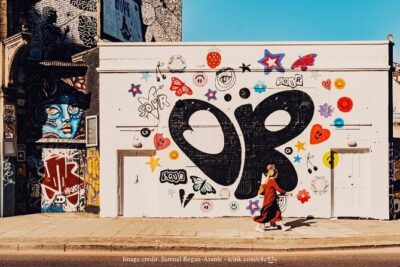
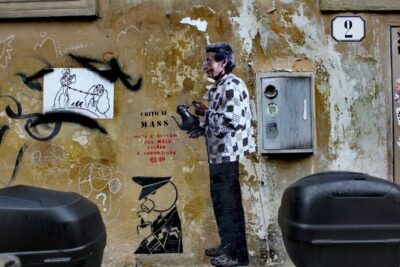
Palermo’s walls have a pulse. This street art and urban life walk gives you a real feel for how art sits in daily Palermo, not behind museum glass, with guide Elena leading you through places most visitors skip. I especially love the mix of big-name murals like TVBoy and Millo alongside the smaller, everyday details like painted shutters and street-corner scenes. You also get a tram ride out to Sperone, where the city’s creative energy feels more raw and local.
Two other things click fast: Elena connects what you see to the city’s broader cultural and political context, and the route uses natural “listening points” so the art makes sense as you walk, not as a random photo hunt. One possible drawback: this isn’t a classic monument-focused tour. If your main goal is big historic sights and must-see landmarks, you’ll need a different day for that.
In This Review
- Key points I think you’ll care about
- Meeting at Via Argenteria 20 in Vucciria
- Vucciria to Kalsa: murals, painted shutters, and street-level stories
- How Elena makes street art feel like culture, not decoration
- The tram ride to Sperone: using public transit for a new viewpoint
- Sperone’s big murals: Igor Scalisi Palminteri, Rosk & Loste, Medianeras, and Millo
- The walk segments that connect everything
- Gelato tasting: a small included break that fits the day
- Price and value: why $45 can work for this kind of day
- Who this Palermo street art walk is best for
- Practical tips so you get the most out of the 3 hours
- Should you book this Palermo Street Art and Urban Life Walk?
- FAQ
- How long is the Palermo Street Art and Urban Life Walk?
- How much does it cost?
- What’s included in the tour?
- Where does the tour start and end?
- What languages are available for the live guide?
- Is it wheelchair accessible, and what should I bring?
Key points I think you’ll care about
- Elena’s guide style mixes street art with context on how Palermo’s society and power structures shape the visuals you see.
- Vucciria and Kalsa on foot show you how murals live next to markets, shutters, and everyday routines.
- A real tram ride to Sperone changes your perspective from center-city bustle to the creative outskirts.
- Large-scale Sperone works include pieces by Igor Scalisi Palminteri, Rosk & Loste, Medianeras, and Millo.
- Small group size caps the experience at 10, so questions don’t get swallowed.
- Gelato tasting is included, which helps keep the 3-hour pacing friendly.
Meeting at Via Argenteria 20 in Vucciria
The tour starts at Via Argenteria 20, at Epic Sicily’s base in the Vucciria area. That’s a smart choice because you begin where people actually move through the city, not where visitors arrive on buses and disappear.
You’ll be in a small group, limited to 10 participants. It keeps the walk from turning into a slow parade and helps Elena steer you to the best spots as the neighborhood shifts.
Plan for the basics: comfortable shoes and a camera. Palermo can be sunny and uneven underfoot, and you’ll want time to look up and then step safely forward.
Vucciria to Kalsa: murals, painted shutters, and street-level stories
From the start, you work your way through Vucciria and then into the Kalsa area, mixing street art with normal urban life. You’ll spend about 30 minutes walking this first stretch, and it’s exactly the kind of time that makes you notice things. Murals aren’t treated like “objects”; they’re treated like part of the street’s daily conversation.
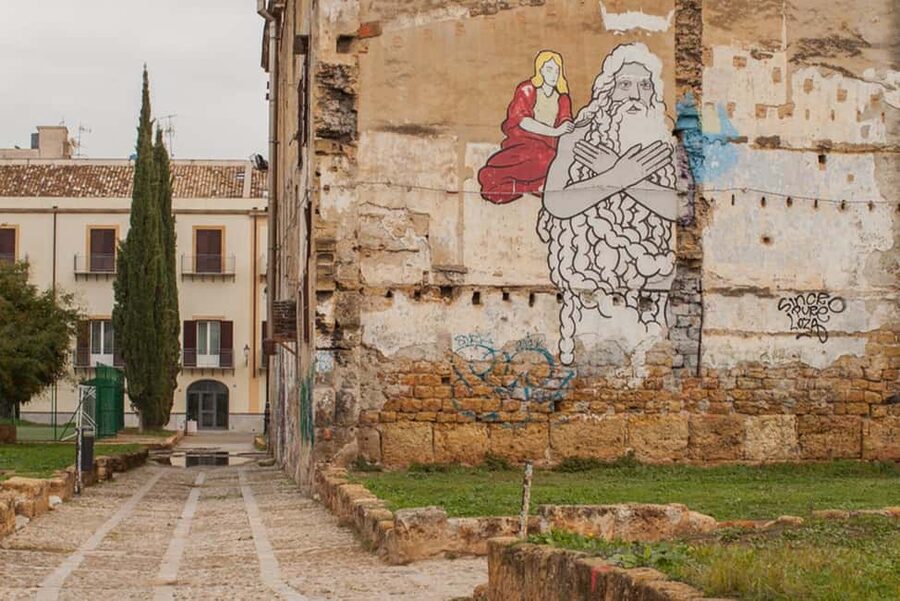
In this part of Palermo, you’re likely to see art credited to TVBoy and SID.Next, along with the kinds of painted shutters and walls that look like they belong to the block, not a planned photo spot. The best moments here are the ones where art blends into the corner you’d normally just walk past: a doorway, a shutter, a short alley where the paint changes the mood.
Then Kalsa brings a different rhythm. The neighborhood is quieter than the market area, and that matters because street art can feel louder when you’re surrounded by noise. In Kalsa, you get room to read what a piece is doing with space and attention.
A big plus is that Elena’s explanations tend to connect the work to place. You’ll hear what the art is saying and why it’s shown here, which changes how you look at even the smaller details.
How Elena makes street art feel like culture, not decoration
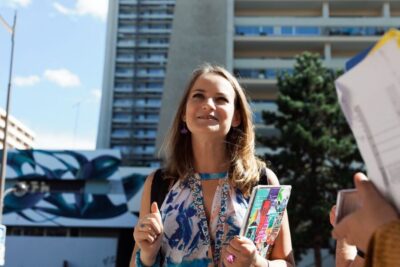
Elena’s background is one of the highest-rated parts of the experience, and you’ll feel it from the first proper stop. She’s not just naming artists; she’s tying what you see to Palermo’s real-world context.
That includes cultural background, and in at least some cases, political and mafia-related context too. It’s not presented like a lecture that pulls you away from the street, but as a lens that helps explain why certain themes appear where they do.
This is also where a tour like this beats a self-guided walk. Street art changes fast, and the meanings can be tangled. Having someone who can connect the dots helps you go beyond spotting a mural and actually understanding what it’s doing in the city.
The tram ride to Sperone: using public transit for a new viewpoint
Half the magic here is that you don’t only walk inside the tourist core. You take a tram ride to Sperone, around 15 minutes, and it’s one of the cleanest ways to feel the city widen around you.
When you’re stuck in one central area, street art can start to feel like a curated vibe. The tram reset helps. You see how people commute, how neighborhoods shift, and how art shows up in places with different daily priorities.
It also makes the pacing easy. After initial walking, the tram gives you a breather without turning the day into a stop-and-start schedule.
Sperone’s big murals: Igor Scalisi Palminteri, Rosk & Loste, Medianeras, and Millo
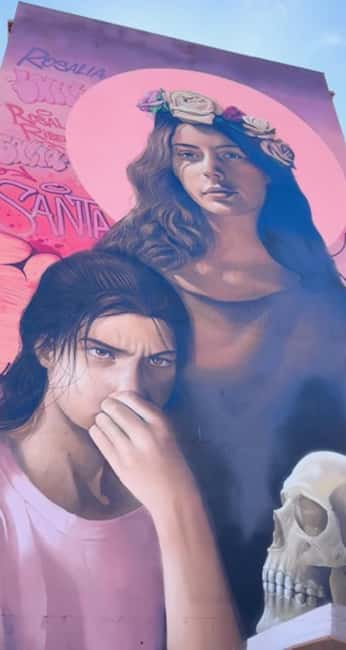
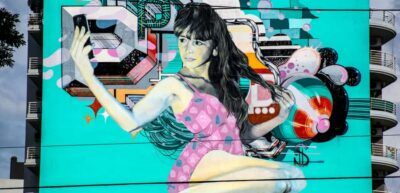
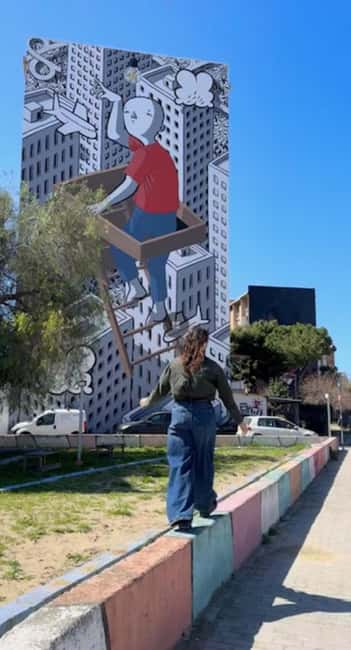
Sperone is where the tour turns from “street art as a taste” into “street art as a presence.” In this part, you’re looking at larger-scale works and a neighborhood visual language that feels more contemporary and confident.
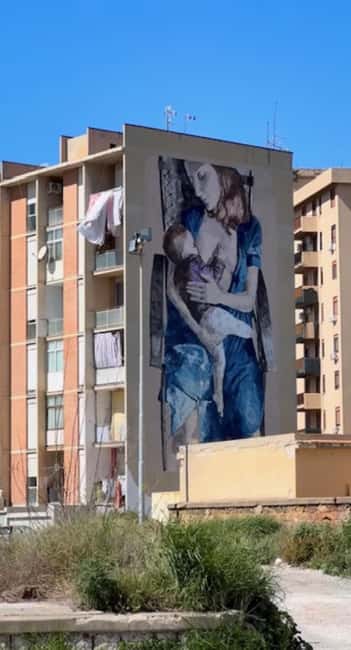
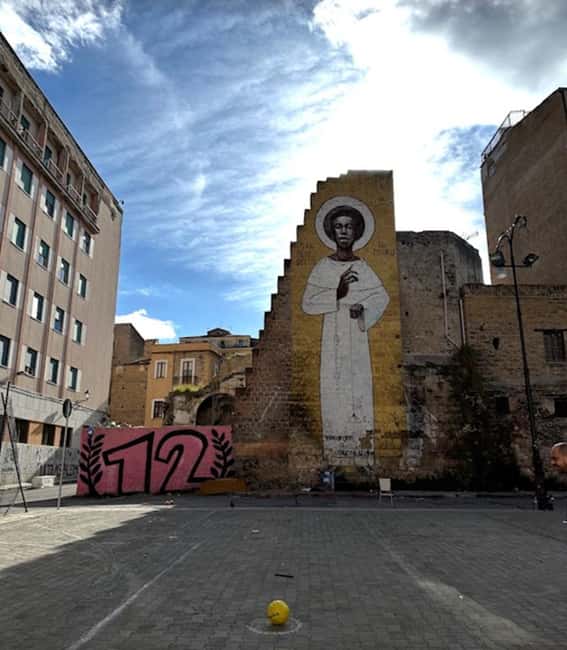
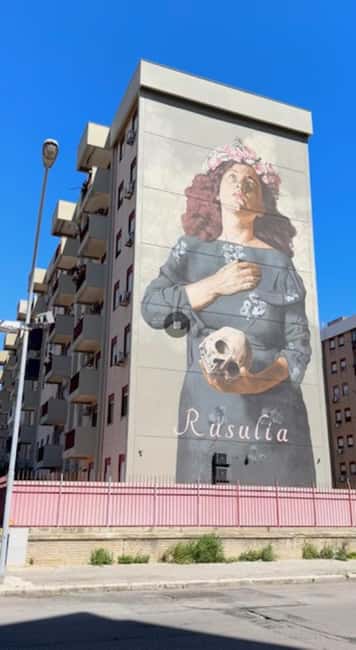
You’ll see murals associated with Igor Scalisi Palminteri, Rosk & Loste, Medianeras, and Millo. The difference in scale matters because it changes your body relationship to the art. Instead of standing close to appreciate a shutter, you look at how a wall claims room across an area and becomes part of the way people orient themselves.
What I like about this section is that it doesn’t treat Sperone like an art theme park. The works are shown as part of the neighborhood’s ongoing identity, where creativity exists alongside ordinary life and social change.
Elena’s context helps a lot here. A mural can look purely stylish until someone explains what’s being referenced, or why a neighborhood embraces (or reacts to) certain messages.
The walk segments that connect everything
Between the tram rides, you’ll do additional walking stretches, including another walk of about 30 minutes and a final walk of around 25 minutes before returning to the starting point on Via Argenteria 20.
Those segments are more than time fillers. They’re where the tour keeps its logic: you move from market energy to quieter streets, then outward to Sperone, and you come back with a fuller map in your head. The art isn’t random. It’s sequenced so your eyes and mind adjust to each neighborhood’s tone.
One practical note: the exact order of stops can change with events, weather, and logistics. That’s normal for city walking, and it’s also part of learning how Palermo actually operates on a given day.
Gelato tasting: a small included break that fits the day
Included in the price is an artisanal gelato tasting. It’s a simple detail, but it plays a real role in the experience because it prevents that “all walk, no pause” fatigue.
Also, drinks aren’t included, so if you need water or something else, plan to buy it yourself. In warm weather, that’s not optional comfort, it’s smart travel sense.
If you care about photography, gelato time is a good moment to re-check camera settings and decide what you want to shoot next. Street art photographs best when you can stand back, wait for foot traffic to thin, and then capture the full wall.
Price and value: why $45 can work for this kind of day
At $45 per person for about 3 hours, this isn’t a bargain in the “cheap” sense. But it’s good value in the “what you get” sense.
Here’s why it holds up:
- You’re paying for a local guide specialized in street art and urban culture, not just someone holding a route.
- Tram tickets are included, which matters because getting to Sperone is part of the point.
- The gelato tasting is included, and it keeps you comfortable during the walking time.
- Small group size (up to 10) keeps it interactive and easier to ask questions.
For me, the strongest value is not the murals by name (though they’re impressive). It’s the way Elena helps you connect visual style to neighborhood context, including how Palermo has been shaped by social change.
If you’re already planning a separate day for Palermo’s major landmarks, this is a strong counterbalance. If it’s your first visit and you only have one day, you’ll still likely enjoy it, but you may miss out on top sights unless you adjust your schedule.
Who this Palermo street art walk is best for
This tour suits you if:
- You want street art as culture and context, not just a list of murals.
- You like seeing how art sits next to daily routines, like markets and ordinary shutters.
- You enjoy photography and want guidance on where to look and what to notice.
- You’d rather spend half a day with a local than bounce between landmark stops.
It may not be the best fit if:
- You want a traditional “see the famous churches and monuments” format.
- You don’t enjoy some discussions about real social realities and how they connect to city visuals.
Practical tips so you get the most out of the 3 hours
Come prepared and the walk feels smooth. Don’t wait until you’re sweating to search for shoes that don’t hurt.
Bring:
- Comfortable shoes
- Hat
- Camera
- Sunscreen
Keep in mind:
- The tour can shift stops depending on weather and logistics.
- You’ll do a mix of walking and tram time, so light layers and water planning help.
- The tour runs with a live guide in English, Italian, and Spanish, so you can choose what works best for you.
Wheelchair accessible is listed, which is great. Still, for anyone with mobility limitations, it’s worth keeping your pace realistic because city sidewalks can be uneven even when the route is designed to be accessible.
Should you book this Palermo Street Art and Urban Life Walk?
Yes, if your Palermo trip includes more than just postcard stops. I think you should book it if you want to see the city as people live it, with murals by TVBoy, SID.Next, Millo, and others turned into part of the neighborhood story.
Skip it only if you’re strictly focused on monuments and prefer a purely historical, landmark-heavy day. Otherwise, this walk is one of the most practical ways to get a fresh perspective on Palermo in just 3 hours, with tram transport, small-group energy, and that included gelato break to keep things human.
FAQ
How long is the Palermo Street Art and Urban Life Walk?
It lasts 3 hours.
How much does it cost?
The price is $45 per person.
What’s included in the tour?
The tour includes a local guide specialized in street art and urban culture, tram tickets, and an artisanal gelato tasting.
Where does the tour start and end?
It starts and ends at Via Argenteria, 20 (Epic home base in Vucciria).
What languages are available for the live guide?
The guide is available in English, Italian, and Spanish.
Is it wheelchair accessible, and what should I bring?
It’s wheelchair accessible. You should bring comfortable shoes, a hat, a camera, and sunscreen.