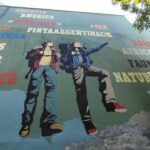
Buenos Aires tells stories on walls. This private street-art bike tour is a smooth way to explore the parts of town most visitors skip, with art stops that connect to local life. I love how the ride turns murals into lessons about neighborhoods, sports, and politics, and I also like that the guide keeps the pace friendly with frequent stops and photo time. One thing to consider: this isn’t a casual stroll—you need real comfort biking in an urban setting and heading into non-touristy corners.
We meet in San Telmo in the early afternoon, then you pedal south toward La Boca and Barracas for about four hours, with roughly eight stops and plenty of breaks on foot. Expect English/Spanish guidance, bottled water, snacks, and a coffee and/or yerba mate pause. There’s also an optional e-bike if you want an extra assist for the ride.
In This Review
- Key things I’d bookmark before you go
- San Telmo meet-up and the “purpose” behind the ride
- La Boca backstreets, color traditions, and murals with meaning
- Calle Lanín: the comeback story of a nearly dead street
- Barracas and the wall scale you’ll feel in your legs
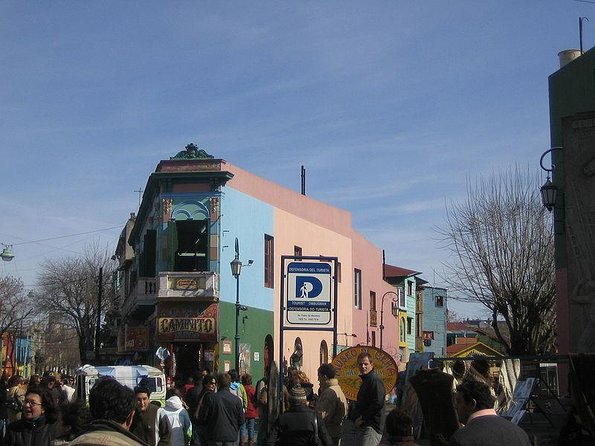
- Caminito without the tourist trap feeling
- Design district stops: where street art meets modern ideas
- How the tour turns walls into stories about life in Buenos Aires
- E-bikes, pacing, and when it’s a bad fit
- Price and value: $115 for four hours of real city texture
- Should you book this private off-the-beaten-path art bike tour?
- FAQ
- FAQ
- How long is the Private Off the Beaten Path: Hidden Urban Art Bike Tour?
- Where does the tour start and where does it end?
- Is the tour private?
- What’s included in the price?
- Does the tour run in bad weather?
- Is an e-bike available?
- How physically demanding is this tour?
- What neighborhoods and areas will we see?
- What is the cancellation policy?
Key things I’d bookmark before you go
- San Telmo start, orientation first so you know how to bike the route before murals start flying at you
- La Boca and Barracas backstreets where you see community-led art instead of postcard walls
- World-scale mural moments, including Alfredo Segatori’s giant work spanning three buildings
- Design collective stops like the Metropolitan Design Center and Cooperativa Vieytes (in a former ice cream factory)
- Frequent break time with about eight stops for walking, photos, and a yerba mate moment
San Telmo meet-up and the “purpose” behind the ride
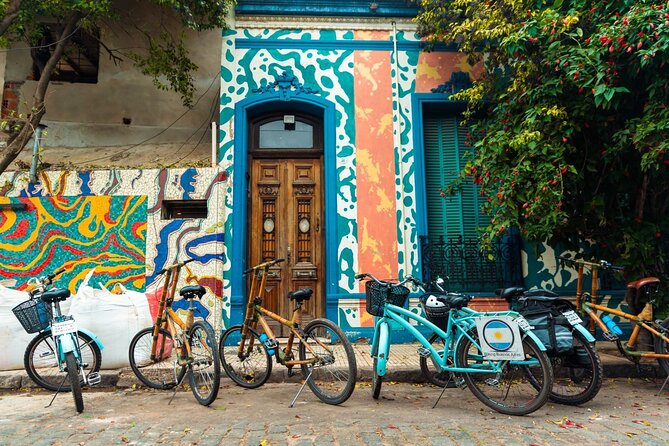
The day starts in San Telmo at Balcarce 1016, and you’ll meet your guide in the early afternoon. Before you move, you get bike orientation plus practical urban riding tips—more important than people think, because Buenos Aires streets don’t drive like a museum. Helmets are provided, and the tour frames the ride as more than sightseeing: it’s tied to a “For Purpose Enterprise” approach via a constitutional agreement with Holocary, aiming to build a cultural bridge through a bossless, co-existence minded structure.
That matters because the tour’s energy feels more like a conversation than a checkpoint run. You’re not just collecting murals—you’re learning how locals read these walls and how artists respond to the city around them. And yes, you’ll get a free-ticket-free entry-style orientation moment before the art truly starts.
If you’re hoping for a slow, relaxed cruise with zero city-riding pressure, this might feel like more active travel than you expect. You’ll be on the bike for a good chunk of the afternoon, and the tour runs in all weather, so dress for rain or heat.
You can also read our reviews of more tours and experiences in Buenos Aires.
La Boca backstreets, color traditions, and murals with meaning
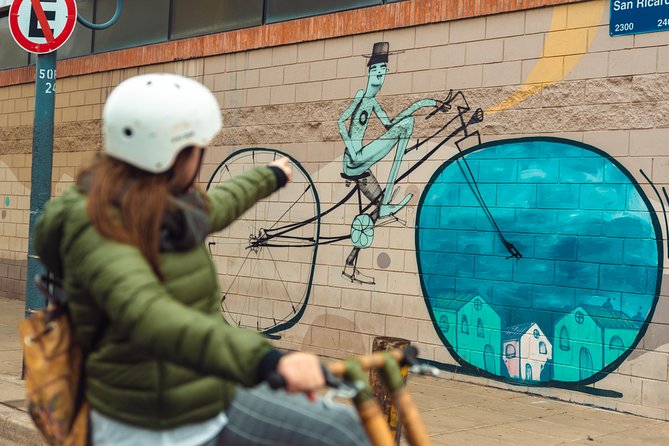
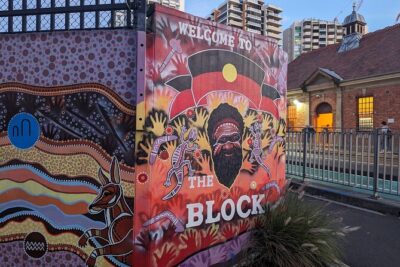
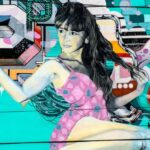
After your start-up briefing, you head south toward La Boca, a neighborhood known for its Italian roots and working-class energy, and for being linked to Boca Juniors. The tour uses that context to explain why so much street art here leans toward identity—things like neighborhood pride, sports passion, and community memory.
You’ll check out street art around the original area where COLOR BA festival happened, so you’re seeing art inside the neighborhood’s cultural timeline, not just as isolated visuals. Along the way, you stop for murals by collectives such as Red Sudakas and Triangulo Dorado, with guidance on how Argentine street art often mixes style with message.
One practical upside: the route is built to keep you seeing multiple neighborhoods without feeling like you’re trapped in one tourist lane. A couple of guides in past tours—like Raymond and Daniel—have been specifically praised for turning mural-watching into real conversation. If your guide has strong connections, you may even get the chance to meet an artist at a studio, though that depends on what’s possible on the day.
The main drawback? You’re riding through working neighborhoods, so you’ll want to keep your head up, not your camera down. The reward is huge: you’ll understand why the art is there, not just what it looks like.
Calle Lanín: the comeback story of a nearly dead street
One of my favorite stops is Calle Lanín, described as a street that used to be dark and near dead—then got brought back to life by artist Marino Santa Maria. The name itself carries that almost-funny sadness, since it means almost dead, which makes the story feel human: art didn’t just decorate the street, it helped revive it.
This stop is also highlighted for cultural significance, including being listed by UNESCO as a site of cultural interest. That’s a big deal because it shows how Buenos Aires street art isn’t only street-level creativity. It’s recognized as part of the city’s cultural fabric.
Timing-wise, the stop is short—about 15 minutes—so treat it as a focused photo and interpretation moment, not a long wander. If you like street art but also like context, this is the kind of place where a quick stop still lands.
Barracas and the wall scale you’ll feel in your legs
Next comes Barracas, a neighborhood where the tour leans hard into big-scale mural culture and mosaic detail. Here you can slow down visually and also walk for a bit, which helps if you’re biking and photographing at the same time.
You’ll see the detailed mosaics of Pasaje Lanín, then push into a standout mural moment: the world’s largest street mural by Alfredo Segatori, also known as Pelado. The description notes the work spans three buildings, which is one of those details that sounds dramatic until you’re standing in front of it and realizing how long-scale and structural it is—this isn’t just painted on a wall. It’s part of the architecture.
Another highlighted mural is El Regreso de Quinquela by Segatori, described as once the longest mural painted by one person and currently the longest in Argentina. That kind of scale explains why people call these works landmark art, not casual graffiti.
You’ll also see collaborative pieces, including a mural representing the Styles Street Art Convention, plus works by local artists such as Pum Pum, Mart, Pol Corona, and Martin Ron. The benefit of covering multiple artists in one neighborhood is that you start noticing patterns—how different styles carry different attitudes while still feeling like one local conversation.
A realistic consideration: biking and walking in this part of town means you should wear shoes that can handle uneven surfaces and be ready for quick photo detours. It’s not difficult, but it’s not carpeted tourist territory either.
Caminito without the tourist trap feeling
You’ll spend time around Caminito, and the tour helps you understand how this area became one of the city’s most visited and colorful corners. That’s useful because Caminito can look like pure spectacle if you only view it at street-level. With a guide, you learn the story behind how it developed into a must-see spot.
This stop also includes a fun mini-activity: a Stealth Stencil moment. It’s the kind of short, hands-on interaction that makes the art feel less distant and more like a practice, not just a product.
You’ll also sample a local beverage that’s described as a beloved Argentine favorite. Since the tour also includes coffee and/or yerba mate during breaks, you’ll likely get at least one taste of that classic comfort-drink culture while you keep moving.
If Caminito is busy when you arrive, don’t panic. Your best move is to use the guide’s timing and keep your photos quick and intentional. The tour format gives you structure, so you don’t get stuck wandering aimlessly.
Design district stops: where street art meets modern ideas
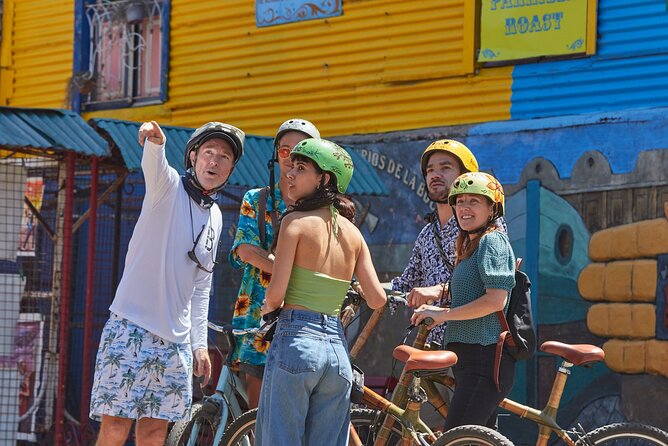
After the mural heavy lifting, you pivot to Buenos Aires design energy. This is where the tour feels smart: street art doesn’t stop at walls; you get a sense of how creative production and design thinking operate in the city’s networks.
You’ll visit the Metropolitan Design Center, described as a hotspot of Buenos Aires contemporary design. Then there’s Cooperativa Vieytes, a collective housed in a former ice cream factory, decorated with a symbolic mural. That detail matters because it shows reuse and community space: a place with real local history turned into something creative and shared.
These stops work well if you’re the type who likes seeing the broader ecosystem. The tour isn’t only about paint and style; it shows how street-level art connects to spaces where people organize, design, and collaborate.
A small note: these are more “look around and learn” than “walk and photograph forever.” If you love streets more than interiors, still give these stops a chance—they add contrast and make the mural stories feel grounded.
How the tour turns walls into stories about life in Buenos Aires
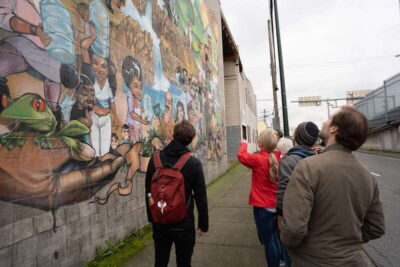
Street art in Buenos Aires often communicates more than aesthetics, and this tour is built around that idea. You’ll learn to read murals as signals of neighborhood life—things tied to working-class communities, local identity, and the social currents running through the city.
One reason past riders rated this so highly is that guides have been praised for patient, thoughtful explanations. Some tours highlighted discussion topics ranging from how people see and think to how politics show up in Argentine street art. Even if you’re not hunting for political theory, you’ll still get the practical payoff: art becomes a map of what people care about.
Sports also enters the picture in a natural way. The La Boca context—Boca Juniors and the neighborhood’s deep identity—helps you connect why certain visual themes show up again and again. You start seeing graffiti not as random noise, but as a public language.
And don’t underestimate the guide’s day-to-day value. One rider specifically noted getting helpful recommendations for the rest of their trip, plus some surprises. If you do one “orientation” style activity early in your stay, this is a strong candidate.
E-bikes, pacing, and when it’s a bad fit
The tour runs about four hours, with around eight stops. That means you’ll cycle between short segments, then get out to look around and talk. The pacing is meant to keep you engaged without turning the ride into a fitness test.
Still, this isn’t a “sit back and float” option. The company notes it requires a good level of comfort biking in an urban setting and venturing into non-touristy areas. If you’re nervous around streets, this could feel stressful instead of fun. If you’re comfortable riding in cities, you’ll likely appreciate the way the route links neighborhoods efficiently while keeping the focus on the art.
Bikes include helmets and bottled water, plus snacks and a coffee and/or yerba mate stop. If you choose the optional e-bike (for an extra fee), that can help if you want an easier pedal without giving up the “real bike” feeling.
One balanced caution from earlier riders: the bikes did the job, but they could use more maintenance. That shouldn’t scare you off, but it’s smart to do a quick check before rolling—tires, brakes, and how the seat feels.
Price and value: $115 for four hours of real city texture
At $115 per person for roughly four hours, the price sits in a reasonable range for a private guided experience in a major city—especially one that uses bikes and includes a full set of stops. What you’re paying for isn’t just the ride. You’re paying for navigation through areas most visitors miss, plus interpretation that turns what you see into something you understand.
You also get a lot of practical inclusions: bike use, helmet, bottled water, snacks, and an on-the-route coffee and/or yerba mate pause. That’s not just convenience; it keeps you comfortable so you can focus on the art.
If you’re comparing against a ticketed museum day, the value is different. This is more about perspective change and neighborhood literacy than about sitting inside. If you want to leave Buenos Aires feeling like you actually learned something about how people live and speak through public walls, this tends to be a strong buy.
One more value point: the experience is private, so you’re not stuck waiting for a group pace. That matters on a tour with multiple photo stops and short walking windows.
Should you book this private off-the-beaten-path art bike tour?
Book it if you want a half-day that changes how you see the city fast. I’d especially recommend it as one of your earlier Buenos Aires activities, since the guide’s mural context and neighborhood know-how can help you explore the rest of the trip with better instincts.
Skip it (or choose the e-bike if you’re unsure) if you dislike biking in traffic-adjacent streets or if the idea of non-touristy neighborhoods makes you uneasy. This tour rewards people who can handle a lively urban ride and who enjoy learning as they look.
FAQ
FAQ
How long is the Private Off the Beaten Path: Hidden Urban Art Bike Tour?
It’s approximately 4 hours.
Where does the tour start and where does it end?
The tour starts at Balcarce 1016, C1064 San Telmo and ends back at the meeting point.
Is the tour private?
Yes. It’s a private tour/activity, and only your group participates.
What’s included in the price?
The tour includes local taxes, use of a bicycle, a helmet, an English/Spanish speaking guide, bottled water, snacks, and a coffee and/or tea mate stop. An e-bike is optional for an extra fee.
Does the tour run in bad weather?
Yes. It operates in all weather conditions, so dress appropriately.
Is an e-bike available?
Yes, an e-bike (optional) is available for an extra fee.
How physically demanding is this tour?
You should have a moderate physical fitness level, and you need good comfort biking in an urban setting and venturing into non-touristy areas.
What neighborhoods and areas will we see?
You’ll ride through San Telmo, then explore La Boca and Barracas, plus design stops including the Metropolitan Design Center and Cooperativa Vieytes.
What is the cancellation policy?
Free cancellation is available. You can cancel up to 24 hours in advance for a full refund. If you cancel less than 24 hours before the start time, the amount paid is not refunded.