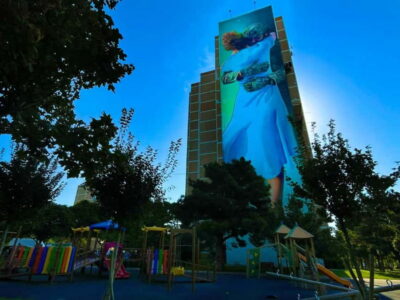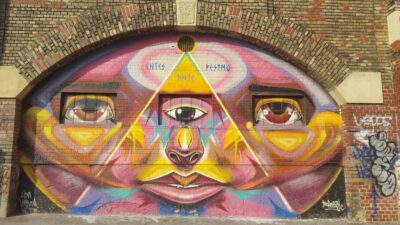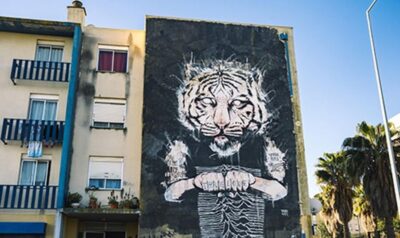
Street art can feel like graffiti. This one reads like a message board. In Budapest, ET leads a slow, on-foot look at local murals, stickers, and street expressions with the meaning behind them, not just the visuals. I love the small group size (max eight) that keeps the chat going, and I love that you learn how to interpret what you’re seeing as you walk. One thing to consider: it’s lots of walking on thin streets, so it’s best if you’re up for an active couple of hours.
You’ll start at Telep-Art Galéria Budapest (Madách Imre út 8) and finish at Szimpla Kert (Kazinczy u. 14), one of Budapest’s most recognizable ruin bar spots. You get a mobile ticket, the tour runs in English, and you’re close to public transportation—handy when you’re juggling the rest of your day.
In This Review
- Quick hits for your Budapest street art walk
- Why Budapest street art feels different on foot
- Meeting at Telep-Art Galéria: the start point that sets the tone
- Two hours of slow walking: what the itinerary really feels like
- What you learn: the meaning behind murals, stickers, and smart-art
- District VII perspective: history, change, and why politics shows up
- Who ET is on this walk (and why it matters)
- Finishing at Szimpla Kert: turn art-walk energy into an easy next step
- Price and value: why $36.20 can make sense
- What to expect day-of (and how to prepare)
- Who this tour is perfect for
- A fair caution: when another tour might be better
- Should you book this Budapest street art tour?
- FAQ
- FAQ
- Where does the street art tour in Budapest start?
- Where does it end?
- How long is the tour?
- Is the tour offered in English?
- What group size should I expect?
- Will I get a mobile ticket?
- Are service animals allowed?
- Can I cancel and get a full refund?
- Is confirmation provided after booking?
Quick hits for your Budapest street art walk
- Meet ET at Telep-Art Galéria in District VII and walk the neighborhood with purpose.
- Slow pace on thin streets so you actually notice the details tourists miss.
- Street art types go beyond murals, including stickers and smart-art style visuals (and more).
- Meaning matters: you’ll decode messages, not just admire color and style.
- Max eight travelers keeps it interactive, with plenty of room for questions.
- Ends at Szimpla Kert, so you can keep the alternative vibe going right after.
Why Budapest street art feels different on foot
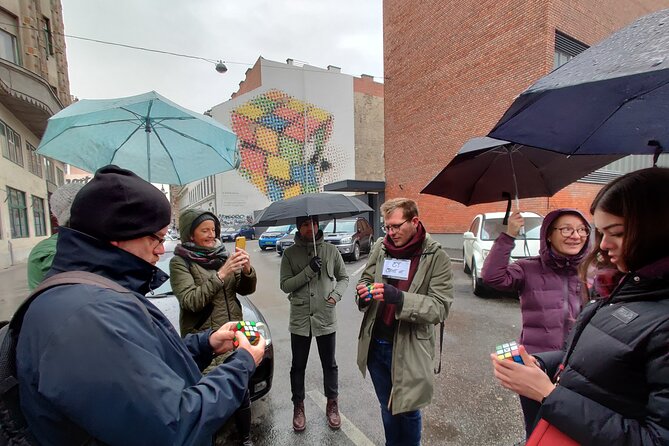
Budapest’s street art isn’t just decoration. It’s a running conversation about identity, politics, and everyday life—stuff people argue about, joke about, and respond to. This tour is built for that reality. You move slowly, stop often, and learn what to look for and how to read it.
The biggest payoff is not that you see a few big murals. It’s that you learn the logic of the scene. After a couple of stops, you start spotting themes on your own: which messages show up repeatedly, how different artists use different formats, and why some works feel personal while others feel like public commentary.
This is also the kind of tour where the guide’s enthusiasm changes the atmosphere. ET’s role isn’t just pointing at walls. He explains the background behind the art and connects it to what’s happening around the area—so the neighborhood starts to make sense as you walk through it.
You can also read our reviews of more tours and experiences in Budapest.



Meeting at Telep-Art Galéria: the start point that sets the tone
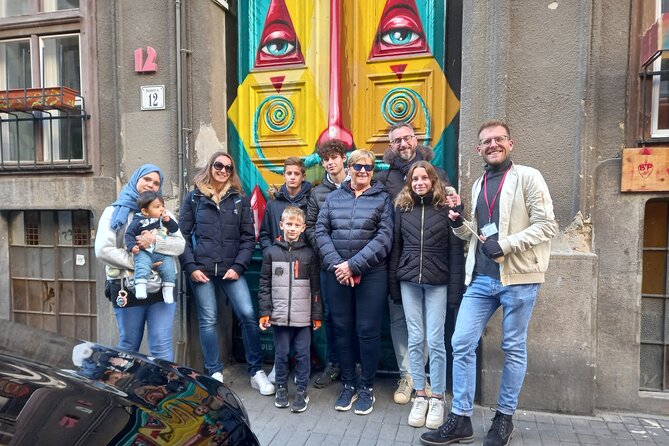
You meet at Telep-Art Galéria Budapest, Madách Imre út 8 (1075). Starting at a gallery-style meeting point helps more than you might think. It cues you that this isn’t random street-sniffing. You’re going out with a lens.
The location also matters practically. District VII is where you’ll find plenty of street art energy, and the meeting point is near public transportation, so it’s easier to slot the tour into a real itinerary without starting your day from scratch.
And because the group is capped at eight travelers, you’re not lost in a crowd. You can hear the explanations, and the walk stays flexible enough for questions.
Two hours of slow walking: what the itinerary really feels like
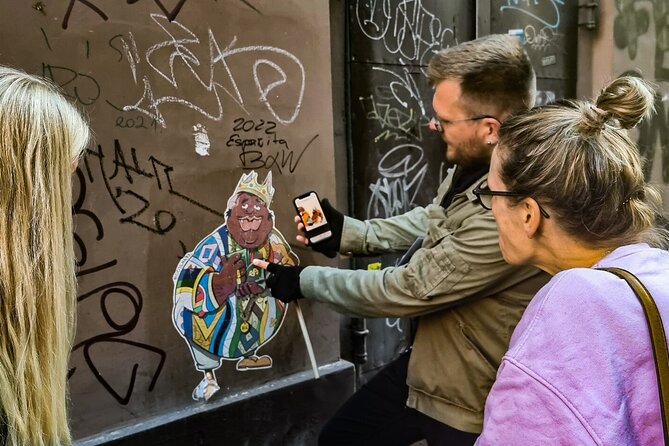
The tour is about two hours and paced for real attention. The plan is simple: you walk slowly through the smaller streets, and ET shows you many pieces of street art along the way.
Expect the route to feel like an art scavenger hunt with structure. You’re not racing from landmark to landmark. Instead, you’re learning how to see: composition, symbolism, the difference between a surface-level image and a message aimed at the neighborhood.
A common theme in feedback is that it’s a walking tour in the literal sense—there’s plenty of movement. That’s a feature if you enjoy walking and noticing details. It’s a drawback if you hoped for a mostly seated, photo-ops-only experience.
What you learn: the meaning behind murals, stickers, and smart-art
This is where the tour earns its keep. You come for street art, but you leave with a reading habit.
You’ll see different types of work—not just pretty paintings. Based on what people report from the walk, the mix can include:
- Large wall pieces (the ones that dominate your first impression)
- Stickers and smaller formats (the ones you’d miss if you only looked straight ahead)
- Smart-art style visuals (a format that blends image and messaging)
- Other street expressions that show up around District VII
The big learning moment is that a lot of this art is political or social. One review experience specifically highlighted how local street artists express critical views of the world through different media. That means you’ll often be thinking about context while you look: what issue might the artist be responding to, what kind of audience is this speaking to, and why this style fits the point being made.
If you like your travel experiences with a little logic and a little edge, you’ll enjoy that the tour teaches you to interpret. Several people said the tour changed how they looked at walls during the rest of their trip—once you know what you’re hunting for, Budapest starts talking back.
District VII perspective: history, change, and why politics shows up
Street art doesn’t happen in a vacuum. Budapest’s District VII is known for a creative, alternative energy, and the tour uses that environment to explain why the art scene looks the way it does.
During the walk, ET ties the artwork to what’s changing in the area. People describe hearing not just art explanations, but how the neighborhood’s story influences artists and how artists respond to that story.
One of the strongest themes from feedback is the tour’s focus on messages rather than only aesthetics. That’s why it’s popular with people who love politics, activism, and culture—or people who just want a different angle on the city beyond the usual sightseeing list.
There’s also a social angle. The group format is interactive, so you’re not stuck listening for two hours straight. You’ll talk, ask questions, and hear different perspectives from the people you’re walking with. That’s especially likely with international groups and mixed backgrounds in the arts, where the discussion can turn into something more personal than a standard guided lecture.





Who ET is on this walk (and why it matters)
The guide name you’ll see here is ET, and that shows up again and again in what people loved. The pattern is pretty clear: ET is involved in Budapest’s art scene and brings that firsthand energy to the walk.
What makes that practical for you is that the explanations don’t feel generic. It’s not just definitions of art styles. People highlight that the guide:
- keeps the tour engaging and interactive
- points out street art a tourist would likely miss
- connects works to context across Europe and local history themes
Some visitors even mention that ET shares extra resources and Instagram-style pages to keep exploring after the tour. That’s a smart add-on if you want to keep hunting murals on your own once you know how to look.
And if you’re worried the guide will run a stiff script, the tone from feedback sounds warm and welcoming. One person noted the guide creates that atmosphere intentionally—good for first-timers and good for people who feel a little shy asking questions.
Finishing at Szimpla Kert: turn art-walk energy into an easy next step
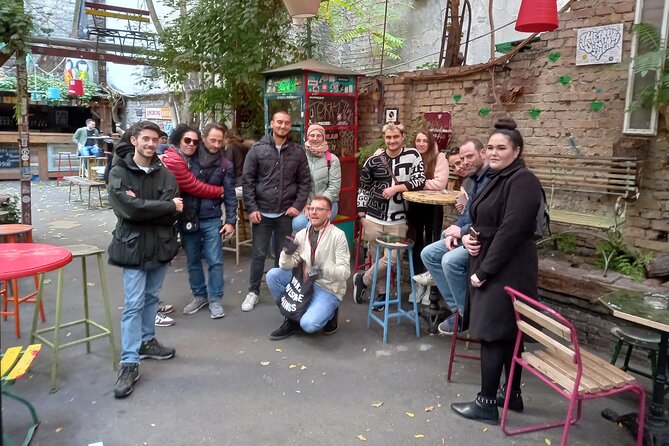
The tour ends at Szimpla Kert, Kazinczy u. 14 (1075). This is a major advantage for planning. You finish at a place many people recognize, and it’s an easy pivot to food, a drink, or just continuing to wander without needing to figure out transport right away.
Since the walk is designed around street art in the neighborhood, ending at an iconic ruin bar also makes sense thematically. You’re already in a different mood than the classic “sightseeing route,” and Szimpla Kert fits that alternative vibe.
If you like to keep things flexible, this finish point helps. Even if you don’t have a perfect plan, you’ve got an established area to regroup.
Price and value: why $36.20 can make sense
The price is $36.20 per person for roughly two hours. That’s not the cheapest activity in Budapest, but it’s also not inflated for a short stroll.
Here’s the value logic:
- Max group size of eight means more attention per person than big group tours.
- The tour is specialized: it teaches interpretation, not only locations.
- You’re getting a guided walk focused on a topic many visitors don’t know how to read.
If you’re the type who likes to understand why the city looks the way it does, this price often feels reasonable. If you only want scenic photos and don’t care about context, you might see less value in paying for a guided interpretation-focused walk.
What to expect day-of (and how to prepare)
Because this is a street art walk with lots of stops, you should treat it like an active neighborhood experience.
Based on the feedback, you can expect:
- Lots of walking
- a slow pace with frequent pauses to look closely
- more attention to details and hidden messages than big sightseeing stops
Practical prep that matches what the tour is doing:
- wear comfortable shoes (the pace is slow, but the walking adds up)
- bring a curious mindset; the “point” is meaning
- be ready for discussion about the themes behind the artwork (not only the visuals)
Also note: service animals are allowed, which is a helpful inclusion if you travel with a companion animal.
Who this tour is perfect for
This is a strong fit if you want Budapest from a different angle.
You’ll likely love it if you:
- enjoy street art beyond murals—stickers, small formats, and messaging
- like politics, social commentary, or cultural change in cities
- want an experience that makes you see more on your own afterward
- prefer a small group and an interactive guide approach
One review even called it a must-do for creative and politically minded people. And multiple people mentioned it works well for different ages, which makes sense because art is visual language and the tour explains meaning in a way you can follow.
A fair caution: when another tour might be better
This walk is designed around interpretation and walking. So it might be less ideal if you:
- want a low-energy tour
- only want iconic buildings and broad panoramas
- don’t want to talk about messages and political themes behind artwork
If you prefer a purely aesthetic gallery-style experience, you might feel the balance is more “meaning” than “beauty.” But if you enjoy the story behind the walls, this is exactly the point.
Should you book this Budapest street art tour?
If you’re in Budapest and you’re even mildly curious about how cities talk through walls, I’d book it—especially because the format is small (eight max) and guided by ET, who clearly knows the scene and keeps things interactive.
Choose it if you want:
- a two-hour neighborhood walk you’ll remember after
- help learning what different types of street art are saying
- a path through District VII that’s more than just photo stops
Skip it if walking isn’t your thing, or if you want a classic sightseeing day. But for travelers who like their art with context and their routes a little off the tourist grid, this is a smart use of an afternoon.
FAQ
FAQ
Where does the street art tour in Budapest start?
The tour starts at Telep-Art Galéria Budapest, Madách Imre út 8, 1075 Hungary.
Where does it end?
It ends at Szimpla Kert Budapest, Kazinczy u. 14, 1075 Hungary.
How long is the tour?
It’s approximately 2 hours.
Is the tour offered in English?
Yes, it’s offered in English.
What group size should I expect?
The tour has a maximum of eight travelers.
Will I get a mobile ticket?
Yes, it includes a mobile ticket.
Are service animals allowed?
Yes, service animals are allowed.
Can I cancel and get a full refund?
Free cancellation is available up to 24 hours before the experience start time for a full refund. If you cancel less than 24 hours before, the paid amount is not refunded.
Is confirmation provided after booking?
Yes, you receive confirmation at the time of booking.