REVIEW · CASABLANCA
Street Art in Depth 4 days in Casablanca and Rabat
Book on Viator →Run by Genuine Morocco · Bookable on Viator
Street art here has a workbench and a pulse. This 4-day Casablanca and Rabat experience is built around Morocco’s mural festivals, with real access to how the work gets planned and how artists create wall by wall during sbagha bagha season. I love the behind-the-scenes access to the sbagha bagha team and resident artists, because you don’t just see murals—you learn what it takes to make them happen.
I also like the mix of street art and city context, from downtown Casablanca sights like Place Mohammed V to Rabat’s medina walls and old-vs-modern texture. The one consideration: at $1,862.22 per person, this is premium pricing, so you’ll want to be sure you’re paying for the festival access and guided mural time—not just a basic sight-seeing loop.
In This Review
- Key highlights
- Why Casablanca + Rabat is such a smart setup for street art
- Price and what you’re really paying for
- Day 1 in Casablanca: hidden painted walls with the sbagha bagha team
- Day 2 in Casablanca: major sights plus the mural mindset
- Day 3 in Rabat: learning the selection process and working walls
- Day 4 in Rabat: a street-art car tour, then riad nights
- How the guided access changes your mural photos
- Hotel/riad nights and how to use them well
- Logistics that matter: private group, transport, and timing
- Who this street art tour is best for
- Should you book Street Art in Depth in Casablanca and Rabat?
- FAQ
- FAQ
- How long is the street art experience?
- Is this tour private?
- Do I get pickup?
- What language support do I get?
- Does the tour include hotel or riad stays?
- Are meals like lunch and dinner included?
- What street art festival teams are involved?
- What does the Casablanca part focus on?
- What does the Rabat part focus on?
- What time does the tour start?
- Can I cancel if plans change?
Key highlights
- Sbagha bagha access in Casablanca with a resident artist showing painted walls across the city
- Meeting festival teams and learning how artists are selected for the big medina walls
- Rabat street art by car to cover more murals efficiently, then decompress in your riad
- English-speaking driver + bilingual-ish festival support so you’re not stuck guessing
- Private format with only your group, starting at 8:00 am
Why Casablanca + Rabat is such a smart setup for street art
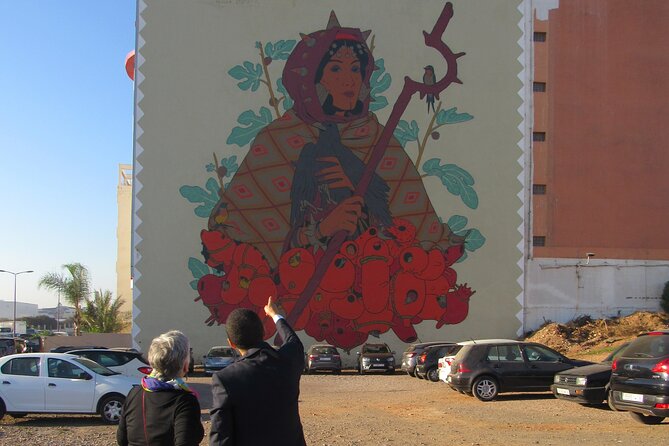
Casablanca (Casa) and Rabat give you two different street-art “vibes,” even before the murals start. Casablanca is the country’s largest city and industrial hub, so it tends to feel more outward and cosmopolitan—then murals bring it back to a human scale. Rabat shifts the tone toward the political capital and historic medina life, where wall art often feels tied to place, not just style.
This matters because you’re not only hunting for pretty pictures. You’re trying to understand how mural culture operates in Morocco—how teams organize working time, how artists get slotted, and why certain walls matter. When you see the process up close, each mural stops being a random photo-op and becomes a story you can actually explain.
Price and what you’re really paying for
At $1,862.22 per person, this isn’t a low-cost street-art sprint. The value is in the package: you get 3 nights in a hotel or riad, daily breakfast, transportation, an English-speaking driver, and festival-facing support with team members from sbagha bagha and JIDAR. In other words, you’re paying for people and access—time on the ground with the right contacts.
Also note what’s not included: lunch and dinner at leisure, plus drinks and tips. That’s normal for a tour like this, but it can affect your total budget. If you like to keep meals spontaneous and cheap, this is fine; if you prefer a planned dining plan, you may spend a bit more to match your comfort level.
The big “why” behind the price: you’re getting guided street-art time during a festival moment. That kind of access costs money, and it’s exactly what makes this different from a generic mural walk.
Day 1 in Casablanca: hidden painted walls with the sbagha bagha team
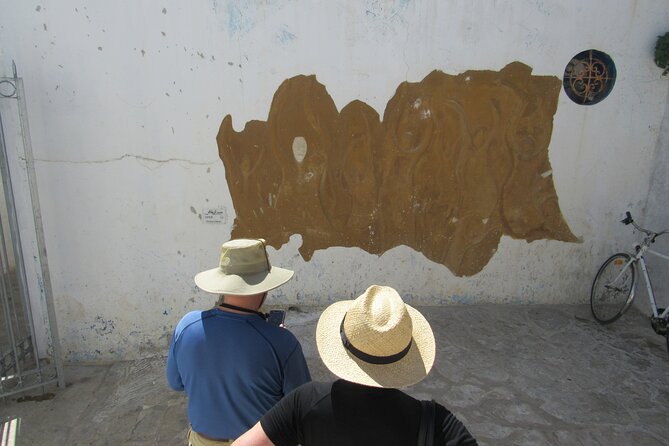
Day 1 starts with Casablanca, and the key word is access. You’ll spend around 4 hours with a member of the sbagha bagha team plus a resident artist who shows hidden painted walls in the old medina and around the city. The practical payoff is huge: Casablanca is big, and street art spreads out. A resident artist can point you to walls you’d miss on your own, especially in areas where the art looks like part of the neighborhood rather than a landmark.
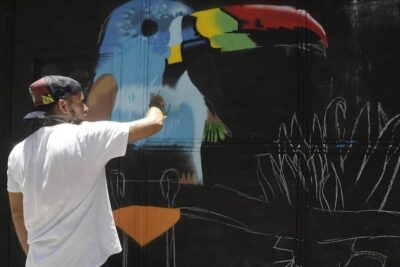
What I like about this first day is how it frames street art as work. You’re shown how the sbagha bagha team organizes the festival and what it takes to support artists painting for days. That immediately changes how you look at murals afterward. Instead of asking, Who did it? you start asking, Who arranged it, planned it, and protected the time it took to finish?
Potential drawback: the “hidden walls” style means you may do more walking and quick orientation than you would on a day built only around major monuments. If you’re hoping for a totally low-movement day, you’ll want to pace yourself and bring comfortable shoes.
Day 2 in Casablanca: major sights plus the mural mindset
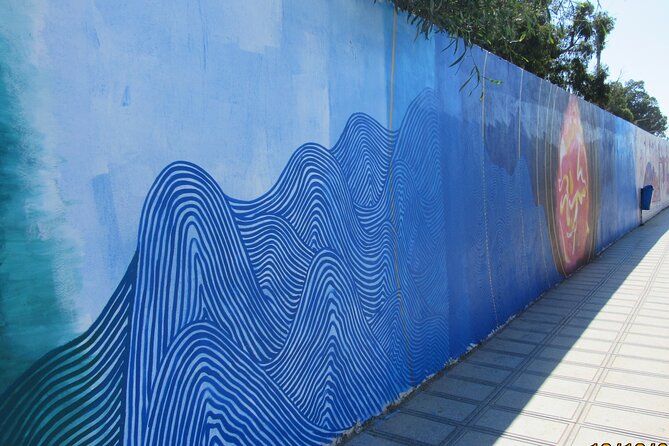
On Day 2, you’re still in Casablanca, with about 5 hours of guided exploring. The itinerary includes classic downtown sights like Place Mohammed V and the Grand Theater de Casablanca, plus architecture that mixes French-colonial and Moroccan styles—best seen in areas like Quartier Habous and Ain Diab.
Then you get the centerpiece most people remember: the Hassan II Mosque, famous for its seaside setting and the fact that it has the world’s tallest minaret. Even if your main focus is street art, this stop matters because it grounds you in the city’s layers. Morocco isn’t one look, one era, or one art scene, and Casablanca shows that more than most places.
How does this connect to street art? It gives you context. Murals don’t live in a vacuum. When you understand the city’s flow—ports, business energy, cosmopolitan neighborhoods—you’re better at reading the street-art themes you’ll see over the next days.
One small comfort note: the schedule lists the main activity as admission ticket free, which suggests you’re not paying separate entry fees for the guided touring portions. Still, if you add extra stops on your own, that’s where your budget can drift.
Day 3 in Rabat: learning the selection process and working walls
Day 3 shifts you to Rabat for about 5 hours, focused on visiting with the JIDAR festival team. This is the day where the tour becomes less about where the murals are and more about how mural festivals operate behind the scenes.
You’ll learn how artists are selected and how they work on the big old walls of the medina. That’s a real skill-building moment, because it changes your understanding of what street art is. It isn’t only spray paint and improvisation. There’s planning, coordination, and timing—especially when artists are producing large works on historic surfaces where the environment and the neighborhood matter.
Rabat’s medina setting also adds a different kind of texture to the art. In Casablanca, you’re working with a city that feels more outward and modern. In Rabat, the old-medina walls can make murals feel more integrated—like the artwork is responding to the fabric of daily life, not just taking over an empty space.
Practical expectation: your best results from this day come if you arrive ready to watch and listen, not only to photograph. The process you learn here makes the murals on Day 4 feel more “legible.”
Day 4 in Rabat: a street-art car tour, then riad nights
On Day 4, the tour gives you a broader street-art viewing approach. You’ll take a car tour around Rabat to view outstanding street art murals, designed to help you discover the whole city and its old-and-modern atmosphere. This is the most efficient way to cover more walls in one go, especially in a city where distances and neighborhoods can be tricky.
After that mural coverage, the plan is to return to your hotel or riad and enjoy your evening. The itinerary explicitly frames these nights as part of the experience, which is smart. Festival touring can get tiring—watching big wall projects takes mental stamina. Having evenings built around your own downtime helps you turn what you saw into something you remember.
What to keep in mind: a car tour is great for distance, but it can mean less time in each spot. If you love lingering with details—signatures, textures, the way layers overlap—bring a habit of doing one or two “close looks” per mural, then moving on with purpose.
How the guided access changes your mural photos
I’ll be blunt: anyone can take a photo of a colorful wall. The difference here is that the tour gives you a reason to notice.
With sbagha bagha and JIDAR team involvement, you’re more likely to understand:
- Why certain walls and neighborhoods get chosen
- How selection works for festival artists
- How murals take days, not hours
- What the team’s job is beyond artwork—logistics, coordination, and support
When you walk into a mural hunt with that mindset, you start seeing composition choices and themes more clearly. Your photos improve, but more importantly, your understanding improves.
Also, one theme that showed up in the experience’s praise is hospitality and ease of trust. Reviews specifically thanked Susan and Hicham for a worthwhile tour and for being welcoming, helpful, and reassuring. That matters in Morocco, where getting the story right depends on having guides who can explain, translate, and smooth out the day-to-day.
Hotel/riad nights and how to use them well
The tour includes 3 nights in a hotel or riad, plus daily breakfast (listed as 4 breakfasts). That means you’re not spending your time searching for food or scrambling for logistics during the busy mural days.
Because the tour begins at 8:00 am, you’ll likely want to keep evenings calmer. This is a great match for a riad stay: you’ll have time to shower, recharge, and plan your next day’s route of attention—what themes you want to look for, what neighborhoods you want to revisit, and which murals might deserve a closer look.
If you’re the type who wants to keep walking after the tour ends, do it carefully. Rabat and Casablanca can be energetic, and festival areas may bring crowds. Your best strategy: explore with purpose, then rest early so you don’t feel wrecked by Day 3.
Logistics that matter: private group, transport, and timing
A few practical details help you judge whether this fits your style.
- Private tour: only your group participates, which usually means you can set a comfortable pace and ask questions without feeling rushed.
- English-speaking driver: helpful for moving around, timing, and making sure you’re not stuck outside the mural context.
- Team member with you: you’re not just with a driver and a generic guide—you’ll also have a sbagha bagha team member during visits, plus meeting time with the JIDAR festival team.
- Pickup offered: if you want that extra layer of convenience, this tour includes it.
- Mobile ticket: you should have an easier check-in flow once your booking is confirmed.
- Near public transportation: useful if you want a little flexibility in evenings, though most of your movement is already handled.
Timing-wise, Day 1 is listed at 4 hours, and Days 2–4 are listed around 5 hours each. With that schedule, you’ll feel like the days are guided and structured, but you still get time at night on your own.
Who this street art tour is best for
This experience is a strong match if you:
- care about murals as culture, not just decoration
- want festival access and real explanations of the process
- enjoy guided city context alongside street art
You might also like it if you’re curious about the contrast between Casablanca’s cosmopolitan energy and Rabat’s medina walls.
Who should think twice? If your travel style is more monument-only, or if you want a totally free-form mural hunt with zero structure, this tour may feel more scheduled than you prefer. And if you’re on a tight budget, the price will likely be your biggest obstacle. You’re paying for access and organization, not just transportation and photos.
Should you book Street Art in Depth in Casablanca and Rabat?
If you want street art with meaning—how festivals function, how artists are chosen, and why particular walls get painted—this tour is a solid choice. You’re not just ticking off murals; you’re learning how mural magic gets made through sbagha bagha and JIDAR team involvement.
Book it if you’re excited by behind-the-scenes access and you like having expert support while you move between Casablanca and Rabat. Pass if you’re mostly chasing low-cost street art photos and you’re comfortable finding murals without guides.
FAQ
FAQ
How long is the street art experience?
It runs for 4 days (approx.), with activities listed at around 4 hours on Day 1 and about 5 hours each on Days 2, 3, and 4.
Is this tour private?
Yes. It’s described as a private tour/activity, meaning only your group participates.
Do I get pickup?
Pickup is offered, so you can expect some help getting started each day.
What language support do I get?
You’ll have an English speaking driver, plus you’ll be traveling with team members who support the festival visits.
Does the tour include hotel or riad stays?
Yes. The package includes hotel or riad for 3 nights and includes daily breakfast.
Are meals like lunch and dinner included?
No. Lunch and dinner are not included (and you’ll have them at leisure), along with drinks.
What street art festival teams are involved?
In Casablanca, you’ll connect with the sbagha bagha team. In Rabat, you’ll visit with the JIDAR festival team and learn how artists are selected.
What does the Casablanca part focus on?
You’ll discover Casablanca highlights and also meet a sbagha bagha resident artist who shows hidden painted walls in the old medina and across the city.
What does the Rabat part focus on?
You’ll learn about JIDAR festival planning and how artists work on medina walls, then do a Rabat street-art tour by car to see murals around the city.
What time does the tour start?
The start time is 8:00 am.
Can I cancel if plans change?
Yes. There is free cancellation up to 24 hours before the experience start time for a full refund.