REVIEW · BOGOTA
Biking in Full Color: Urban Art Bike Tour
Book on GetYourGuide →Run by Capital Graffiti Tours · Bookable on GetYourGuide
Bogotá’s street art rolls by on two wheels. I love the way street art here is explained through real neighborhoods, and I like the practical flow of riding on bike lanes (or Sunday Ciclovía). One thing to consider: you’re biking 13 km rain or shine, so bring comfortable shoes and be ready to pedal.
You’ll trace the Bogotá graffiti story from La Candelaria through Centro, Teusaquillo, Santa Fe, and La Macarena, with a focus on walls painted by female artists and a mural tied to peace and post-conflict. The guide, including Diego, tends to connect what you’re seeing to the people and pressures behind it, not just the style.
For $62, you’re buying a tight 3-hour loop: transportation, stops, and storytelling in one package. The trade-off is simple: backpacks and valuables aren’t allowed, so travel light and keep essentials easy to access.
In This Review
- Key things I’d bet you’ll remember
- Starting at La Candelaria’s big red wall
- The 13 km loop across Centro, Teusaquillo, Santa Fe, and La Macarena
- A small drawback to keep in mind
- Women artists, political art, and the peace mural you’ll look for
- Coffee factory stop: a break that actually fuels the ride
- How bike lanes and Ciclovía Sundays change the ride
- What to bring (and what to avoid)
- The guide is the engine: Diego-style street art storytelling
- Price and time: is $62 a smart value for 3 hours?
- A quick reality check
- Who this Bogotá urban art bike tour is best for
- Should you book this tour?
- FAQ
- How long is the urban art bike tour?
- How much biking is included?
- Where does the tour start?
- Does the tour run in rain?
- What should I bring, and what’s not allowed?
- What languages are available for the guide?
Key things I’d bet you’ll remember
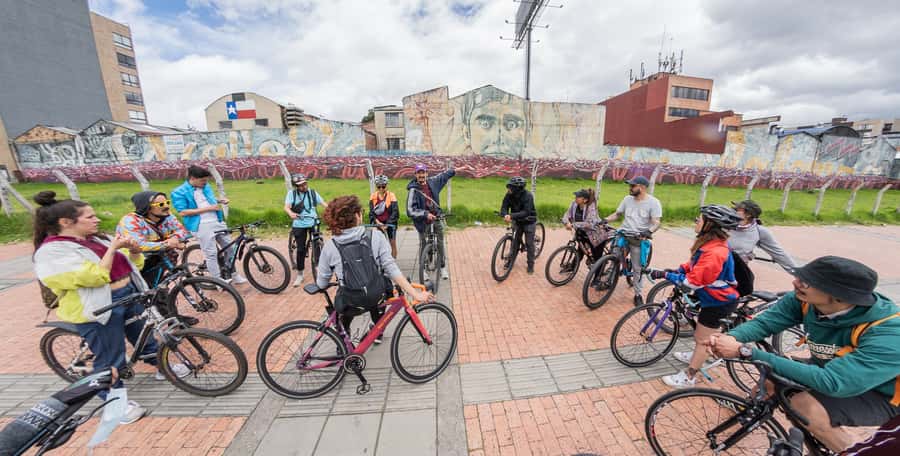
- Women’s street art in Bogotá: you’ll specifically look for murals and illustrations by female artists, not just the usual name-brand graffiti.
- Peace and post-conflict messaging: you’ll see a mural symbolizing peace and Colombia’s post-conflict reality.
- 13 km over four neighborhoods: Centro, Teusaquillo, Santa Fe, and La Macarena each feel different on the bike.
- Bike lanes and Ciclovía Sundays: you’ll ride using established cycling routes and the Sunday cultural, car-limited vibe when available.
- A guide who links art to local context: Diego-style storytelling focuses on meaning, technique, and history behind the walls.
- A coffee factory stop: you get a practical pause, not just photos.
Starting at La Candelaria’s big red wall
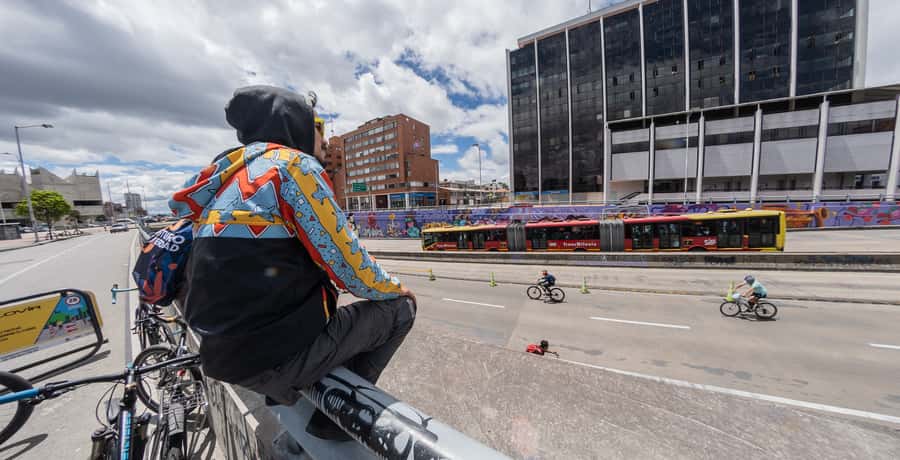
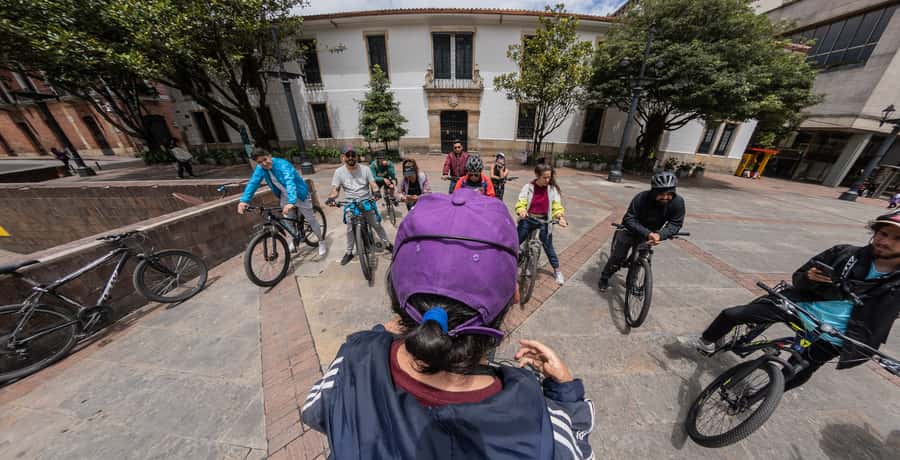
Your tour begins in La Candelaria, one of the best places to get oriented fast. The meeting point is in front of the big red wall at Carrera 3#12-52. When you arrive, look for your guide in a purple hoodie, cap, or umbrella.
This matters more than it sounds. La Candelaria is where many visitors want to start, but it’s also where Bogotá’s visual culture gets loud and layered. Meeting right on a landmark wall helps you jump into the art conversation immediately instead of wasting time getting oriented and figuring out where to head next.
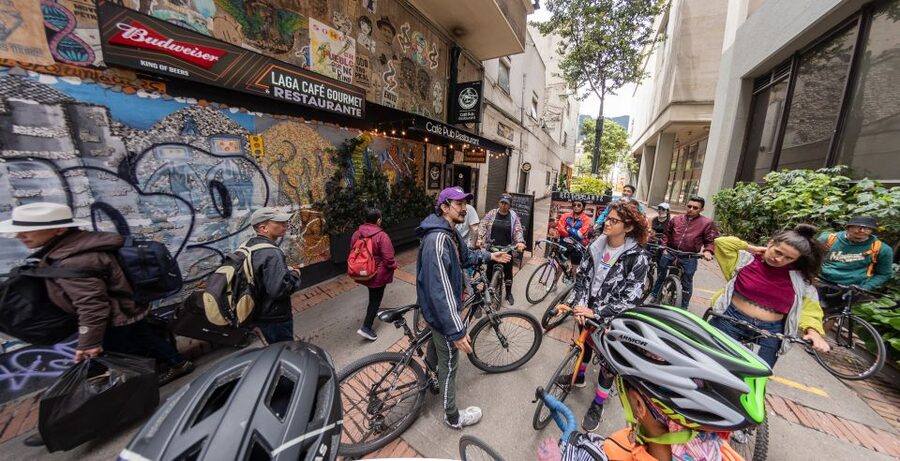
Once you’re grouped up, the format is straightforward: you bike from mural to mural with multiple stops, guided by someone who can read the walls with you. You’ll ride through neighborhoods and learn to recognize the street art movement in Bogotá instead of just snapping a few colorful pictures.
And yes, you’ll cover ground. The route is designed to be manageable in 3 hours, but it’s still active. Come ready to pedal, not just stroll.
You can also read our reviews of more tours and experiences in Bogota.
The 13 km loop across Centro, Teusaquillo, Santa Fe, and La Macarena
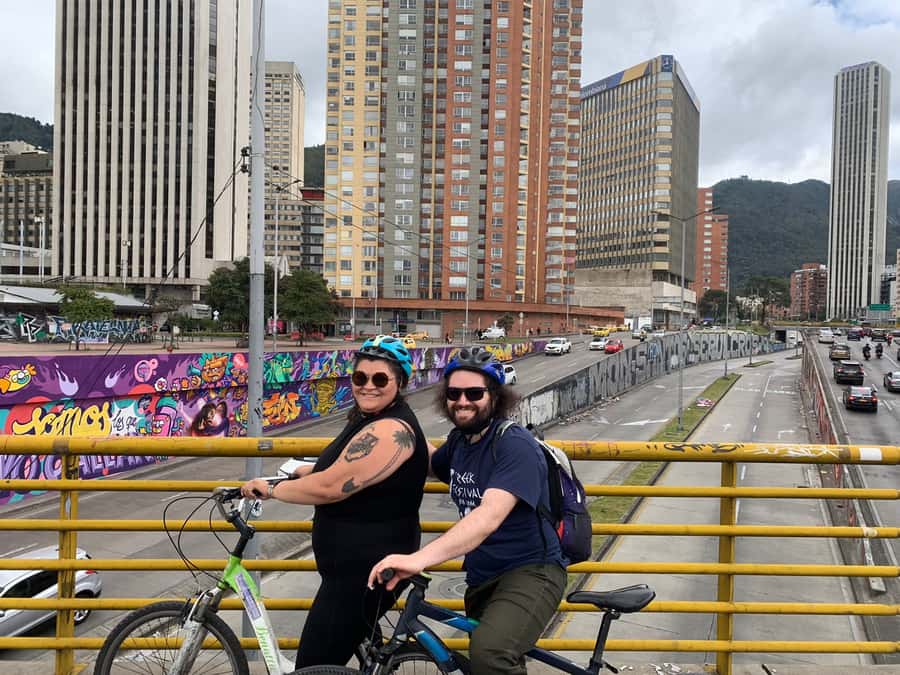
The route totals 13 km and passes through four neighborhoods: Centro, Teusaquillo, Santa Fe, and La Macarena. That’s the core value of this tour: the art isn’t shown as separate “Instagram walls.” It’s presented as part of how Bogotá’s city changes from block to block.
Here’s the practical way to think about it: each neighborhood gives you a different lens on Colombia’s present story.
- Centro helps you see where the street art conversation feels close to the city’s everyday pulse: busy streets, mixed use areas, and a fast-moving urban rhythm.
- Teusaquillo tends to feel like a different chapter—still central, but with a slightly different neighborhood texture that makes the art stand out in a new way.
- Santa Fe brings you into another zone of meaning, where the wall work can feel more political or socially loaded, not just decorative.
- La Macarena is where the tour’s giant-mural moments land in a big, memorable way, helping you connect scale to message.
What you’ll likely appreciate is how the guide links the murals to the city around them: architecture, urbanization, and the historical threads behind the imagery. Even if you’re not an art student, that kind of framing helps you “read” the walls.
A small drawback to keep in mind
Because you’re moving and stopping repeatedly, this tour is best for people who can handle cycling time plus short walking breaks. If you’re hoping for a slow, sit-and-talk experience, the format may feel like a bit of a sprint.
Women artists, political art, and the peace mural you’ll look for
One of the most specific highlights is the emphasis on murals and illustrations by female artists. That’s huge for a street art tour, because it shifts the spotlight from the most famous names to the voices shaping the visual conversation right now.
You’ll also be guided through politically charged and meaningful street art. In Bogotá, graffiti isn’t only about style. It’s a language people use to argue, remember, and insist on social realities.
The tour includes a mural that symbolizes peace and post-conflict. You won’t just pass by it; the point is to understand why that symbol matters in a city where the past and present still sit close together. For many people, this is the emotional center of the ride: the moment when the color becomes a message, not just a pretty wall.
If you want street art as social commentary, you’ll probably leave with a better sense of what Colombian artists are responding to, and how those responses show up on public surfaces.
Coffee factory stop: a break that actually fuels the ride
About midway, you’ll stop at a coffee factory. The goal here isn’t sightseeing in the abstract. It’s a real pause during a 3-hour biking route so you can reset before the murals get bigger.
What I like about having a food or drink stop is that it changes how you experience the city. On bike tours, you’re often scanning, pedaling, and listening at the same time. A short stop lets you catch your breath, refill your energy, and then come back to the art with sharper attention.
This is also a useful moment if you need to mentally switch gears. Up to that point, you’ve been collecting visual information. After the coffee stop, you’re ready to connect meaning to scale—especially with the giant murals later on.
How bike lanes and Ciclovía Sundays change the ride
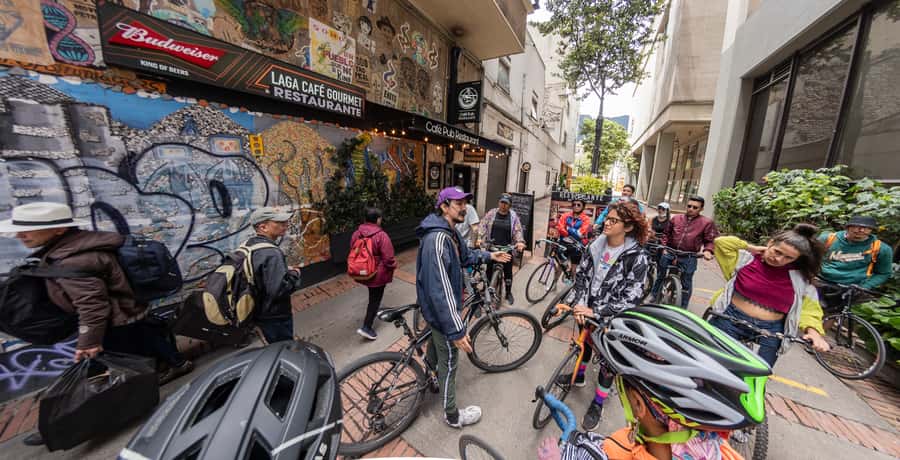
You’ll bike using city bike lanes or on Ciclovía Sundays, depending on the day and route conditions. That difference is more than logistics. It affects how safe, comfortable, and culturally “alive” the ride feels.
On bike lanes, the experience is practical: steady movement, predictable segments, and a way to see Bogotá without constant stop-start traffic. On Ciclovía Sundays, the city opens up for cyclists and cultural activity on Sunday mornings, so the whole vibe shifts. You’re not just watching street art; you’re moving through a Bogotá that’s temporarily built for people on bikes.
Either way, the point is the same: the bicycle gives you agility. You can cover different neighborhoods without long transfers, and you can position yourself at murals at the right distance—close enough to notice details, far enough to grasp the full composition.
What to bring (and what to avoid)
- Bring sports shoes.
- You’ll be biking in rain or shine; you’ll get a rain poncho.
- No backpacks and no valuables are allowed, so plan for small essentials only.
That rule isn’t just fussiness. It keeps bikes and stops manageable, and it avoids the awkward problem of trying to secure bags while you’re focusing on murals.
The guide is the engine: Diego-style street art storytelling
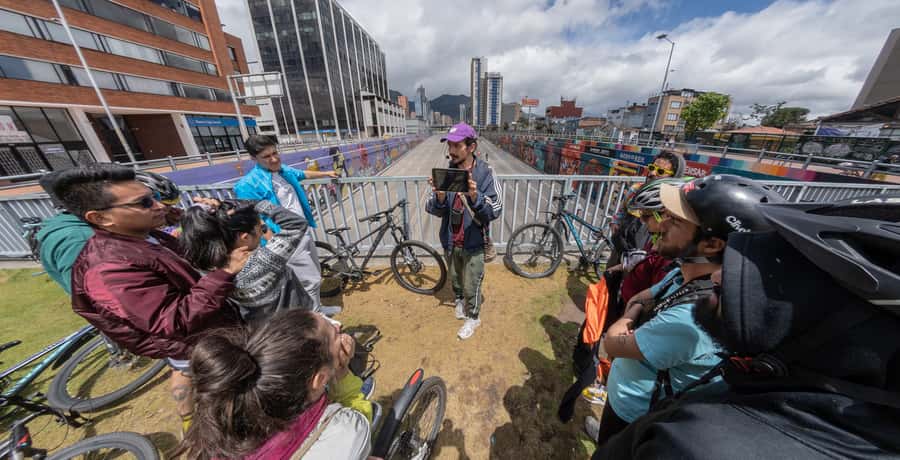
What sets this tour apart is the guide’s passion for street art and the fact that the guide is also a renowned urban artist. You’ll hear stories tied to the artwork’s history, techniques, and meanings, which is what turns a colorful walk into something you can actually understand.
One guide name you may run into is Diego. In practice, Diego’s approach is the kind that sticks: he explains art, graffiti, and history across multiple neighborhoods, and he connects the walls to the people and community behind them.
And that’s what you’re paying for. Sure, you’re getting bike time and murals. But the real value is interpretation. Without that, you can still enjoy street art as decoration. With it, you start seeing how Bogotá uses graffiti to talk about identity, politics, and social struggle.
The language lineup is also practical: English, Spanish, French, German, and Italian. That matters if you want your guide to match your language comfort level while you’re moving.
Price and time: is $62 a smart value for 3 hours?
At $62 per person for 3 hours and 13 km, you’re in the “mid-priced” zone for a specialized tour. Here’s how I’d judge value based on what’s included:
You’re getting:
- A guided route across four neighborhoods
- A bike-based format (so you’re not wasting time in transit)
- Multiple mural stops, including giant murals
- A coffee factory stop
- Rain poncho support
- Meaning-focused art interpretation
So the question isn’t only whether the price is low. It’s whether the tour saves you time and adds understanding. In this case, it does both. The route compresses what would take you half a day—or longer—into a structured loop. And the guide’s storytelling increases the odds you’ll understand what you’re seeing, not just where it is.
A quick reality check
You should budget energy. This is not a museum tour where you stand still. You’ll pedal, stop, listen, and keep moving. If you can handle that, $62 feels fair for a guided street art experience with real city coverage.
Who this Bogotá urban art bike tour is best for
This is a strong fit if you:
- Like street art more when it has meaning behind the color
- Want to learn how Bogotá’s graffiti movement works in different neighborhoods
- Enjoy bikes and want a car-free-feeling way to cover 13 km
- Are curious about Colombia’s post-conflict peace themes expressed in public art
- Prefer small group or private formats (available)
You might skip it if you:
- Want a mostly passive, low-activity tour
- Need to carry a lot of gear (since backpacks aren’t allowed)
- Get uncomfortable biking in rain (even with a poncho)
Should you book this tour?
I’d book it if you want Bogotá street art with context, not just visuals. The combination of women artists, politically meaningful murals, and that peace/post-conflict message gives the tour more purpose than many basic graffiti walks. Add the bicycle format, and you get efficient neighborhood coverage without feeling rushed to just “hit spots.”
If you’re a comfortable cyclist and you like learning while you move, this is an easy yes. If you hate biking, hate stopping and listening, or you’re carrying more than small essentials, then look for a different style of tour.
FAQ
How long is the urban art bike tour?
The tour lasts 3 hours.
How much biking is included?
The route covers 13 km using bike trails through multiple neighborhoods.
Where does the tour start?
Meet in front of the big red wall at Carrera 3#12-52, in La Candelaria. Look for your guide in a purple hoodie, cap, or umbrella.
Does the tour run in rain?
Yes. It takes place rain or shine, and you’ll be given a rain poncho.
What should I bring, and what’s not allowed?
Bring sports shoes. Backpacks and valuables are not allowed.
What languages are available for the guide?
The live guide is available in English, Spanish, French, German, and Italian.