REVIEW · COLOGNE
Explore Cologne’s best Street Art Quarter
Book on Viator →Run by LocalBini - The go-to platform for Experiences by Locals in Europe · Bookable on Viator
Street art can read like a neighborhood diary. This 90-minute walk through Cologne’s street art quarter puts you face-to-face with recognizable artists and different graffiti styles, then translates the visuals into clear context as you move on foot. I particularly like the tight small-group attention and the variety of styles you’ll see from paste-ups to large murals, all focused in one area.
There’s one thing to think about: the route is compact, so if you want a longer, slower art crawl, the time may feel short for the $152.67 price tag.
In This Review
- Quick Take on What You’ll Get
- Key Highlights to Expect
- Why Ehrenfeld Street Art Works So Well on Foot
- Goethe-Apotheke im Helioshaus: Architecture First, Then Art
- Heliosstraße Stops: Paste-Ups, Murals, and Street-Level Storytelling
- Bürgerzentrum Ehrenfeld: Social Messages and Mosaic Craft
- Lessingstraße and the Graffiti Energy of HNRX and Just Love
- Roa’s Monochrome Animals and the Community Feel at Ain Café
- Schönsteinstraße Memorial: Captain Borderline and the Edelweißpiraten
- Ehrenfeld Train Station Murals: Where Art Meets Daily Motion
- Captain Borderline and Faith47 in the Heart of Cologne’s Art Speak
- City Leaks Festival Walls and the Art Walk Finale at Goldmund
- Price and Value: Is $152.67 Worth It for 90 Minutes?
- Who This Tour Is Best For
- Should You Book This Cologne Street Art Tour?
- FAQ
- How long is the street art quarter experience?
- What does the tour cost?
- How big is the group?
- Is the tour offered in English?
- What’s included in the price?
- What are the stops like?
- Where do you meet and where does it end?
- Is food included?
- Can I cancel for free if plans change?
Quick Take on What You’ll Get
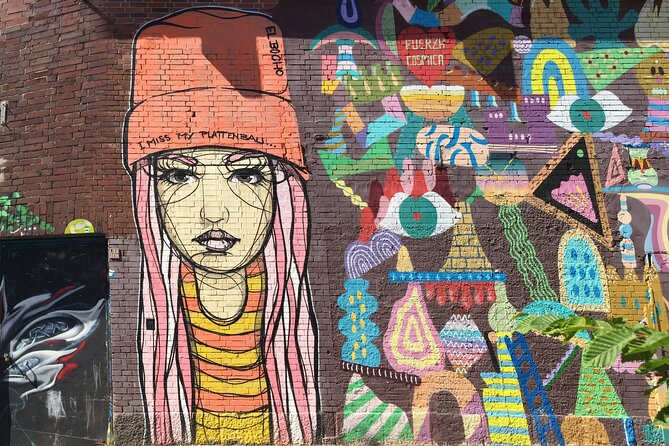
You’ll start at Goethe-Apotheke im Helioshaus (an 1884 architectural landmark repurposed for medical practices), then work your way through Ehrenfeld street art stops tied to Heliosstraße, Bürgerzentrum Ehrenfeld, Lessingstraße, and the Ehrenfeld train station area. Along the way, you’ll learn how styles shift by location and purpose, from ephemeral paste-ups like Sei Leise to bold statement murals by Captain Borderline, Faith47, Roa, and others, before ending near Café Goldmund.
Key Highlights to Expect
- Small-group focus (max 8): more time for questions and photo pauses.
- One-footprint neighborhood route: you’ll bounce between art spots without long transfers.
- Multiple street art formats: paste-ups, mosaics, monochrome murals, and large wall pieces.
- Artist-name wayfinding: you’ll connect the visuals to names like Captain Borderline and Faith47.
- Finish at Goldmund Literatur Café: a handy landing point for a snack or cake.
- English-speaking local guide energy: you get both technique and city context as you walk.
You can also read our reviews of more tours and experiences in Cologne.
Why Ehrenfeld Street Art Works So Well on Foot
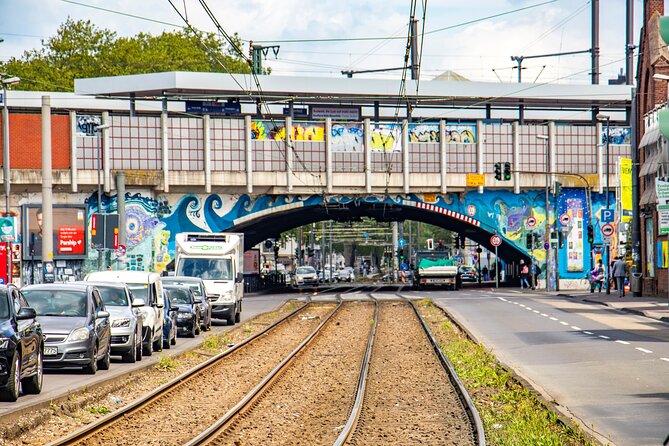
Cologne’s street art is not just something you spot from a distance. On a good walking route, you start noticing how walls, stairwells, courtyards, and even stations shape the art you see. That’s what makes this tour a smart format: it’s designed as a concentrated stroll through the Ehrenfeld area rather than an all-day hop from one far-off mural to another.
Ehrenfeld is also practical for travelers. You’re moving through a dense patch of streets and façades where street art actually feels part of daily life, not staged for visitors. The tour’s small group (up to 8) helps here too. When there are fewer people, you spend less time waiting and more time looking closely at details like letterforms, shading choices, and how artists handle big public surfaces.
The other thing I like is that you don’t just get “pretty pictures.” You learn the differences between street art and graffiti styles while you’re watching them unfold in real locations. That turns each stop into a mini lesson you can immediately see, instead of a vague lecture.
Goethe-Apotheke im Helioshaus: Architecture First, Then Art
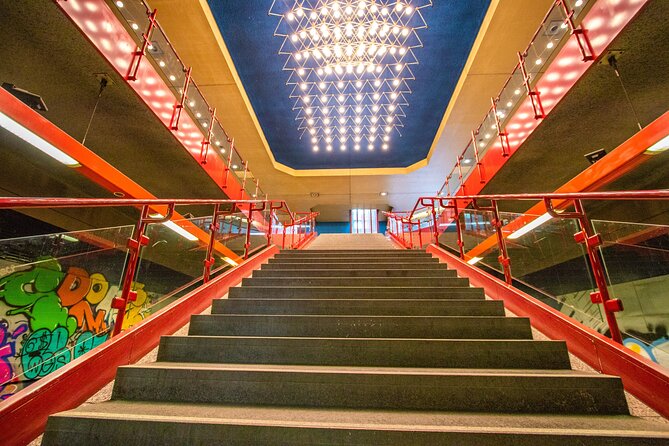
Your walk begins at Goethe Apotheke in the Helioshaus, a classical architectural jewel from 1884. The building is now used for medical practices, which means you’re not looking at a wall that was built solely for art. You’re looking at architecture that already has character—arched façades, ornate staircases, and a light-filled atrium—and then seeing what street art adds to that atmosphere.
Why this first stop matters: it’s a reset for your eye. Before you hit the murals, you’re training yourself to notice shapes, curves, and how light hits surfaces. That makes it easier to appreciate later pieces, especially works that rely on contrast—bright colors against darker wall textures or monochrome portraits that depend on tonal range.
Practical note: this first segment sets the tone for the tour. Expect a bit more “look and learn” here than at later, faster-moving photo stops. It’s a good way to start because it gets you oriented in Cologne’s design language before you switch into street-level visual culture.
Heliosstraße Stops: Paste-Ups, Murals, and Street-Level Storytelling
From there, you head into Heliosstraße, where the walls shift from architectural details to street art that feels current and sometimes temporary. You’ll spot works tied to Sei Leise’s ephemeral paste-ups, which are easy to overlook if you’re only hunting for big, obvious mural blocks. But when you’re guided through them, you start seeing the tactics: quick layering, sudden pop, and the way street art can feel like it’s speaking in real time.
You’ll also encounter large-scale murals connected with Alexander Isakov’s utopian architecture themes. This pairing is smart. Paste-ups teach you how quickly street art can appear and how it can carry meaning in small moments. Big murals teach you how artists build long visual arguments—how lines, buildings, and idealized forms can turn a street wall into a kind of dream-machine.
If you’re the type of traveler who likes to connect dots, this is where it happens. You start noticing recurring visual strategies: when an artist uses clean geometry vs. rough edges, when color feels like information vs. emotion, and how some pieces invite reading while others hit you more like a feeling.
Bürgerzentrum Ehrenfeld: Social Messages and Mosaic Craft
The tour then turns toward Bürgerzentrum Ehrenfeld, where the focus shifts toward murals that ask you to think. This is where the art isn’t only about style. It’s also about ethics, community, and social commentary.
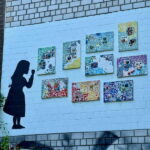
You’ll see socially critical work attributed to Captain Borderline, along with mosaic magic by Barbara Deppner. Mosaic art changes how you perceive the wall because it’s made to be read in fragments. Up close, you notice individual pieces and texture. Step back, and the image clicks into a whole. A guide helps you know when to move in closer for details and when to back up for the overall message.
Here’s a good mindset for this stop: don’t rush the first 30 seconds. Spend time on a detail you might miss on your own—an expression in a face, a symbol in the background, a repeated shape. This tour’s best value is that it trains you to look like an art critic without needing any art-school background.
Possible drawback at this point of the route: if you’re expecting a long, sit-and-stare museum pace, this is still a walking tour. You’ll get meaningful attention, but it’s timed. So if a single wall completely grabs you, take a photo, then do one careful look-through at eye level before you move on.
Lessingstraße and the Graffiti Energy of HNRX and Just Love
Next up is Lessingstraße, an urban canvas that leans more toward graffiti style and signature lettering. You’ll look for works attributed to HNRX, and the tour highlights a piece titled Just Love—an ode to borderless creativity and the artist’s playful spirit.
This stop is useful if you want to understand graffiti as more than vandalism or tag-only scribbles. Graffiti has its own design rules: flow, legibility, layering, and how colors act as structure. A good guide makes those rules visible by pointing out what you might otherwise treat as background noise.
One practical tip: graffiti walls often sit at angles or on corners. If the tour pauses, don’t just point your camera straight ahead. Look slightly sideways too. Many details show up in the way the lettering wraps around the wall edge or meets another piece nearby.
Roa’s Monochrome Animals and the Community Feel at Ain Café
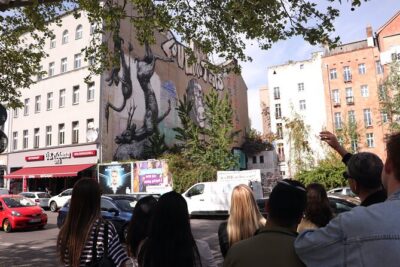
Now the tone changes again with Roa’s monochrome murals. These pieces lean into stark animal portraits and themes that blend mortality and vitality. Monochrome art can feel more intense because color isn’t doing the storytelling. Instead you read form, shadow, and expression.
That’s exactly why this stop works in a guided route: by the time you reach Roa, you’ve already seen color-heavy street art, paste-ups, and mosaic work. Monochrome becomes a contrast lesson. You learn how tone and structure can carry emotion just as strongly as bright palettes.
Nearby, you’ll also find community-driven art adorning Ain Café. It’s a reminder that street art isn’t only on large walls. In the right neighborhoods, it’s woven into small public places where people actually meet. If you’re planning your own wandering afterward, this is the kind of detail that helps you spot where to walk next.
Schönsteinstraße Memorial: Captain Borderline and the Edelweißpiraten
The tour continues to Schönsteinstraße, where you’ll see Captain Borderline’s memorial to the Edelweißpiraten resistance fighters. This stop adds weight to the street art story. It shows how artists use walls as public memory—turning neighborhood streets into places where history can be seen and felt.
Why that matters for you: it stops street art from being only an aesthetic hobby. It becomes civic language. Even if you’re not a Germany history specialist, a guide can help you understand how resistance stories connect to identity and public space.
This is also a moment where you might want to slow down and take fewer photos. Memorial pieces can feel better when you let them land first, then capture what you need after you’ve read the visual message.
Ehrenfeld Train Station Murals: Where Art Meets Daily Motion
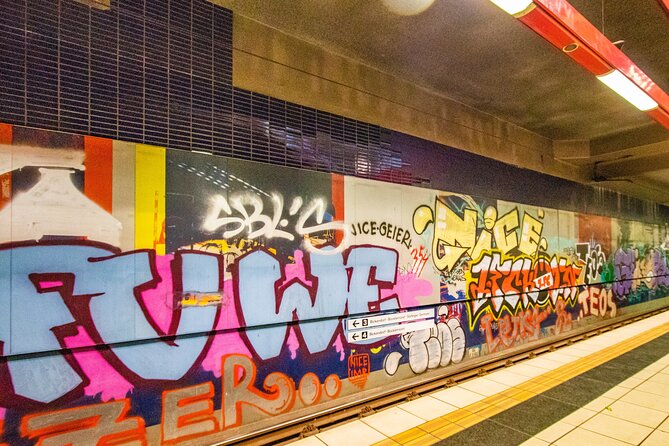
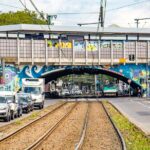
One of the most practical and surprising segments is the street art around Ehrenfeld train station. The station area shows how street art survives in motion: commuters pass, trains arrive, and the art keeps existing in the same place, regardless of who’s looking.
You’ll see works such as Huami’s Freedom and El Bocho’s playful I miss my Plattenbau. This pairing is telling. Freedom is bold and direct. I miss my Plattenbau is lighter and nostalgic, but it still points to social memory. That blend is part of why street art feels local rather than generic.
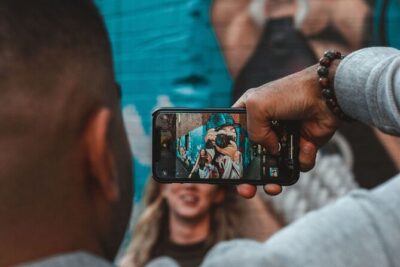
If you’re using your phone camera, be patient here. Station areas have changing lighting and people walking through frames. Let the guide’s pacing help you pick moments when you can frame the piece cleanly.
Captain Borderline and Faith47 in the Heart of Cologne’s Art Speak
The tour then focuses on Cologne’s artistic spirit through murals by Captain Borderline and Faith47. You’ll see Captain Borderline’s Animals and Faith47’s Maria—two very different visual languages placed in the city’s heart.
What I like about having these two stops back-to-back is that it forces contrast. Animals brings you to form and symbolism through street-level portrait energy. Maria brings a religiously inspired element that can feel surprising in a street-art context. It’s a reminder that street art isn’t stuck in one theme. Artists borrow from everything their community carries—belief, fear, identity, humor.
If you’re worried this might feel confusing, don’t. The guide’s job here is to help you read what you see. You’ll get the why behind the what, so it doesn’t feel like random wall decoration.
City Leaks Festival Walls and the Art Walk Finale at Goldmund
The last stretch takes you through the City Leaks Festival’s urban garden landscape of street art. You’ll look for works linked to M-City’s The Eye and SYM1’s Captain Ehrenfeld murals. Festival-style public art often has a community texture. Even if you don’t know the backstory, the walls can feel like they were made for shared attention.
Then the walk ends at Goldmund Literatur Café Restaurant on Glasstraße 2. The tour even makes it easy to continue the experience: it’s a great place to grab a piece of cake and decompress after you’ve been looking up close for 90 minutes.
This ending matters because it turns the tour into a day plan. You don’t have to scramble for food or navigate out of the neighborhood right away. You can just sit, review your photos, and decide what to explore on your own next.
Price and Value: Is $152.67 Worth It for 90 Minutes?
$152.67 per person is not a bargain price for an hour and a half. The value only makes sense if you care about two things this tour does well.
First, it’s a small group experience, capped at 8 travelers, with an English-speaking local eager to show you the city. That matters because you’re paying for time with a guide who can explain style differences and point out details you’d likely miss when street art hunting alone.
Second, you get a route that strings together multiple kinds of street art—paste-ups, mosaics, monochrome animal portraits, graffiti lettering, and memorial murals—within one compact walking area. If you like variety, you get your money’s worth faster than someone who only wants the biggest mural or only wants graffiti tags.
The main drawback, hinted by the overall feedback, is that the tour can feel short compared to the price. If you’re the type who wants to linger on one wall until you’ve fully absorbed it, you may wish it ran longer.
Who This Tour Is Best For
This is a great fit if you:
- like walking tours that feel practical and not overly abstract
- enjoy street art but want help reading the styles and meanings
- want a focused route in Ehrenfeld without doing the guesswork
It may feel less satisfying if you:
- only want the single most famous murals and prefer long unstructured time
- plan to sprint through photos and don’t care about context
Should You Book This Cologne Street Art Tour?
I’d book it if you want street art with meaning, not just a photo parade. The combination of a compact Ehrenfeld route, a small group size (max 8), and guided explanations of different street art and graffiti styles is the core value. It’s especially good for first-timers to Cologne street art who want to get their bearings fast.
I’d pass or manage expectations if you want a longer art walk. Since the experience is about 1 hour 30 minutes, you’ll appreciate it most if you treat it like an introduction plus a curated “best-of the area” sampler.
FAQ
How long is the street art quarter experience?
It lasts about 1 hour 30 minutes.
What does the tour cost?
The price is $152.67 per person.
How big is the group?
The tour has a maximum of 8 travelers.
Is the tour offered in English?
Yes, it’s offered in English.
What’s included in the price?
You get an enthusiastic, knowledgeable local guide and positive vibes. The tour also uses a mobile ticket.
What are the stops like?
You’ll visit several street art locations around Ehrenfeld, including Heliosstraße, Bürgerzentrum Ehrenfeld, Lessingstraße, areas near the Ehrenfeld train station, and a finale at Goldmund Literatur Café.
Where do you meet and where does it end?
You start at Goethe Apotheke, Venloer Str. 389, 50825 Köln, Germany, and end at Goldmund Literatur Café Restaurant, Glasstraße 2, 50823 Köln, Germany.
Is food included?
No. Food, drinks, and snacks are not included.
Can I cancel for free if plans change?
Yes. You can cancel up to 24 hours in advance for a full refund.