REVIEW · BROOKLYN
Street Art Tour in New York City with Local Expert Guide
Book on Viator →Run by Friendly Local Guides · Bookable on Viator
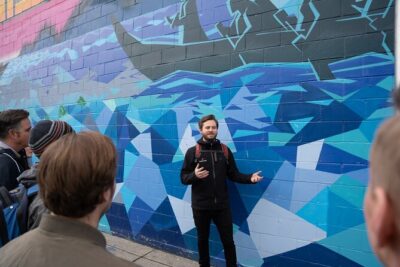
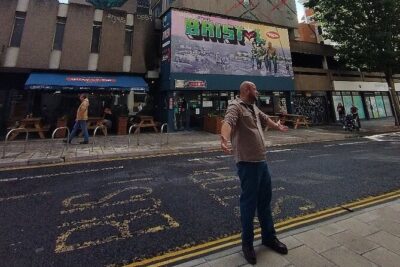
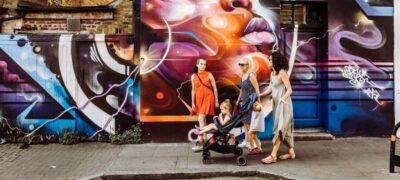
Street art in New York moves fast. This 2-hour Brooklyn-based route threads DUMBO Walls, Lower East Side alleys, and the High Line so you see how styles change from wall to wall.
I like that it’s built for a small group of up to 10, so you can actually hear the guide and keep your eyes on the details. I also like the mix of approaches on the same walk: from bigger mural walls to tags and street-level spray. One thing to consider is that the trip includes less “polished” street expression, so if you only want museum-style art, this may feel messy.
You’ll start at 9:00 am with pickup offered and a mobile ticket, and you’ll cover several neighborhoods across boroughs. Expect a moderate amount of walking and a lot of looking up. The tour includes what it needs for street stops, but you may still want to plan for transit costs depending on how you move between areas.
In This Review
- Key things that make this tour worth your time
- Starting in DUMBO: the DUMBO Walls project and big-city photo angles
- Down to Little Italy: L.I.S.A. public art and quick museum detours
- The Lower East Side wall gauntlet: Freeman Alley, Bowery Mural, and older brickwork
- East Village and Lower East Side parks: First Street Green Cultural Park and Centre-Fuge
- SoHo hip-hop mural energy and the art-scene shortcut walk
- Finishing on the High Line: JR’s Inside Out and Kobra’s V-J Day wall
- Price and logistics: is $159 a smart buy for 2 hours?
- Who should book this street art tour (and who should skip it)
- Final call: should you book?
- FAQ
- How long is the street art tour?
- What is the meeting time?
- Is pickup available?
- What languages is the tour offered in?
- How big is the group?
- Do I need to buy tickets or pay admission fees at the stops?
- What should I wear or how fit do I need to be?
- Do I get a mobile ticket?
- Is cancellation free?
Key things that make this tour worth your time
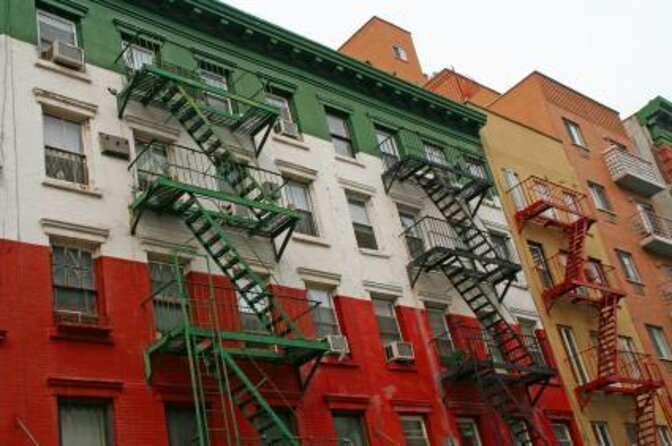
- Small group size (max 10): better viewing and easier conversation with your guide.
- Real street art variety: graffiti, painted murals, and even digital-linked work show up along the way.
- Photo-friendly targets: iconic walls and building facades give you plenty of sharp angles.
- Neat neighborhood jumping: DUMBO to Little Italy to the Lower East Side to SoHo to the High Line.
- You get “after the tour” direction: your guide points you toward what’s worth seeing next.
Starting in DUMBO: the DUMBO Walls project and big-city photo angles
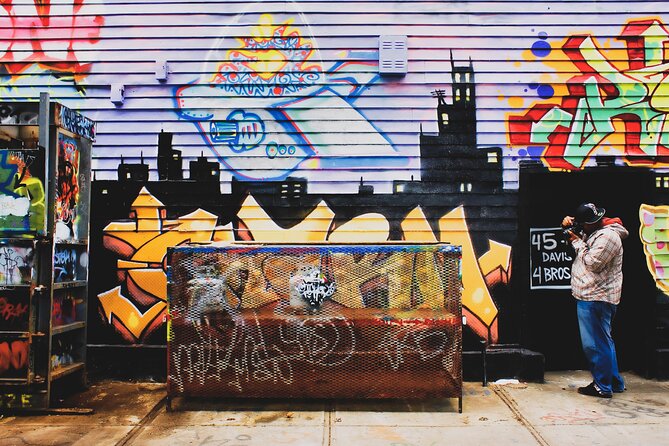
You begin in DUMBO at 20 Jay St. #510, in the DUMBO Walls space. This is one of those setups that proves street art can be both public and intentional: the project involves Jonathan Levine Gallery, the DUMBO Improvement District, and Two Trees Management Co. The space is eight walls, each one acting like a separate chapter of the city’s visual mood.
Here’s what I find useful about starting in DUMBO: the area gives you a clean baseline for the tour. You get artists you’ll recognize from the wider street-art world—names like CAM, DALeast, Eltono, Shepard Fairey, Faith47, MOMO, Stefan Sagmeister, and Yuko Shimizu appear in the DUMBO Walls lineup. Seeing a wall with that scale right at the start helps you spot the “why” behind later work that’s smaller, rougher, or more tag-heavy.
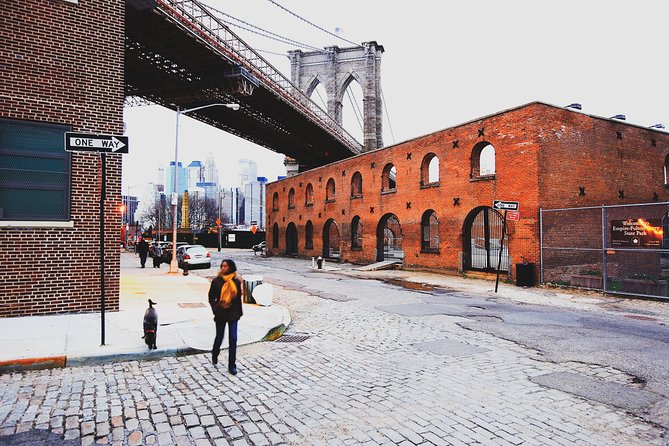
There’s also a practical side to this stop. You’ll be close to the Brooklyn Flea area (and if you’re curious, it’s the kind of place where you can wander after the tour). You’ll also get a feel for moving between Brooklyn and Manhattan—there’s mention of crossing via the Brooklyn Bridge or Manhattan Bridge during the itinerary, and that matters because it changes what you can see and photograph as you go.
Why it works for you: you’ll start with walls that are easier to read at walking speed, so your eyes get calibrated fast.
Watch for: if you’re expecting only “anonymous street walls,” DUMBO Walls includes artists with higher profiles, and that can shift the vibe.
You can also read our reviews of more tours and experiences in Brooklyn.
Down to Little Italy: L.I.S.A. public art and quick museum detours
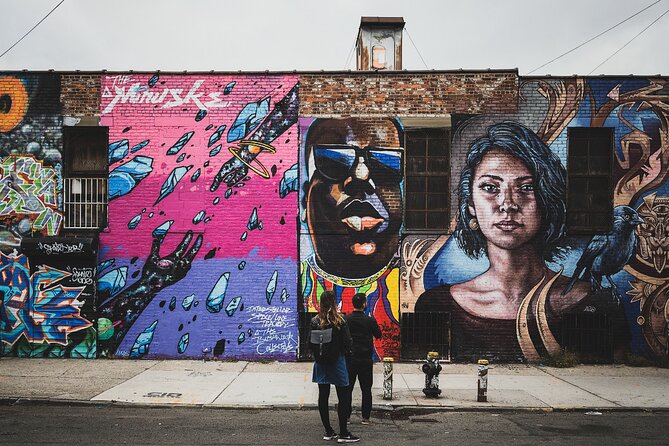
Next you head toward Little Italy, specifically the L.I.S.A. Project around Mulberry St. The L.I.S.A. Project NYC has commissioned artists from around the world for about five years, building a public-art footprint in and around the neighborhood. If you like street art that changes with time, this stop is a good proof point: the work has continued to evolve, including pieces by Sonny Sundancer, Nick Walker, GATS, KaNOkid, Crash, and BKFOXX.
What you’ll appreciate here is that you’re not just looking at art—you’re looking at how a neighborhood supports it. The project is tied to the Merchants Association of Little Italy, which helps explain why these murals show up on storefront-adjacent walls rather than only in isolated back alleys. It’s a small but meaningful difference: the art here often feels like it belongs to daily life.
You’ll also pass two major museum options along the way: the Tenement Museum and the International Center of Photography Museum. These aren’t listed as required stops, but the route is positioned so you can decide on the spot whether you want to extend your day. If your group is museum-curious, this is a handy fork in the road.
Why it works for you: you’ll see how public art can act like a neighborhood brand, not just an underground message.
Watch for: the tour time is tight—if you want a full museum visit, you’ll need to plan that separately.
The Lower East Side wall gauntlet: Freeman Alley, Bowery Mural, and older brickwork
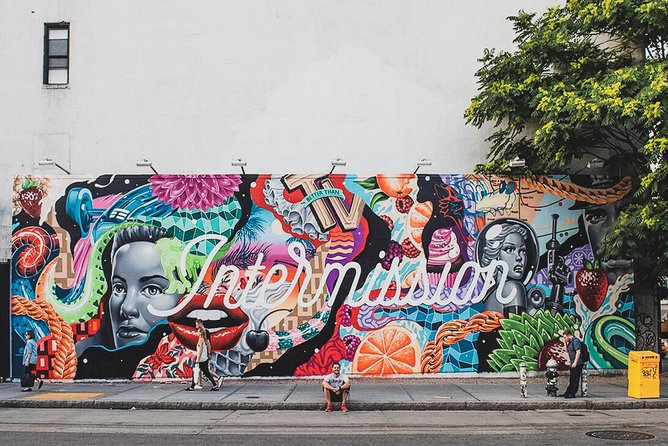
Now the tour leans more street-level. At Freeman Alley on the Lower East Side, you’ll look at a narrow passage known for graffiti coverage. This is the kind of place where the “art” isn’t always one clean mural—it can be layered tags, pieces on brick, and a wall that feels like it’s been worked on for years. Artists such as ASVP, Army of One, and Hanksy are mentioned, and the most recent mural highlighted here is James Goldcrown’s Love Wall, with colorful spray-painted hearts.
If you’re the type who enjoys visual archaeology—like, what’s newer versus what’s been overwritten—Freeman Alley is where you can start picking those clues up. It also sets expectations for the rest of the route. You’re not only chasing curated designs; you’re also learning to read street expression in its raw form.
From there, you’ll pass a landmark on your way: the Basilica of St. Patrick’s Old Cathedral. You get a quick reminder that this area isn’t only about street art; it’s also about architectural scale and older landmarks that anchor the neighborhood.
Then comes 76 E Houston St, the Bowery Mural. This is one of the most famous “art program on a wall” stories in the city. Nearly 40 years ago, Keith Haring put his work on the concrete canvas, and afterward the wall became a magnet for vandal tags. Later, curator Jeffrey Deitch teamed up with Tony Goldman of Goldman Global Arts (owner of the wall) to bring in acclaimed artists worldwide, including Os Gemeos, Shepard Fairey, Kenny Scharf, and Ron English.
Why it works for you: you see a direct contrast—street tagging versus intentional mural programming—without leaving the neighborhood.
Watch for: if your ideal street art is always “museum-perfect,” these stops may feel more chaotic than you want.
East Village and Lower East Side parks: First Street Green Cultural Park and Centre-Fuge
After the dense wall sections, the route opens up into outdoor art spaces. At First Street Green Cultural Park (33 E. First St), you’ll find an open-air art setting founded in 2008. Think of it as a public canvas where multiple styles coexist. The mural competitions here have included artists such as Vernon O’Meally, Karlis Rekevics, Jeromy Velasco, Alexis Duque, Emily Noelle Lambert, Justin Rodier, Marc Pelletier, Paul Paddock, Robert Plater, Phlegm, and See One.
I like this stop because it changes how you walk and how you look. Instead of squeezing into narrow alleys or scanning wall-to-wall, you get a more relaxed viewing pace. The park format also makes it easier to compare styles and techniques without feeling like you’re constantly dodging foot traffic.
You’ll then move to Centre-Fuge Public Art Project at E. First St. This one is tied to construction sites—Jonathan Neville and Pebbles Russell started it in 2011 with the goal of turning bland construction trailers into colorful murals. Periodically, exterior walls of those sites get covered with spray-painted work, with contributors like Cycle 21, Julia Cocuzza, Mike Kuhn, Damien Miksza, Col Wallnuts, and Kwue Molly.
Why it works for you: you’ll see street art reacting to modern city life—construction, logistics, and constant change.
Watch for: because construction murals come and go, some details can vary from day to day, and you’re always seeing a snapshot in motion.
SoHo hip-hop mural energy and the art-scene shortcut walk
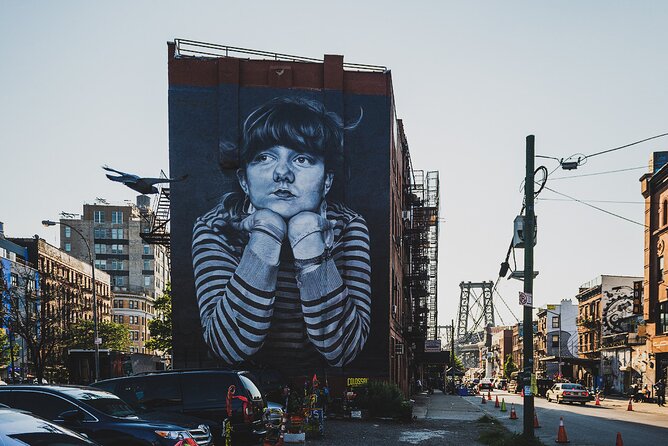
Next up is SoHo, where you’re shown a mural that explicitly connects street visuals to hip-hop culture. The piece pays homage to graffiti and rap, with reference to 1970s New York break dancing. You’ll notice specific elements called out during the walk: a graffiti-bombed subway train, a boombox playing “Planet Rock” by Afrika Bambaataa, and a Mugsy pin painted by Doze Green, tied to the Rock Steady Crew.
This is a great stop if you like street art that includes cultural references you can decode on your own. The guide’s role here matters because the mural is packed with callbacks—without context, it can look like a busy collage, and with context it becomes a whole message.
SoHo also gives you options nearby. The route brings you close to the Whitney Museum of American Art, the Ground Zero Museum Workshop, and the David Zwirner art gallery. You might not go inside, but the proximity helps you keep the day flexible. If you’re someone who uses street art as a warm-up before galleries, this is a smart ending-in-progress.
Why it works for you: the art isn’t just decoration; it’s tied to a story you can actually talk about later.
Watch for: if you’re strict about timelines, remember you’re still within a 2-hour window overall.
Finishing on the High Line: JR’s Inside Out and Kobra’s V-J Day wall
You wrap up at the Linear Park on the West Side, where you can see High Line Art along and near the walkway. The High Line itself is elevated, which makes the views part of the show—lower Manhattan shows up in the frame, and the walls around the route give you more visual angles than a standard sidewalk crawl.
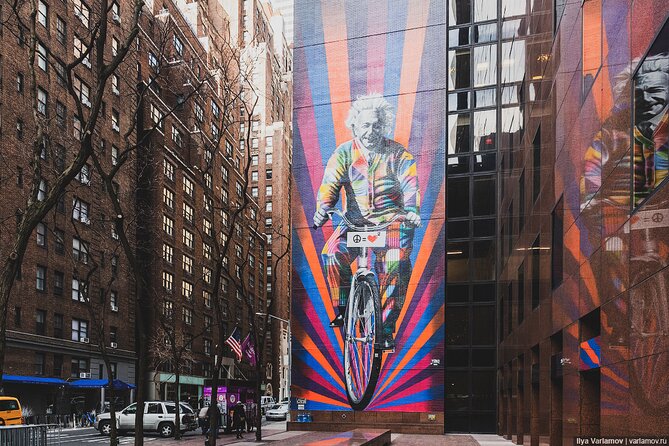
This is also a place where bigger-name street artists show up through public art invitations. Friends of the High Line has invited artists worldwide, including JR for a large-scale mural portrait connected to the Inside Out Project (noted here in 2011). You’ll also hear about Kobra (2012), with a colorful mural inspired by Alfred Eisenstaedt’s 1945 photograph known as V-J Day.
I like the High Line as a finale because it slows you down just enough to take everything in. You’ve already learned how the tour reads streets, walls, and materials; now you get a “big picture” sense of how public art sits in the city landscape.
Why it works for you: you finish with both art and city views, and you can decide how long you want to keep walking on your own.
Watch for: wear shoes you trust. An elevated park plus lots of neighborhood transitions adds up.
Price and logistics: is $159 a smart buy for 2 hours?
At $159 per person for about 2 hours, the value depends on what you want from the time. You’re not paying for museum entry. You’re paying for a guide and a tight route through multiple neighborhoods plus the added benefit of recommendations afterward on what to see next.
Two things make the price feel more reasonable. First, the group is limited to 10 participants, which is exactly what helps for street art—small groups reduce noise and let you hear the guide while you focus on fine details. Second, the tour includes all fees and taxes, and the listed street stops show free admission (like the mural walls and open-air parks). If your day includes a bunch of expensive paid attractions, that matters.
Now the practical side: the itinerary includes subway-level movement between areas, and one important thing to take seriously is transit cost. Even if pickup is offered and the tour is near public transportation, the schedule and movement may still require you to pay your own subway rides. I’d bring a metro card or plan to have funds ready, and confirm how transportation works before you go.
Also, be ready for walking. The route covers several neighborhoods and multiple stops clustered around Lower Manhattan streets and the High Line. The fitness requirement is listed as moderate, which usually means you’ll be fine if you’re comfortable walking city blocks and standing for short viewings.
Bottom line: if you like street art that includes both commissioned murals and messier, tag-driven expression, the price is in the fair zone. If you only want a polished “gallery wall” experience, you might feel the mismatch.
Who should book this street art tour (and who should skip it)
Book it if you want a guided street-art sampler across multiple styles and neighborhoods. The route takes in DUMBO Walls, Little Italy’s L.I.S.A. Project, Freeman Alley, the Bowery Mural tied to Keith Haring and later programming, and outdoor art spaces like First Street Green Cultural Park and Centre-Fuge. You’ll also end with High Line Art, which adds both street art and views.
Skip or reconsider if you need everything to be strictly curated. Some parts of the walk are explicitly about graffiti coverage and tags, not only about big commissioned murals. If you’re the type who wants only carefully produced pieces, you may find portions of the route feel closer to vandalism than to art.
It also helps if you like planning after the tour. The format includes expert advice on what to do next, which is handy if this is your first trip to New York or your first day across these neighborhoods.
Final call: should you book?
I’d book this tour if you want a small-group, neighborhood-hopping street art day with real context, not just a self-guided photo walk. The route is designed to show contrasts—commissioned mural projects beside rougher street layers—so you leave with a better read on what makes New York street art tick.
I’d hesitate only if you hate walking crowds of city sidewalks for two hours, or if you’re strongly anti-tag and want everything to look like it was painted for a gallery wall.
If you do book, do two smart things: pack comfortable shoes and have transit money ready in case you’ll be taking the subway between stops.
FAQ
How long is the street art tour?
The tour lasts about 2 hours.
What is the meeting time?
The start time is 9:00 am.
Is pickup available?
Pickup is offered, and the tour is listed as near public transportation.
What languages is the tour offered in?
The tour is offered in English.
How big is the group?
The experience is limited to a maximum of 10 travelers.
Do I need to buy tickets or pay admission fees at the stops?
The listed street art stops include free admission tickets, and the tour includes all fees and taxes. If you decide to enter nearby museums, any entrance fees are not included.
What should I wear or how fit do I need to be?
The tour notes a moderate physical fitness level, and you should expect walking through several neighborhoods.
Do I get a mobile ticket?
Yes, you’ll receive a mobile ticket.
Is cancellation free?
Free cancellation is available if you cancel at least 24 hours before the experience starts.