REVIEW · TIRANA
Tirana Mural Bike Tour: Street Art, Culture & Photography Stops
Book on Viator →Bookable on Viator
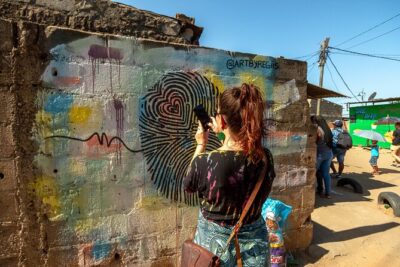
Tirana’s street art moves at bike speed. This mural-focused bike tour strings together quick stops with smart context, so you see more art in less time. I especially like the photo-friendly pacing, where each pause is short enough to keep you rolling but long enough to frame a shot.
I also love that the guide explains what you’re looking at in plain language. From Sou Fujimoto’s Reja The Cloud Pavilion to Franko Dine’s Brothers mural and its Albania–Kosovo connection, the art feels tied to real local identity rather than random wall paint. If you end up with a guide like Santiago, you’ll likely get crisp Tirana history while the ride stays easy to follow.
One possible drawback: this tour depends on good weather, and that can affect timing or plans. Also, small-group tours can sometimes shift at short notice, so try to keep a little flexibility if your schedule is tight.
In This Review
- Key highlights worth knowing
- How a bike tour turns Tirana murals into stories
- Price and timing: what you’re really paying for
- Starting in the Old Bazaar with the right kind of energy
- Reja The Cloud: photography meets public space design
- Lokomotiva: industrial textures and a tank turned to peace
- FAB Gallery and the upside-down bunker effect
- Smaller murals with big weirdness: DOG, Mots, and surreal pause time
- Myslym Shyri: the street where messages show up in daily life
- Rocket01’s nature-and-tech mural: slow down, even on a bike
- Sizmikazot’s Clothespin: playful size, practical symbolism
- Franko Dine’s Brothers: unity across borders, told in faces
- What makes the guide work (and why it matters for value)
- Bike comfort and city reality: expect quick stops and some traffic
- Small-group size: you’ll actually see your guide’s points
- Should you book Tirana’s mural bike tour?
- FAQ
- How long is the Tirana Mural Bike Tour?
- What does the tour cost?
- Where does the tour meet?
- Is the tour offered in English?
- Do I need a paper ticket?
- Is the tour limited to a certain group size, and what if the weather is bad?
Key highlights worth knowing
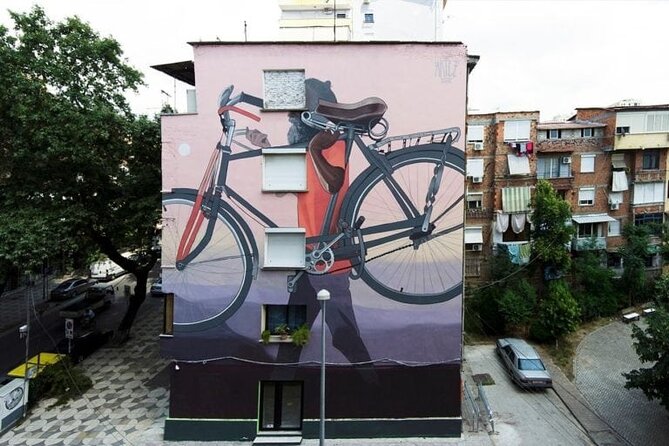
- Street art, architecture, and political symbolism in one short ride across Tirana
- Quick photo stops (mostly 3–10 minutes each) that keep the energy up
- Reja The Cloud Pavilion by Sou Fujimoto, a modern landmark made for public space
- Lokomotiva and industrial street art with a tank repurposed into a peace symbol
- Short mural interpretations along major streets like Myslym Shyri, where messages show up in daily life
How a bike tour turns Tirana murals into stories
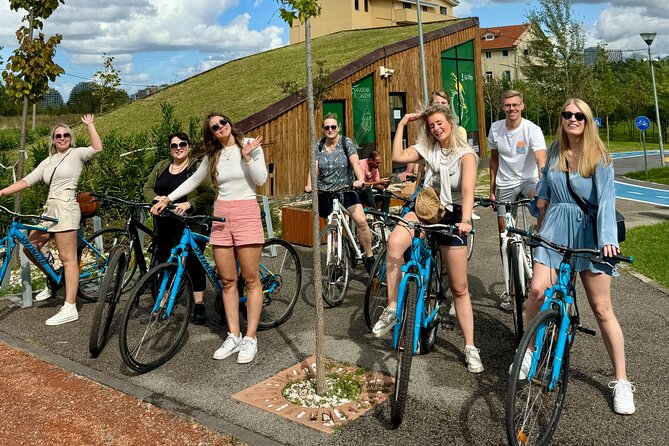
Tirana is one of those cities where you can walk for an hour and feel like you’re only scratching the surface. This bike tour helps because it turns street art into a sequence. You get context at each stop, then you move on before the city noise overloads you.
The format matters. The whole experience runs about 2 to 3 hours, and the group stays small (a maximum of 10). That means you’re not stuck waiting for a long line at every mural. Most stops are also quick, with free admission noted for each listed stop—so you spend time looking, not paying.
You also get an English experience with a mobile ticket. That’s practical for a city where you might not want to manage paper tickets while juggling maps, snacks, and photos.
You can also read our reviews of more tours and experiences in Tirana.
Price and timing: what you’re really paying for
At $42.06 per person for a 2–3 hour outing, you’re not paying for a museum ticket or a long guided lecture. You’re paying for access to a focused route, a guide who connects the dots, and the convenience of cycling between mural clusters.
The value shows up in two ways:
First, you get to cover a lot of ground without figuring out the best streets on your own. Second, the tour pauses where the art is most legible—so you actually see details instead of just snapping from the saddle and hoping for the best.
If you love street art but struggle to interpret political or social references, this is a strong match. The tour is built for people who want meaning, not just pictures.
Starting in the Old Bazaar with the right kind of energy
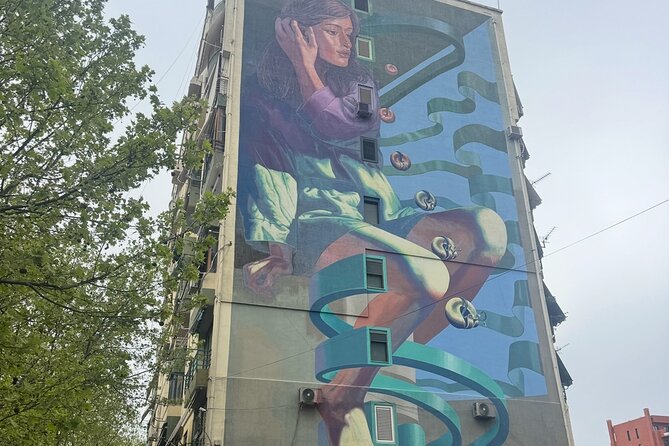
Your tour starts at the Old Bazaar area, at the coordinates 8RJF+8X2, Rruga Qemal Stafa. The first stop is Old House Bar Tirana, right in the middle of a neighborhood that feels lived-in.
This matters. Starting in the Old Bazaar helps you ease into Tirana’s rhythm. Instead of beginning in a quiet, curated area, you start surrounded by everyday commerce and street art. It’s a good mental warm-up. You get a quick introduction to the artwork themes you’ll keep seeing as you ride.
Expect a short stop—about 10 minutes—then you’re back on the bike. That quick rhythm is ideal if you’re traveling with limited time and still want multiple “wow” moments.
Reja The Cloud: photography meets public space design
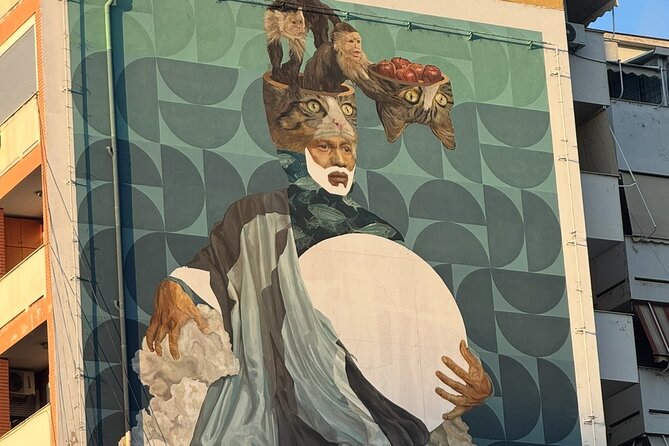
Next comes Reja, The Cloud Pavilion, designed by Japanese architect Sou Fujimoto. It’s a white steel structure in front of the National Art Gallery area, and it’s meant for people to gather and move around. Even if you’re not an architecture nerd, you’ll understand the point quickly: it’s airy, open, and built for interaction.
This is one of the stops where your photos can look better with less effort. The clean lines and open framework give you strong angles fast, and the location is designed for walking around it.
Practical tip: if you want the clearest shots, keep moving your position slightly. Because the structure is so open, your best view often comes from changing your angle rather than from standing in one spot.
The stop time is around 10 minutes, so you’ll likely get a couple of angles and then head back out to the street.
Lokomotiva: industrial textures and a tank turned to peace
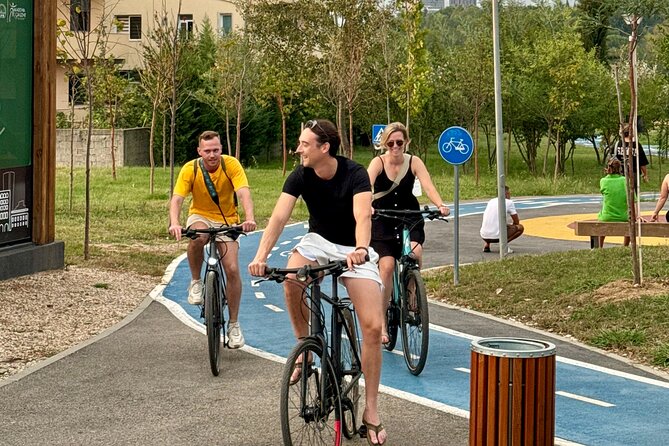
From there you bike to Lokomotiva, a former railway space that now works as a creative hub. The setting is part of the attraction. You’re not just seeing murals—you’re seeing street art layered on industrial surfaces, which makes the whole scene feel more grounded.
This stop also includes a powerful contrast: a brightly painted military tank that has been transformed into a symbol tied to peace and expression. That kind of visual flip is exactly what makes street art in Tirana feel like it’s responding to history, not ignoring it.
You’ll get about 10 minutes here. Because it’s a larger visual environment than a single mural wall, it’s a great place to slow down for photos. Look for the way the concrete textures and paint colors interact—it can make your pictures look more “real” than flat wall shots.
FAB Gallery and the upside-down bunker effect
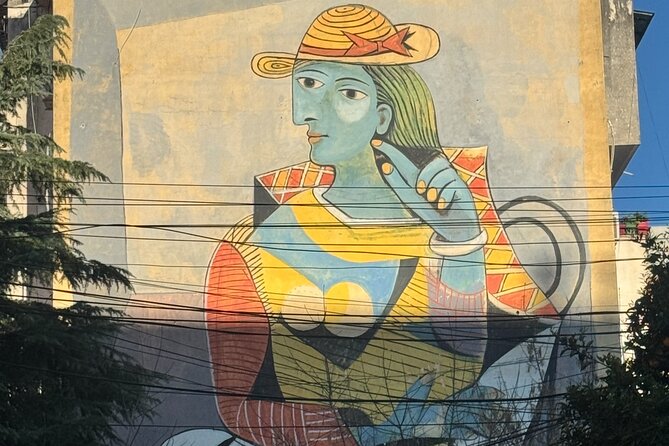
Near the University of Arts, you’ll reach FAB Art Gallery. Around it, you’ll see murals that match Tirana’s more bold, youth-driven creativity.
The standout detail here is an upside-down bunker installation. It flips the feel of Albania’s past symbols into something more interpretive—turning an image of isolation into something people can approach as art.
This stop feels like the tour’s “meaning check.” You start to notice how the city’s street art doesn’t just decorate space; it re-frames memory and identity.
Stop time is about 10 minutes, and because it’s near a student area, the vibe can feel more contemporary than the earlier bazaar moments.
Smaller murals with big weirdness: DOG, Mots, and surreal pause time
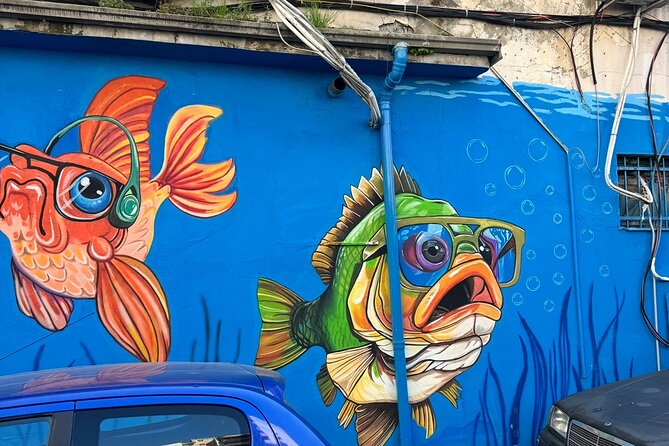
Not every stop has to be grand to matter. Beside a kiosk known as Kesulekuqja (Little Red Riding Hood), you’ll find a mural by DOG and Mots.
This one leans abstract and surreal, so it’s a great moment to practice “look longer” mode. The point isn’t to decode it like a math problem. The point is to let it spark questions.
You only get about 5 minutes here, but that short window is enough to notice shapes, colors, and the feeling the artists want you to hold onto for a second.
If you like quirky art, you’ll probably love this stop more than you expect.
Myslym Shyri: the street where messages show up in daily life
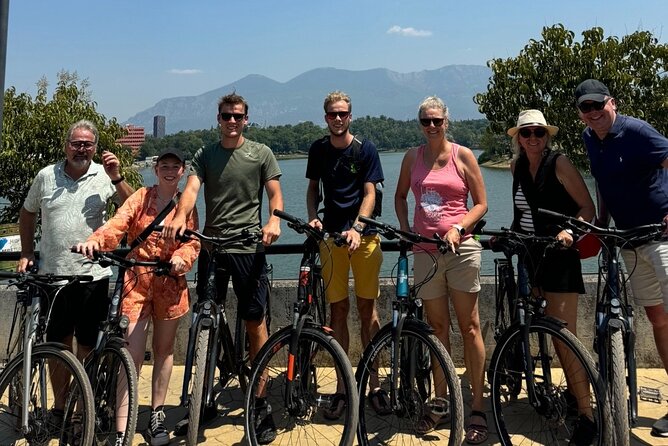
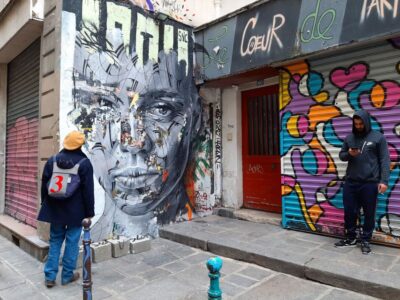
One of the best parts of the tour is cycling through Myslym Shyri, described as one of Tirana’s most popular streets. This is where the art isn’t tucked away. It shows up in your line of sight while people move through the day.
The tour pauses to interpret murals and graffiti you’d normally zip past. The guide connects what you see to youth expression and social issues shaping the city today.
This is a key value of doing the mural tour by bike instead of only walking. On foot, you can still find art, but you might not catch the thread. By bike, you’re moving across the city fast enough to compare multiple pieces back-to-back, which makes the messages easier to feel.
Stop time here is about 10 minutes. If you’re serious about photos, this is also where you should be ready to shoot quickly when the guide points out something specific.
Rocket01’s nature-and-tech mural: slow down, even on a bike
As you pass a mural by Rocket01, you’re looking at work that mixes nature and technology in unexpected ways. The effect is that you naturally slow down in your head, even if your legs keep turning the pedals.
This stop is short—around 5 minutes—but it functions like a palate cleanser between heavier symbolism stops. It also reminds you that Tirana street art isn’t only political. Some of it is simply imaginative and future-facing.
If you’re bringing a camera, consider framing this mural with part of the street leading lines. The bike speed helps you find context quickly, but you still need to aim with intention.
Sizmikazot’s Clothespin: playful size, practical symbolism
Another memorable stop is Clothespin by Sizmikazot, a duo from Turkey. The mural shows a giant clothespin that looks like it’s holding the building together.
Even if you don’t know the artist, the visual is funny first, symbolic second. It’s the kind of mural that makes you smile, then think about what holds something together in a city full of change.
This is a very short stop—about 3 minutes—so don’t plan to study it like an art-book image. Instead, take one good shot early, then use the guide’s words to catch the meaning you might miss at speed.
Franko Dine’s Brothers: unity across borders, told in faces
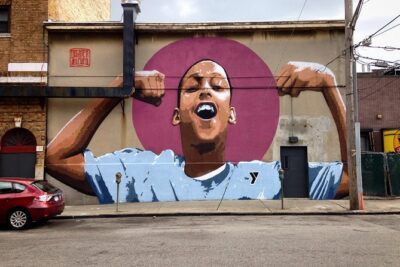
The tour ends with Brothers by Albanian street artist Franko Dine. The mural depicts two boys side by side, and it’s often used as a symbol of unity and shared identity.
Here’s the helpful context you get: the guide explains the connection between Albania and Kosovo and how that relationship shapes culture. That kind of explanation changes the way you read faces in a mural. It’s not just two figures. It’s a message meant to be seen and repeated.
Stop time is about 5 minutes. Then you keep rolling, back toward the meeting point, which is where the tour ends.
What makes the guide work (and why it matters for value)
The tour’s best feature is not that the murals exist. It’s that you learn how to read them. That’s what transforms the experience from photo walk to cultural understanding.
In particular, you’ll get explanations tied to specific pieces, including:
- Reja The Cloud Pavilion and the idea of modern architecture in public space
- Lokomotiva and how industrial art spaces can carry new meanings
- FAB Gallery’s upside-down bunker and the way symbols can be flipped
- Brothers and the Albania–Kosovo unity theme
A good guide also keeps the group together and helps you avoid getting separated in traffic or at intersections. When you’re on a bike, that practical leadership is part of the experience quality, not a side detail.
Bike comfort and city reality: expect quick stops and some traffic
You’re cycling around an active city. Even when the ride is planned to be manageable, you should expect normal urban conditions: cars, crosswalk moments, and the need to keep your eyes up.
The tour is designed for most people to participate, but bring the right attitude. This isn’t a long countryside ride. It’s a city cycle with frequent brief stops. If that sounds like your kind of day, you’ll fit right in.
If you’re not comfortable riding in traffic, I’d still consider the tour, but ride with extra patience. Lean on the group’s pace and follow the guide’s instructions closely.
Small-group size: you’ll actually see your guide’s points
With a maximum of 10 travelers, the tour avoids the classic “everyone wanders and the guide talks into the void” problem. You’re close enough to hear the explanation, but not packed.
That makes a difference at the mural moments, because street art often rewards attention to small details. A short stop becomes more valuable when you can actually see what the guide is pointing at.
Should you book Tirana’s mural bike tour?
Yes, if you want a short, efficient way to experience Tirana through street art, architecture, and symbolism. The mix is strong: Reja The Cloud gives you a modern landmark feel, Lokomotiva brings industrial grit, and stops like FAB Gallery and Franko Dine’s Brothers make the political and cultural themes clear without turning the day into a lecture.
I’d hesitate only if:
- you have a tight schedule with no buffer for weather-related changes, since the tour needs good weather
- you prefer long museum-style time at each site, because many stops are brief by design
If you like taking photos but also want the “what am I looking at” part answered, this is a smart way to spend a half-day in Tirana.
FAQ
How long is the Tirana Mural Bike Tour?
It runs about 2 to 3 hours.
What does the tour cost?
The price is $42.06 per person.
Where does the tour meet?
The start is in the Old Bazaar area, at 8RJF+8X2, Rruga Qemal Stafa, Tiranë, Albania, and the tour ends back at the meeting point.
Is the tour offered in English?
Yes, the tour is offered in English.
Do I need a paper ticket?
No. You get a mobile ticket.
Is the tour limited to a certain group size, and what if the weather is bad?
The group has a maximum of 10 travelers. The experience requires good weather; if it’s canceled due to poor weather, you’ll be offered a different date or a full refund.