REVIEW · MUNICH
Art Nouveau Meets Street Art in Munich (Max. 12 guests)
Book on GetYourGuide →Run by Philipp's Munich Tours · Bookable on GetYourGuide
Art Nouveau turns playful in Munich. I love the architect-guided Schwabing walk and I love the spray-paint postcard finale that’s built for beginners. The one consideration: it is not suitable for wheelchair users, and you’ll be on your feet.
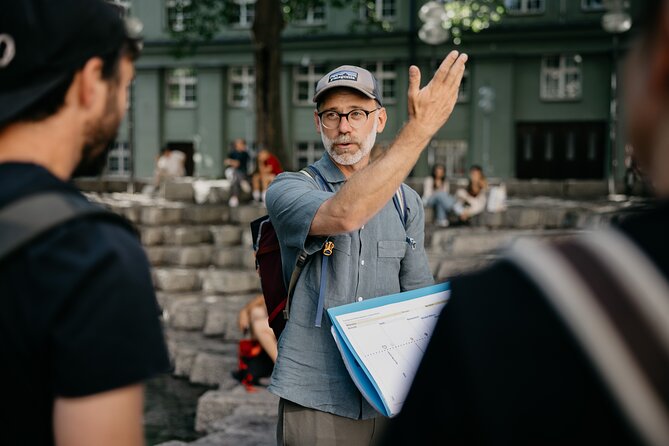
You’ll tour with Philipp, an architect and certified official Munich guide, in a small group of up to 12. Expect English and German (Spanish is also listed), plus stories that connect the look of Jugendstil with artists like Wassily Kandinsky and Paul Klee.
In This Review
- Key highlights you’ll feel on the ground
- Why Schwabing is the right base for Munich’s Jugendstil
- Meeting at Georgenstraße 7 and getting oriented fast
- Studying four Jugendstil façades in Schwabing
- The subway shift: from Schwabing ornament to contemporary street-art energy
- Inside the heated container: making four stencil postcards with spray paint
- Finishing near Bahnwärter Thiel and what to do after
- Price and value: what $42 buys you in 150 minutes
- Who should book this Munich Art Nouveau and spray-paint tour
- Should you book this tour with Philipp?
- FAQ
- Where does the tour meet?
- How long is the experience?
- What languages is the tour offered in?
- What do I make during the spray-paint part?
- Is food or drinks included?
- Is the tour suitable for wheelchair users?
Key highlights you’ll feel on the ground
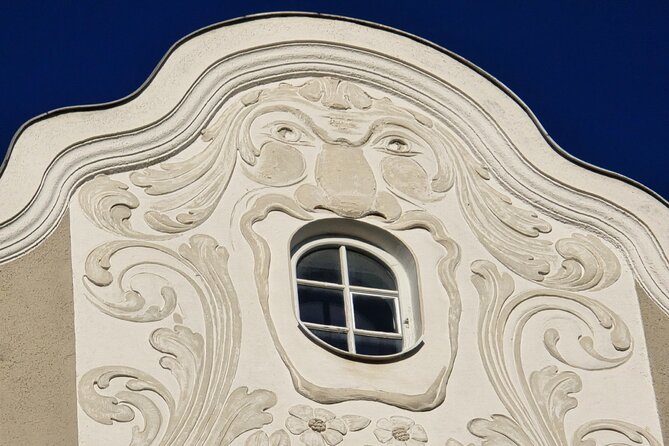
- A real Jugendstil neighborhood story in Schwabing: you learn how the movement shaped Munich’s façades
- Four façades framed and read like design: floral motifs, bold ideas, and why they matter
- Subway transfer to a contemporary art space: a clear shift from 1900s ornament to today’s creativity
- Heated shipping-container workshop: spray-paint postcards with stencils in a relaxed setup
- Safety gear + beginner-friendly materials: goggles, gloves, masks, and clothing covers are included
- You leave with a postcard gift and a digital map: one highlight turns into something you can take home
Why Schwabing is the right base for Munich’s Jugendstil
Schwabing is where Munich’s creative streak shows. It has the feel of a historic bohemian quarter, and it’s the kind of place where architecture isn’t just background—it becomes the main event. For this tour, that matters because Jugendstil (the German branch of Art Nouveau) loves surfaces: curling lines, floral details, and dramatic façade ideas.
You’re not just walking past pretty buildings. The tour is designed to help you see design—how ornament, structure, and symbolism work together on the street. And once you understand what you’re looking at, the later spray-paint activity makes more sense, since the stencils come directly from the details you study.
If you like art but get tired of museum lectures, this is a good swap. You’ll be outside, in Munich neighborhoods, with a guide who can explain what you’re seeing in plain language—and then turn it into something you make with your own hands.
You can also read our reviews of more tours and experiences in Munich.

Meeting at Georgenstraße 7 and getting oriented fast
The tour starts at Georgenstraße 7, right in front of the building entrance. Your guide will be easy to spot with a tablet slung over his shoulder, so don’t waste time playing hide-and-seek.
Getting there is straightforward via subway lines U3 or U6. Exit at Giselastraße station, then plan about a 10-minute walk to reach the meeting point. Since transportation to and from the start is not included, I recommend you build in a small buffer for getting oriented and meeting on time.
You’ll want comfortable shoes. The duration is 150 minutes, and the experience includes guided walking in Schwabing plus the transfer by subway. It’s family-friendly in tone, but it still works best when you can move without rushing or stopping every few minutes.
And just so you’re not surprised: smoking isn’t allowed during the activity, and participation is at your own risk. You’ll also get a clear, organized workflow once you reach the creative part, which helps the whole thing stay relaxed instead of chaotic.
Studying four Jugendstil façades in Schwabing
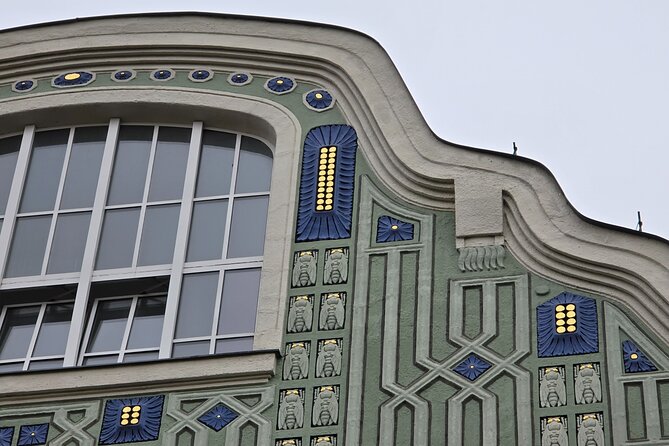
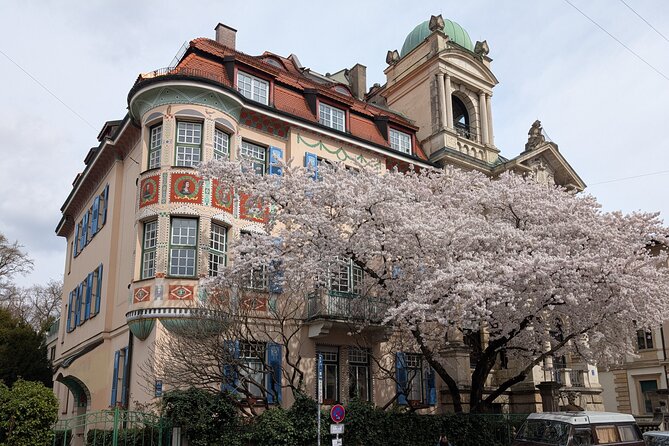
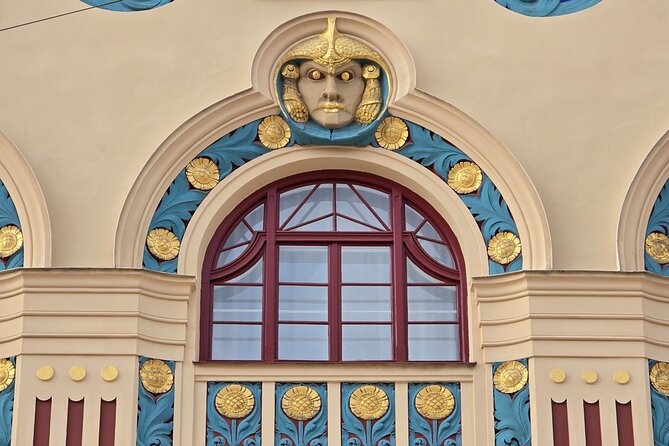
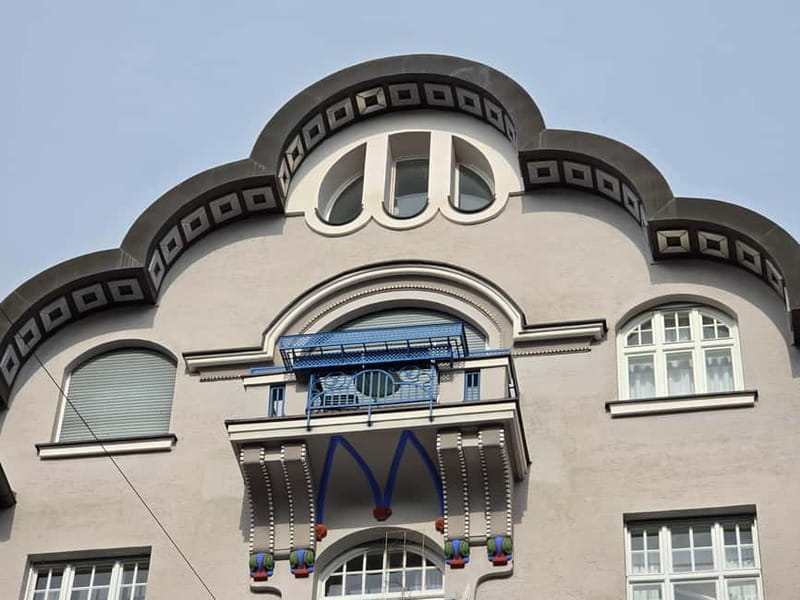
After a discovery stretch in Schwabing, you’ll focus on four outstanding Jugendstil façades. This is where the tour becomes more than sightseeing. You’re not just admiring from a distance; you’re observing details closely, framing what you notice, and using those visual impressions as inspiration later.
Jugendstil often reads like it’s trying to blend art into everyday life. You’ll see floral motifs and bold design choices that feel both decorative and purposeful. Part of the value here is the way Philipp connects architectural style to people and ideas, including references to artists such as Wassily Kandinsky and Paul Klee. Even if you don’t know their work yet, the stories give you handles for what you’re seeing on stone and stucco.
What I like about this approach is that it teaches a skill you can reuse. By the time you reach the workshop, you’ll already know what to pick out: a curve worth copying, a pattern worth simplifying, or a motif that translates well into stencil form. That’s why the workshop doesn’t feel random or like a separate activity.
A possible drawback depends on your expectations. If you’re looking for lots of monument-level stops or long explanations about Munich in general, you may want more time just wandering. This tour is tightly focused on Jugendstil details, and that laser focus is the point.
The subway shift: from Schwabing ornament to contemporary street-art energy
After about an hour of exploring, you travel by subway to a contemporary artistic district on a former castle-yard site. The point of the move is smart: it turns your eyes from early-1900s design into modern creative expression without you losing the thread.
This is where you’ll feel the Art Nouveau meets street art idea in a practical way. Schwabing trains your attention to lines, motifs, and façade composition. The later workshop then takes those lessons and applies them through stencil-based spray painting.
The location is described as a former castle-yard site, and the creative space itself is inside a heated shipping container. That detail matters. It means the art-making part is built to be comfortable, so you can focus on creating instead of freezing through instructions.
Timing is also part of the design here. The tour doesn’t leave you waiting around for the workshop. You discover, you travel, and then you create, with each phase supporting the next.
Inside the heated container: making four stencil postcards with spray paint
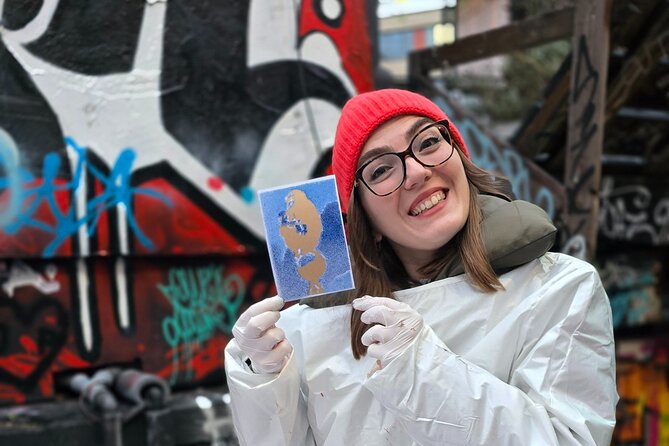
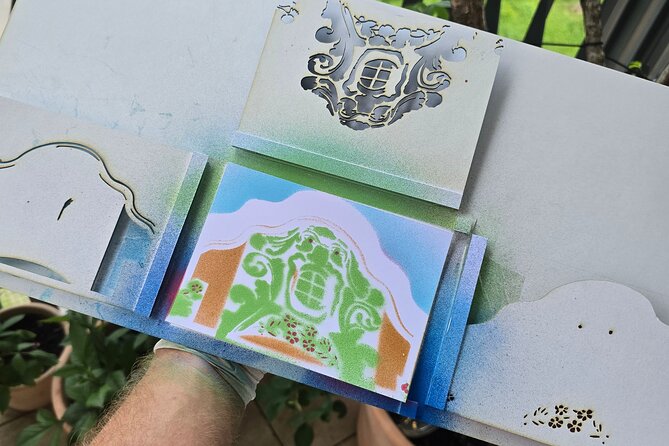
This is the fun part. In the contemporary district, you get hands-on with spray painting and create four postcards. You’ll use stencils based on the Jugendstil treasures you explored earlier, so your earlier façade observations become the blueprint for what you make.
The workshop setup is beginner-friendly. The included gear helps everyone stay comfortable: safety glasses, protective gloves, masks, and clothing covers. You’ll also receive the materials you need—spray paint, stencils, envelopes, and postcards—so you don’t have to hunt for anything.
Here’s the practical value: you’re not just painting a random design. You’re learning how to translate detailed architecture into simpler shapes that still look good as street-art style postcards. Stencils do a lot of the heavy lifting, and that makes the process approachable even if you’ve never held a spray can before.
If you’ve done art workshops elsewhere, you may know the usual problem—either it’s too technical or it’s too vague. This one aims for a middle path: relaxed, structured, and tied directly to the visuals from Schwabing. That connection is what makes it satisfying, not just busy.
One more thing to plan for: you should expect a small amount of creativity time where you’ll likely want to slow down and compose. Look at your stencil shapes, decide where you want the strongest motif, and don’t rush the placement. The whole activity lasts within the 150-minute window, so staying attentive to the guide’s setup advice pays off.
Finishing near Bahnwärter Thiel and what to do after

The tour ends at Bahnwärter Thiel. That’s a useful finish point because it keeps you in an area where you can keep the creative mood going after the session ends. You’ll leave with more than just photos; you’ll have a postcard as a gift depicting one of the highlights you saw on the tour.
You’ll also have a digital map with the guide’s favorite places to visit in Munich. That’s valuable if you’re the type who wants a plan after the tour rather than wandering without direction. It’s also a nice way to turn the day into a longer art-focused itinerary.
And since you made four postcards yourself, you’ll have a tangible souvenir that feels earned. Even if you don’t mail them, they make great keepsakes because they’re linked to specific façade details you learned to notice.
Price and value: what $42 buys you in 150 minutes
At $42 per person for 150 minutes, this tour is priced like an experience—not like a quick stop-and-go walk. The value comes from what’s included and how it’s used.
You’re paying for:
- A small group (up to 12), guided by Philipp—an architect and certified official Munich tour guide
- Street-level art instruction plus focused façade observation in Schwabing
- A hands-on spray-paint workshop with stencils
- Safety and art materials: spray paint, stencils, postcards, envelopes, and protective gear
- A postcard gift plus a digital map for follow-up exploring
Also, the tour is described as having 100% 5-star Google reviews. While ratings are never the whole story, it does suggest the format is landing well and that the organization is consistent.
If you’re comparing against other Munich walking tours, the biggest difference is that you get to make something at the end. A lot of tours show you art; fewer let you produce a street-art style artifact using the same visuals you studied outside.
Who should book this Munich Art Nouveau and spray-paint tour
This is a strong fit if you fall into any of these groups:
- Art lovers who want the buildings to teach them: you’ll learn to read Jugendstil motifs on façades
- Beginners who want an easy entry into street-art style work: stencils and clear guidance do the work
- Families looking for something active and fun that isn’t just another indoor workshop
- Creative minds who like combining observation with making
It’s also a good choice if you’re traveling at a pace where one afternoon is enough to get a distinct slice of Munich. The duration is 150 minutes, and the day flows from Schwabing discovery to a contemporary creative space without feeling like two separate activities.
Two practical notes to keep in mind: you’ll need comfortable shoes, and it’s not suitable for wheelchair users. If mobility is a concern, this is worth reconsidering.
Should you book this tour with Philipp?
If you want a Munich experience that connects Jugendstil façade details to something you create yourself, this is an easy yes. The balance is right: outside walking for architecture, then a hands-on postcard workshop that uses what you learned instead of starting from scratch.
Book it if you’re the type who enjoys learning by looking—then turning that looking into a tangible result. The small group size, bilingual guide support (English/German, Spanish listed), and included materials make it low-stress and good value for the time.
Skip it only if your priority is long, wide-ranging Munich sightseeing or if you need wheelchair accessibility. Otherwise, this is a clever, art-forward afternoon that gives you more than photos.
FAQ
Where does the tour meet?
You meet at Georgenstraße 7, in front of the entrance to the building.
How long is the experience?
The tour duration is 150 minutes.
What languages is the tour offered in?
The tour is offered in English, German, and Spanish.
What do I make during the spray-paint part?
You spray-paint postcards using stencils. You create four postcards, and there is also a unique postcard gift included.
Is food or drinks included?
No. Food and drinks are not included.
Is the tour suitable for wheelchair users?
No, it is not suitable for wheelchair users.