Street art maps Athens faster than postcards. I love how this tour keeps things small-group and up close, and I also like the on-foot neighborhood route that connects murals to the parts of Athens you’d skip if you only chased the big sights. The result is simple: you see more than wall-to-wall graffiti, because the guide ties each piece to people, place, and meaning.
One thing to consider: you’ll be walking, and the experience depends on good weather. Also, street art changes often, so a mural you’re counting on might look different over time.
In This Review
- Key things that make this street art walk worth your time
- A 2.5-hour route that turns Athens corners into stories
- Where you start and how the walk finishes (so you don’t get turned around)
- Metaxourgio: social initiative murals and the owl of Athens
- Kerameikos: from ancient potters to modern mural walls
- Gazi: Athens nightlife energy, daytime murals, big-name artists
- Psirri: local favorite streets where graffiti meets tradition
- What you’re really paying for: guidance, not just walking
- The guide factor: artist stories, process, and local politics
- Shoes, timing, and weather: make the walk easy on yourself
- Who this tour is best for (and who should pick something else)
- Quick value check: is $55.18 fair?
- Should you book the Athens street art tour?
- FAQ
- How long is the Athens street art tour?
- What is the price per person?
- How many people are in the group?
- What language is the tour offered in?
- Where do I meet, and where does the tour end?
- What should I know about cancellation or weather?
Key things that make this street art walk worth your time
- Up to 8 people means the guide can answer your questions without rushing you
- English-led, guided by locals so the artists and references land with context
- Four different neighborhoods in one route, each with a distinct style and mood
- Free, admission-free viewing at every stop (you’re paying for the guided focus, not tickets)
- Street art is always shifting, which is part of what makes Athens feel current
- Hygiene basics included (hand sanitizer and face masks) for a more comfortable stroll
A 2.5-hour route that turns Athens corners into stories
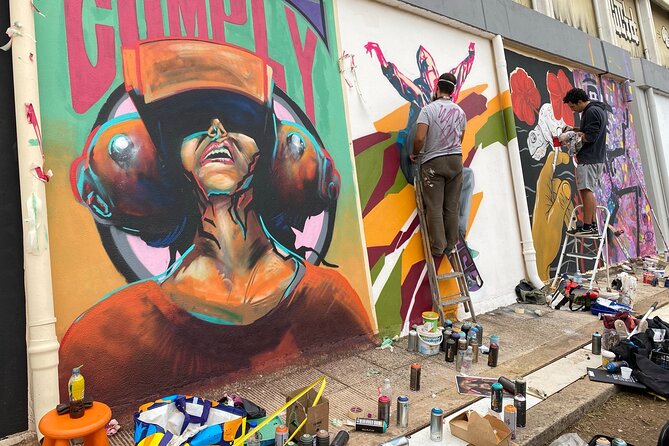
This tour is built for a short window of time in Athens. At about 2 hours 30 minutes, you get a guided walk that’s paced to let you look up, stop, and actually take in the art instead of just snapping photos while moving on.
The value here isn’t only the murals. It’s the way the guide frames what you’re seeing. Street art can feel like a random gallery at first glance. But when someone explains why an artist chose a certain image, what’s going on in the neighborhood, and how the community reads the work, the whole city starts behaving like a living exhibit.
And the small group matters. With a maximum of 8 travelers, you’re not stuck in a long line where the loudest voices take over. It’s easier to ask, point, and go back for a second look.
You can also read our reviews of more tours and experiences in Athens.



Where you start and how the walk finishes (so you don’t get turned around)
You begin at The Stanley Hotel on Odisseos 1. From there, you work your way through several neighborhoods on foot and the tour ends in Psyri.
That finish location is handy. Psyri is a natural jump-off point for food and a drink afterward. Even if you’re not planning a late night, it’s one of those areas where you can keep exploring without feeling stranded.
Also, the route is set up to be near public transportation, so you’re not forced into a complicated plan just to get home after the tour.
Metaxourgio: social initiative murals and the owl of Athens
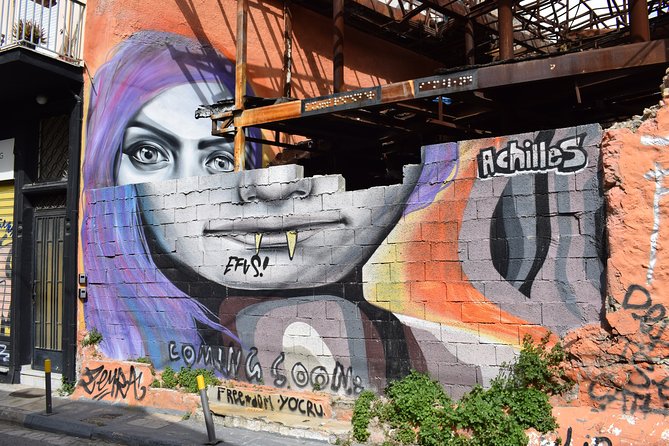
Metaxourgio is where the tour starts with momentum. This is a district known for social initiatives and events, which helps explain why the street art here often feels more community-driven than just decorative.
You’ll spend about 30 minutes here, and one highlight is the famous owl of Athens. Even if you’ve heard of it, it hits differently in place—because you can see the scale, the placement, and how it sits in the neighborhood rather than behind glass.
Why this stop is smart: it sets the tone early. You begin with street art that’s tied to public life, then the rest of the route keeps expanding that idea—street art as conversation, not just style.
If you want the best viewing, slow down for the details. Stand back once to take the whole mural in, then step closer to notice how the artist uses lines, layers, or color to pull meaning from a distance.
Kerameikos: from ancient potters to modern mural walls
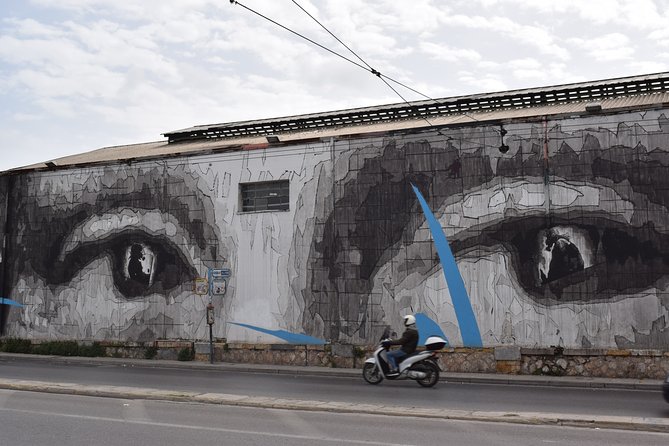
Kerameikos is famous in antiquity for ceramics and workshops, and that craft legacy carries an interesting energy into the present. The area is now one of Athens’ more alternative neighborhoods, and the street art collection there keeps building over time.
You’ll get about 45 minutes here—enough time to go beyond the first mural you spot. This stop works well because you’re seeing layers of Athens: old-making tradition in the background, and contemporary artists putting fresh statements right into the urban space.
What I like about this stop for first-timers: it’s a bridge. You’re not choosing between history and street art. You’re seeing how the city repurposes space. Even if you’re not a street art expert, the guide can connect the dots between the artwork and why this kind of creative energy fits Kerameikos.
Practical note: Kerameikos can be visually busy. If you get overwhelmed, pick two or three murals to focus on deeply. The guide’s context will help you do that fast.
Gazi: Athens nightlife energy, daytime murals, big-name artists
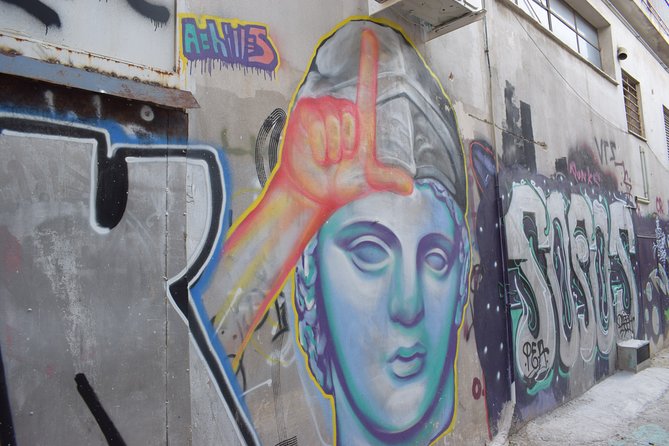
Gazi is one of the areas most associated with bars, restaurants, and nightlife. On this walk, you don’t need to be planning a night out to enjoy it. You’ll still get the payoff: a street art scene shaped by prominent artists.
This stop is about 45 minutes, and it’s here that you’ll be reminded that some of the most well-known street artists in Greece have chosen Gazi as a canvas.
Why this matters: nightlife districts can sometimes feel like they exist only for crowds. But street art changes that. It turns the area into a gallery with attitude—work you can read as a snapshot of local identity.
If you’re the type who loves a bit of context, this is often where the guide’s storytelling clicks. In one account, the guide helped make sense of the artists and the processes behind pieces, not just the final visuals. That approach can make famous-name work feel personal instead of distant.




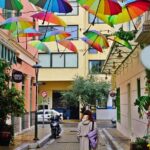

Psirri: local favorite streets where graffiti meets tradition
Psirri is one of the neighborhoods Athens locals love. It’s a mix of old and new, and the street art here leans into graffiti—more raw, more immediate, and often more playful in how it uses space.
You’ll spend about 30 minutes here. That’s a good length for Psirri because the walls are dense with visuals. You’ll likely spot pieces you’d never search out on your own, which is the point of ending the tour in a place built for wandering.
This stop also helps you close the loop. By the time you get here, you’ve already learned that street art in Athens isn’t one style or one message. It’s multiple neighborhoods speaking in different tones.
A tip for getting the most out of Psirri: before you leave a mural, look for clues the guide points out—images that repeat across pieces, symbols that connect to the neighborhood, or stylistic choices that hint at the artist’s intent.
What you’re really paying for: guidance, not just walking
At $55.18 per person for about 2.5 hours, you’re paying for more than the route. You’re paying for the guide’s ability to translate the art into something you can understand in real time.
The tour includes all fees and taxes, and you also get mobile tickets. You’re not buying entry tickets at each stop, since the time at each neighborhood is listed as free admission.
The standout value is the human part: the guide handles the stories. In English-language tours I’ve seen mentioned, guides like Agatha (and also Kalliope and Agnes in different groups) are praised for connecting murals to artist background and meaning. That’s what turns street art from decoration into a conversation.
Small group also improves value. If you’re on a quieter day, you may feel like the tour becomes more personal. One account described the group being just a few people, and the guide managed to keep the attention on everyone without it feeling awkward.
The guide factor: artist stories, process, and local politics
This tour isn’t only about spotting famous walls. The strongest praise centers on how the guide explains:
- who the street artists are
- what the pieces are saying
- how viewers might interpret the art
- why certain murals appear where they do
That last part matters in Athens. Street art here often reflects local life. One review highlighted that the guide shared context about the recent history of Athens and even the politics linked to some pieces. You don’t need to be a political junkie to enjoy that. It’s just useful background that helps you read the visuals without getting lost.
Even when a piece can be interpreted in multiple ways, the guide can give you enough context to enjoy your own take. That balance is key: you get facts, but you’re not forced into one meaning.
Shoes, timing, and weather: make the walk easy on yourself
This is a walking tour with moderate physical fitness recommended. Plan for uneven sidewalk moments, standing time for viewing murals, and the simple fact that Athens can feel warmer than you expect while you’re outdoors.
Street art is also continually changing. That’s not a downside so much as a reality check. If you go in knowing that the walls are alive—new pieces appear, older ones fade—you’ll enjoy the tour more.
You should also keep your schedule flexible. The experience is described as requiring good weather, and on bad-weather days you may be offered a different date or a refund.
Who this tour is best for (and who should pick something else)
This street art tour is a great match if you:
- want something different from classic Athens sightseeing
- like neighborhood exploration on foot
- enjoy art but also want the story behind it
- prefer small groups over big bus-style tours
It may be less ideal if:
- you’re very short on time and only want a quick highlights loop
- you dislike walking through multiple neighborhoods
- you expect one guaranteed, never-changing set of exact murals
Quick value check: is $55.18 fair?
For $55.18, you get around 2.5 hours of guided walking, a local expert guide, free admission at each stop, and small-group size up to 8. You also get hand sanitizers and face masks provided, which is a thoughtful touch for comfort.
What’s not included is what you’d expect: any personal expenses and tips (optional), plus no pickup/drop-off.
So the way to think about the price: you’re buying interpretation and time. You’re not just paying to look at walls. If you like learning how artists and neighborhoods connect, this price feels reasonable for the effort you’re getting.
Should you book the Athens street art tour?
Yes, if you want Athens in a fresher format than the usual museum-first plan. This walk gives you a real sense of how street art functions in different neighborhoods—Metaxourgio’s social energy, Kerameikos’ alt-craft feel, Gazi’s big-artist wall culture, and Psirri’s local graffiti spirit.
Book it especially if you enjoy guides who explain meaning, process, and the politics behind some pieces. If you’re flexible with weather and comfortable with a moderate walking pace, you’ll likely end the tour feeling like you understand Athens better than when you started.
FAQ
How long is the Athens street art tour?
It lasts about 2 hours 30 minutes.
What is the price per person?
The price is $55.18 per person.
How many people are in the group?
The tour has a maximum of 8 travelers, so it stays small-group style.
What language is the tour offered in?
The tour is offered in English.
Where do I meet, and where does the tour end?
You start at The Stanley Hotel, Odisseos 1, Athina 104 37 and the tour ends in Psyri, Athens.
What should I know about cancellation or weather?
There is free cancellation up to 24 hours in advance for a full refund. The tour requires good weather, and if it’s canceled due to poor weather, you’ll be offered a different date or a full refund.