REVIEW · OAXACA CITY
Bicycle Tour through Oaxaca learning about its Urban Art and History
Book on Viator →Bookable on Viator
Bikes turn Oaxaca into a moving gallery. This 2-hour ride mixes urban art with landmark Oaxaca City history across old neighborhoods like Jalatlaco and Xochimilco, with lots of stops to look, photograph, and learn.
I love how the tour is built for real sightseeing, not just riding: you get photo-friendly breaks in some of the oldest lanes, then you move on to major monuments. I also like the practical package: bicycle, helmet, local guide, and technical assistance are included, so you can focus on the art instead of logistics.
The main thing to consider is road feel. You’ll be on city streets that can include cobblestones and normal traffic, so you’ll want basic comfort biking and balance, especially for a quick setup period at the start.
In This Review
- Key things you’ll notice on this Oaxaca street art bike tour
- Why this bike tour works for urban art and Oaxaca history
- Meeting at Bike & Roadtrips Oaxaca and what the ride feels like
- Jalatlaco and Xochimilco: where murals meet old lanes and big-photo corners
- Templo de San Matías Jalatlaco: the photo stop that explains the neighborhood’s themes
- Los Arquitos de Xochimilco: old aqueduct arches under street-level life
- Cerro del Fortín viewpoints: panoramic Oaxaca without the hike tax
- Santo Domingo de Guzmán: baroque church beauty plus living culture stops
- Price and logistics: why $34.65 is a bargain if you want both art and movement
- Safety and comfort: the cobblestone reality check (and how the guide helps)
- Who should book this Oaxaca City street art bike tour
- Should you book this tour
- FAQ
- How long is the bicycle tour through Oaxaca City?
- What is the price per person?
- Is the tour offered in English?
- What is the group size limit?
- Where is the meeting point, and does the tour end there too?
- What is included in the tour price?
- Are admission tickets included for the stops?
- What should I bring, and what happens if weather is poor?
Key things you’ll notice on this Oaxaca street art bike tour
- Small group (max 8) means more attention from the guide and easier stopping for photos
- Jalatlaco and Xochimilco bring you into Oaxaca’s oldest-feeling neighborhoods fast
- Stop-and-look pacing gives you time to study murals and architecture instead of rushing past
- Cerro del Fortín viewpoints help you connect the street art to the city’s geography
- Santo Domingo de Guzmán complex adds baroque architecture plus museum spaces
- English guidance led by Daniel keeps the story clear and the route safe
Why this bike tour works for urban art and Oaxaca history
Oaxaca City can be a bit much on foot. Streets branch, viewpoints hide behind walls, and it’s easy to miss the neighborhoods that make the city feel like Oaxaca, not just another town with churches. This tour solves that by moving you by bike while still slowing down at the right moments.
The big idea is simple: you don’t only see murals. You see where they live and why they matter in the city’s culture. The ride links street art streets with key architectural sites, so the artwork isn’t floating on its own. It’s part of the same urban fabric as the churches, aqueduct-era arches, and the planning of old neighborhoods.
You also get value that’s easy to feel right away. For around $34.65 per person you’re not just paying for a guide. You’re paying for a full “show up and go” experience: bike, helmet, and support, with a route that hits multiple highlights in about two hours.
You can also read our reviews of more tours and experiences in Oaxaca City.

Meeting at Bike & Roadtrips Oaxaca and what the ride feels like
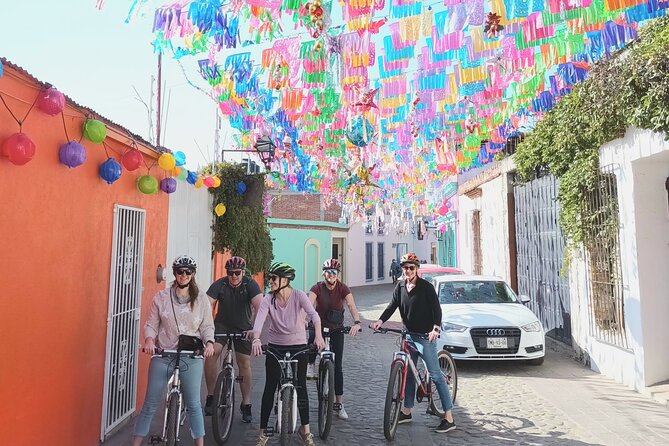
You meet at Bike & Roadtrips Oaxaca, on C. de Mariano Abasolo 315 (Ruta Independencia), Centro. The tour ends back at the same meeting point, which is handy because you don’t have to figure out transit or a new pickup spot at the end.
This is designed for small groups, with a maximum of 8 travelers. That matters more than people think. Smaller groups usually mean the guide can slow down at crossings, keep everyone together, and give you time to take photos without the “move, move, move” pressure.
Expect a quick setup period at the start. One review called out that the bike setup took around 25 minutes, so your total time on the road may feel slightly less than the headline duration of about 2 hours. It’s still a short day activity, and it works well early in your trip when you want your bearings fast.
On the street, plan for typical Oaxaca road conditions. Reviews mention cobblestones and regular city traffic. The good news: the guidance includes technical assistance, and people consistently note that the guide keeps the group safe and relaxed. Still, if you’re new to biking in cities, bring extra patience for that first stretch while you find your comfort.
Jalatlaco and Xochimilco: where murals meet old lanes and big-photo corners
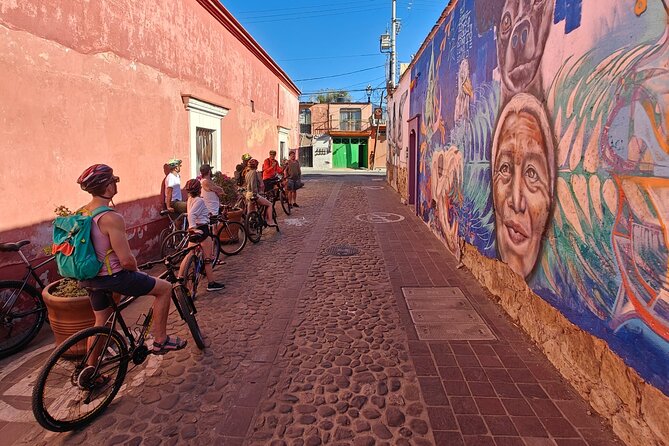
The heart of the experience is how it pairs neighborhoods with artwork. The ride starts by taking you through representative areas of Oaxaca City on streets known for Oaxacan artists and color-heavy murals. You get to watch art in its natural habitat, not behind glass and not as a museum stop.
Two neighborhoods anchor the vibe:
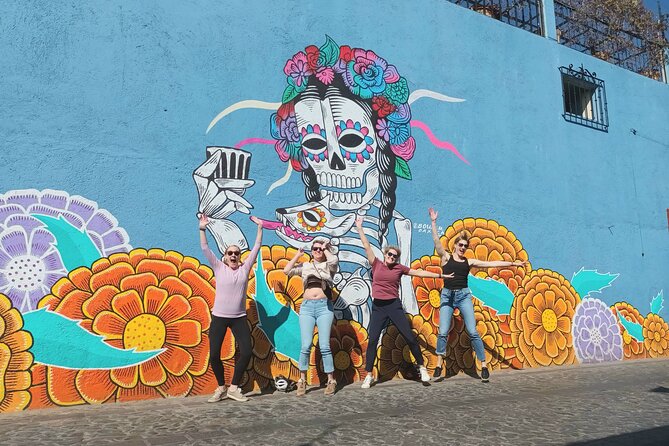
Jalatlaco is known for its streets decorated with mural-style works that echo the themes people associate with Day of the Dead. It’s a place where you can see how urban planning and community creativity shape what you experience from one corner to the next. You also get time to stop repeatedly, which is where the tour earns its “street art” identity. You’ll be able to step off the bike, study the details, and take photos without feeling like you’re only passing through.
Xochimilco adds a different layer. It’s one of the oldest areas of Oaxaca City, founded in 1486 by Xochimilca–Aztec warriors. That time depth shows up in the built environment: old houses, older street patterns, and architectural leftovers that connect the neighborhood to earlier infrastructure.
One specific standout in Xochimilco is the look of the old arches tied to the San Felipe aqueduct, built in the mid–18th century to supply water to the population. That’s the kind of contrast I love on these tours: you’re admiring art on the walls, then you’re suddenly looking at colonial-era structures that tell a completely different story about how the city worked.
Templo de San Matías Jalatlaco: the photo stop that explains the neighborhood’s themes
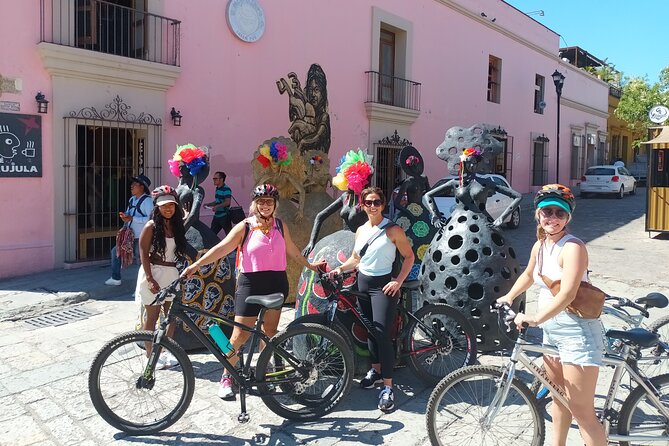
After exploring the wider area, you get a focused stop at Templo de San Matías Jalatlaco. This church sits in a neighborhood that’s especially associated with mural work tied to Day of the Dead celebrations, plus traditional comparsas—the kinds of group performances and community processions that bring the neighborhood’s identity to life.
What you gain here is context. Murals can look beautiful, but without the connections to local celebration and planning, they can feel like decoration. This stop helps tie the imagery to how people live and remember in Oaxaca.
Time at this stop is about 20 minutes. That’s short enough to keep the tour moving, long enough that you can get clear photos and look at the church setting without feeling rushed.
The practical tip: treat this as your “slow down and frame the scene” moment. If you’re photographing murals, this is where you’ll want to shoot wider views that show the church and street relationship, not just close-ups.
Los Arquitos de Xochimilco: old aqueduct arches under street-level life
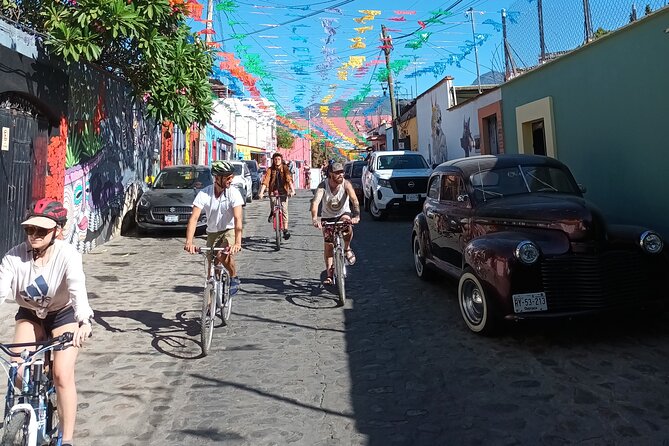
The ride includes a dedicated look at Los Arquitos de Xochimilco. The main draw is the arches themselves, part of the colonial-era construction connected to the San Felipe aqueduct.
Even if you don’t care much about aqueduct history, these arches give you something valuable as a visitor: a visible clue that the neighborhood has layers. You’re not only seeing “old streets.” You’re seeing older engineering, still standing in a place that continues as a lived urban area.
This stop is about 20 minutes, which is a good length for taking in architecture and getting photos. It’s also a nice break from the mural focus, so your brain resets before the next heavier landmark.
Cerro del Fortín viewpoints: panoramic Oaxaca without the hike tax
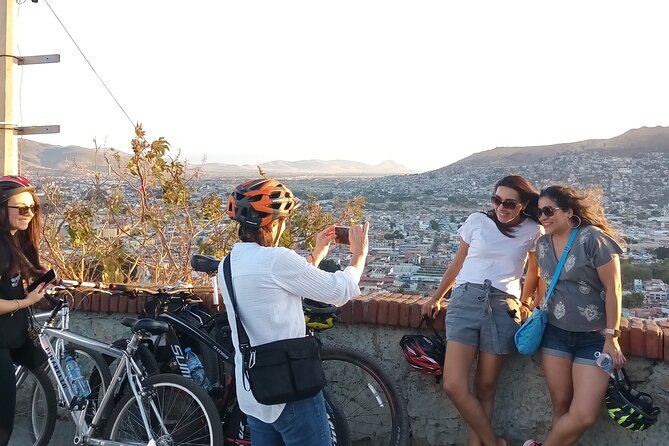
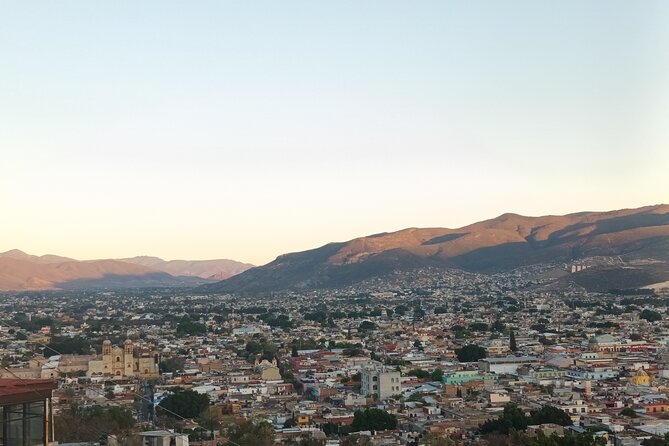
If you want Oaxaca to “click” in your head, a viewpoint helps. The tour includes Cerro del Fortín, where you can see panoramic views from a lookout on the highest hill near the center.
The time here is about 30 minutes (depending on the group’s physical condition). That flexibility matters. People have different comfort levels with hills and city pacing, and a good guide adjusts rather than pushing everyone into the same level of effort.
You also pass by two noteworthy references while heading toward this area:
- A Oaxaca crafts house
- The house connected with Benito Juárez García, one of Mexico’s most emblematic political figures
This is a clever part of the tour because it ties viewpoint time to cultural geography. Instead of arriving at the viewpoint totally separate from the city story, you’re moving through places that explain how Oaxaca’s identity shows up in daily streets and institutions.
If you’re hoping for sunset photos, this is your best shot in the tour timeline. Even if you miss perfect golden hour, the overview helps you understand how neighborhoods connect, which makes the next day’s walking easier.
Santo Domingo de Guzmán: baroque church beauty plus living culture stops
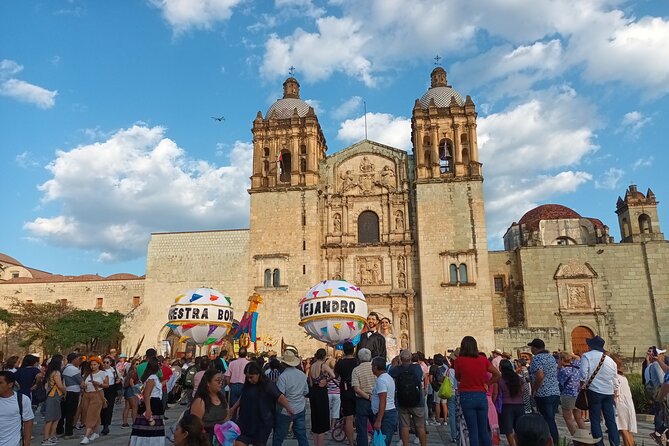
The final big landmark is Templo de Santo Domingo de Guzmán. You’re visiting one of the most beautiful churches in Latin America, and today it functions as a cultural complex rather than only a church building.
The description of the complex matters because it tells you what kind of visit you’re getting. The enclosure includes:
- The Ex-convent
- The Museum of the Cultures of Oaxaca
- The Ethnobotanical Garden
- The Burgoa Library
- The Public Newspaper Archive
This mix gives you options. You’re getting baroque New Spain architecture from the church itself, but you can also connect with Oaxaca through cultural collections and the idea of plants and traditional knowledge represented through the ethnobotanical garden.
Your time here is about 20 minutes. That’s not a long museum session, so I’d treat this as a “see the scope and get orientated” stop. If you want to go deeper, you can plan a longer return visit later based on what sparks your interest.
One more charming possibility: with luck, you might see a calenda—a street celebration that people describe as never ending. Even if you don’t catch it, you still leave with a powerful sense of how the city turns monumental spaces into daily life.
Price and logistics: why $34.65 is a bargain if you want both art and movement
At $34.65 per person, you’re paying for a short, guided way to cover multiple neighborhoods, plus equipment and support. For Oaxaca City, that’s strong value because street art tourism often turns into a self-guided guessing game. Here, you get structure and context without needing to plan a route on your own.
Included:
- Bicycle
- Helmet
- Local guide
- Technical assistance
Not included:
- Bottled water
That last point is a real-world note. Two hours is short, but Mexico afternoons can still be warm. Bring water, and if you can, bring a small snack too. Your route includes multiple stops, and you’ll likely appreciate a hydration break when you pause for photos.
Bike sizes run XL, L, M, and S, which is a good sign if you’re particular about fit. A comfortable bike makes city riding less stressful, which matters a lot on cobblestones.
What about language? This tour is offered in English, and multiple people specifically called out how well the guide communicates. That’s huge for a street art tour, because interpretation is half the fun. You want to understand why a mural is where it is and what it’s responding to.
Safety and comfort: the cobblestone reality check (and how the guide helps)
This is not a traffic-free bike path tour. Reviews mention city traffic and cobblestone surfaces, and that can feel intimidating at first.
Here’s the practical approach: treat the first minutes as training time. Get used to the bike, take cues from the guide, and don’t try to match speed with people who seem more confident. The guide’s role includes keeping everyone safe, and reviews consistently highlight that the guide watches the group closely and makes people feel relaxed.
Also, you’ll have helmets. Even with a quick ride, helmets are non-negotiable. If you’re coming from a place where bike helmets are optional, this tour is a reminder that safety gear is part of good hospitality.
If you have mobility limits or you know you’re sensitive to uneven pavement, this is a place where you should assess your comfort level. The itinerary has viewpoints and historic streets, so expect some rougher texture under tires.
Who should book this Oaxaca City street art bike tour
You’ll like this tour if you:
- Want street art murals with context, not just photos
- Prefer biking as a way to cover more ground than walking
- Like a guided pace that mixes neighborhoods, churches, and viewpoints
- Are comfortable with short city riding and normal street conditions
You might skip it if you:
- Have no confidence riding in city traffic or on uneven surfaces
- Want a long museum-style visit (the stops are short, by design)
- Need a fully relaxed, low-stimulation walk-only tour
This is also a smart first-day activity. People describe it as a way to get oriented and learn neighborhood names, which makes the rest of your trip easier.
Should you book this tour
If your goal is Oaxaca City street art plus real historical context in a short timeframe, I’d book it. The combination of small group size, included bike/helmet support, and a route that hits Jalatlaco, Xochimilco, Cerro del Fortín, and Santo Domingo de Guzmán is exactly the kind of plan that saves time and adds meaning.
Just go in with the right expectations: it’s a moving city ride on real streets. If you’re ready for that, you’ll get a lot out of a small price tag and a very story-driven tour.
FAQ
How long is the bicycle tour through Oaxaca City?
It’s about 2 hours (approx.).
What is the price per person?
The price is $34.65 per person.
Is the tour offered in English?
Yes, the tour is offered in English.
What is the group size limit?
The tour has a maximum of 8 travelers.
Where is the meeting point, and does the tour end there too?
You meet at Bike & Roadtrips Oaxaca, C. de Mariano Abasolo 315, Ruta Independencia, Centro, 68000 Oaxaca de Juárez. The activity ends back at the meeting point.
What is included in the tour price?
It includes bicycle use, a helmet, a local guide, and technical assistance.
Are admission tickets included for the stops?
The tour notes free admission tickets for the stops listed.
What should I bring, and what happens if weather is poor?
Bottled water is not included, so you should bring your own. The experience requires good weather; if it’s canceled due to poor weather, you’ll be offered a different date or a full refund.