REVIEW · NAPLES
Naples Essentials: Monuments, Local Life & Street Art
Book on GetYourGuide →Run by insolitotour.napoli · Bookable on GetYourGuide
Naples talks back on this walk. I love the way Davide turns landmark facts into stories you can actually picture, and you’ll also get real meaning behind the Maradona murals instead of just a quick photo stop. It’s the kind of route that shows Naples as both theater and street corner.
The only catch is the pace and footing. You’ll cover moderate walking through busy areas with uneven streets, and it runs in all weather, so you’ll want comfortable shoes and an umbrella.
In This Review
- Key things I’d bet on (before you book)
- Piazza del Plebiscito: where Naples meets you first
- Royal power and San Carlo’s presence on the street
- Castel Nuovo and the Arch of Triumph: Naples as a Mediterranean capital
- Galleria Umberto I: Belle Époque charm under a glass dome
- Quartieri Spagnoli: narrow alleys, everyday life, and street art that matters
- Via Toledo and the Toledo Metro Art Station finale
- How the 2-hour route feels in real life
- Price and value: what $28 buys you here
- Who should book this (and who should skip it)
- Should you book Naples Essentials?
- FAQ
- How long is the tour?
- How much does it cost?
- What’s included in the tour?
- What isn’t included?
- Where does the tour start?
- What language is the guide available in?
- What should I bring?
- Is this tour suitable for children?
- Is it wheelchair accessible?
Key things I’d bet on (before you book)
- Davide’s storytelling keeps the whole 2 hours moving, with humor and clear explanations
- Piazza del Plebiscito to San Carlo gives you a fast, smart overview of Naples’ power and arts
- Castel Nuovo and the Arch of Triumph make the city’s medieval and Mediterranean role tangible
- Quartieri Spagnoli street life feels lived-in: narrow alleys, street art, and laundry overhead
- Maradona murals with cultural context helps you understand why the legend still matters
- Toledo Metro Art Station is a beautiful way to finish, mixing modern design with historic streets
Piazza del Plebiscito: where Naples meets you first
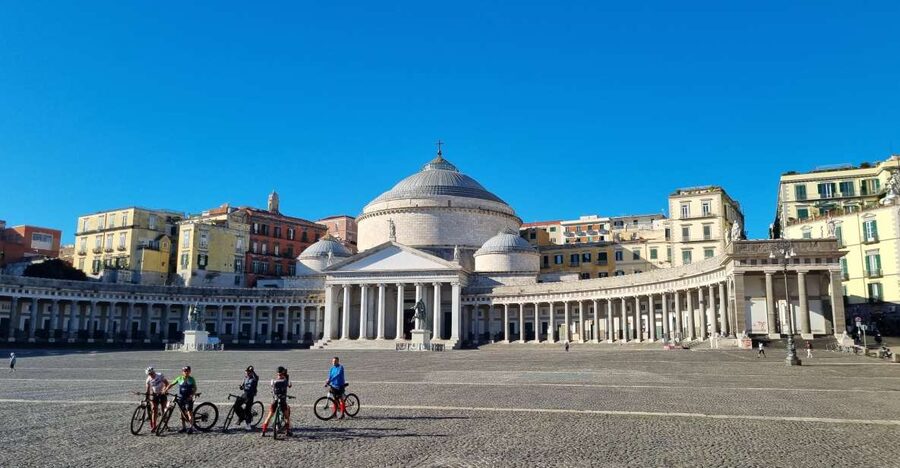
I like tours that start with a real scene, not a random sidewalk. Here, you begin in Piazza del Plebiscito, one of Naples’ biggest “meeting points,” where the city’s public life has always played out. Even if you only spend a few minutes there, you start getting the rhythm: Naples is loud, social, and outward-facing.
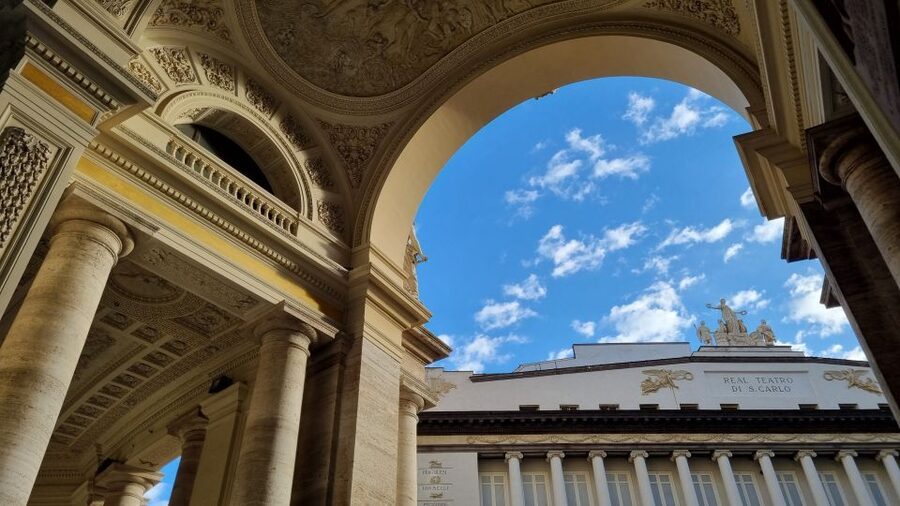
From the square, you’ll see the Royal Palace exterior, the majestic Basilica of San Francesco di Paola, and the outside of San Carlo Opera House. The opera house is especially worth paying attention to because it’s described as the oldest opera house still in use in Europe. That single detail changes how you look at it. It’s not just a pretty building; it’s a working cultural institution.
This first stretch is a strong value move. In under an hour, you get architecture and context that most first-time visitors only piece together across several days. If you’re trying to orient yourself fast while still learning something meaningful, this start is ideal.
You can also read our reviews of more tours and experiences in Naples.



Royal power and San Carlo’s presence on the street
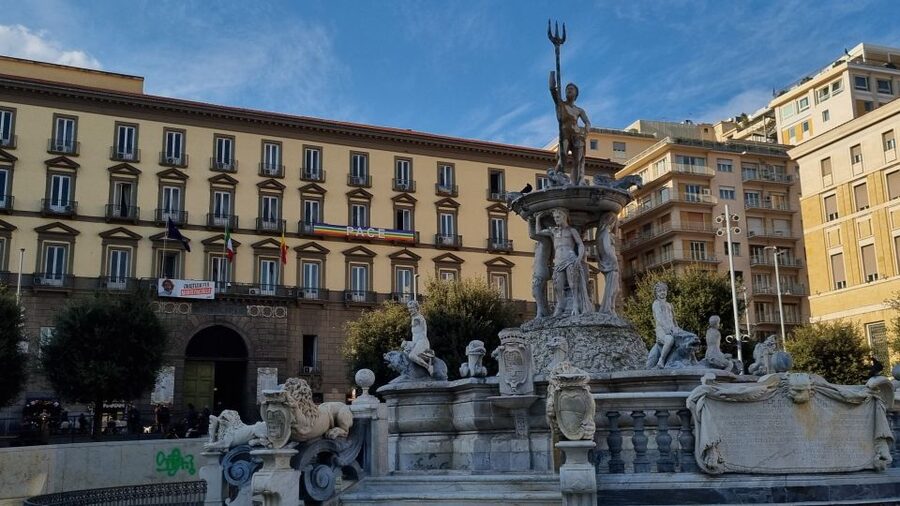
Naples has always been a city shaped by big players—royal ambitions, city politics, and the constant pull of the Mediterranean. Your guide does a good job bringing that into the walk without turning it into a lecture marathon.
You’ll hear stories and legends linked to what you’re seeing as you move through the historic heart. The payoff is that the buildings stop being background. San Francesco di Paola reads differently once you know how Neapolitan life has been shaped around ceremony, religion, and public space. And with San Carlo, you get that rare mix of “this is historic” and “this is still active.”
If you care about culture but also hate tours that feel too heavy, you’re in the right place. The tone reported in the tour experience is playful and engaging, and the guide’s style helps make history feel personal instead of distant. One review even called out that the guide managed to hook an uninterested teenager—so if you’re traveling with someone who usually tunes out, this format has a chance of working.
Castel Nuovo and the Arch of Triumph: Naples as a Mediterranean capital
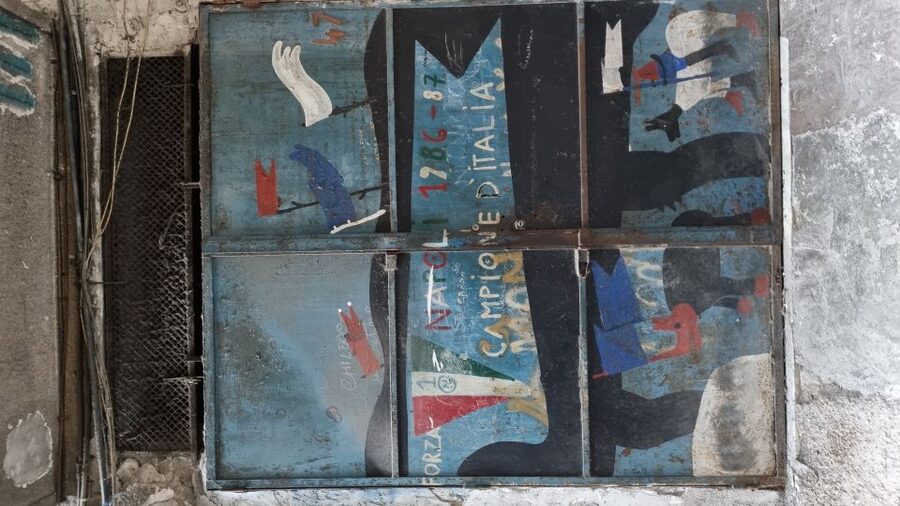
Next up is Castel Nuovo, also called Maschio Angioino, the medieval symbol of the city. This isn’t a stop for people who just want “a castle and done.” It’s a stop for understanding why Naples mattered.
You’ll admire the monumental Arch of Triumph, which serves as a reminder of Naples’ role as a powerful Mediterranean capital. That’s the kind of line that can sound vague—until you stand where the city’s identity was physically displayed. In a short walk, you’re seeing how the city framed itself: proud, strategic, and built to impress.
What I like about this part of the route is the pacing. You don’t stay stuck in one spot. You see a landmark, you get the story behind it, then you move. It’s a practical way to keep your attention without needing constant breaks.
Galleria Umberto I: Belle Époque charm under a glass dome

After the medieval weight of Castel Nuovo, you’ll get a shift in atmosphere at Galleria Umberto I. This is where Naples shows a different side—elegant, stylish, and connected to the idea of city life as an experience.
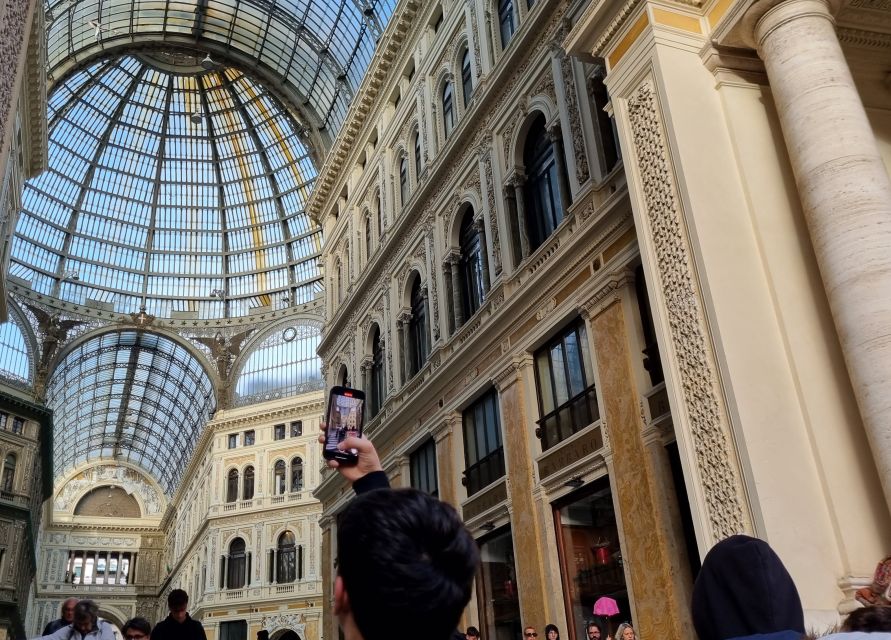
The highlight here is the spectacular glass dome and the Belle Époque feeling of the space. If you’ve ever looked at old European arcades and wondered how they worked socially, this is a good answer. These covered, refined walkways weren’t only for shopping. They were places to be seen, to stroll, and to spend time in weather that wasn’t always friendly.
Because this is a guided walk, you’re not just passing through. You’re building a mental map: royal and religious Naples, then medieval Naples, then a later Naples that wanted elegance and modern comfort. That sequence helps your brain connect the city layers instead of treating each stop like a separate postcard.
Quartieri Spagnoli: narrow alleys, everyday life, and street art that matters
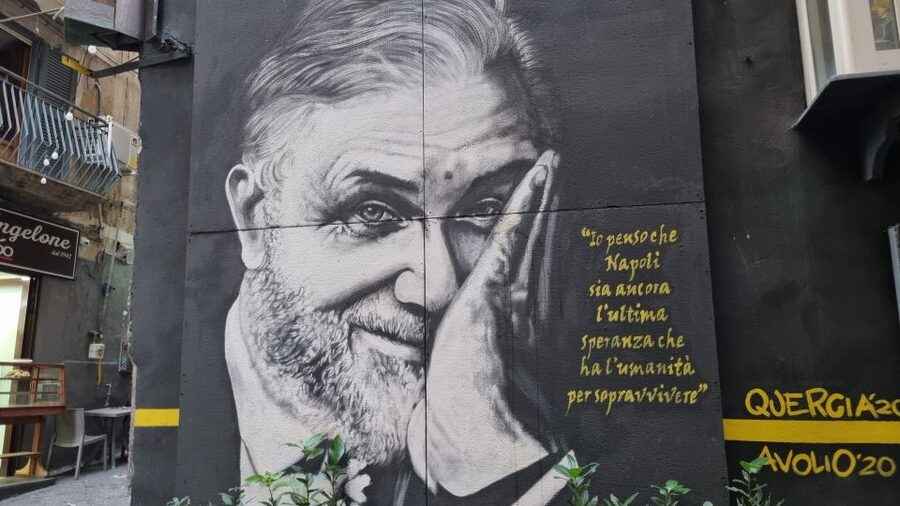
This is the heart of why the tour feels like Naples, not just Naples-as-a-museum. The walk into Quartieri Spagnoli brings you into a neighborhood texture you can’t replicate by speeding past in a taxi.
You’ll explore the narrow streets with street art, laundry hanging overhead, and voices echoing through the alleys. That “busy in the small spaces” feeling is real. And it’s exactly what makes the stop more than just scenery. You get the sense of daily life continuing on top of history.
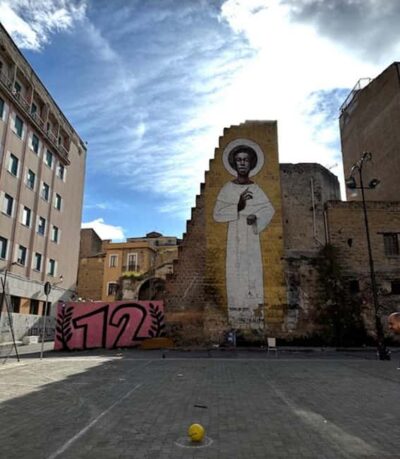
Then comes the tour’s signature street-art moment: the Maradona murals. The guide doesn’t just point them out. You’ll learn why Diego Armando Maradona is still deeply loved and celebrated by Neapolitans. That cultural meaning is the key. Street art here isn’t decoration. It’s part of a living identity—football as community pride, memory, and local emotion.
If you’re the type who thinks street art is only for Instagram, you’ll get why it’s different in Naples. And if you’re a football fan, this section lands even harder.





Via Toledo and the Toledo Metro Art Station finale

Your tour ends along Via Toledo, one of Naples’ main streets where old city energy meets modern flow. It’s a useful landing zone because it’s where you can keep moving after the tour without feeling lost.
You’ll see the historic Bank of Naples along the way. It’s a reminder that cities grow financial muscle right alongside cultural and political power.
Finally, you’ll finish near the Toledo Metro Art Station, which is considered one of the most beautiful metro stations in Europe. That ending is a smart choice. You’re not just stopping at one more landmark—you’re closing the loop between Naples’ past and the city’s current visual personality. Metro art stations can feel like a random bonus on some tours, but here it works as a graceful wrap.
Practical note: because you’re walking in public areas, you’ll want to keep your phone accessible for photos, but also be ready for crowds. This isn’t a quiet park stroll.
How the 2-hour route feels in real life

This is a 2-hour walking tour. For many visitors, that’s the sweet spot: long enough to see major stops and understand the connections, short enough that you don’t burn half your day on foot.
Expect moderate walking through busy city areas with uneven streets. That matters because Naples is not built like a smooth museum campus. You’ll do better if you wear shoes you trust on uneven pavement and take your time on steps and turns.
It runs in all weather conditions, so the advice is simple: bring an umbrella. If you forget, you can still manage, but you’ll spend part of the tour thinking about getting dry instead of listening to the guide.
Also keep in mind what’s not allowed: luggage or large bags. Pack light. If you’re carrying more than a small day bag, plan to store it before you meet.
Price and value: what $28 buys you here
The price is listed as $28 per person for a guided walking tour with a licensed local guide and (when required) headsets for clear audio. For Naples, that’s solid value if you want more than photos.
Here’s why: the guide isn’t only covering famous monuments. The tour links them to everyday neighborhoods, then tops it off with cultural interpretation of the Maradona murals. That kind of context is what turns a “look at that” day into a “now I understand this city” day.
You’re also getting an efficient layout: Piazza del Plebiscito, Royal/Opera area, Castel Nuovo, Galleria Umberto I, Quartieri Spagnoli, Via Toledo, then a dramatic metro-art finish. In a day built around discovery, $28 for that structure is a fair trade—especially if you’re visiting for the first time.
What’s not included is also clear: food, drinks, and entry to attractions. So if you expect this to function like a guided day pass, it won’t. But for a walking introduction that helps you navigate Naples afterward, it’s a smart spend.
Who should book this (and who should skip it)
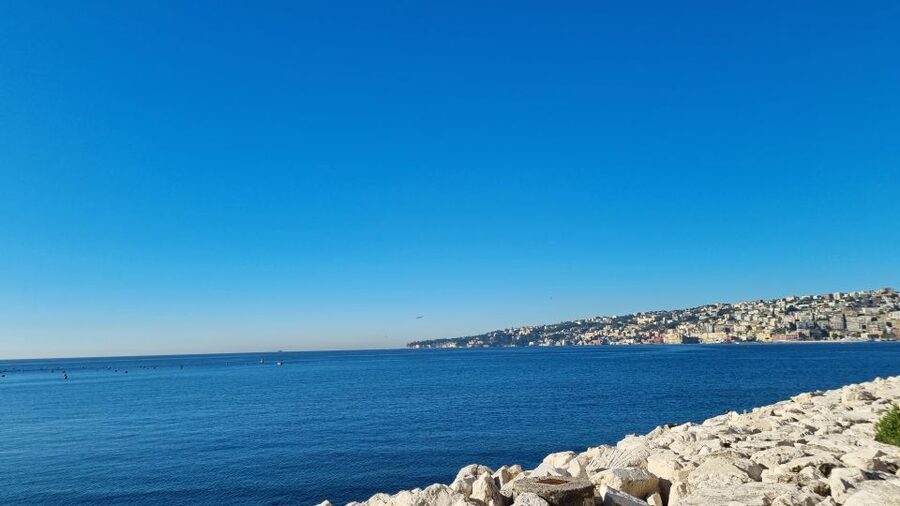
I think this tour fits best if you want a first-time Naples orientation with real neighborhood atmosphere. It’s a good match for couples, friends, and anyone who likes mixing big sights with street-level life.
You should be cautious if:
- you need wheelchair access (it’s not suitable for wheelchair users)
- you’re traveling with kids under 10 (it’s not suitable for children under 10)
- you dislike uneven sidewalks and crowds (the route involves moderate walking in busy areas)
Also, if your main goal is inside-the-building museum time, you may feel the lack of entries. This is about seeing exteriors, learning the stories, and absorbing the street scenes.
But if you want a guided walk that feels like Naples, this tour is one of the best ways to get traction fast.
Should you book Naples Essentials?
I’d book it if you want your first Naples day to feel connected: monuments with meaning, neighborhoods with texture, and street art with cultural context. The big reason is the guide experience—Davide is reported as funny, professional, and able to make both history and neighborhood life click.
If you’re coming with limited time, this format earns its keep. Two hours gives you a strong sense of direction for the rest of your trip, especially because you end on a major corridor near a standout metro-art stop.
Just go in with realistic expectations: it’s a walking tour with uneven streets and crowds. Pack light, wear good shoes, bring that umbrella, and let the city do what it does best—talk to you while you walk.
FAQ
How long is the tour?
The Naples Essentials walking tour lasts 2 hours.
How much does it cost?
The price is $28 per person.
What’s included in the tour?
It includes a licensed local guide, the guided walking tour, and headsets for clear audio when required.
What isn’t included?
Food and drinks aren’t included, and entry to attractions is not included.
Where does the tour start?
It starts in Piazza del Plebiscito, though the exact meeting point may vary depending on the option booked.
What language is the guide available in?
The live guide is available in English, Spanish, and Italian.
What should I bring?
Bring comfortable shoes and an umbrella.
Is this tour suitable for children?
It isn’t suitable for children under 10.
Is it wheelchair accessible?
No. It isn’t allowed for wheelchair users, and electric wheelchairs are also not allowed.