REVIEW · CAPE TOWN
Cape Town: Woodstock Street Art & Culture Tour
Book on Viator →Run by One Day Africa · Bookable on Viator
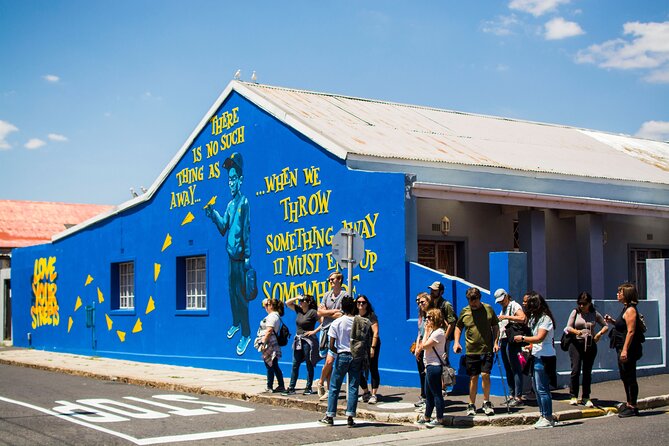
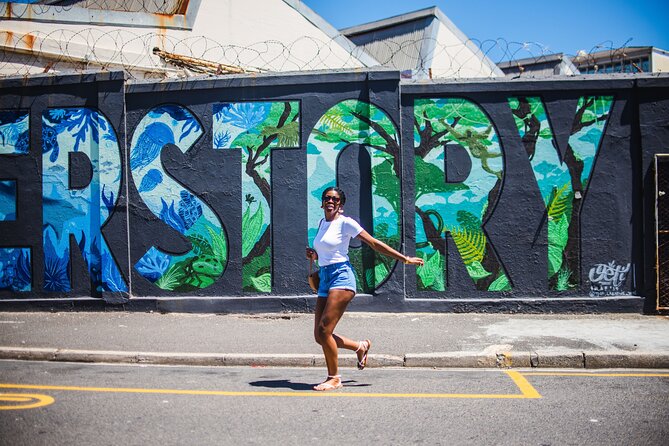
Street art tells Cape Town’s real story. This 2-hour walking tour in Woodstock and Salt River turns colorful murals into real-world conversations about community, creativity, and change. You’ll see street art tied to social and economic issues, plus the human side of who paints it and why.
I love how the guide connects each wall to the bigger picture—how art relates to the streets people live on. I also like the stop at Salt Circle, where the mural work feels linked to festivals or exhibitions, not just random tagging. It’s not only about looking; it’s about understanding what you’re looking at.
One consideration: the walk includes a lot of thoughtful talk alongside the art, so if you only want quick photo moments and zero context, you may wish it stayed more hands-off. Also, double-check the meeting point details before you go, since unclear points can cost time.
In This Review
- Key highlights worth planning for
- Why Woodstock and Salt River are the right streets
- What you’ll see on the walk: murals, technique, and Salt Circle
- Woodstock murals: learning the meaning in the details
- Salt River and Salt Circle: the festival-exhibition energy
- You might meet the artists
- The story behind the walls: social issues and personal meaning
- Past and present political and social concerns
- Techniques and motivations, explained for normal humans
- How the 2 hours actually feel on your feet
- Price and value: is $38.65 worth it?
- Who should book this, and who might not love it
- Practical tips so you enjoy it more
- Should you book the Cape Town Woodstock Street Art & Culture Tour?
- FAQ
- How long is the Cape Town Woodstock Street Art & Culture Tour?
- Where does the tour take place?
- How much does the tour cost?
- Is the ticket digital?
- How far in advance should I book?
- What group size can I expect?
- Is it near public transportation?
- Can I bring a service animal?
- When will I receive confirmation?
- What’s the cancellation policy?
- Who is the tour provider?
Key highlights worth planning for

- Street art with purpose: you’ll learn how murals connect to social and economic realities.
- Woodstock + Salt River route: you get Cape Town creativity beyond the usual tourist loop.
- Salt Circle mural area: festival/exhibition style work shows up here.
- Real artist and community stories: the guide explains motivations and techniques.
- Smaller group size: max 30 people, so questions actually land.
- Guides with local credibility: I’ve seen strong feedback tied to guides like Chandy, Terrence, and Shipo.
Why Woodstock and Salt River are the right streets
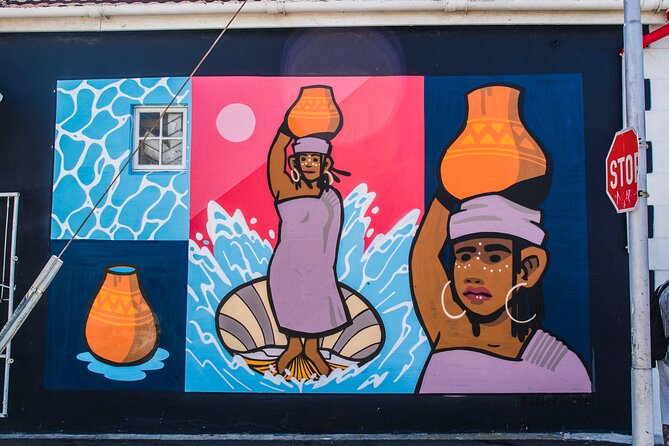
Cape Town gets called a creative hub for a reason, and this tour puts you in the parts of town where street art isn’t an accessory. It’s part of daily visual language. Woodstock and Salt River sit in a space where creativity has to respond to real conditions—housing pressure, job challenges, and the push for a newer South Africa.
What I like about this approach is that it respects the neighborhood. You’re not treating murals like a zoo exhibit. Instead, the walking route is built around the idea that art changes how people see their own communities—and sometimes, how outside audiences see them too. That matters, because the difference between mural art and “just graffiti” is often the context you’re given while you’re standing in front of the wall.
Also, the tour is designed to make you slow down. You don’t just pass by. You stop, look carefully, and get a guide who talks in plain language about what’s happening and why.
You can also read our reviews of more tours and experiences in Cape Town.



What you’ll see on the walk: murals, technique, and Salt Circle
This is a guided walking experience, so you’ll get that street-level view you can’t get from photos. Expect to spend time on multiple mural sites rather than one single big photo spot.
You’ll also encounter street art described as some of the best from around the world—then the guide brings it home to Cape Town. That contrast is useful: it helps you notice the craft, but it also helps you read the message.
Woodstock murals: learning the meaning in the details
In Woodstock, the murals become a kind of open-air classroom. Your guide walks you through individual pieces so you can pick up the main story first, then the technique second. This is where you start hearing about motivations—why an artist chooses a subject, why a style fits the message, and how the neighborhood influences the work.
If you’re the type who likes to ask why someone picked that color or symbol, this tour supports that. The vibe is conversational. People aren’t just watching from behind a phone.
Salt River and Salt Circle: the festival-exhibition energy
As you move toward Salt River, you shift from one mural story to another. One of the most practical things you’ll hear is that some mural work in the area is connected to organized events—especially in the Salt Circle area, where murals have been tied to festivals or exhibitions.
That matters because it changes how you interpret the art. If it’s part of an event, you’re not just seeing a random wall. You’re seeing a public platform—something planned, funded, or designed to be shared with the community. It also helps explain why the artwork can feel unusually polished or intentionally themed.
You might meet the artists
A standout promise here is that you may meet artists themselves. Even when you don’t, you’ll still get that “art made by people” feeling, not “art made by a faceless machine.” The tour focuses on artists’ motivations, and that human angle is one of the reasons this tour is consistently rated so highly.
The story behind the walls: social issues and personal meaning
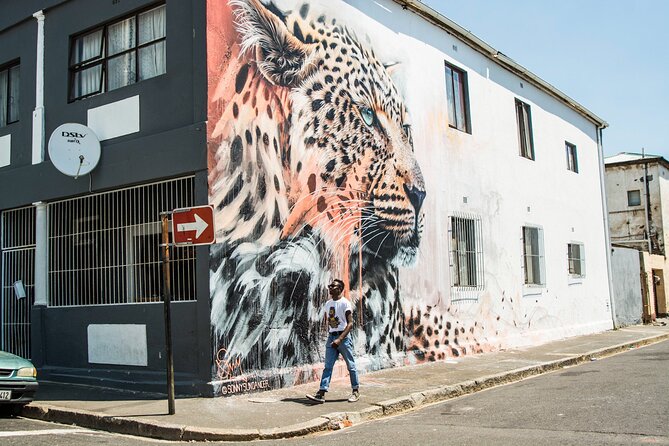
If you came for street art only, you’ll still get that. But the tour’s real strength is how it connects murals to lived experience.
You’ll talk about social and economic issues in the neighborhoods, and you’ll hear about how street art relates to the idea of a new South Africa—both the hopes and the tensions. The guide doesn’t treat these topics like scary headlines. The tone stays grounded, with a big emphasis on what’s positive in the creative scene too.
Past and present political and social concerns
Some of the most compelling moments are when the guide ties the visual work to the past and present. You’ll get context that helps you read the mural like a message, not just a picture. One theme that shows up clearly is that understanding the historical background makes the art hit harder.
Even better: the tour isn’t only about politics in the abstract. You may also hear perspectives on young people’s life and what creativity means in that real-world setting. That’s why the walk can feel more like a cultural conversation than a simple art lecture.
Techniques and motivations, explained for normal humans
One reason people feel satisfied after this tour is that the guide explains the work in a way that connects to what you see right in front of you. You get discussion of different techniques and the thinking behind them—without sounding like you need an art degree to follow along.
This is where guide personalities matter. In the feedback I saw, guides like Chandy come up as wise and thoughtful, with an educational-but-fun energy. Terrence is described as personable, full of detail about artwork and community, and encouraging questions. Shipo is noted for explaining the history behind the paintings in a way that feels easy to track while you’re on foot.
You don’t need to memorize anything. You just need to be ready to listen, look, and ask.
How the 2 hours actually feel on your feet
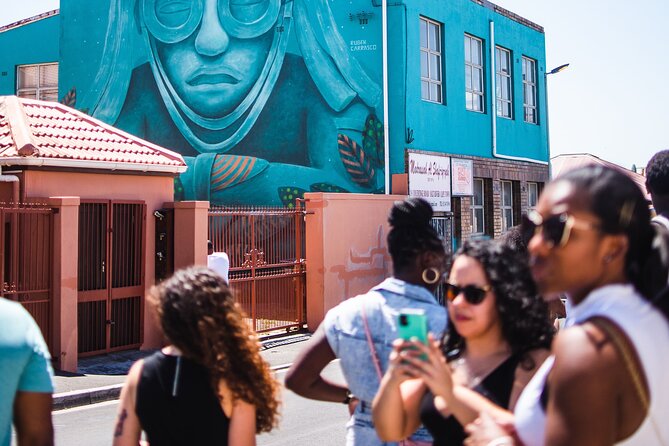
This tour runs about 2 hours. That’s a good length for street art—long enough to see multiple pieces and get real context, short enough that you’re not stuck wandering all day.
Because it’s a walking tour, wear shoes you’d be happy to stand in. Street art tours aren’t long hikes, but they do require attention to the ground and the route, and you’ll want to keep your pace steady.
Also, be mentally ready for a guide-led flow. The stops aren’t about sprinting from mural to mural; they’re about slowing down at each piece long enough to understand it.
One small reality check: the meeting point needs to be clear. In at least one case, an unclear meeting point led to a delayed start. So do yourself a favor and confirm the meeting location details before you head out—then you avoid losing part of your 2 hours.
Price and value: is $38.65 worth it?
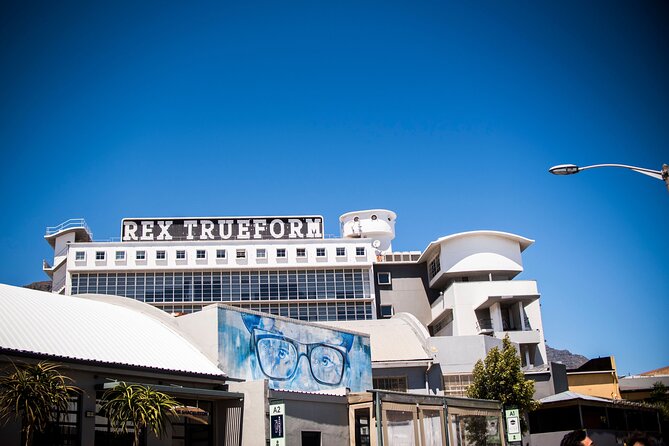
At $38.65 per person for roughly 2 hours, this isn’t a bargain you should treat as disposable. It is priced like an experience that depends on a capable local guide and a route that has meaning.
And the value is more than the street art images. You’re paying for:
- A guided walk through neighborhoods people don’t always visit
- Explanations of social and economic context
- Artist motivation and technique talk while you’re standing in front of the work
- A chance at artist/community interaction (when schedules allow)
- A group cap of 30, which supports real conversation
One more useful signal: the tour is commonly booked about 15 days in advance. When something sells out that often, it usually means people find it worthwhile—not just pretty.
If you’re comparing options, think of this as an art tour with community context baked in. If you want murals plus a guided read of what they’re responding to, the price starts to feel fair.
Who should book this, and who might not love it
This is a great fit if you:
- Love street art but want the meaning behind it
- Prefer neighborhood-focused experiences over landmark checklists
- Enjoy thoughtful conversation about social change
- Like tours where you can ask questions and get answers linked to specific murals
- Want a shorter active outing (2 hours is realistic)
It might be less ideal if you:
- Want a quick hit of photos only, with minimal discussion
- Prefer purely technical art instruction with zero community context
- Get uncomfortable with conversations touching on social and political themes
One nice plus: most people can participate, and the tour is set up near public transportation. That makes it easier to plug into a Cape Town day without needing a private driver.
Practical tips so you enjoy it more
- Bring comfy walking shoes. Even though it’s only 2 hours, the goal is to stop often and look closely.
- Use your phone for the mobile ticket. Keep your confirmation handy, and make sure your ticket is accessible offline if needed.
- Plan to arrive early. With walking tours, “a few minutes late” can translate into “you missed the first mural stop.”
- Bring a question or two. This tour rewards curiosity—how style choices relate to meaning, how the community sees the art, and why certain themes show up.
- Respect the neighborhood. Street art lives in a real place, not behind museum glass.
- Think about heat and water. Cape Town sun can be strong, and you’ll be outside the whole time.
If you want a smooth experience, the key is simple: slow down, listen, and treat the murals like you’re reading a message meant for people who live here.
Should you book the Cape Town Woodstock Street Art & Culture Tour?

I think you should book this if you want street art with context and a guide who connects murals to community life. The big win is that you don’t just see the art—you understand what it’s responding to, and that makes the visuals more satisfying.
Book it especially if you enjoy off-the-beaten-path neighborhoods and you like tours where the conversation has substance. In the feedback I saw, guides like Chandy, Terrence, and Shipo get praised for turning the walk into something educational and genuinely fun.
Skip it if you want a quick, purely visual stroll with no discussion. But if you’re open to ideas—and you like the feeling of learning while you walk—this is one of the best ways to get a real sense of Cape Town’s creative pulse.
FAQ
How long is the Cape Town Woodstock Street Art & Culture Tour?
It’s about 2 hours.
Where does the tour take place?
The tour focuses on the Woodstock and Salt River neighborhoods in Cape Town, South Africa.
How much does the tour cost?
The price is $38.65 per person.
Is the ticket digital?
Yes, you’ll use a mobile ticket.
How far in advance should I book?
On average, it’s booked about 15 days in advance.
What group size can I expect?
The tour has a maximum of 30 travelers.
Is it near public transportation?
Yes, it’s near public transportation.
Can I bring a service animal?
Service animals are allowed.
When will I receive confirmation?
Confirmation is received at the time of booking.
What’s the cancellation policy?
You can cancel for free up to 24 hours before the experience starts for a full refund.
Who is the tour provider?
The provider is One Day Africa.