REVIEW · NEW YORK CITY
New York City: The Banksy Museum Entry Ticket
Book on GetYourGuide →Run by The Museum Banksy · Bookable on GetYourGuide
Banksy in a museum hits different. This one is built around street art you can see close up, with works presented in a way that helps you notice how they were made. I like that it focuses on the world’s largest collection of Banksy pieces in one place, so you can compare styles and themes without hopping across multiple countries.
I also like the curatorial idea of showing how well-made reproductions/versions get as close as possible to the original street works. One thing to consider: there is no guide included, so if you want deep context delivered by a person, you’ll need to be comfortable reading labels or just letting the art do the talking.
In This Review
- Key things to know before you go
- What You’ll See: Banksy’s Street Art, Brought Indoors
- Price and Time: Getting Value from a $30, 1-Day Ticket
- Your Walk-Through: Rooms of Familiar Pieces, Up Close
- How the Museum Handles Missing or Damaged Work
- Seeing the Craft: Why Up-Close Detail Matters
- Practical NYC Strategy: Where It Is and How to Fit It In
- Who Should Buy This Ticket (and Who Might Skip It)
- FAQ
- FAQ
- How much is the Banksy Museum ticket?
- How long does the experience last?
- Where do I enter the museum?
- Is a guide included with the ticket?
- Is the museum wheelchair accessible?
- What languages are available for the host or greeter?
- Should You Book This Banksy Museum Entry Ticket?
Key things to know before you go
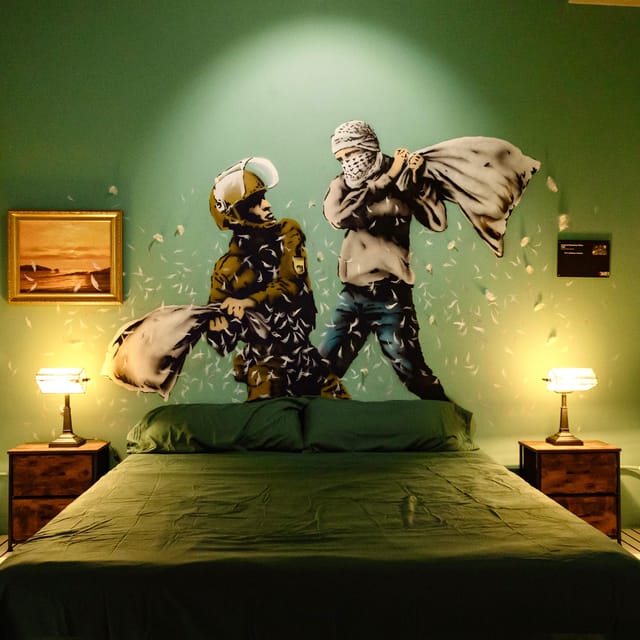
- World’s largest Banksy collection in one stop, built for one-day viewing
- Close viewing of the work, with attention paid to how pieces are made
- Stories behind missing street art, including works that have been destroyed
- Works tied to war zones, adding a sharper edge to the experience
- English and Spanish host/greeter, helpful if you need basics on site
- Wheelchair accessible, with entry at Broadway and Canal Street
What You’ll See: Banksy’s Street Art, Brought Indoors
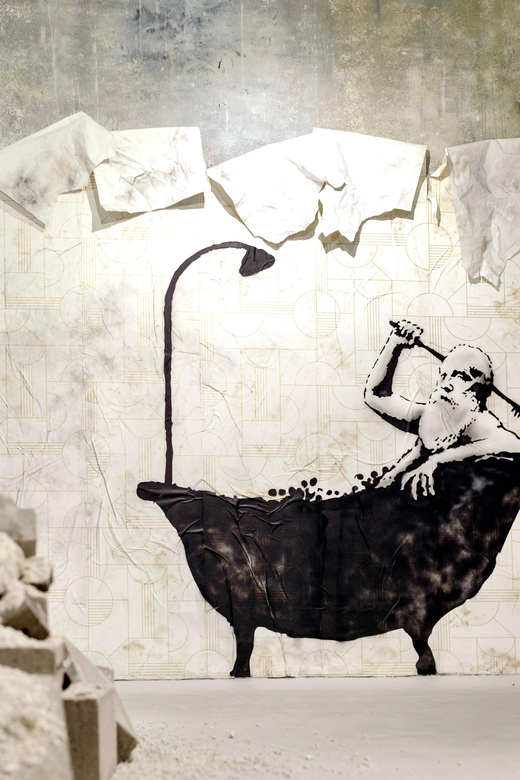
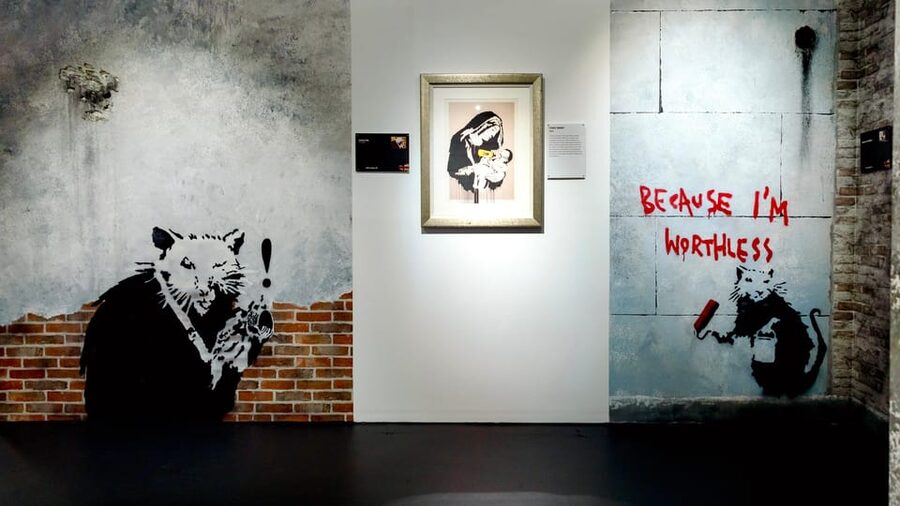
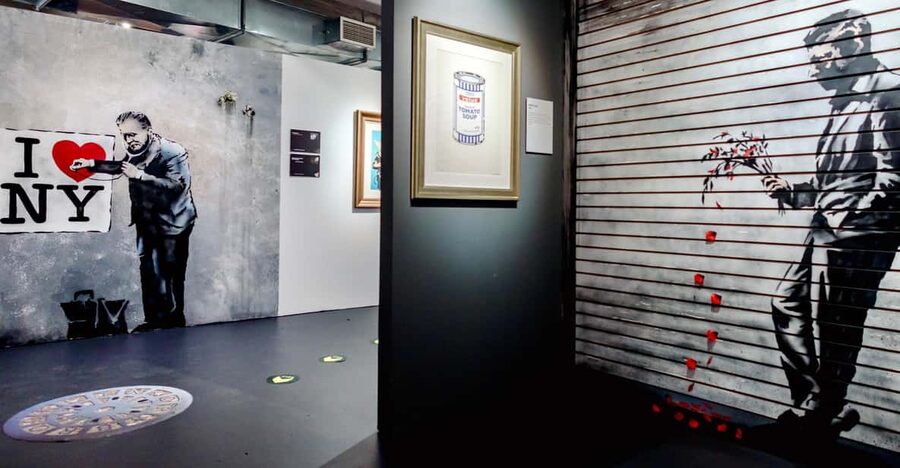
The Banksy Museum experience is basically a controlled way to look at street art. Instead of hunting for walls across the city, you get multiple rooms of Banksy’s best-known imagery gathered under one roof, presented so you can stand close and study. If you like art because of the details—stencils, composition, and that signature mix of humor and bite—you’ll get more out of this than a quick glance from a sidewalk.
I like that the museum doesn’t treat Banksy like a distant legend. It presents him as a street artist with an unusual approach that traveled worldwide, then asks you to think about what happens when the original street works disappear. That’s a big part of the emotional hook here: Banksy is famous, but a lot of the work is temporary by nature. Seeing it collected in one setting turns fleeting street moments into something you can actually slow down for.
Also, the museum’s emphasis on recreations that are made to match the original pieces helps you understand what you’re looking at. You’re not just viewing posters—you’re getting a sense of how the work was designed to land visually at the street level.
You can also read our reviews of more tours and experiences in New York City.



Price and Time: Getting Value from a $30, 1-Day Ticket
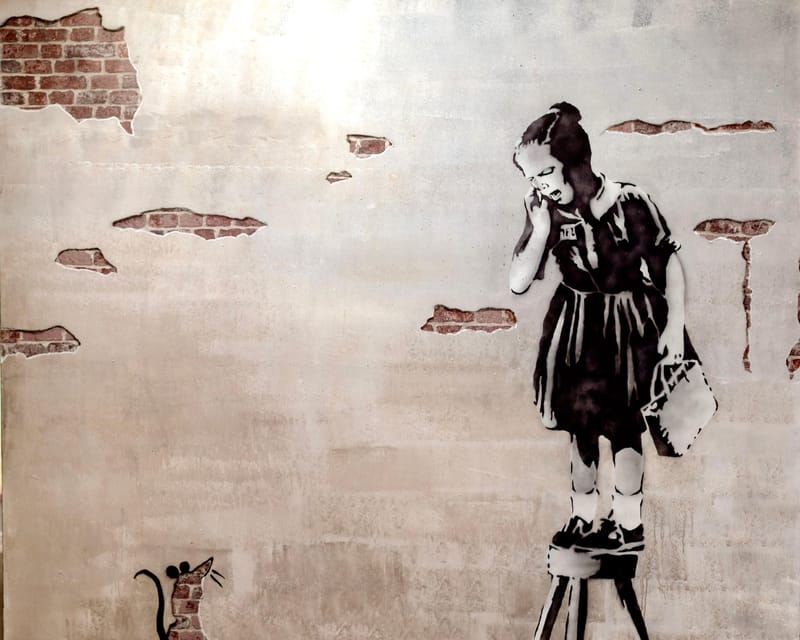
At $30 per person for a 1-day ticket, you’re paying for convenience and focus. You’re not spending time commuting across neighborhoods or tracking down individual murals. You’re buying a single entry that lets you see a large lineup of Banksy works in one go.
One practical way to think about value: this is best if you want a dense art hit, not a long museum day. Since the duration is listed as 1 day, you should plan to treat it like a main activity, not a side stop you squeeze in between meals. Give yourself enough time to walk through rooms slowly and circle back if certain pieces pull you in.
Because a guide is not included, the ticket value depends a lot on how you like to consume information. If you’re the type who reads every label and takes in symbolism on your own, you’ll feel right at home. If you need a person to narrate meaning and connect themes, you may find yourself wanting more explanation.
Your Walk-Through: Rooms of Familiar Pieces, Up Close
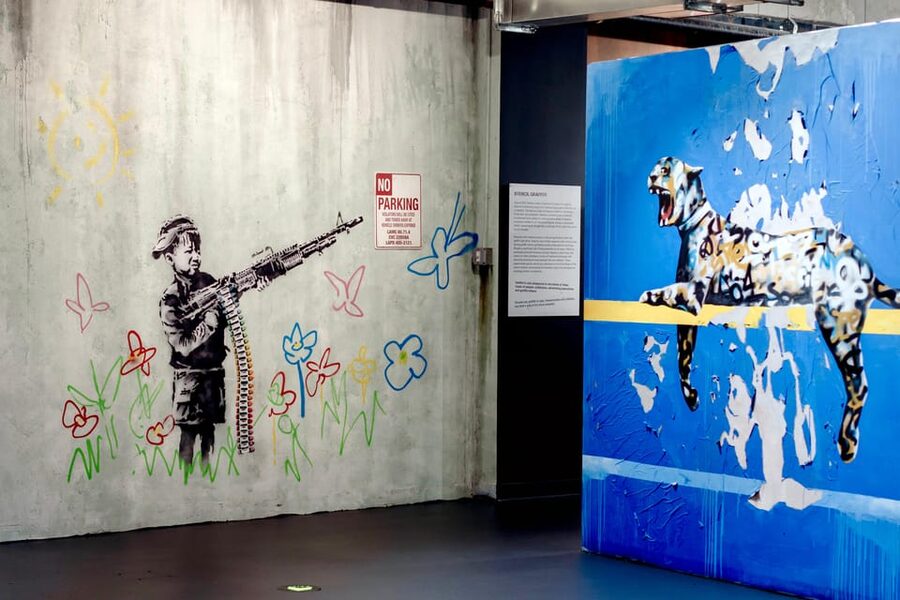
Your starting point is simple: enter the museum at the corner of Broadway and Canal Street. Once inside, the flow is all about room-to-room viewing—filled with Banksy’s famous and recognizable artworks. The museum’s goal is to give you a focused look at the art, not scatter it across city blocks.
Expect a steady rhythm: walk in, look closely, move on. This format works because street art often rewards distance and placement. Indoors, you get the opposite: you can stand nearer, notice shapes and edges, and see how the pieces are built to communicate fast. If you’ve ever seen Banksy in photos and wondered what the real scale or construction feels like, this is where you can reset that.
A highlight worth planning around is that the museum includes Banksy works that have been destroyed and others connected to war zones. That means the tone doesn’t stay light. As you move through rooms, you’ll be switching gears—some pieces read like satire or provocation, while others carry the weight of real-world conflict or erasure. It’s one reason this ticket feels like more than a theme park version of Banksy.
How the Museum Handles Missing or Damaged Work
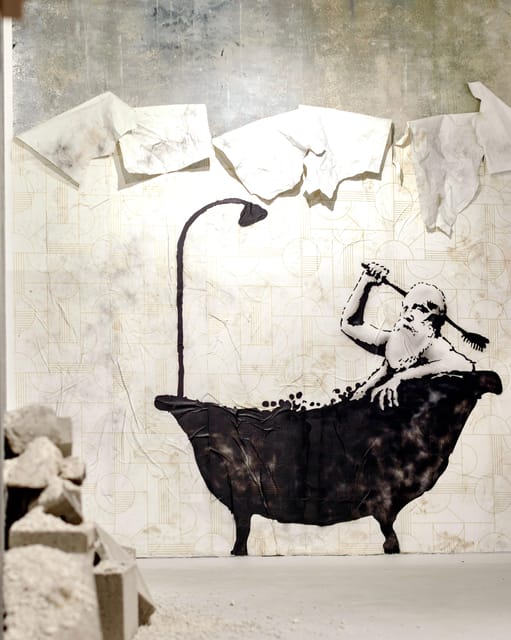
Banksy’s street works are often fragile—subject to weather, legal action, vandalism, or demolition. This museum directly leans into that reality, aiming to show what happens when art disappears from its original context. You’ll see Banksy pieces that have been destroyed, plus works currently in conflict areas.
For you, that matters because it changes what you’re doing in the rooms. You’re not only looking at visuals; you’re also looking at absence. The museum frames the experience around the idea that the street version can vanish, but the message and imagery can still be studied. That’s a powerful shift, because it turns collecting into something closer to preservation.
At the same time, this is also where you should calibrate expectations. The experience is built to recreate or present works as close to the original as possible, but you’re still in a museum environment. If you want the raw immediacy of finding a stencil on an actual wall in real time, you might miss that street energy. The trade-off is clarity and access: you can see a lot, in good conditions, without chasing locations.
Seeing the Craft: Why Up-Close Detail Matters
Banksy is a master of quick impact. But the magic is not just the subject—it’s also the construction. Indoors, you can slow down and notice the choices that make the artwork hit.
I like the museum’s emphasis on how the works are made to be as close to the original as possible. That focus is exactly what helps you move beyond the slogan-level interpretation. You start asking better questions: How was this laid out? What’s doing the heavy lifting visually? Why does the stencil feel sharp while the message feels messy or complicated?
Even if you’re not an art nerd, you can still benefit. Look for the edges, the layering cues, and how the imagery is composed to work in a street setting. Then compare that to what you feel indoors. That contrast is part of the point—and it makes the visit feel like more than just seeing famous images.





Practical NYC Strategy: Where It Is and How to Fit It In
The museum’s entrance is at Broadway and Canal Street, which makes it easy to plug into a Lower Manhattan day. If your plan is to do a classic NYC loop—walk, eat, wander—this is a solid anchor stop because it doesn’t require special timing beyond your entry slot.
Bring the right mindset. This is a ticketed museum stop, so plan to wear shoes for walking inside and give yourself time to move at your own pace through the rooms. If you come in with the attitude of scanning quickly, you’ll miss what the museum is really offering: close looking at a big concentration of Banksy’s work.
Also, since English and Spanish are available through a host/greeter, you can ask basics on arrival without feeling stuck. That’s especially helpful if you’re trying to line up your visit efficiently.
Who Should Buy This Ticket (and Who Might Skip It)
This is a good fit for you if:
- You want a high concentration of Banksy art in one day
- You like street art but prefer the comfort of a controlled viewing space
- You’re curious about Banksy’s controversial side, including works linked to destruction and war zones
It might be less satisfying if:
- You want a guided narrative (because no guide is included)
- You’re only interested in the most spontaneous, on-the-wall street experience
- You’re visiting with kids under 4 (the museum is not suitable for that age group)
If you fall into the sweet spot—street art fan, curious mind, and you don’t need a live docent—this ticket is likely to hit the right balance of access and impact.
FAQ
FAQ
How much is the Banksy Museum ticket?
The entry ticket is priced at $30 per person.
How long does the experience last?
It’s listed as 1 day. You can check starting times based on availability.
Where do I enter the museum?
Enter the museum at the corner of Broadway and Canal Street.
Is a guide included with the ticket?
No. The ticket includes entry only, and a guide is not included.
Is the museum wheelchair accessible?
Yes. The museum is wheelchair accessible.
What languages are available for the host or greeter?
The host/greeter is available in English and Spanish.
Should You Book This Banksy Museum Entry Ticket?
If you want one focused NYC stop that delivers a lot of Banksy imagery in a way you can see up close, I’d book it. The $30 price makes the biggest sense when you treat it as your main art activity for the day, not a quick pit stop. The only strong reason to hesitate is if you need a guided explanation, since no guide is included. If you’re comfortable reading and using your own instincts while you look, you’ll likely leave feeling like you finally saw Banksy at “museum scale,” not just in passing photos.