REVIEW · BARCELONA
Barcelona: Insider Street Art Tour with Private Studio Visit
Book on GetYourGuide →Run by Artspace · Bookable on GetYourGuide
If you think you know Barcelona walls, this adds context. This artist-led street art tour connects styles you spot on the pavement with the people who make them. It also ends with a private studio visit, so street art stops being just something you walk past.
I love that the guides are real makers and real students of the scene, not just tour operators reading facts. One thing to consider: with a 2-hour pace, you’ll hit the best stops and themes, not linger long enough to “study” one piece for an hour.
The best part for me is the switch from street to studio to gallery. You don’t just see works at Teatre Condal and around the Gothic Quarter, you learn how to read tags, paste-ups, murals, and urban sculpture like a local.
In This Review
- Key Highlights You’ll Actually Feel
- Why Barcelona Street Art Works Best With a Real Guide
- Teatre Condal Meet-Up: How the Tour Starts in the Real City
- Av. del Paral·lel to El Raval: Learning the Language of the Walls
- La Rambla and the Gothic Quarter: Why These Streets Change the Mood
- The Studio Stop: Seeing How Urban Art Is Made
- Canal Gallery: From Street Wall to Gallery Frame
- What the Guides Actually Add (Kate, Kat, Anya, Juan, Luke)
- Photo Spots, Walking Pace, and What to Bring
- Price and Value: Is $33 Reasonable for Barcelona Street Art?
- Who Should Book This Tour (and Who Might Skip It)
- Should You Book This Insider Street Art Tour?
- FAQ
- How long is the Barcelona street art tour?
- Where is the meeting point?
- What areas will we walk through?
- Is there a private studio visit?
- Is the tour in English?
- What kind of street art will we see?
- What’s included besides the tour?
- Is it wheelchair accessible and can I cancel for a refund?
Key Highlights You’ll Actually Feel
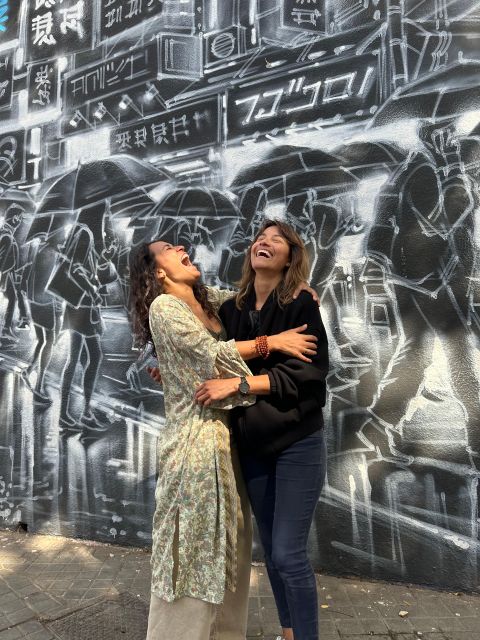
- Artist-guides and art historians who explain the stories behind what you see
- Private studio access to an underground urban art workspace
- Street-to-gallery comparison at an urban art gallery stop
- Barcelona’s graffiti-capital context and a practical way to “read” walls
- Photo-friendly route through El Raval, La Rambla, and the Gothic Quarter
- Follow-up support via an interactive map with galleries and cool stops
Why Barcelona Street Art Works Best With a Real Guide
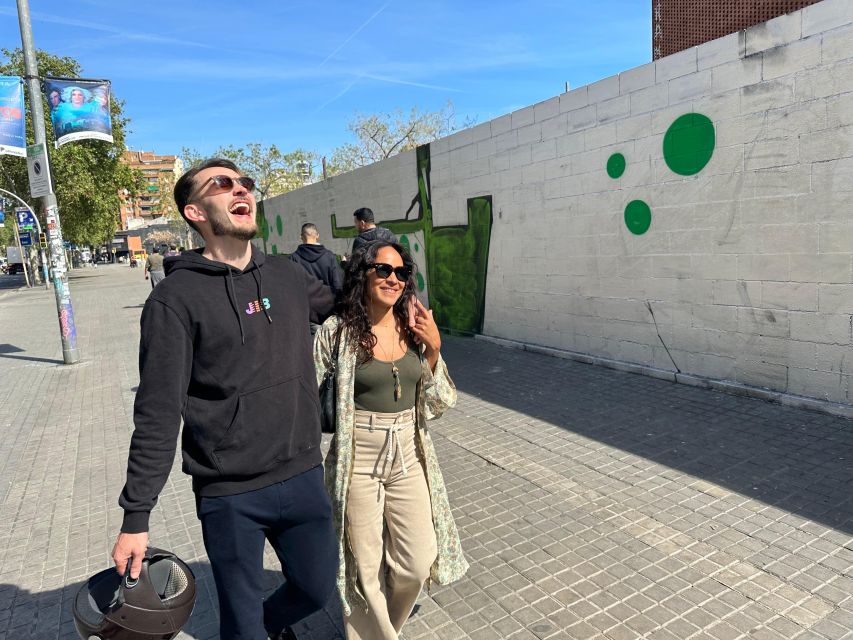
Barcelona street art isn’t a single style. It’s a whole conversation across neighborhoods, tools, and generations. On this tour, you get a guide who can translate that conversation on the spot.
I like that you learn how to tell different graffiti styles apart without needing a street-art degree. You also get language for what you’re seeing—things like tags (quick signatures), paste-ups (paper/print work), murals (larger compositions), and urban sculpture (3D work). That changes how you look at walls after the tour ends.
The other big win is how human it feels. The walk ends at places where the art is made and shown, not just photographed from the sidewalk. When you meet artists and hear the real stories behind pieces, the city’s street art becomes easier to understand and harder to ignore.
You can also read our reviews of more tours and experiences in Barcelona.

Teatre Condal Meet-Up: How the Tour Starts in the Real City
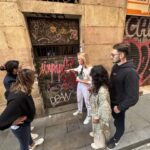
You meet at Teatre Condal, right in front of the BINGO sign. It’s a simple starting point, and the area gives you quick access to cafés and shops if you need a bathroom or a refresh before you begin.
The tour kicks off with a short guided introduction near Av. del Paral·lel, 40. From there, you move on foot, with frequent stops for looking, listening, and photos. Because the total time is only 2 hours, the pacing is brisk but not chaotic. You’ll be walking between neighborhoods like El Raval and the edges of the Gothic Quarter, so wear shoes you trust.
One practical plus: English is the working language, so you’re not stuck guessing at context when you’re close to the work.
Av. del Paral·lel to El Raval: Learning the Language of the Walls
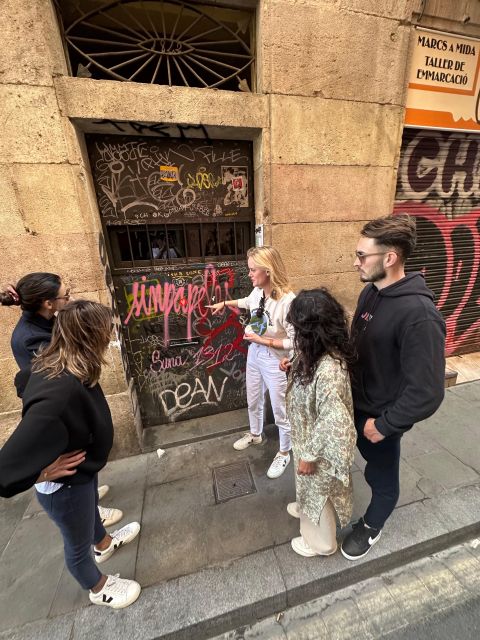
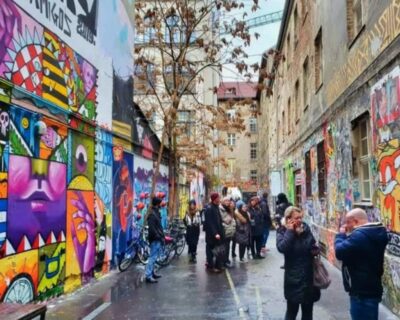
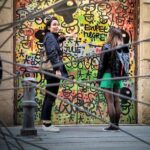
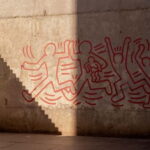
This is where the “reading mode” starts. Early on, you see a range of urban art works and learn how styles and techniques signal different intentions. A tag can be about presence. A mural can be about storytelling. Paste-ups can feel like messages that landed late at night. Urban sculpture reads differently again because you’re dealing with space, shadow, and view angles.
In El Raval, you’re walking through a part of Barcelona that’s known for creativity and street culture. The tour uses this area well. You get the chance to connect what you’re seeing on the street to how the art moves toward the studio and beyond.
Photo-wise, this section is strong. You’ll pass pieces with enough color and texture to make photos worth your time. But the real value is learning what to look for before you shoot—placement, layering, style cues, and how an artist builds meaning with limited space.
La Rambla and the Gothic Quarter: Why These Streets Change the Mood
After Raval, the route brings you toward La Rambla for a brief stop, then into the Gothic Quarter for another walking segment. Even if you’ve been in these areas before, the tour approach makes a difference.
Instead of treating these streets like sightseeing corridors, the guide keeps the focus on street art as urban communication. You’ll move quickly, with short visits timed to how you can best absorb the content: look, listen, ask questions, and keep moving.
This is also where you learn why Barcelona is often called one of the graffiti capitals of Europe. It’s not just quantity. It’s variety and technique—street artists adapting to surfaces, traffic, weather, and the city’s own visual rhythm.
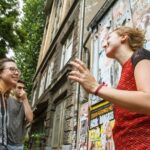
If you’re the type who likes to ask questions, this part can be especially rewarding. In small groups, you can usually go deeper. One guide style you might get includes explanations and back-and-forth that feel relaxed, like Anya did in an English-speaking group I saw described in past bookings.
The Studio Stop: Seeing How Urban Art Is Made
Then comes the main event: the underground urban art studio. This is where you stop being a spectator and start being a visitor with context.
The tour takes you to an artist collective workspace, where you meet artists themselves. That matters because street art can be misunderstood if you only see the finished surface. In the studio, you get the human side: process, materials, and how artists talk about their work when they’re not on the sidewalk performing it.
From the reviews, this studio access is the part people talk about first. The tone is usually informal and friendly—people like Luke were described as down-to-earth and passionate, which helps when you’re standing around creative spaces and trying not to sound like you’re asking basic questions. The better question in a studio is usually: Why this method? Why here? Why now?
You’ll also likely notice how different artists think about the relationship between street and studio. Some pieces look like they could only exist outdoors. Others make more sense when you understand how sketches, layers, and planning work behind the scenes.
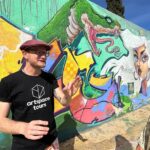

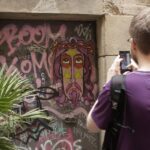


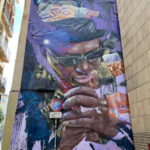
Canal Gallery: From Street Wall to Gallery Frame
After the studio, the tour ends at Canal Gallery. This final stop is smart because it shows the transition from street pieces to gallery presentation.
On the street, work has to survive context—changing light, weather, and the fact that people walk past it in seconds. In a gallery, the viewing changes. The distance shifts. The lighting changes. Even the audience changes. The tour helps you notice that shift instead of just accepting it.
There’s also something practical here: seeing how urban art is represented by a gallery space helps you understand what to look for next when you’re exploring on your own. You get a frame for how urban art travels beyond its original walls.
If you want to keep this momentum after the tour, this stop also tees up the included interactive map. It points you to more galleries, cafes, and cool places, which is useful because Barcelona street art can send you in a dozen directions fast.
What the Guides Actually Add (Kate, Kat, Anya, Juan, Luke)
The tour’s promise is that the guides are artist-active and art-scene aware. In practice, the difference shows up in how they explain what you’re seeing. Instead of generic art facts, you get stories tied to the street.
Names that show up in past bookings include Kate and Kat (English explanations in some groups), Anya (strong art context and easy Q&A), Juan (clear street-art knowledge and studio tours), and Luke (very hands-on, personable studio energy). You might not get the same guide, but the baseline is consistent: they know how the scene thinks, and they can explain the details in plain language.
One more detail that’s worth your time: guides often share practical “where to go next” advice. In one described experience, people walked away with tips for finding more street art and even music gigs in the city. That’s the kind of value that turns a tour into a starting point, not a one-off.
Photo Spots, Walking Pace, and What to Bring
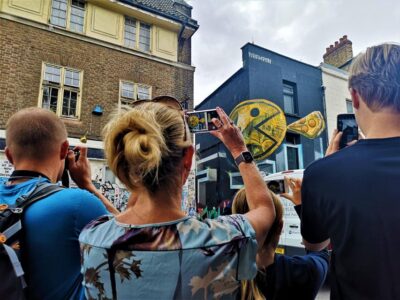
This is a walking-focused experience, built around short looks and quick transitions. You’ll have multiple chances for photos as you pass major colorful works.
Keep in mind:
- You’ll be on foot for a full 2 hours, so comfortable shoes help.
- Bring a charged phone/camera if you care about capturing texture and color.
- Dress for Barcelona weather, since street-level time matters.
Because the tour includes both outdoor street viewing and indoor studio/gallery moments, layers can also be useful if temperatures swing.
Price and Value: Is $33 Reasonable for Barcelona Street Art?
At $33 per person, you’re not paying for a bus tour or a long lecture. You’re paying for access and interpretation.
Here’s what that money covers in real terms:
- a focused street-art walk that teaches you how to recognize techniques and formats like tags, paste-ups, murals, and sculpture
- insider-level context from guides active in the scene (artists and art historians)
- entry to a private studio space where you meet artists
- a gallery stop at Canal Gallery
- an included interactive map for continuing your search
If you like street art, this price can feel fair because the studio access alone is the kind of thing most people can’t arrange on their own in the moment. If you’re only there for quick photos and don’t care about interpretation, the cost may feel less justified. But if you want to understand what you’re seeing and keep exploring afterward, it’s strong value for Barcelona.
Who Should Book This Tour (and Who Might Skip It)
Book it if you:
- want to learn how to read street art, not just see it
- enjoy conversations with artists and scene-aware guides
- like walking a real neighborhood route, including El Raval and the edges of the Gothic Quarter
- want a short, clear plan that ends with a studio and gallery
Skip it or consider a different style of tour if you:
- hate walking or want a very slow pace
- expect only one neighborhood or only one kind of street art
- want a full-day deep research session
This is best for people who like focused experiences—two hours that give you a new way to look.
Should You Book This Insider Street Art Tour?
I’d book it if your goal is to see Barcelona street art with meaning. The tour’s value isn’t just the locations—it’s the artist-led explanations and the studio access that makes the street-to-gallery story real.
If you’re unsure, ask yourself one question: do you want to leave with “I saw colorful walls,” or with “I can read the walls”? This tour clearly leans toward the second.
FAQ
How long is the Barcelona street art tour?
It lasts 2 hours.
Where is the meeting point?
You meet in front of the BINGO sign on Teatre Condal.
What areas will we walk through?
The route includes stops and walking segments around Av. del Paral·lel, El Raval, La Rambla, and the Gothic Quarter.
Is there a private studio visit?
Yes. The experience includes a visit to an artist collective’s studio space where you meet local artists.
Is the tour in English?
Yes, the live tour guide speaks English.
What kind of street art will we see?
You’ll see a wide variety of urban art in Barcelona, with help learning the context behind tags, paste-ups, murals, and urban sculpture.
What’s included besides the tour?
You get an interactive map with recommendations for galleries, cafes, and other cool places in Barcelona.
Is it wheelchair accessible and can I cancel for a refund?
The tour is wheelchair accessible. You can cancel up to 24 hours in advance for a full refund, and there’s also a reserve now & pay later option.