REVIEW · BARCELONA
Street Art, Sculptures & Crime Stories Walking Tour – Barcelona
Book on Viator →Bookable on Viator
Street art gets a darker backstory here. This Barcelona walking tour mixes murals and sculptures with the kind of neighborhood history that explains why the art got made in the first place, from El Raval’s tough past to the Gothic Quarter’s old stone meets new paint approach. With a friendly local guide (often named Liliia), you’ll get the context behind what you see, not just a photo stop parade.
I really like two things about this setup: the small group size (max 15) keeps the pace human, and the guide’s coffee and lunch recommendations help you turn the walk into a full day instead of a quick hit-and-run. One thing to consider: snacks are not included, and you’ll be on your feet for about 2.5 hours—so plan water and something small to eat if you get hungry.
In This Review
- Key things you’ll notice on this route
- The vibe: art, history, and crime-adjacent storytelling
- Price and what $108.37 really covers
- Meeting point and how the route flows
- Stop 1: El Raval’s murals, hidden details, and the crime-story thread
- Stop 2: La Rambla and the Miró mosaic you step over
- Stop 3: Gothic Quarter’s Roman and Gothic stone with modern street paint
- Stop 4: El Born / La Ribera—optical illusion art and the staring-building facade
- What to do before and after so the day actually works
- Who this tour is best for (and who should skip it)
- Should you book this Barcelona street art tour?
- FAQ
- How long is the Street Art, Sculptures & Crime Stories Walking Tour?
- How much does the tour cost?
- What language is the tour offered in?
- How many people are in a group?
- Where does the tour start and end?
- Are admission tickets included?
- Are snacks included?
- Can the tour be customized?
- What kind of ticket do I get?
- What is the cancellation policy?
Key things you’ll notice on this route
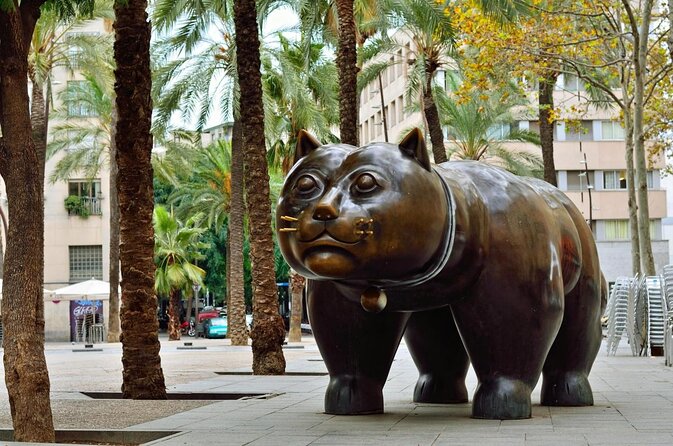
- El Raval’s mix of big murals and tiny hidden works in alleys and doorways
- Joan Miró’s mosaic in the pavement on La Rambla, right where most people never look down
- Modern street art placed against Roman and Gothic stone in the Gothic Quarter
- El Born’s optical illusion pieces plus the eerie staring-building facade
- Some admissions are built in, while other stops are free to visit
- A recommendations list after the tour, useful for food and drink
The vibe: art, history, and crime-adjacent storytelling
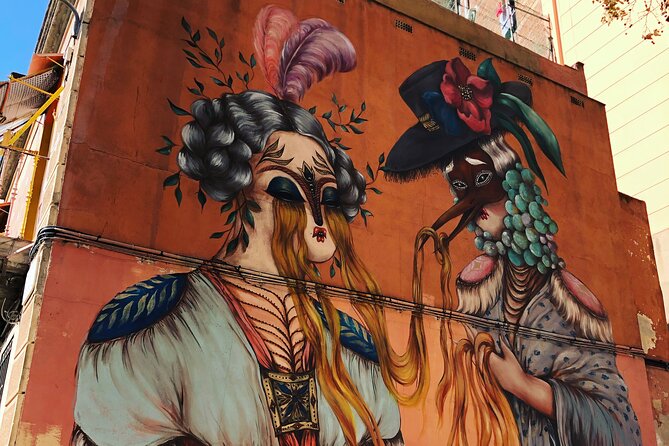
Barcelona’s street art scene isn’t just decoration. This walk treats it like evidence—visual clues left by artists responding to politics, identity, and real events. That’s why it feels different from a standard “landmark sprint.”
I like the way the tour connects the dots. El Raval gets you into the mood with murals tied to social struggles, neighborhood legends, and a dramatic historical killing that sparked local artistic responses. Then you move into areas where the city’s layers show up more clearly: medieval streets and Roman traces in the Gothic Quarter, and Born’s gallery-energy with optical illusions that play tricks on your eyes.
The other strong point is the human pace. The route is timed for walking and stopping—so you can actually read what’s in front of you. And because the group stays small, you can ask questions about symbols, artists, or the meaning behind a wall without feeling rushed.
You can also read our reviews of more tours and experiences in Barcelona.


Price and what $108.37 really covers
At $108.37 per person for about 2 hours 30 minutes, this is not a budget-only activity. But it’s also not just someone pointing at walls. The value comes from three things:
First, you get a guide who explains the how and why behind the art, including neighborhood context and stories. Second, admission tickets are included for some stops, which matters because you’re not paying extra later for those specific moments. Third, the tour ends in a useful place (Born), so you’re well-positioned to keep exploring afterward.
What you should plan for: snacks aren’t included, so you’ll want your own pre-walk bite or a mid-walk option nearby. Also, the experience is tightly focused on street art and related history—if you’re craving purely classical monuments, you may want to pair this with another attraction the same day.
Meeting point and how the route flows
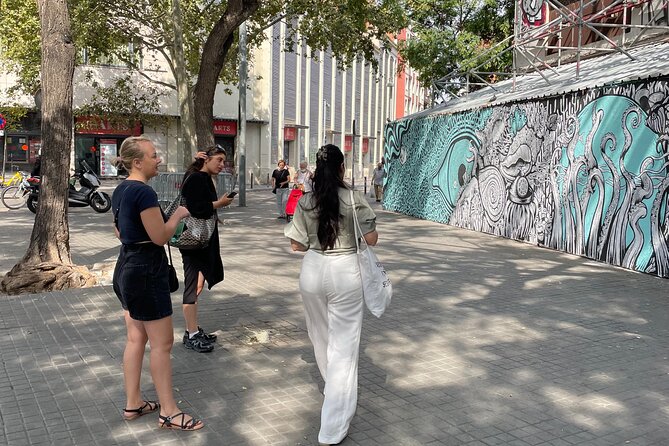
You start at Carrer Nou de la Rambla, 105 (Ciutat Vella) and finish at Carrer Antic de Sant Joan, 7 (near Ciutadella) in El Born. That end point is handy because it drops you in one of the city’s most walkable districts, with markets, cafes, and plenty of room to wander after the guided part.
The rhythm of the tour is also worth knowing. You spend the longest stretch in El Raval, then you shift gears with shorter segments on La Rambla and the Gothic Quarter, and end with a longer stop in El Born. In practical terms: you get one deeper neighborhood chapter, two quick context hits, and then a final finish that’s more playful and visual.
If you’re sensitive to crowds, consider timing. La Rambla is a central corridor with foot traffic, so wear comfortable shoes and accept that you’ll be sharing the street with everyone else looking for flowers, performances, or just a stroll.
Stop 1: El Raval’s murals, hidden details, and the crime-story thread
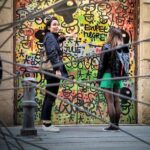
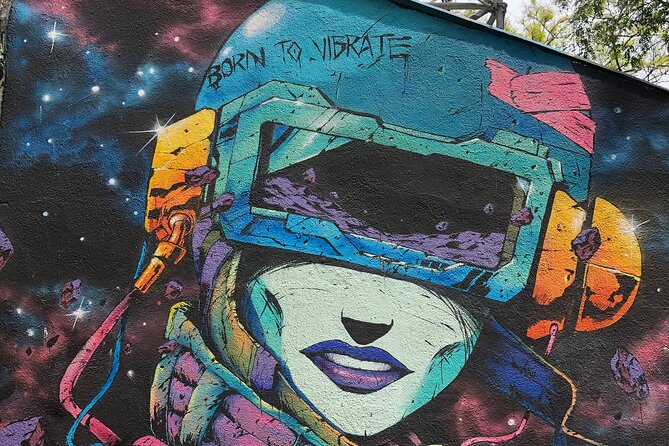
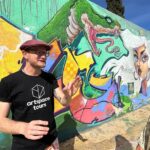
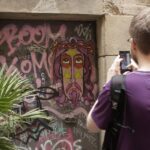
El Raval is where the tour starts to feel like a movie set—minus the soundtrack, plus more texture. This neighborhood is known for social and political street art, and you’ll see both large-scale murals and smaller pieces tucked into places most people miss.
You’ll focus on:
- Large murals that reflect social struggles and local legends
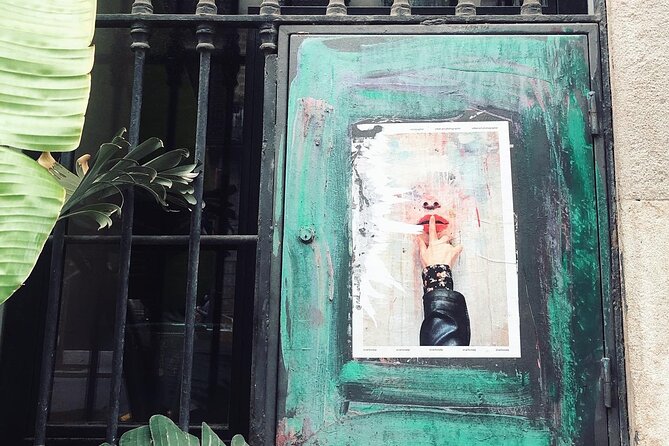
- Tiny works hidden in alleys and doorways
- A site tied to a dramatic historical killing that inspired neighborhood art
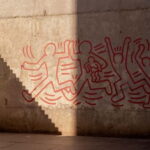
- Iconic mosaics connected to Raval’s rebellious spirit
- Extra visual details that show the area’s shift from danger-zone reputation to cultural hotspot
What makes this stop valuable is the way it connects art to place. When you understand the context, you start seeing symbolism everywhere: who the image seems aimed at, what emotions it uses color and figures to push, and why certain walls keep getting repainted in similar themes.
One practical note: because El Raval includes alleyways and smaller lanes, you’ll want good grip shoes and patience. This is the part where you’ll be looking up and looking sideways, not just straight ahead.
Stop 2: La Rambla and the Miró mosaic you step over
La Rambla is famous for being busy and photogenic, but the smartest move here is learning how to look at what’s under your feet. This stop centers on a Joan Miró mosaic embedded in the pavement—the kind of artwork millions walk over without really noticing.
You also get a slice of contemporary street art thinking:
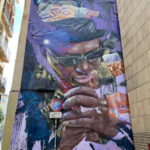
- Thought-provoking murals and installations from local artists
- Themes that touch identity, freedom, and day-to-day city life
The timing is short here (around 20 minutes), which works well because it keeps you from burning your whole energy budget in the busiest corridor. You’ll get the key visual and meaning beats, then you can use the rest of La Rambla time however you want—coffee, people-watching, or just continuing on with less guesswork.
If you hate crowds, treat this as a “quick scan” portion. You’re not meant to linger for half an hour on a sidewalk full of distractions. The point is the art insight.


Stop 3: Gothic Quarter’s Roman and Gothic stone with modern street paint
Then you step into the Gothic Quarter, where time stacks up fast. You’re walking through the old core of Barcelona, with medieval street lines and areas shaped by older Roman presence. What’s fun—and useful—is watching contemporary street art react to ancient architecture.
You’ll look for:
- Modern murals that blend with Gothic arches and Roman ruins
- Hidden pieces tucked into ancient alleys and courtyards
- Early Barcelona works connected to Picasso (including references to artworks created during his early years here)
- Urban installations that reinterpret medieval legends
- The contrast between thousand-year-old stone and fresh spray paint
This is the stop that helps you understand why street art matters. When it’s placed on old stone, it stops being just decoration. It becomes a conversation across centuries: power, myth, survival, and identity, all re-staged with modern materials and modern language.
Admission is included for this segment, so you’re also getting at least part of the experience through official access rather than only street-level sights.
Stop 4: El Born / La Ribera—optical illusion art and the staring-building facade
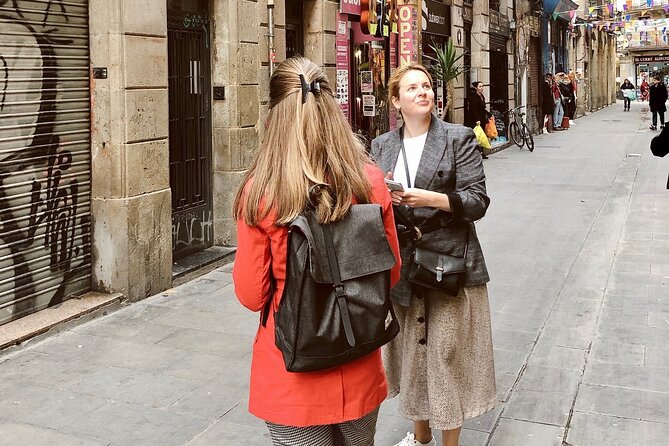
El Born is a stronger “street art star” zone, with murals that feel designed for discovery and sharing. This is also a neighborhood where you’ll see how street art sits beside markets and historic architecture.
You’ll focus on:
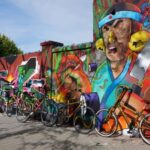
- Optical illusion street art that messes with your eyes
- The famous staring building facade, where windows and details seem to watch you
- Around Santa Caterina Market, vibrant murals that pair nicely with the market’s wavy, Gaudí-inspired roof
This stop is longer (around 40 minutes), which makes sense. Optical illusion art takes a little time to register. You’ll also want a few slow passes past the same wall from different angles—because the whole point is how the image changes with where you stand.
It’s a strong finale. By the time you hit Born, you’ve already built context in Raval and Gothic streets. Now the tour lets you enjoy the playfulness of the visuals while still keeping the city-history thread alive.
What to do before and after so the day actually works
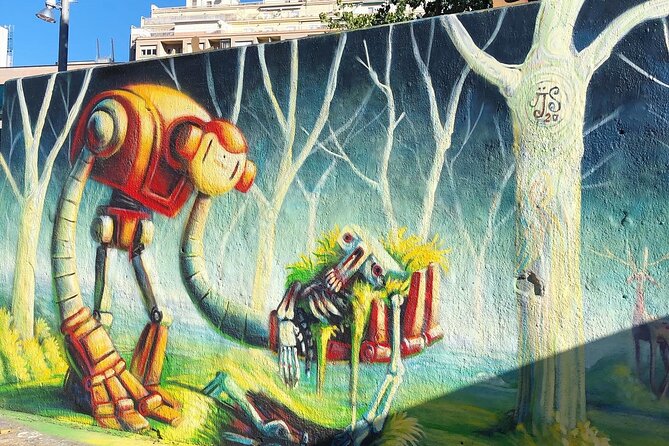
If you want the best experience, arrive with two mental habits:
1) Keep your eyes moving. The best pieces are often not on the main strip.
2) Listen for the story behind the symbol. Even if you do not know an artist name, you can still get meaning from what the guide points out.
For after the tour, use your guide’s recommendations list and then wander. The tour finishes near Ciutadella in Born, so you can pivot easily into lunch, a market stop, or an easy stroll through the surrounding blocks.
If you’re pairing this with other Barcelona plans, I’d avoid stacking it right before something that needs you to sit quietly for a long time. You’ll likely come away energized and ready to move, not exhausted.
Who this tour is best for (and who should skip it)
This works especially well for you if:
- You like street art with meaning, not just pretty walls
- You enjoy neighborhoods with layered history
- You want a guided walk that ends in a great spot for food
It might be less ideal if:
- You mainly want big, ticketed sights and classic monuments
- You’re not into reading context and want a fast photo-only loop
- You get hungry fast and don’t plan for snacks
The sweet spot is someone who likes culture and curiosity, and who enjoys walking as part of the experience.
Should you book this Barcelona street art tour?
I think it’s worth booking if you want Barcelona to feel real, not just Instagram-clean. You’re getting a guide-led route through four distinct districts—Raval’s story-heavy walls, La Rambla’s Miró pavement clue, the Gothic Quarter’s old-meets-new artwork, and Born’s optical illusion finale.
Book it if you’ll use the recommendations for coffee and lunch, and if you’re comfortable walking for about 2.5 hours. Skip it only if your idea of a perfect day is mostly classic sights with minimal context—because this one is all about the art and the stories behind it.
FAQ
How long is the Street Art, Sculptures & Crime Stories Walking Tour?
It lasts about 2 hours 30 minutes.
How much does the tour cost?
The price is $108.37 per person.
What language is the tour offered in?
The tour is offered in English.
How many people are in a group?
The tour has a maximum of 15 travelers.
Where does the tour start and end?
It starts at Carrer Nou de la Rambla, 105, Ciutat Vella, 08001 Barcelona, Spain and ends at Carrer Antic de Sant Joan, 7, Ciutat Vella, 08003 Barcelona, near Ciutadella.
Are admission tickets included?
Admission is included at Stop 1 (El Raval) and Stop 3 (Gothic Quarter). Stop 2 (La Rambla) and Stop 4 (El Born / La Ribera) are listed as free.
Are snacks included?
No, snacks are not included.
Can the tour be customized?
Yes. The tour might be customized for you and your group.
What kind of ticket do I get?
You’ll receive a mobile ticket.
What is the cancellation policy?
You can cancel for a full refund up to 24 hours in advance of the experience start time.