REVIEW · MADRID
Madrid: Street Art Bike Tour
Book on GetYourGuide →Run by Cooltourspain · Bookable on GetYourGuide
Madrid’s walls talk when you pedal. This street art bike tour in Madrid follows the evolution of graffiti from early tagging to major festival pieces, with a local graffiti artist guiding the ride. I especially like the mix of history and street-level technique, and I also like the neighborhood feel as you roll through Malasaña and Lavapiés on two wheels.
One thing to keep in mind: you’re riding in real city traffic, and the tour is listed as medium level with just one uphill. If you’re not used to cycling around cars, plan to take it slow and let the guide know your pace up front.
In This Review
- Key Highlights You’ll Actually Care About
- Street Art on Wheels in Madrid’s Center District
- A Guided Route Through Madrid’s Graffiti Timeline
- Malasaña by Bike: Plaza Dos de Mayo and Festival Colors
- Lavapiés and Noviciado: Solar Antonio Grilo and Esto es una Plaza
- Bikes, Safety, and How the Pace Feels
- Artists and Festival Pieces You’ll Learn to Recognize
- Logistics That Keep the Tour Smooth
- Price and Value: Is $46 a Good Deal
- Who This Tour Fits Best (and Who Should Rethink It)
- Should You Book This Madrid Street Art Bike Tour?
- FAQ
- How long is the Madrid Street Art Bike Tour?
- What does the tour cost?
- Where do I meet the guide?
- Where does the tour end?
- What’s included in the ticket price?
- What is not included?
- What should I bring?
- What languages are available for the live guide?
- Is the tour easy to ride for beginners?
- What’s the cancellation policy?
Key Highlights You’ll Actually Care About
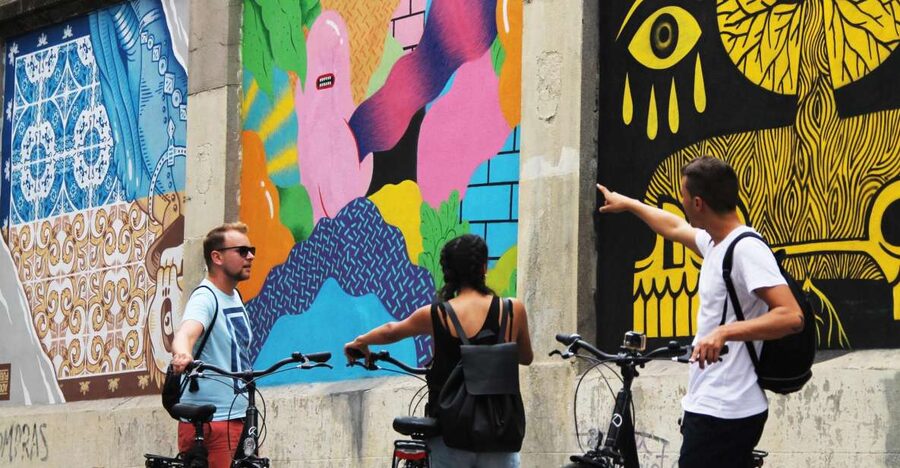
- Local graffiti artist guiding: you learn how pieces get made, not just what they look like.
- A preserved 1989 tag tied to the early Madrid graffiti movement.
- Boa Mistura stop at Alonso Martínez with a photo-worthy piece.
- Malasaña street art festival visuals, including the area around Plaza Dos de Mayo.
- Lavapiés community gardens like Solar Antonio Grilo and Esto es una Plaza.
- Helmet, lock, and bike included so you can focus on the art, not logistics.
Street Art on Wheels in Madrid’s Center District
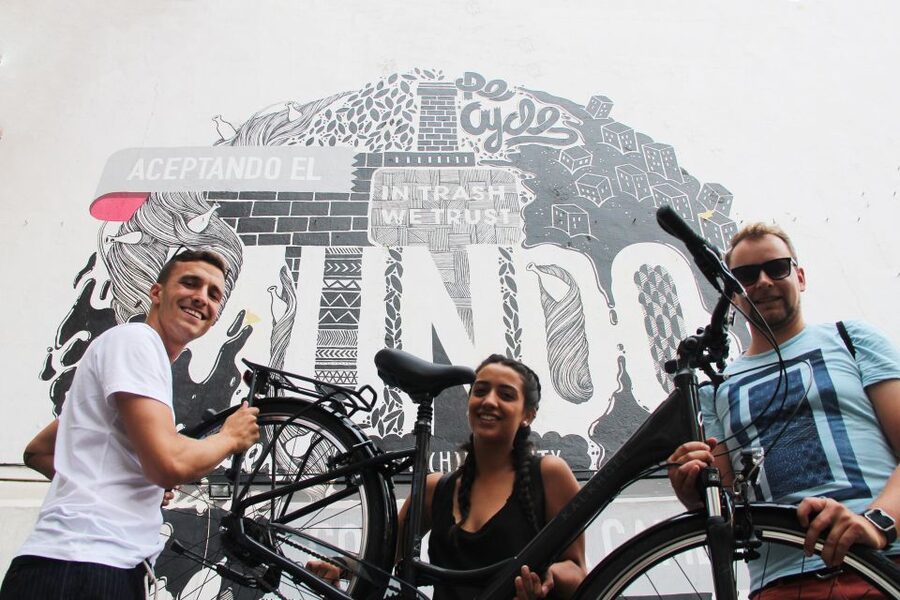
This tour is built around a simple idea: street art makes more sense when you see it in context, at bike speed, with a guide who knows the scene. You’re not standing in one place reading captions. You’re moving through Madrid’s center district, catching murals on walls, tags on shutters, and festival-style pieces that you’d miss if you only walked the “main sights.”
The best part is that the guide doesn’t treat graffiti like a museum item. You’ll hear how artists developed styles and techniques while decorating the city’s surfaces—walls, metal shutters, and other built details. That matters, because in Madrid you’ll notice street art everywhere, but you won’t automatically know what’s old, what’s new, and what each style is trying to do.
I also appreciate the practical structure. You get bike safety instructions before you roll. Helmets and a lock are included, so you’re not hunting for gear. And the tour includes a restroom break, which sounds basic until you’re 60 minutes into exploring and realize you’d rather not stress about timing.
You can also read our reviews of more tours and experiences in Madrid.
A Guided Route Through Madrid’s Graffiti Timeline
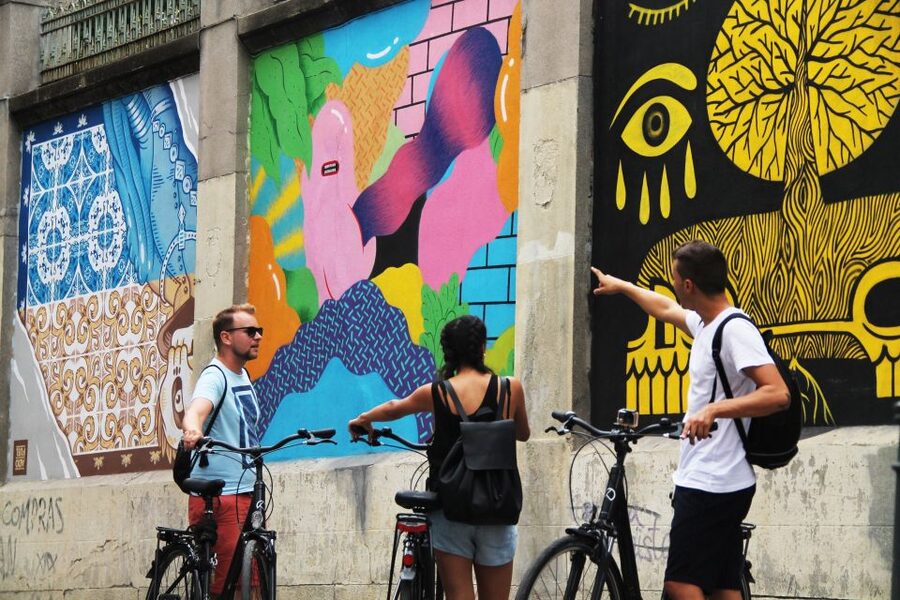
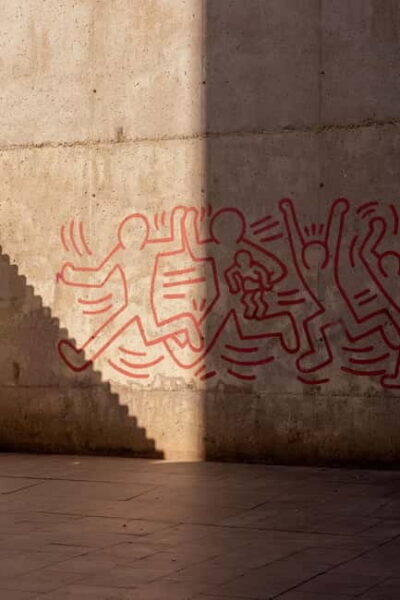
The tour’s story starts with the roots. You’ll visit a spot where Muelle—often described as the pioneer of the graffiti movement in Madrid—left a tag that’s still preserved from 1989. You’ll also learn about a very young person associated with that early wave of change in the city’s street-art culture. This isn’t just trivia. Seeing an old tag that survived tells you something important: graffiti isn’t always erased. Sometimes it’s protected by the city’s memory, community attention, or just plain persistence.
From there, the ride turns toward contemporary design energy. You’ll head toward Alonso Martínez, where you’ll photograph the first piece created by Boa Mistura. This is a good moment to reset your eye. Boa Mistura is known for bringing a design-agency level of planning to street art, and the contrast with older tagging helps you understand how the “from the street” look still connects to big visual projects worldwide.
Then comes the festival layer. In Malasaña, you’ll cross through artwork by national artists tied to the 2017 edition of Pinta Malasaña—a street art festival that colors the neighborhood during April. The route funnels you toward the neighborhood’s center, Plaza Dos de Mayo, where you’ll spot a colorful street installation: Bolardo Voy, Bolardo vengo. It’s the kind of public art that turns everyday street objects into part of the show.
By the time you reach Lavapiés, the story keeps expanding. You’ll go beyond murals into community-led spaces and the way street art can grow out of abandoned areas and local activism. That makes the tour feel less like a “greatest hits reel” and more like a guided walk through how the city’s creative culture has changed over time.
Malasaña by Bike: Plaza Dos de Mayo and Festival Colors
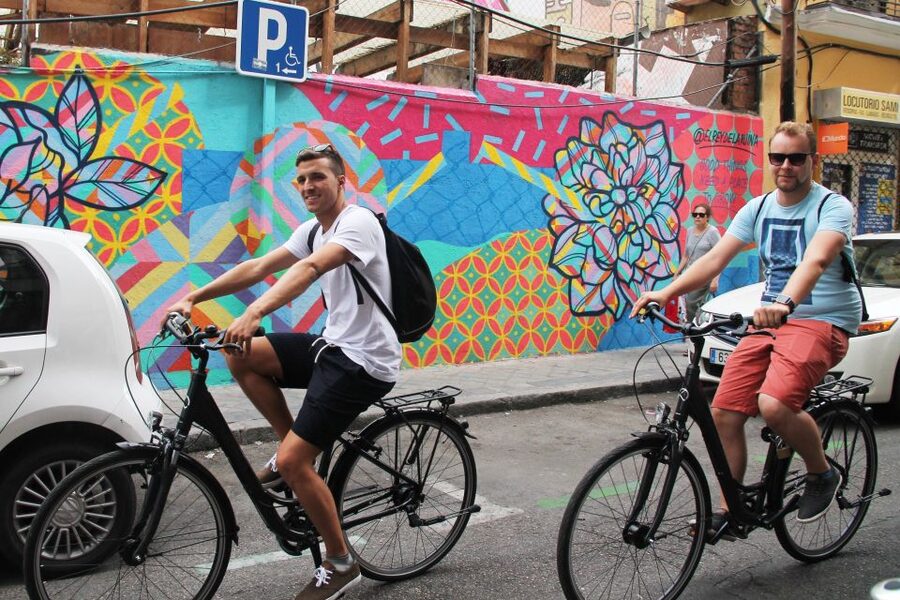
Malasaña is one of those neighborhoods where art and nightlife blur together. On foot you can miss the “why here” details. On a bike tour, you can cover more ground while still stopping long enough to understand what you’re seeing.
As you pedal through, you’ll pass pieces connected to Pinta Malasaña (2017). The month-long April festival is the key, because you’re seeing street art that’s part of a planned moment in the neighborhood calendar. The guide’s explanation helps you spot the difference between art that’s meant to last and art that’s meant to announce a creative wave.
The centerpiece stop is Plaza Dos de Mayo. Around here, the vibe is all about public display—art that turns the street into a living gallery. Bolardo Voy, Bolardo vengo adds a playful twist by using traffic-related elements as the canvas. It’s fun, but it also teaches a bigger lesson: in Madrid, street art often plays with ordinary infrastructure, turning functional objects into visual statements.
One practical tip: bring your photo patience. You’ll likely stop for photography at more than one mural. If you’re the type who takes ten shots of the same angle, this is the tour where you’ll be glad you did it. Just don’t let the camera slow your group pace too much.
Lavapiés and Noviciado: Solar Antonio Grilo and Esto es una Plaza
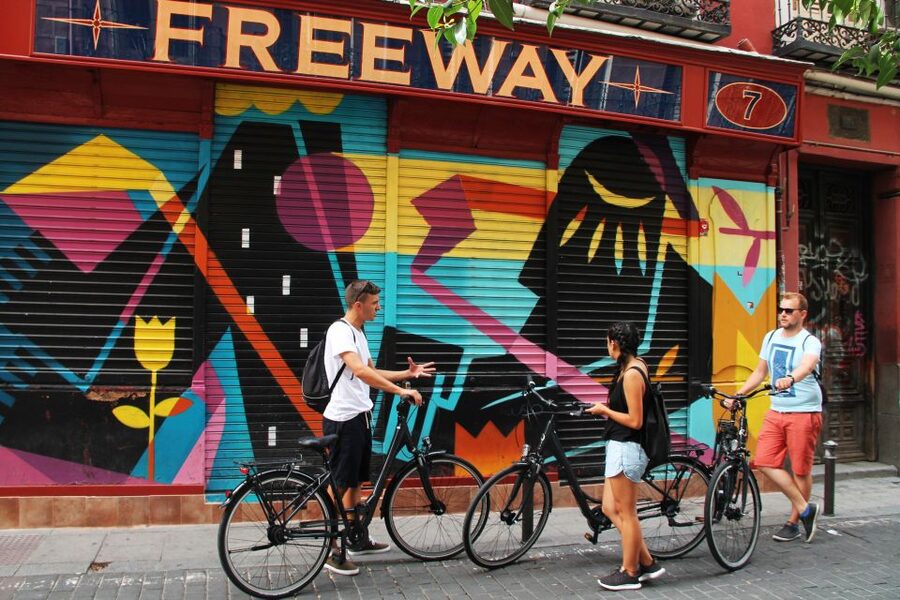
Lavapiés and the nearby Noviciado areas are where this tour gets especially human. The art isn’t only on building exteriors. You’ll have time to visit Solar Antonio Grilo and Esto es una Plaza by bike.
These are community hubs—urban gardens full of street art created for and by the neighborhood. The tour frames them as places that used to be abandoned and then were repurposed into something active and shared. That kind of transformation is a big deal, because it shows street art isn’t always about tagging for attention. Sometimes it’s about rebuilding space for community use.
There’s another angle too: the tour describes these gardens as examples of hybrid economy systems. Even if you don’t go into the economics in deep detail, the takeaway is clear—people aren’t just decorating walls. They’re creating places where culture has a practical role in daily life.
You’ll also encounter street-art interventions by artists including El Rey de la Ruina, Cassassola, Ze Carrión, and Por Favor. Having named artists in your route helps your brain connect murals to styles. It stops the tour from becoming “pretty walls” and makes it more like “street art with an owner.”
As with Malasaña, you’ll still see a strong mural presence in Madrid’s center district. One of the tour highlights is the chance to see the biggest mural in the center district, which tends to be the sort of image you remember even if you forget the exact street name.
Bikes, Safety, and How the Pace Feels
This tour includes bike rental, helmet, and a lock. That’s a big value point because street-art walking tours don’t include gear, and independent bike rentals in central Madrid can eat money fast. Here, the bike package is part of the ticket price, so you’re paying to move efficiently between neighborhoods.
The timing is listed as about 2.5 hours. In practice, plan for a little more time to account for stops, safety talk, and the restroom break. The tour also notes just one uphill, which matters when you’re judging whether this is worth it on a hot day or after a long morning.
What about cycling difficulty? It’s labeled medium level. One review-style detail you should treat seriously: the traffic of Madrid can be a challenge for riders who aren’t used to city cycling. The good news is the guide can adjust the tour to accommodate participants who are less confident. Still, your best experience comes if you’re comfortable riding among cars, even at a calm pace.
And because beverages aren’t included, I’d plan to bring water or buy it nearby before you meet. You’ll get the restroom break during the ride, which helps, but you won’t automatically have a drink provided.

Artists and Festival Pieces You’ll Learn to Recognize
A lot of street art tours show you murals. This one tries to help you read them. As you move, you’ll hear about the techniques graffiti artists use to decorate different surfaces. That includes the way markings behave on textures like metal shutters compared to flat building walls.
You’ll meet major names in the route:
- Muelle (1989 tag preserved)
- Boa Mistura (the piece photographed on the Alonso Martínez stretch)
- Festival-connected work tied to Pinta Malasaña (2017)
- Community and mural artists in Lavapiés and Noviciado, including El Rey de la Ruina, Cassassola, Ze Carrión, and Por Favor
This matters because street art can look random if you only see photos. But in real life, you start noticing patterns: color choices, letter shapes, stenciling styles, and how artists scale their work for street visibility. When you know what you’re looking at, you see more in less time—which is exactly what you want from a 2.5-hour bike tour.
Logistics That Keep the Tour Smooth
The meeting point is the entrance of a small Carrefour Express on C/Montera 32, near Gran Vía & Sol. The tour ends back at the same meeting point, so you don’t have to worry about getting back to your start area.
You also get a live guide in English or Spanish. The tour is described as led by a local graffiti artist, which is what you want for credibility. You’ll get explanations rooted in how Madrid’s artists think, not generic art-speak.
There’s also a Madrid city map included. I like that. Even if you don’t use it during the ride, it helps you continue exploring after the tour ends—especially in neighborhoods like Malasaña and Lavapiés where side streets can lead to more art than you’d expect.
Price and Value: Is $46 a Good Deal
At $46 per person for about 2.5 hours, the price can feel “medium” compared to walking tours. The value comes from the built-in cost of the bike rental, plus the helmet and lock, plus the live guide time.
Here’s the math in plain terms. If you were to rent a bike for a few hours, you’d likely pay a similar range or more just for the rental. Then you’d still need a guided route and someone to explain what you’re seeing. This ticket rolls those elements together.
It’s also good value because you cover multiple neighborhoods that would take longer by foot: Malasaña, Lavapiés, and the center district mural stops. That makes the $46 feel less like a premium art tax and more like paying for efficient access.
Two things can affect your personal value. If you’re not a confident cyclist in city traffic, you might find the medium level a distraction. And since beverages aren’t included, you may want to budget a small extra amount for water.
Who This Tour Fits Best (and Who Should Rethink It)
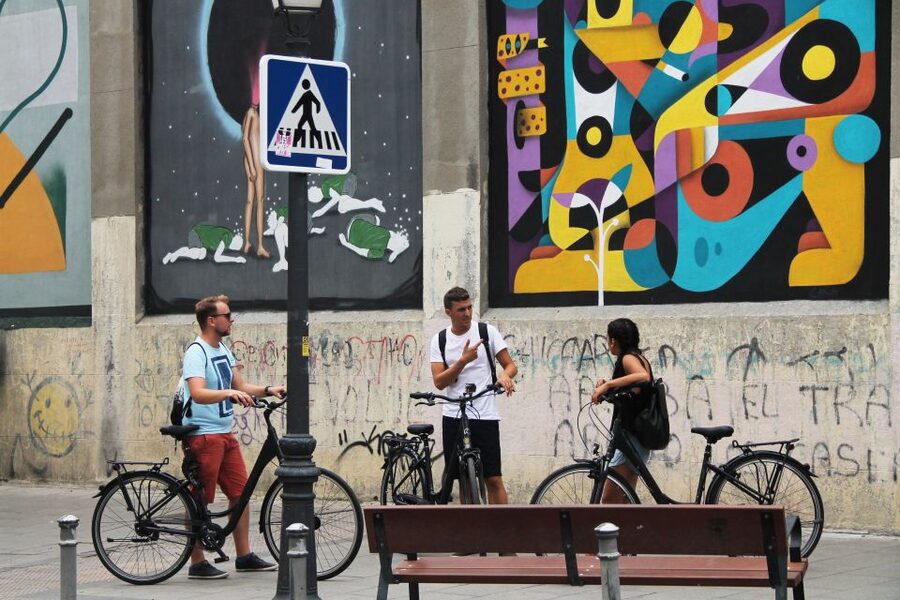
This tour suits you if:
- You want street art with context, not just photos.
- You like biking enough to ride through real urban streets.
- You want to see both festival pieces and community-created spaces like Solar Antonio Grilo and Esto es una Plaza.
- You’re curious about Madrid’s graffiti evolution from early tagging to modern mural work.
It may not be the best match if:
- You’re uncomfortable cycling near cars or you expect a relaxed, car-free route.
- Your biggest goal is a slow museum-style pace with long stops.
- You don’t want to deal with one uphill and typical bike-tour timing.
On families: one account highlighted a guide-led ride where a 7-year-old biked independently and the family had a great time. I’d still treat this as “only if your child can handle city cycling,” since the tour description points to traffic realities.
Should You Book This Madrid Street Art Bike Tour?
If your idea of a great Madrid day includes street art plus neighborhoods that feel like real life, I’d book it. The combination of a local graffiti artist guide, named artists and festival connections, and the shift from major murals to community gardens gives the tour a clear point of view.
Choose this tour especially if you want to:
- get a quick visual timeline of graffiti in Madrid,
- understand how techniques show up on different surfaces,
- and see Malasaña and Lavapiés without spending half your day navigating.
If you’re a shaky cyclist, consider whether you can handle city traffic for a short, medium-paced ride. If you can’t, you might prefer a walking-only street art route instead. But if you can pedal comfortably, this is one of the best ways to make Madrid’s street art feel like a living conversation rather than a pile of pictures.
FAQ
How long is the Madrid Street Art Bike Tour?
The tour duration is listed as 2.5 hours. Starting times depend on availability.
What does the tour cost?
The price is $46 per person.
Where do I meet the guide?
Meet at the entrance of the small supermarket Carrefour Express at C/Montera 32. The nearest metro station is Gran Vía & Sol.
Where does the tour end?
The activity ends back at the meeting point.
What’s included in the ticket price?
Included are bike rental, a helmet and lock, a Madrid city map, a live guide in English or Spanish, and a restroom break.
What is not included?
Beverages are not included.
What should I bring?
Bring your passport or ID card and wear comfortable shoes.
What languages are available for the live guide?
The tour offers live guidance in English or Spanish.
Is the tour easy to ride for beginners?
It’s described as a medium level activity with just one uphill. Since the tour involves city traffic, cycling comfort matters.
What’s the cancellation policy?
Free cancellation is offered up to 24 hours in advance for a full refund.