REVIEW · MADRID
Street Art Guided Tour in Madrid
Book on Viator →Run by Cooltourspain · Bookable on Viator
Street art in Madrid moves fast. This 2-hour walk takes you from old industrial walls to community spaces, all tied to what’s happening right now. You’ll follow a route through La Neomudéjar and La Tabacalera, then end at Campo de Cebada, where street art and public life overlap.
I love how the tour mixes big-name street-art sites with street-level context. You don’t just see murals—you get the why behind them, including protest work linked to Spain’s article 626. I also love the pace and format: it’s small (up to 13 people) and guided, so you can ask questions and actually track the details you’re seeing.
One thing to watch: timing and access can vary. La Tabacalera can have restrictive weekday hours, and one stop (Esta es Una Plaza) only guarantees its wall visit if the space is open.
Key Highlights and What Matters
- La Neomudéjar: a former power plant turned street-art hub, with national and international artists working there
- Protest art context: plenty of discussion about Spanish article 626 and why artists push back
- La Tabacalera’s basement: walls lined with hundreds of street-art projects and stencils
- Lavapiés walking layer: a multicultural neighborhood walk that frames the art in place and people
- Campo de Cebada: a community gathering space shaped by the 15-M movement and used for movies, music, and garden time
In This Review
- Lavapiés Street Art: What This Tour Helps You See
- Starting Point to First Walls: From Teatro Valle-Inclán to La Neomudéjar
- La Neomudéjar: The Power Plant That Became a Street-Art Stage
- La Tabacalera de Lavapiés: Exterior Walls, Festival Energy, and a Basement of Stencils
- The Lavapiés Walk: Esta es Una Plaza and the Neighborhood That Explains Itself
- Campo de Cebada: From the 15-M Movement to Movies, Music, and Garden Time
- Guides and Group Size: Why Small Numbers Help You Get Answers
- Price and Time: Is $30.38 Worth It for Two Hours?
- Who Should Book This Street Art Tour (and Who Might Skip)
- Final Call: Should You Book It?
- FAQ
- How long is the street art guided tour in Madrid?
- What’s the price per person?
- What languages are available?
- Where does the tour start and end?
- Is the tour dependent on weather?
- How many people are in each group?
- What’s included in the ticket price?
- Is food included?
- Can I get a full refund if I cancel?
Lavapiés Street Art: What This Tour Helps You See

Madrid’s street art isn’t stuck in one style or one decade. In Lavapiés, it’s more like a living conversation—between artists, residents, festivals, and the rules that try to contain graffiti.
This tour is built to help you notice that conversation. You’ll walk far enough to get a real neighborhood feel, but you won’t spend the whole time guessing what you’re looking at. The guide is there to point out message, technique, and the difference between sanctioned work and the stuff that shows up in spite of it.
Starting Point to First Walls: From Teatro Valle-Inclán to La Neomudéjar
The tour starts at Teatro Valle-Inclán, near La Latina or Tirso Molina by metro. From there, it’s a short walk to La Neomudéjar, about a five-minute approach from the meeting area.
As you move, you’ll pass through the edges of Madrid’s art ecosystem, including references tied to the transit area near Atocha. That matters because the best street-art tours don’t treat art as a museum object. They frame it as something that’s always negotiating with the city’s everyday flow.
You can also read our reviews of more tours and experiences in Madrid.


La Neomudéjar: The Power Plant That Became a Street-Art Stage
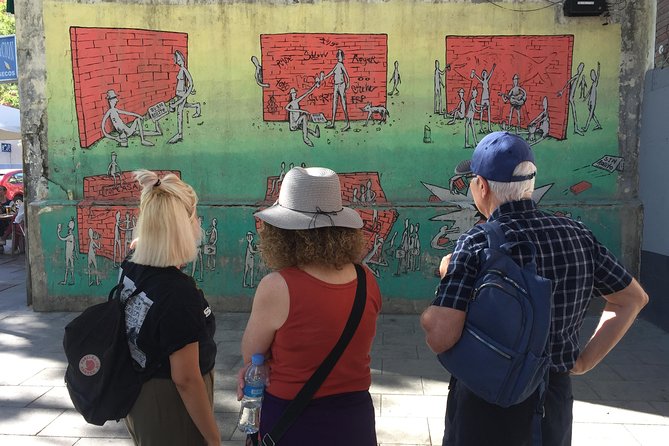
La Neomudéjar is a former power plant—built to help power the train station in the 19th century. Now it functions like an art magnet: a space where artists take over the walls and make new work in public view.
This is one of the biggest reasons the tour feels different from a basic mural walk. You’re not only looking at finished pieces. You’re seeing a site that was repurposed for creativity, and that shifts how you read the art on the walls.
You’ll hear about artists such as Himen, Ze Carrión, and Laguna626. The key point isn’t who they are on Instagram; it’s why they work in this kind of space and what their art is trying to do. Many pieces use street art to protest Spain’s article 626, a law aimed at penalizing graffiti creators.
If you care about the politics of design—how public art argues with official rules—this is the part that usually lands hardest.
La Tabacalera de Lavapiés: Exterior Walls, Festival Energy, and a Basement of Stencils
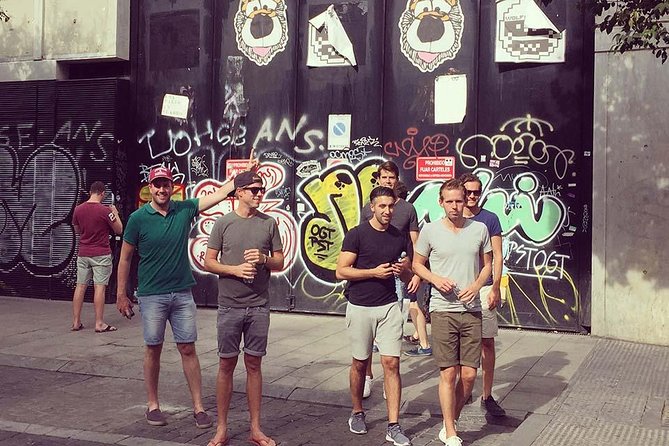
After La Neomudéjar, the tour moves to La Tabacalera, a 19th-century tobacco warehouse. Long before it was an art space, it was built for a massive workforce—over 1,000 workers were involved in tobacco processing, chopping, shredding, and rolling products.
Today, the building hosts exhibitions and performances, and it has the kind of street-art access that makes the whole tour feel practical. You’ll focus on the exterior graffiti walls, paying attention to the artists’ message and technique. This is also where the tour often connects to major local street-art festival energy, since new work can appear when festivals are underway.
One of the most interesting details is what happens underground. The tour takes you to the basement, where hundreds of street-art projects and stencils line its walls. Even if you’re not a stencil superfan, this is where the tour earns its keep: you get a sense of process. Street art isn’t only a final image; it’s drafts, templates, and repeated experimentation.
There’s also a practical note to keep in mind. La Tabacalera has restrictive timing on weekdays, so if you’re traveling midweek, the guide may have to adapt to access rules. The good news is the tour still runs in all weather—you just may see less of the building interior if timing is tight.
The Lavapiés Walk: Esta es Una Plaza and the Neighborhood That Explains Itself
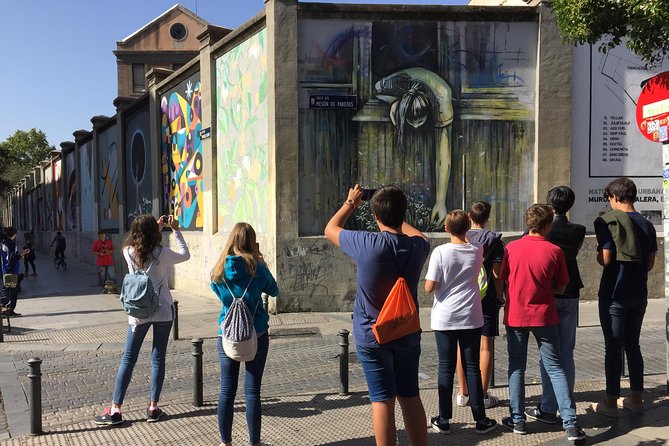
Street art in Madrid makes more sense when you understand the neighborhood. This route includes time walking around Lavapiés, a district known for being multicultural and full of street art and graffiti.
You’ll get the local context as you move—how the neighborhood’s history and mix of communities shape what shows up on walls and why it matters. That’s also where you’ll start picking up patterns: tags that act like signatures, murals that carry messages, and pieces that feel designed for both residents and passersby.
One stop here is Esta es Una Plaza, an urban garden spot tied to the area’s outdoor art feel. The tour notes that the visit to the wall area is only guaranteed if the location is open. So if that garden portion matters to you, it’s smart to check your date and accept that sometimes doors are closed or access is limited.
Campo de Cebada: From the 15-M Movement to Movies, Music, and Garden Time
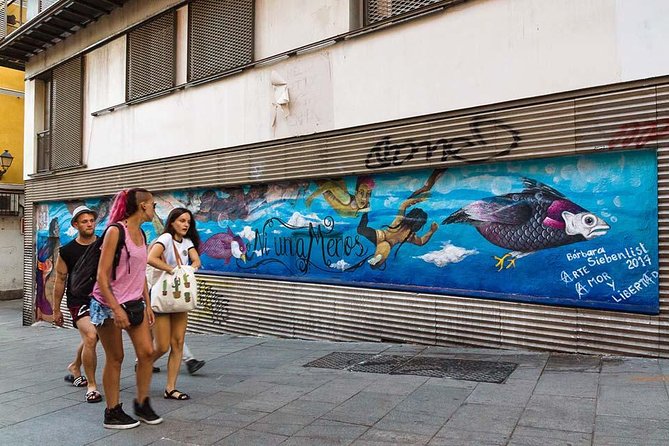
The tour ends at Campo de Cebada, often described as a reclaimed community gathering place and performance site. The site has a clear origin story: it ties back to Spain’s 15-M Movement, when people recaptured public streets and squares for communal use.
Campo de Cebada used to be home to a swimming pool. Now local associations help run it as a community space. You might see it used for summer movies, music, or even collective garden moments—things that make the art scene feel grounded, not just decorative.
This ending matters because it reframes street art. Instead of treating murals as isolated art objects, you see them as part of a social system: people claim space, build community routines, and then invite artists into that energy.



Guides and Group Size: Why Small Numbers Help You Get Answers
The tour runs with a local guide and supports English (and the service mentions multilingual support in English/French/Spanish). Groups are capped at 13 travelers, which changes the vibe fast.
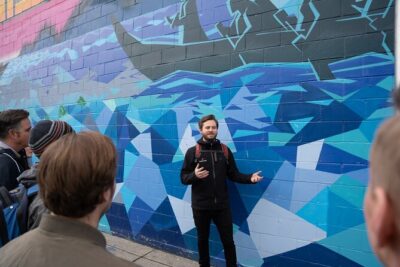
With a small group, you can actually hear explanations at each wall. The guide can also adjust to what you’re curious about, which comes up in the way the tour is praised for being fun and responsive. Past groups have highlighted guides like Santi and Julia for being animated and connected to the local art scene—especially when street artists are actively working nearby.
One more practical point: the tour is about technique and message, not just photos. If you like reading artwork like a language—spray styles, stencil layers, symbols—this format fits.
Price and Time: Is $30.38 Worth It for Two Hours?
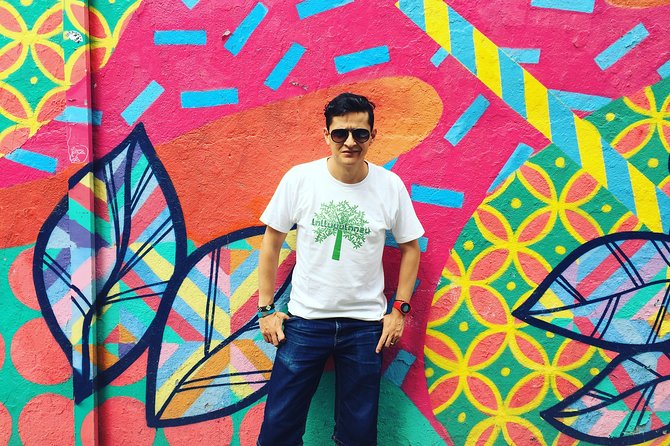
At $30.38 per person for about two hours, this tour isn’t trying to be a cheap shortcut. It’s paying for a guide who can interpret what you’re seeing, plus access to key locations like La Tabacalera’s wall spaces and its basement stencils.
Here’s the value math I’d use: in two hours, you’re covering multiple major art sites in the Lavapiés orbit, and you’re not just walking past them—you’re stopping, looking closely, and getting context about protest themes like article 626. If you’re the type who gets annoyed by tours that rush from picture to picture, this one is built around slower, more informative wall viewing.
Also, it’s typically booked around 16 days in advance on average. If you can lock in a time window early, you’ll usually have an easier pick, especially if you’re traveling during peak seasons or weekends.
Who Should Book This Street Art Tour (and Who Might Skip)
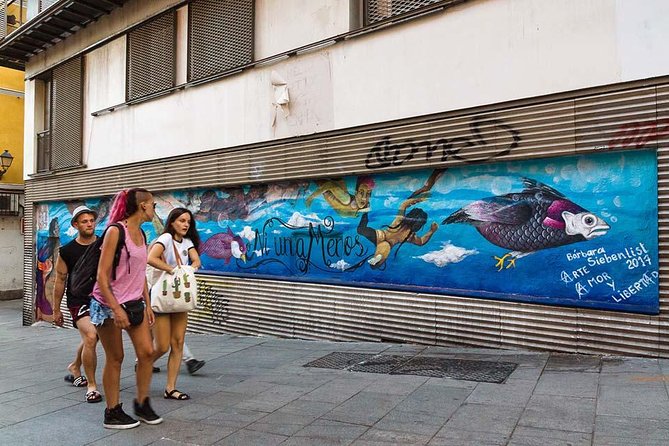
Book this if you want street art with context. You’ll like it if you’re curious about how artists collaborate, how sanctioned and unsanctioned work coexist, and how rules and public space collide. It’s a good fit for first-time street-art visitors because the tour teaches you how to look.
Skip it if you want a long, free-form neighborhood roam without stops. This is structured by design, with specific wall focus at La Neomudéjar, La Tabacalera, and the ending at Campo de Cebada. It’s also not advertised as a hands-on graffiti class—so expect observation and explanation more than active participation.
Final Call: Should You Book It?
I’d book it if you’re in Madrid and want a fast way to understand why Lavapiés street art feels different. The combination of La Neomudéjar (industrial repurposing), La Tabacalera (big festival wall energy plus a basement of stencils), and Campo de Cebada (community space rooted in the 15-M Movement) gives you more than murals. It gives you a map of ideas.
Just plan for weekday timing quirks at La Tabacalera and the possibility that Esta es Una Plaza’s wall visit depends on whether it’s open. If you’re flexible on that, this tour is one of the better ways to see the city’s current street-art mindset in a tight time window.
FAQ
How long is the street art guided tour in Madrid?
It runs for about 2 hours (approx.).
What’s the price per person?
The price is $30.38 per person.
What languages are available?
It’s offered in English, and the guide service is multilingual (English/French/Spanish).
Where does the tour start and end?
It starts at Teatro Valle-Inclán, Pl. de Ana Diosdado, s/n, Centro, 28012 Madrid, and ends at Plaza de Cascorro, Pl. de Cascorro, Centro, Madrid.
Is the tour dependent on weather?
The tour operates in all weather conditions, so dress appropriately.
How many people are in each group?
The maximum group size is 13 travelers.
What’s included in the ticket price?
You get a local guide, and the tour includes a visit to Muros La Tabacalera. The guide is multilingual.
Is food included?
No. Food and drinks are not included.
Can I get a full refund if I cancel?
Yes, free cancellation is offered, and you can cancel up to 24 hours in advance for a full refund.