REVIEW · MADRID
Madrid Street Art Tour (Malasaña Chueca Gran Via & Lavapies)
Book on GetYourGuide →Run by Wolves Tours · Bookable on GetYourGuide
This is street art with real neighborhood context. I like the graffiti history lesson at the start, and I also love the chance to spot named artists, paste-ups, and murals as you walk. The main drawback to plan for is that it’s still a walking tour, so if you don’t walk much, the route may feel like a lot.
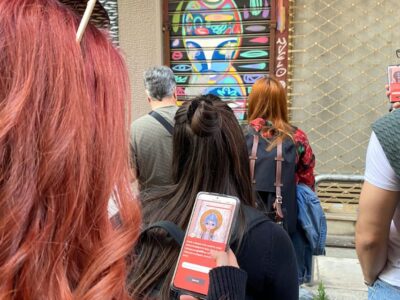
You’ll meet the guide at Way Hostel Madrid and head out on foot for about 2 hours. I’ve heard the pace can feel relaxed, and one guide named Diana stood out for being friendly and helpful, which matters because good street art takes a moment to read. Tip-based value is part of the deal here, so go in with a fair expectation: you’re paying mainly for interpretation and access to the stories behind the walls.
In This Review
- Key Points You’ll Care About
- Why This Street Art Tour Works in Madrid (Not Just a Photo Walk)
- The 2-Hour Route: From Way Hostel to Malasaña, Chueca, and Back to Central Madrid
- Puerta del Sol and Gran Vía: Learn the City’s Visual Language First
- Malasaña Street Art: MUELLE, Paste-Ups, Stickers, and the “Walk and Read” Style
- Chueca’s Color: Murals and Urban Expression With a More Social Vibe
- Lavapiés: The Cultural Heart That Changes the Mood
- What You’ll See Up Close (And Why It’s Worth Looking Beyond the Big Murals)
- Walking Comfort, Pace, and Who Should Book
- Price and Value: The $1.77 Ticket and the Tip-at-the-End Model
- Practical Tips Before You Go
- Should You Book This Madrid Street Art Tour?
- FAQ
- How long is the Madrid Street Art Tour?
- Where do I meet the guide?
- What neighborhoods and areas are included?
- What’s the tour price, and do I pay more?
- Is the tour available in English?
- What should I bring?
Key Points You’ll Care About
- Graffiti origin primer right at the start, so you know what you’re looking at.
- Puerta del Sol and Gran Vía mix the big Madrid landmarks with street-art energy.
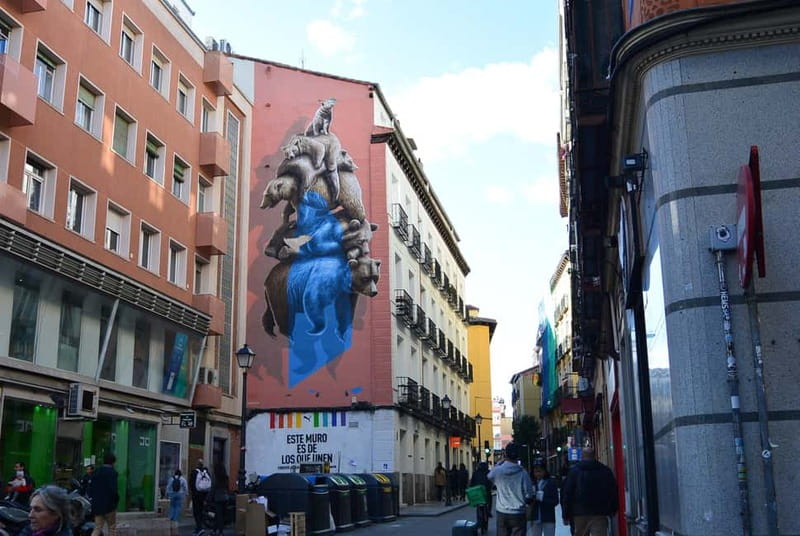
- Named stops and artists like MUELLE, Okudart, and El Rey de la Ruina.
- Photo-friendly mural time including walls tied to major events like Urvanity Art Fair.
- Malasaña + Chueca give you the local “hang out” streets in the middle of the action.
- Lavapiés adds the cultural heart of the city to the tour’s story arc.
Why This Street Art Tour Works in Madrid (Not Just a Photo Walk)
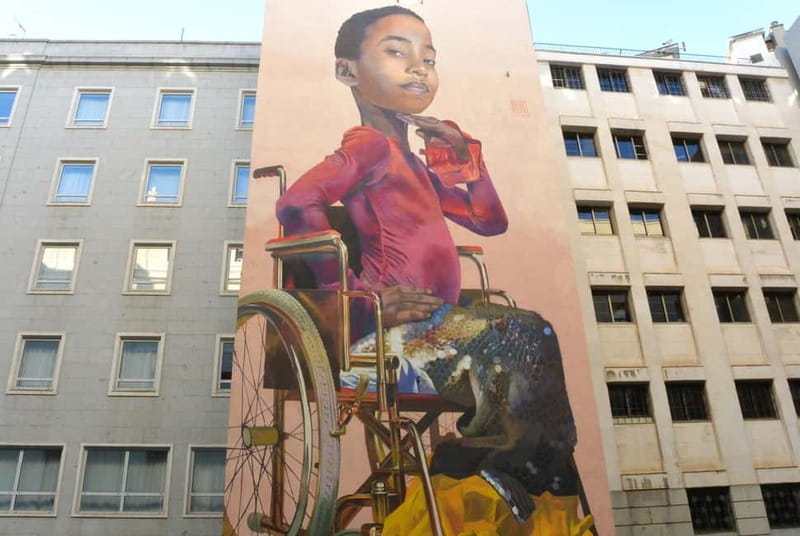
Madrid street art is everywhere, but most of it can blur together fast. What makes this tour worth your time is that it teaches you how to look: where graffiti came from, how styles spread, and why different neighborhoods “talk” in different visual languages. I also like that the guide connects what you see to places you’ll actually want to return to after the walk.
This isn’t a museum-style experience. You’re out on sidewalks and on the kinds of streets where locals actually pass by every day. That’s the point: the best street art feels like part of the neighborhood’s conversation, not like a display you just walked past.
One more practical note: the tour is priced very low upfront (around $1.77 per person), and it’s designed so you choose what it’s worth at the end. That can feel freeing, but it also means you should be clear about your own expectations. If you like guided storytelling and walking city streets, you’ll get more out of it than if you only want quick photos.
You can also read our reviews of more tours and experiences in Madrid.

The 2-Hour Route: From Way Hostel to Malasaña, Chueca, and Back to Central Madrid
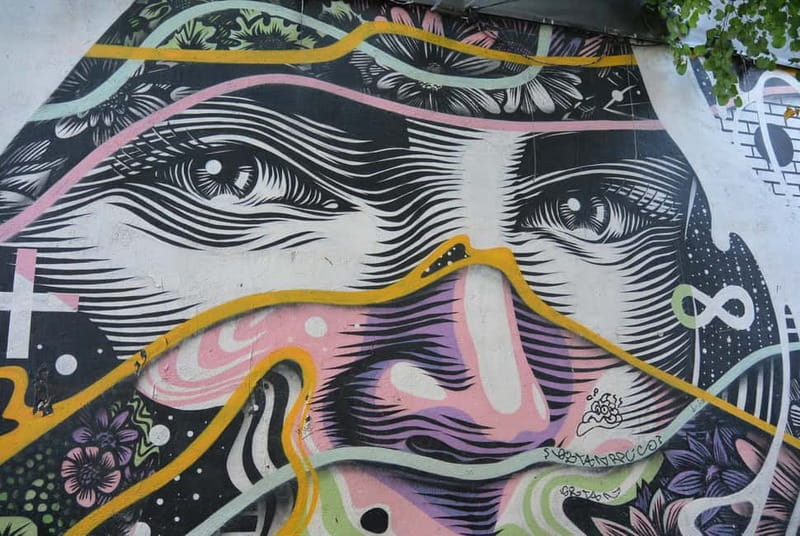
The tour starts at the door of Way Hostel Madrid. From there, you’ll move quickly into a rhythm of short stops—some for photos, some for guided explanation—so the walk never turns into one long lecture. Expect a mix of street corners, facades, and named streets, with time built in to actually look.
You’ll pass through Puerta del Sol and then head to Gran Vía, which this tour calls out as a kind of Spanish Broadway. The streets are famous for a reason: big views, heavy foot traffic, and lots of visual noise. That makes it a good place to practice reading the city’s street-level cues—ads, signage, street texture—before you get to more art-focused blocks.
After that, the tour shifts into neighborhood mode with Malasaña and then Chueca. This is where Madrid’s walls start telling clearer stories. You’ll also see streets like Fuencarral and Hortaleza, which help you understand why these areas became magnets for creative energy in the first place.
The finish is at Calle de la Magdalena, 23 (Centro). That’s convenient because you’ll land back in a central area for onward plans.
Puerta del Sol and Gran Vía: Learn the City’s Visual Language First
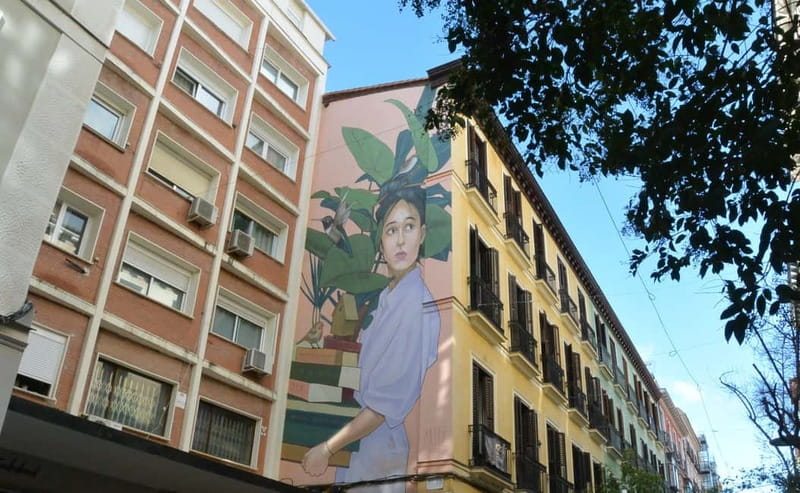
Even if you’ve walked through Puerta del Sol already, the tour approach makes it more useful. You’re not just sightseeing; you’re getting a “how to see” lesson that applies everywhere you go afterward. The tour’s early focus on how graffiti started in the world sets you up to notice origins, influences, and how styles evolve.
Then comes Gran Vía, with its big-city feel. The guide highlights this area as a major Madrid street, and it works well as a contrast: you’re in a commercial, high-visibility corridor, and yet street art still finds room to show up in details, textures, and faces of buildings. If you’re the kind of person who enjoys noticing layers—what’s official vs. what’s unofficial—Gran Vía is a fun stop.
Also, the tour includes the Capitol building as a point of interest. That’s the kind of landmark that helps you orient yourself, especially if Madrid is your first Spanish city.
Malasaña Street Art: MUELLE, Paste-Ups, Stickers, and the “Walk and Read” Style
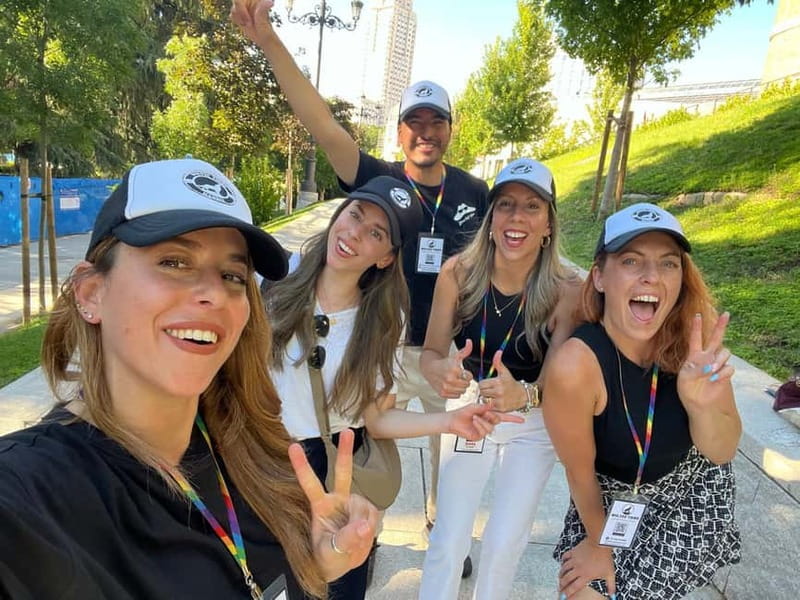
Malasaña is where the tour really starts feeling like a street art mission. This neighborhood has a reputation for creative, youth-driven energy, and the tour leans into that by pointing out different types of street expression, not only big murals.
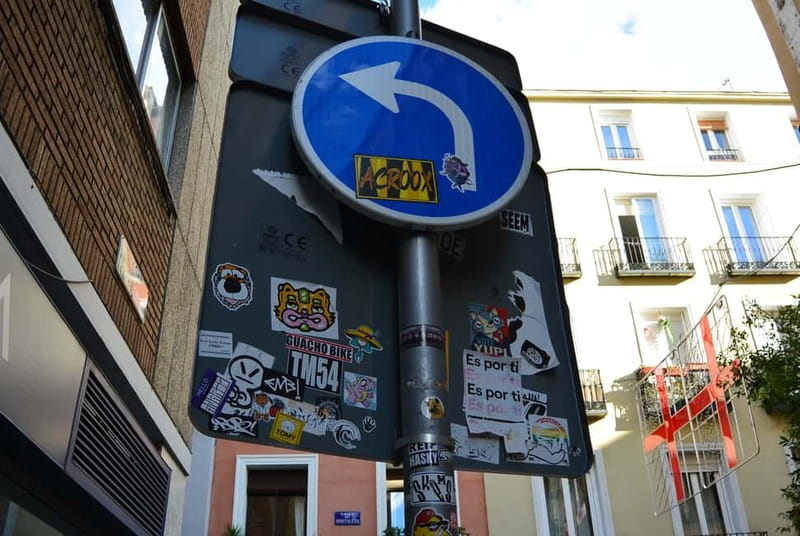
You’ll get a chance to learn about how street art spreads across formats—paste-ups, stickers, murals, and urban sculpture. I like that the guide doesn’t treat it like one genre. Instead, you start to see street art as a set of tools artists use to get messages out fast, stay visible, and build a public style.
A standout mentioned on this walk is a protected signature by a Madrid artist named MUELLE. Protected work is an interesting category because it shows street art isn’t always temporary. When a signature is protected, it signals local value—and it helps you understand how street art can move from “illegal or unofficial” into cultural heritage.
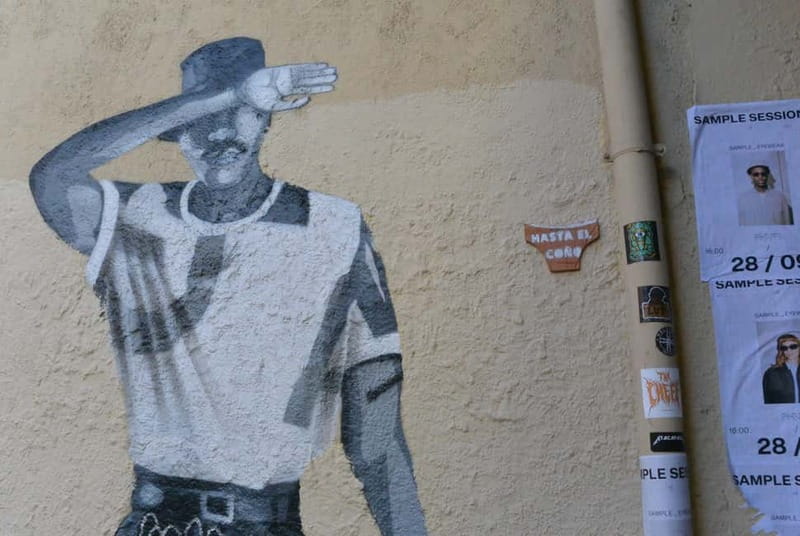
You’ll also have multiple short stops geared toward photos. This is important because murals often include details you’d miss at walking speed. Plan on taking a few minutes, stepping back, and looking for layers: color blocks, lettering styles, recurring characters, and how the art relates to the building itself.
Chueca’s Color: Murals and Urban Expression With a More Social Vibe
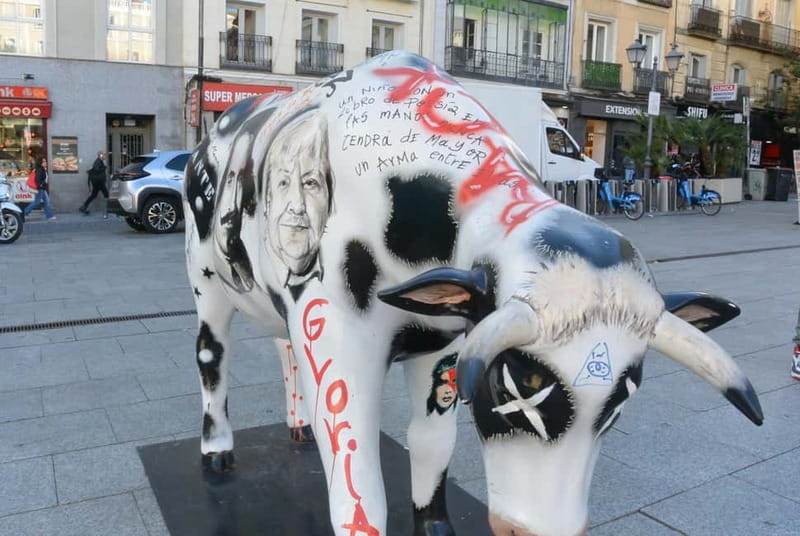
Next up is Chueca, and the tour leans hard into what makes the neighborhood feel distinct: the sense of visual play. The walk highlights the area’s colors and its creative street life, and the route passes through streets like Fuencarral and the surrounding grid that makes Chueca easy to explore on foot afterward.
Chueca also connects well to contemporary street art trends. You’ll see examples linked to national and international artists, and the tour frames this as a way to understand how ideas travel. That matters because if you only know one kind of graffiti—one look from one city—you might miss how many different visual dialects exist.
You’ll also encounter specific artists called out on the route, including Okudart, Basket of Nean, El Rey de la Ruina, and Done Street. I like having names because it makes the art easier to research later. After the tour, you can look up these artists and follow what they’re doing now, instead of only remembering colors and shapes.

Lavapiés: The Cultural Heart That Changes the Mood
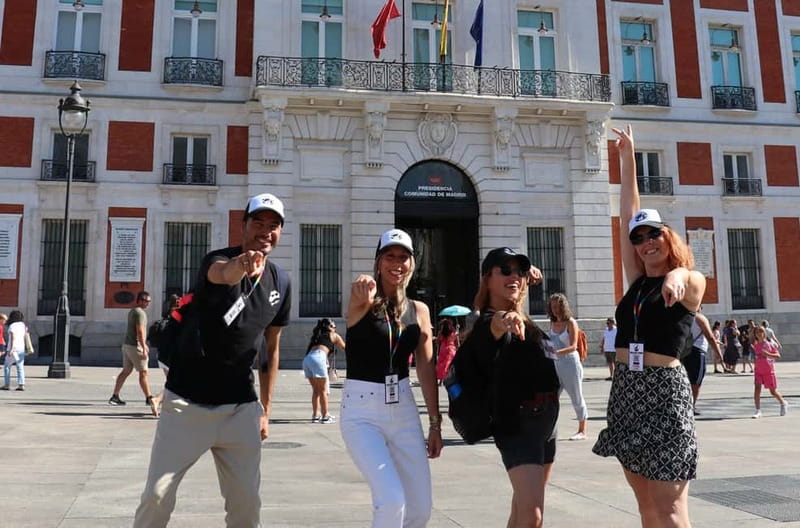
Lavapiés is where the tour broadens beyond street art as decoration. The tour describes it as the cultural heart of the city, and it feels like the point where you get more of the “Madrid people and stories” layer.
What’s useful here is the variety of expression. This isn’t only about murals. You’ll see other formats—mosaics by local artists and mixed visual elements around the neighborhood. If you’ve ever wondered why street art can feel political, celebratory, or community-focused depending on where you are, this part helps connect those dots.
Lavapiés also gives you context for why events matter. The tour points out opportunities to take pictures of mural work connected to Urvanity Art Fair and Calle festival. That’s a big deal for understanding contemporary street art: it doesn’t live in a vacuum. It responds to exhibitions, festivals, and the back-and-forth between local culture and visiting artists.
What You’ll See Up Close (And Why It’s Worth Looking Beyond the Big Murals)
This tour is built around variety, which is where a lot of street art walks fall short. Here, you’re not only chasing the biggest wall. You’re learning to notice different techniques and formats.
You can expect to see:
- Murals and large-scale works tied to known events
- Paste-ups and stickers that function like quick visual statements
- Mosaics from local artists
- Urban sculpture and street-level installations
One practical trick: when you stop for photos, pause longer than you think you need. Street art often has composition tricks—lettering that reads diagonally, images layered over older tags, or color transitions that only make sense once you step back. The guide’s explanations help you interpret that, but you still have to give your eyes time.
Walking Comfort, Pace, and Who Should Book
The tour is wheelchair accessible, which is a solid plus for planning. At the same time, it’s still a walking route with multiple stops, so wear comfortable shoes. One review specifically flagged walking difficulty for people who don’t walk often, and that’s the main caution I’d repeat to you.
Duration is 2 hours, which is a manageable length for a city tour, but it’s also long enough that your legs will notice the difference between “light stroll” and “active walking.” If you’re planning this on a travel day when you’ve already done a lot, consider whether you’ll have energy left.
Who this suits best:
- You love art but don’t want it behind glass
- You want a guided way to understand street art styles and history
- You like pairing landmarks (Puerta del Sol, Gran Vía) with neighborhood wandering
Who might want a different format:
- You don’t enjoy walking much
- You only want a quick hit of photos without interpretation
Price and Value: The $1.77 Ticket and the Tip-at-the-End Model
The listed price is about $1.77 per person, which is remarkably low. The tour also works on a value-for-what-you-learn model: you reserve a spot, show up, and then you can reward your guide with an amount you think the experience was worth.
That setup can be excellent value for you if you actually use the guide’s expertise. The big win here is not the street art itself—you can see street art on your own—but the help reading it. When you learn where styles came from, why artists choose certain formats, and how neighborhoods shape artistic choices, the tour becomes more than sightseeing.
That said, tip-based models are only fair if you feel you got something useful. If you’re expecting a museum lesson or a slow, art-history seminar, you might want to calibrate. This is street-level, fast-moving, and built for seeing and understanding in context.
Practical Tips Before You Go
Bring a camera if you care about mural details. Bring comfortable clothes and, again, comfortable shoes. This kind of tour is all about looking closely at walls, then walking to the next stop before the light changes too much.
Also, set your expectations: you’re not paying for entry tickets. The tour focuses on outdoor points of interest, including streets and murals, not museum time. That makes it a strong choice when you want culture without tying your day to opening hours.
Finally, if you’re picky about photo angles, plan on taking a few extra seconds at each stop. The best results come when you give yourself room to step back and frame art as part of the street, not just as a close-up subject.
Should You Book This Madrid Street Art Tour?
Book it if you want a guided way to understand street art as part of real Madrid neighborhoods—Malasaña, Chueca, and Lavapiés—with stops built around murals, paste-ups, and artist-named context. I think it’s especially worth it if you like learning the “why” behind what you see, not only the “what.”
Consider skipping or pairing with lighter plans if walking is tough for you, since the route is active even though the pace can feel relaxed. If you’re good on your feet and you enjoy street culture, this is a smart, high-value way to spend part of your Madrid time.
FAQ
How long is the Madrid Street Art Tour?
The tour lasts 2 hours.
Where do I meet the guide?
You meet the guide at the door of Way Hostel Madrid with the rest of the group.
What neighborhoods and areas are included?
The tour includes stops around Puerta del Sol, Gran Vía, Malasaña, Chueca, and Lavapiés, plus streets such as Fuencarral and Hortaleza.
What’s the tour price, and do I pay more?
The price shown is $1.77 per person. The tour is tip-based at the end, so you can reward the guide with an amount you feel matches the value you received.
Is the tour available in English?
Yes, the tour guide is English.
What should I bring?
Bring comfortable shoes and a camera, plus comfortable clothes.