REVIEW · BARCELONA
Barcelona | StreetArt Bike Tour Moco Museum
Book on GetYourGuide →Run by A-Bike Rental and Tours - Barcelona · Bookable on GetYourGuide
Street art here has a pulse. I like how the guide stories turn murals into something you can actually read, and I also like the electric bike pace that lets you hit lots of spots in just 2.5 hours. One thing to consider: this tour is not for you if you can’t ride a bike comfortably.
You start and end at Carrer dels Tallers 45, and you cover a mix of contemporary art stops and real street-wall characters, from Keith Haring to early graffiti. The route also keeps changing with what’s newly painted on the walls, so it feels less like a checklist and more like following the city’s creative heartbeat.
In This Review
- Key things I found most worth your attention
- Why riding beats walking for Barcelona street art
- Start at Carrer dels Tallers 45, then roll into the artsy core
- CCCB to MACBA: where street art becomes part of the city story
- The Mural del SIDA (Keith Haring) stop you’ll want to frame carefully
- El Xupet Negre and the Raval wall: from early graffiti to modern statements
- Jardins de les Tres Xemeneies: industrial setting, art in the middle
- From Plaça de la Catedral to the waterfront ideas: Picasso, photomosaics, and street romance
- Passeig de Gràcia and Casa Batlló: the contrast that makes street art click
- What you should bring (and what actually affects your comfort)
- Price and value: why $34 can be a smart buy here
- Who this tour suits best
- Should you book the Barcelona Moco Street Art Bike Tour?
- FAQ
- How long is the Barcelona Moco Street Art Bike Tour?
- What time does the tour start?
- Where do I meet the tour?
- What’s included in the tour price?
- Is the tour cancelled if it rains?
- Do kids need helmets?
- Is the tour wheelchair accessible or suitable for non-bikers?
- Are headphones allowed during the tour?
Key things I found most worth your attention
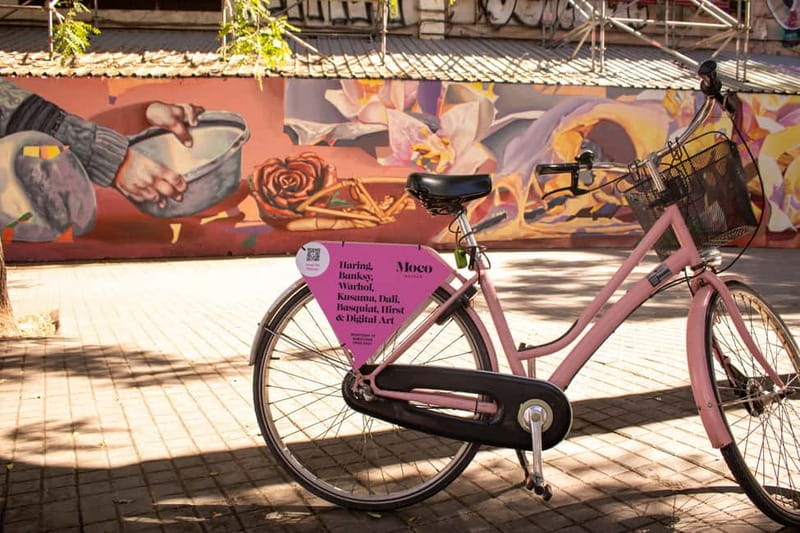
- Electric bike route for 2.5 hours keeps your energy for photos and viewpoints
- English live guide makes each mural understandable, not just visible
- Keith Haring mural (Mural del SIDA) is a headline stop with real context
- Raval street-wall lineup includes the Feminist wall and Space Invader
- Early graffiti credit with El Xupet Negre (Negrelab) adds history without a lecture vibe
Why riding beats walking for Barcelona street art
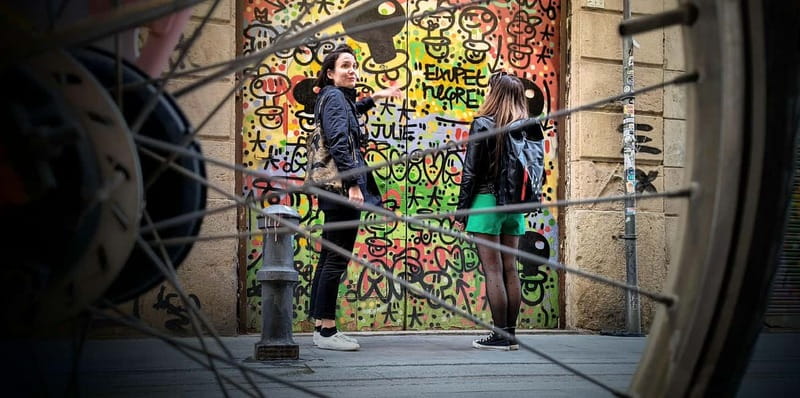
Barcelona street art is best seen with motion. When you walk, you spend a lot of time crossing long distances, dodging traffic bottlenecks, and arriving at murals already tired and squinting for parking luck. On a bike, you get the opposite: you keep the city flowing past you, then you stop in tight bursts to look closely and snap photos.
This tour runs for about 2.5 hours, and the itinerary is built around short rides and frequent photo stops. That pacing matters. You’re not dragged through one giant museum-like loop where you lose the thread. Instead, you get a sequence of walls, sculptures, and painted messages—then you roll to the next one before your attention fades.
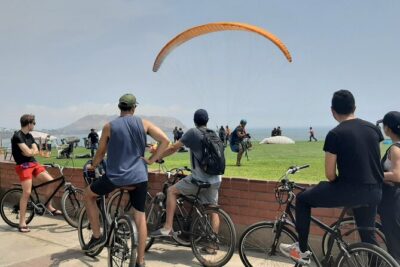
And yes, it’s an electric bike. The route includes multiple short scenic drives and electric bike segments, so you can cover more ground than you would on foot. That also helps if you’re sightseeing the rest of the day too. You won’t feel like the bike tour steals your whole afternoon.
You can also read our reviews of more tours and experiences in Barcelona.

Start at Carrer dels Tallers 45, then roll into the artsy core
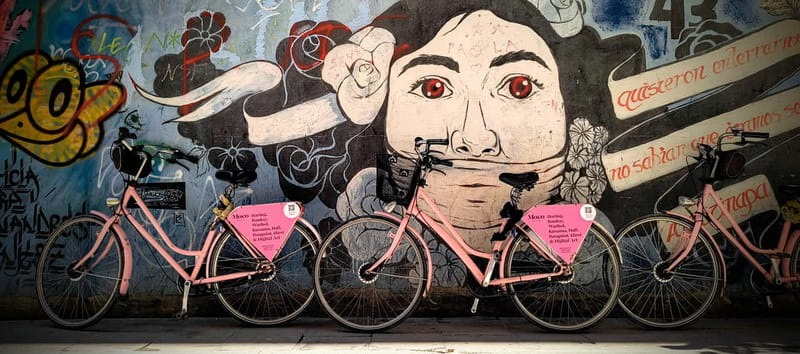
Everything begins at Carrer dels Tallers 45. The meeting point is by the palm tree, in the passage where the team will meet you. Arrive around 10 minutes early so you can get set with your bike and handlebar bag and get the short safety briefing done without stress.
Right away, you get the classic Barcelona contrast: streets that feel lived-in, then suddenly a major contemporary-art site. The first major stop after the warmup is the Centre de Cultura Contemporània de Barcelona (CCCB). Expect a quick orientation and photo stop, plus a guided look that sets you up to see street art as part of how the city thinks—not just random graffiti splashed on concrete.
Then you move toward MACBA, the Museu d’Art Contemporani de Barcelona. This is where the tour leans into modern visual culture and reminds you street art is in conversation with galleries. You’re not just seeing paint; you’re seeing ideas traveling between neighborhoods and institutions.
CCCB to MACBA: where street art becomes part of the city story
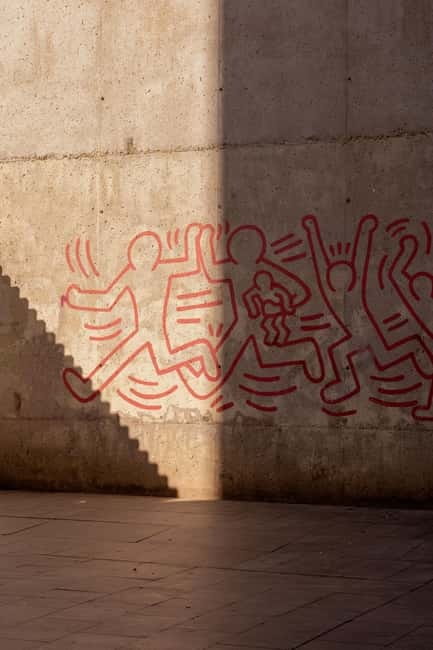
At CCCB, you’re not meant to treat it as a single artwork stop. It’s more like a launchpad. The guide’s job is to help you understand what makes street art read differently than a museum piece: scale, location, speed, and the way a wall can react to current culture.
At MACBA, the tour shifts from context to direct hits. You get photo stops and guided moments that connect the neighborhoods you’re riding through with what’s on the walls. This matters because Barcelona street art is often political, personal, playful, and symbolic at the same time. If you only see it as decoration, you’ll miss why people care.
It’s also smart that the tour includes the short scenic bike segments between stops. You get a break between intense looking, and your photos come out better because you’re not rushing every single time.
The Mural del SIDA (Keith Haring) stop you’ll want to frame carefully
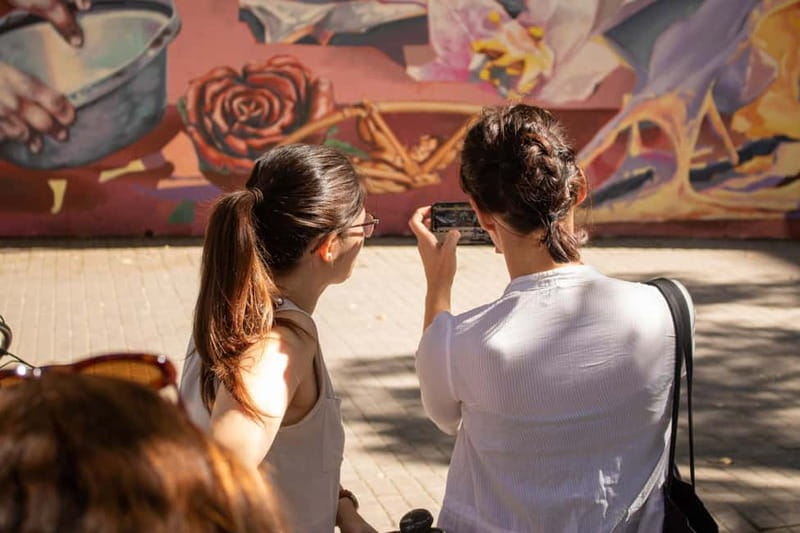
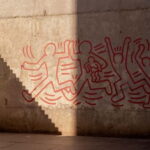
If one wall is the headline, it’s Mural del SIDA (Keith Haring). This is the kind of stop where you’ll likely spend a bit extra time even if the group moves along on schedule. The guide’s storytelling is the difference between seeing a famous artist and understanding what you’re actually looking at.
This mural matters because Keith Haring’s style is bold and readable from a distance. But meaning often needs a little help. That’s what the guide provides: what the artwork is saying, and why it shows up in this kind of urban setting. You’ll also get the small practical benefit of learning how to spot details quickly. The guide can point out what to zoom in on with your phone.
After that, you keep rolling to more stops that widen the net: not just global-famous names, but local styles and early graffiti history too.
El Xupet Negre and the Raval wall: from early graffiti to modern statements
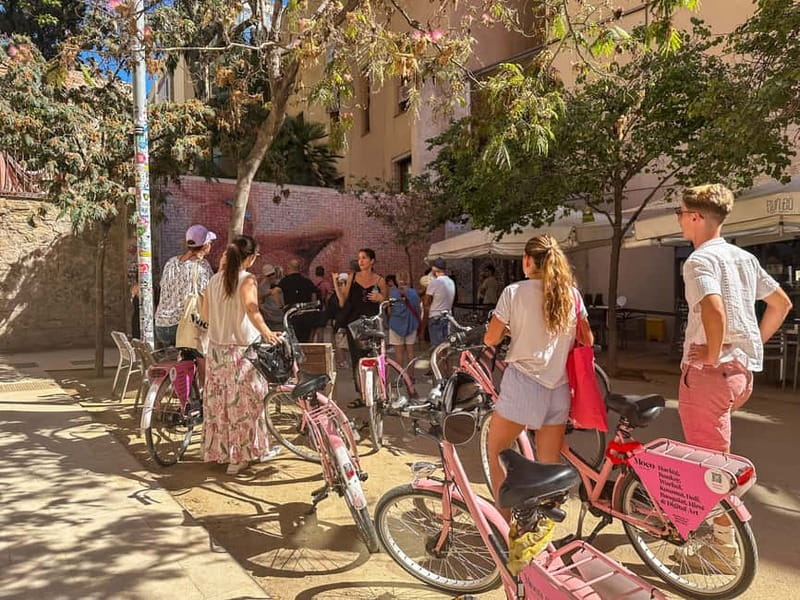
One of my favorite parts of this tour is the way it includes both famous international work and older local roots.
You’ll hit El Xupet Negre (Negrelab), described as one of the city’s earliest graffiti works. That detail is a big deal. It helps you see the timeline of street art in Barcelona: what started as tagging and visual rebellion, and what later expanded into murals with messaging, color, and community identity.
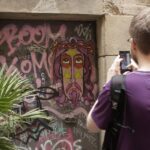
Then the tour heads to the Rambla del Raval, where you find multiple signature street-art elements:
- the Feminist wall
- Space Invader
- Ana Eliza’s contributions
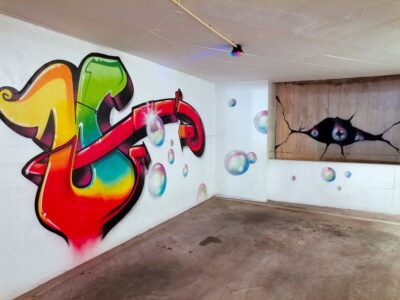
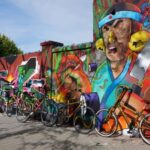
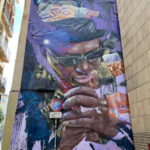
This cluster is exactly why I like doing street art by bike. These aren’t isolated walls that feel like random finds. They sit close enough that you can compare styles and messages in a short span. You start noticing patterns: repetition, symbols, and the different ways artists communicate power and identity.
The guide’s role matters here. Without a short explanation, a lot of these pieces can blend into each other because they use similar visual language. With the guide, each one becomes a separate conversation.

Jardins de les Tres Xemeneies: industrial setting, art in the middle
Next comes a place that changes the mood: Jardins de las Tres Xemeneies on Av/Paral·lel. You’re surrounded by old industrial structures, which gives the street art a different backdrop than the Gothic or tourist-core areas.
This stop is useful even if you’re not obsessed with architecture. The environment frames why street art belongs in cities like Barcelona. Street art isn’t meant to replace buildings. It’s meant to talk back to them—turning industrial leftovers and city corners into message boards.
You get photo time plus guided walking moments, and then you bike onward. The tour stays active without turning into a sprint, which makes it easier to absorb what you’re seeing.
From Plaça de la Catedral to the waterfront ideas: Picasso, photomosaics, and street romance
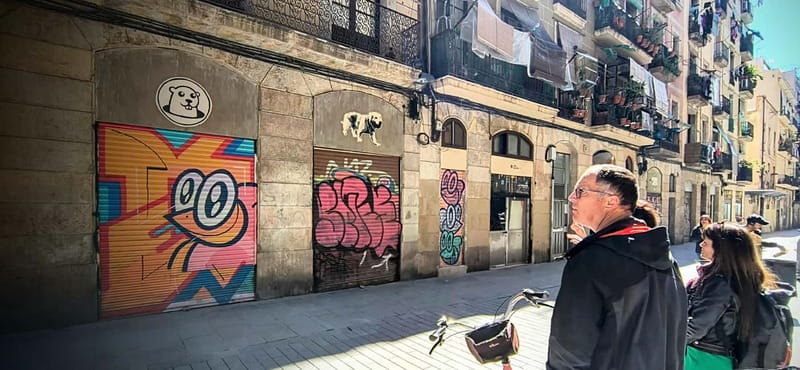
At Plaza de la Catedral, you’ll find the El Beso photomosaic and a Picasso mural. This stop is a good reminder that street art isn’t always anonymous. Some works feel more curated, more public-facing, more like the city’s visual culture extending into the everyday.
The photomosaic is especially the kind of artwork you’ll understand faster if you remember to zoom out and then zoom in. From a distance, you see the big image. Up close, you see how the piece is built and why those tiny parts matter.
Then, the tour continues past more public-art energy:
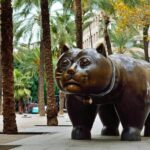
- Gamba Sculpture by Mariscal
- BCNs Head by Leinceshtain
- Columbus Monument
- Theatre Arnau
- El Cap de Barcelona
That mix is intentional. Barcelona street art doesn’t sit in one neighborhood bubble. It travels across the city’s public spaces, and the bike route is built to keep showing you that range.
Passeig de Gràcia and Casa Batlló: the contrast that makes street art click
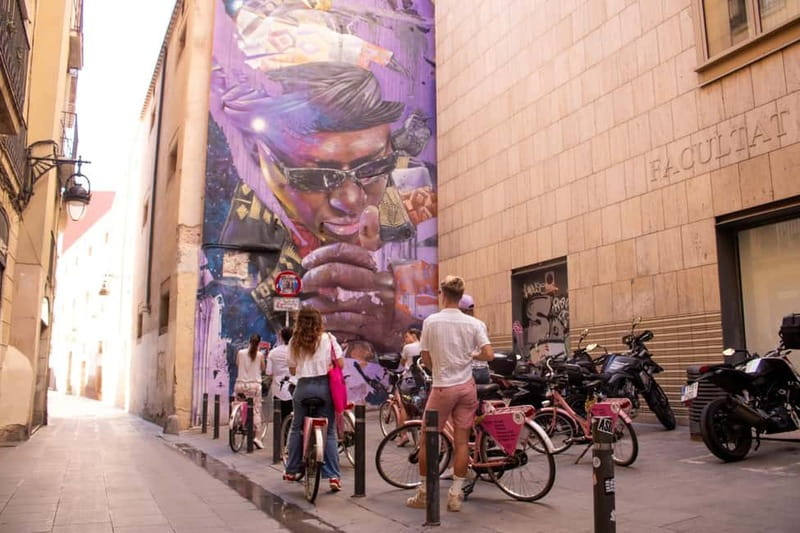
The tour eventually swings toward Passeig de Gracia, with photo stops and passes along the way, and it includes Casa Batlló as a photo/guided moment.
This is where the contrast becomes useful. If you’ve only been thinking about street art as rebellion, the grand architecture reminds you Barcelona always had a big personality. Street art fits into that. It’s another layer of the same city-brain: expressive, theatrical, and opinionated.
Even if you’re not going inside any buildings, you’ll appreciate how the tour ends in a zone that feels polished and formal. It makes the earlier street walls hit harder. The city isn’t divided into old and new. It’s all mixed, just in different proportions depending on where you stop.
What you should bring (and what actually affects your comfort)
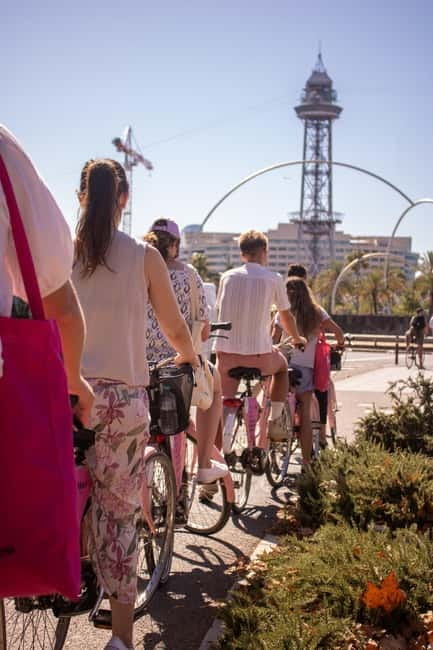
This tour is short enough that you don’t need a backpack full of gear, but a few items can make the difference between a smooth ride and a distracted one.
Bring:
- sunglasses, sun hat, and sunscreen
- weather-appropriate clothing
- a charged smartphone (you’ll want photos)
- passport or ID card
- comfortable clothing for biking
- a copy of your ID is accepted
The tour is rain or shine, and you’ll get a poncho if weather hits. Still, plan for wet roads and wear clothes you can bike in without fuss.
Also, no headphones is the rule. If you’re used to listening to music while walking, be ready to switch to full attention. That’s part of how the guide’s storytelling lands.
Price and value: why $34 can be a smart buy here
At $34 per person for a 2.5-hour electric bike street art tour, this is priced like a high-quality neighborhood experience, not a long-day tour.
The value is in three places:
- You get an English-speaking live guide, and the stops are explained, not just pointed at.
- You get a bike per person, plus a handlebar bag and a free bottle of water, which removes common sightseeing hassles.
- The itinerary packs in a lot of recognizable street-art names and styles within a short time window.
If you only do museum-style art while in Barcelona, you can leave feeling like you saw the official version of culture. This tour gives you the street version and shows how it connects back to major contemporary spaces and public monuments. For many visitors, that balance is exactly what makes the trip feel more real.
Who this tour suits best
This is a great choice if you:
- can comfortably ride a bike
- want street art with context, not just photos
- like a mix of contemporary art + street walls + public art
- want an efficient plan that still feels personal enough to remember
It’s not the best fit if you:
- can’t ride a bike
- use a wheelchair, since it’s not suitable for wheelchair users
Should you book the Barcelona Moco Street Art Bike Tour?
I’d book it if you want a fast, guided way to see Barcelona’s street art as a living part of the city. The combination of electric biking, frequent photo stops, and a guide who connects murals to meaning makes the experience easier to enjoy and easier to remember.
Skip it if biking feels like a challenge for you. This tour is built around riding. Also, if you hate being outside in changing weather, note it runs in rain or shine (poncho provided, but you’ll still be outside).
If you like street art because you want stories behind the walls, and you want to see both modern work and older graffiti roots, this one is a strong match.
FAQ
How long is the Barcelona Moco Street Art Bike Tour?
It lasts about 2.5 hours.
What time does the tour start?
The tour starts at 11:00 am, but you should check availability to see starting times.
Where do I meet the tour?
Meet at Carrer Dels Tallers 45, at the passage by the palm tree where the team will attend you.
What’s included in the tour price?
You get an English-speaking guide, 1 bike per person, a free bottle of water, a handlebar bag for belongings, and picture stops.
Is the tour cancelled if it rains?
No. It runs rain or shine, and poncho rain coats are provided for free.
Do kids need helmets?
Helmets are mandatory for children up to age 16. Helmets are provided free of charge for kids, and adults can request one in advance for an additional cost.
Is the tour wheelchair accessible or suitable for non-bikers?
No. It is not suitable for wheelchair users and not suitable for people who can’t ride a bike.
Are headphones allowed during the tour?
No, headphones are not allowed.