REVIEW · LISBON
Lisbon: Street Art Tour
Book on GetYourGuide →Run by City Guru · Bookable on GetYourGuide
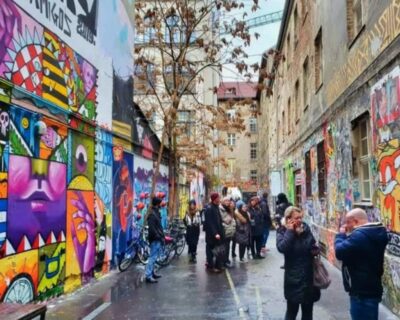
Street art here feels like a local conversation. In just 3 hours, you’ll walk through Lisbon neighborhoods where murals and street sculptures reflect daily life, not just aesthetics. I love how the tour keeps you focused on what to look for and why it matters, led by artists like Erica or Maria (and sometimes guides such as Laith/Leith).
Two things I liked a lot: first, the route is built around neighborhoods, so every stop connects back to Lisbon’s culture. Second, you get a street-artist guide instead of a history lecture, plus you stay away from large crowds and groups. One possible drawback: it’s real walking on uneven pavement and can include unpaved sections, so it’s not the best pick if you struggle with hilly, rough terrain (and it’s not suitable for wheelchair users).
In This Review
- Key things to know before you go
- Why Lisbon Street Art Makes Sense in 3 Hours
- Price and Value: What $40 Gets You (and Why It Works)
- Meeting Point and Practical Logistics (So You Don’t Waste Time)
- The 3-Hour Route: Bairro Alto Through Graça, Stop by Stop
- Bairro Alto (1 hour): Modern vibes with major street-art presence
- Chiado (20 minutes): Quick but meaningful links in the chain
- Baixa de Lisboa (20 minutes): City-center walls with layers of meaning
- Mouraria (30 minutes): Charm, color, and street culture connections
- Graça Historic District (1 hour): A longer finish with strong neighborhood perspective
- What the Guide Does That Changes Your Whole Experience
- How to Get the Most Out of Each Stop (Without Turning It Into Homework)
- Who Should Book This Street Art Tour (and Who Should Skip It)
- Should You Book This Tour?
- FAQ
- How long is the Lisbon Street Art Tour?
- How much does the tour cost?
- Where do I meet the guide?
- What language is the live guide?
- Is food or drinks included?
- What should I bring?
- Is the tour wheelchair accessible?
- Are unpaved or uneven surfaces involved?
- Can I bring oversize luggage?
- Is there free cancellation?
Key things to know before you go
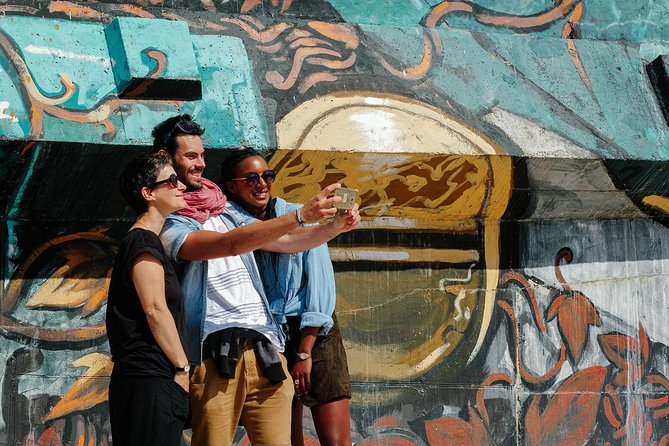
- Street-artist guidance: you’ll be led by someone who treats murals like living communication, not decorations.
- Neighborhood-by-neighborhood route: Bairro Alto, Chiado, Baixa de Lisboa, Mouraria, and Graça Historic District each get their own story.
- Best mural spotting: you’re pointed to standout works you’d likely miss wandering alone.
- Small-crowd style: the experience is designed to avoid big pack energy.
- 3-hour pacing: you’ll cover multiple districts without trying to sprint across the whole city.
- Bring good walking shoes: uneven terrain is part of the deal in Lisbon.
Why Lisbon Street Art Makes Sense in 3 Hours
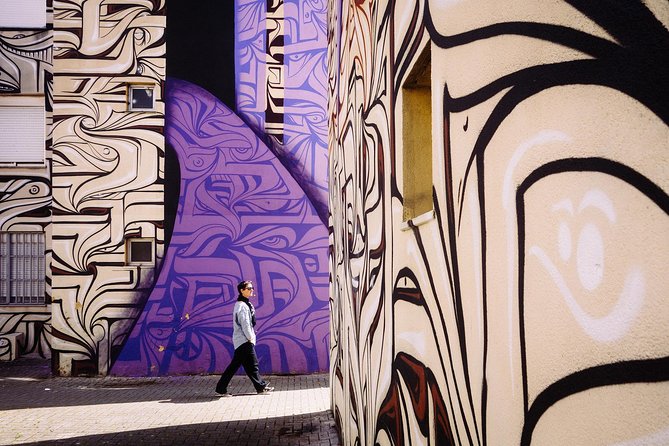
Lisbon is a city of layers. The older tiles and steep lanes are one layer; the street art you see on walls, gates, and underpasses is another. What makes this tour click is that it doesn’t treat street art like a random photo-op. Instead, it treats each work like a neighborhood message—shaped by who lives there, what the street demands, and how people respond.
I also like the timing. 3 hours sounds short until you realize the tour doesn’t try to cover everything. It targets specific districts—then uses each one to explain street art’s role in Lisbon’s public space. That means you finish with a stronger sense of how art “reads” in the streets, not just what you saw.
There’s also a practical bonus. Once you learn how to look—composition, symbols, references, even the choice of wall—you start spotting more art on your own later. Several guides on this route are known for pointing out the small, easy-to-miss details, so you leave with a new eye.
You can also read our reviews of more tours and experiences in Lisbon.



Price and Value: What $40 Gets You (and Why It Works)

At $40 per person, you’re not paying for a ticket to a museum. You’re paying for a guided walking experience that includes a live English-speaking guide and the time needed to connect murals to place. In other words: your money buys interpretation and direction.
Here’s where the value comes from:
- You don’t have to guess where the best works are in each neighborhood.
- You get context that changes how the art lands—social, cultural, and sometimes political angles.
- You spend your time walking Lisbon’s streets rather than making detours to chase a mural you saw online.
Also, this tour is priced for what you’re actually doing: walking. It doesn’t include food or drinks, and there’s no hotel pickup. That keeps the cost focused on the guide and the route—so you can budget a simple snack plan on your own.
And there’s a quality signal: the experience holds a 4.9 rating from 1,324 reviews. High ratings can be noise sometimes, but here the feedback clusters around the same themes: great guidance, strong stories, and a route that makes you see more than you expected.
Meeting Point and Practical Logistics (So You Don’t Waste Time)

You start at R. Luz Soriano 67, and you’ll meet your guide in front of the Interpress building. Since those are listed separately, I’d treat this as a “be early and confirm the exact storefront” situation. Show up a bit ahead and look for the guide—then double-check you’ve got the right meeting point before the walk begins.
What to bring is straightforward:
- Comfortable shoes. Lisbon streets can be uneven, and the tour explicitly says you must be able to walk on unpaved or uneven terrain.
- Plan for a walking-focused morning/afternoon. The route moves through multiple districts, so it’s not a sit-down, stop-and-chat style tour.
What’s not allowed:
- Oversize luggage. If you’re traveling light, you’ll be fine. If you’re hauling a big suitcase, you’ll want a different plan for the day.
Not suitable:
- Wheelchair users. The terrain and walking style make this one a miss if mobility is limited.
The 3-Hour Route: Bairro Alto Through Graça, Stop by Stop
This is the heart of the experience. Each district gets a set chunk of time, and the guide connects what you see to how that neighborhood lives.
Bairro Alto (1 hour): Modern vibes with major street-art presence
Bairro Alto is where the tour starts to feel like Lisbon’s street identity in motion. You get a full hour here, which matters. That time lets the guide explain style, technique, and context instead of rushing to the next corner.
Expect a mix of larger works and the kind of street sculptures that make you stop mid-street and look closer. You’ll also likely hear how different artists choose locations—why a wall in this neighborhood makes sense, and what the surrounding streets add to the message.
A small drawback: because Bairro Alto is the start and the biggest time block early on, it’s easy to get caught up and forget to pace yourself. If you’re sensitive to walking, treat this like warm-up time and save your energy for the later uphill views toward Graça.






Chiado (20 minutes): Quick but meaningful links in the chain
Chiado gets a shorter stop—20 minutes—so you’ll want to stay present. This is the kind of district where street art can feel more “contained,” and the guide’s job is to show you how those pieces still speak to Lisbon’s bigger story.
In this stretch, look for details: smaller tags, symbolic references, or work that interacts with storefronts and pedestrian flow. The guide’s commentary is what makes these quick hits worth it, because the best street art “reads” through context.
If you’re the type who loves long photo sessions, you may feel the time is tight here. But that short stop is also how the tour avoids turning into a slow shuffle.
Baixa de Lisboa (20 minutes): City-center walls with layers of meaning
Baixa de Lisboa is an area that gets a lot of foot traffic, but the tour is designed to avoid the large-crowd vibe. You’ll likely see how street art fits into a place known for movement—what gets painted or installed when the street is constantly in use.
This stop is good for learning a key street-art skill: noticing how art changes with the street’s rhythm. A mural doesn’t just sit on a wall. It adjusts how people walk, what catches attention, and which details you keep ignoring until someone tells you where to look.
The tradeoff is that city-center walls can be layered—older marks, newer additions, overlapping styles. It can feel visually busy if you’re not listening to the guide. This tour works best when you treat the guide as your filter.
Mouraria (30 minutes): Charm, color, and street culture connections
Mouraria is where the tour often feels most personal. You get 30 minutes, which gives time for the neighborhood’s personality to come through through the art choices around you.
This stop tends to be about the relationship between community and artwork—how murals and graffiti reflect what people discuss, what they question, and what they protect. Mouraria’s charm isn’t just in its look; it’s in how the street art relates to the daily presence of people moving through it.
A consideration here: this district can include tighter lanes. Keep an eye on footing and be ready to slow down for turns and uneven sections.
Graça Historic District (1 hour): A longer finish with strong neighborhood perspective
Graça gets the final 1 hour, and that’s smart. By the time you reach Graça, you’ve already learned the street-art “language” the guide is using. Now you can connect what you see to Lisbon’s shape, history, and street life in a more grounded way.
This finish tends to land best if you’re willing to look up and around. Street art here often pairs with the district’s sense of place—walls that feel lived-in, views that make you understand why artists would pick these spots.
If you’re a slow walker or you stop often for photos, plan extra time mentally. The route includes multiple districts, so your finishing energy matters. Comfortable shoes do a lot of work here.
What the Guide Does That Changes Your Whole Experience
A street-art tour can be either a highlight reel or a real education. This one tilts toward education without losing the fun.
The guides on this route are often artists or artist-minded storytellers. Names you might encounter include Erica, Erika, Maria, Marie, and Laith/Leith. What they share in common is the way they explain:
- why a mural belongs in its neighborhood
- how an artist’s style communicates something specific
- how street art connects to Lisbon’s social and cultural context
You’ll probably notice you’re not just memorizing names of artists. You’re learning how to read street art—symbols, techniques, and how the location shapes the meaning. That’s why the tour is considered a strong intro, even if you don’t know street art terms. You don’t need a background. You just need to keep your eyes open.
I also like that the walk isn’t about a single “famous mural” obsession. The stops are designed to show variety: big works and smaller pieces, different neighborhoods, different moods. That variety keeps the tour from feeling repetitive.
How to Get the Most Out of Each Stop (Without Turning It Into Homework)

If you want to walk away feeling like you saw real Lisbon street culture—not just pretty walls—use this simple approach while you go:
- Look for the wall’s job. Ask yourself why that specific wall was chosen: visibility, audience, street angle, or community association.
- Notice scale shifts. The tour includes different sizes of works. Pay attention to how small pieces can still feel powerful when placed well.
- Use the guide as a decoder. When your guide points out context, treat it like translation. Don’t just nod—immediately scan the mural again with the new frame in mind.
- Take notes lightly. You don’t need a notebook. Just jot one detail you want to remember later, like a symbol or a technique name. It helps you keep the stories straight.
This is also why the tour’s structure across neighborhoods works. You learn one district’s visual logic, then you carry that logic to the next one.
Who Should Book This Street Art Tour (and Who Should Skip It)
This tour fits best if you:
- like walking and want to see Lisbon through street-level art
- want context, not just photos
- enjoy neighborhood exploration, especially areas like Bairro Alto, Chiado, Baixa, Mouraria, and Graça
- want a street-artist guide and an experience designed to avoid large crowds and big groups
Skip it if you:
- need wheelchair accessibility (it’s not suitable)
- struggle with uneven ground or unpaved sections
- want a low-effort tour with minimal walking
If you’re on the fence, think about your walking tolerance first. This is Lisbon. Hills and uneven pavement are part of the city’s texture, and the tour expects you to handle that.
Should You Book This Tour?
Yes, I’d book it if street art is even a little on your radar, especially as an early Lisbon activity. At $40 for a guided 3-hour walk, you’re paying for direction and interpretation—two things that make street art much more satisfying to see.
Book it now if:
- you want to understand Lisbon neighborhoods through what’s on their walls
- you prefer a smaller-crowd feel over big-group touring
- you want to leave with a better eye for detail, so you spot more art the rest of your trip
Skip it if:
- uneven walking is an issue for you
- you’d rather do a museum day or a ride-based sightseeing plan
If you book, wear your most reliable shoes and go in ready to look up and around. The payoff is that Lisbon stops being just postcard scenery and becomes a city of messages you can read.
FAQ

How long is the Lisbon Street Art Tour?
It lasts 3 hours.
How much does the tour cost?
The price is $40 per person.
Where do I meet the guide?
You meet your guide in front of the Interpress building. The starting location is listed as R. Luz Soriano 67.
What language is the live guide?
The tour includes a live guide in English.
Is food or drinks included?
No. Food and drinks are not included.
What should I bring?
Bring comfortable shoes.
Is the tour wheelchair accessible?
No. It is not suitable for wheelchair users.
Are unpaved or uneven surfaces involved?
Yes. You must be able to walk on unpaved or uneven terrain.
Can I bring oversize luggage?
No. Oversize luggage is not allowed.
Is there free cancellation?
Yes. You can cancel up to 24 hours in advance for a full refund.