REVIEW · LISBON
3-Hour Guided Street Art Walking Tour of Lisbon
Book on Viator →Run by TheCityGuru · Bookable on Viator
Lisbon reads like street art poetry. This 3-hour walk strings together street art and real neighborhood history, with a guide so you don’t end up guessing.
I like that it’s set up as a small group (max 12), so you can actually ask questions and get photo-friendly direction.
My second favorite is the context: guides like Erika and Maria are praised for tying murals, graffiti, tiles, and even Enlightenment-era art to social and political themes. The one downside to consider is simple: this is a hills and cobbles walking tour with uneven ground, and it’s not ideal if you have mobility limits.
In This Review
- Key things that make this tour worth your time
- Street art in Lisbon: why this walk feels different
- Is the $42.27 price fair for 3 hours?
- Where you start and end (and how that helps your day)
- Stop-by-stop: what each neighborhood teaches you
- Stop 1: Bairro Alto and the nightlife-linked murals
- Stop 2: Elevador da Gloria and Calçada da Gloria’s urban art gallery feel
- Stop 3: Baixa de Lisboa and why azulejos matter more than you think
- Stop 4: Miradouro da Graça (Sophia de Mello Breyner Andresen) and the workers-rights layer
- Stop 5: Alfama’s Chão do Loureiro, a car park turned street-art gallery
- What makes the guide’s approach stand out (and why names matter)
- Small group size: the underrated reason this tour works
- The walking reality: what comfort gear you actually need
- Photo and street art spotting tips that pay off fast
- Who should book this tour (and who might want a different plan)
- Should you book this Lisbon street art walking tour?
- FAQ
- FAQ
- How long is the 3-hour guided street art walking tour?
- How much does the tour cost?
- Is the tour offered in English?
- What’s included in the price?
- What’s not included?
- Where do I meet, and where does it end?
- Do I need to be able to walk on uneven terrain?
- What if the weather is bad?
Key things that make this tour worth your time
- Bairro Alto’s nightlife-linked street art gives you a fast feel for the quarter’s vibe
- Calçada da Gloria / Elevador da Gloria shows how Lisbon turns a slope into an outdoor art wall
- Baixa’s azulejos and symbols connects tiles and streets to meaning, not just decoration
- Miradouro da Graça’s workers-rights legacy adds a political layer most walks miss
- Alfama’s Chão do Loureiro (car-park-turned-gallery) brings street art into the vertical world
- Small group + guide attention helps you spot details without falling behind
Street art in Lisbon: why this walk feels different
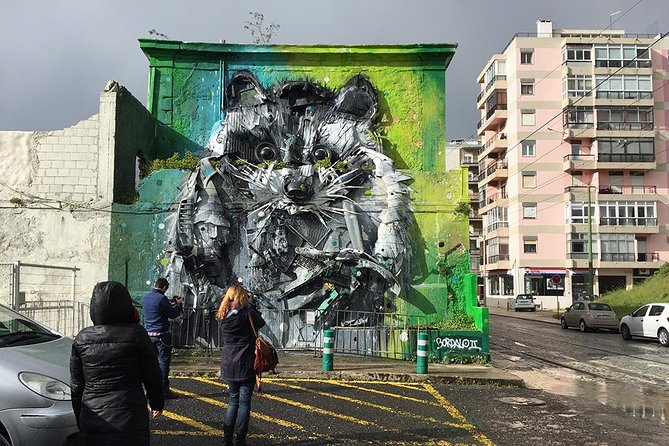
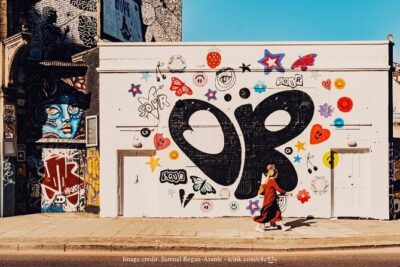
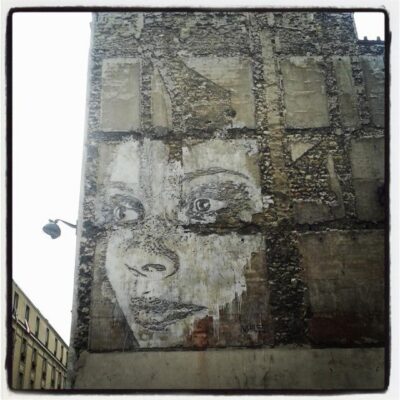
Lisbon street art isn’t only about color. It’s about who gets to speak, where walls become pages, and how a city’s past shows up in modern tags and murals.
This tour is built for that. You’re not just strolling until you find something interesting. You’re moving through neighborhoods with a guide who points out the clues: symbols on tiles, recurring design ideas, and the way each area has its own street art language.
And because it’s a small group, the pacing stays human. You’re not sprinting between murals while your guide talks to the loudest person. You can slow down, look up, and ask what a piece is doing there.
You can also read our reviews of more tours and experiences in Lisbon.



Is the $42.27 price fair for 3 hours?
At $42.27 per person, you’re paying for three things: a local guide, a tight route through multiple neighborhoods, and time-saving navigation. Importantly, the stops are free in terms of admission at each location, so you’re not shelling out extra entry fees along the way.
For me, the value comes from the “why.” Street art is easy to misunderstand if you only treat it like decoration. Here, the guide’s job is to connect what you see to the neighborhood it lives in—nightlife culture in Bairro Alto, the tile symbolism in Baixa, and the workers-rights themes in Graça. That context is hard to DIY in three hours.
Also, a rest break is included halfway through. That matters when you’re walking Lisbon’s uneven streets.
Where you start and end (and how that helps your day)
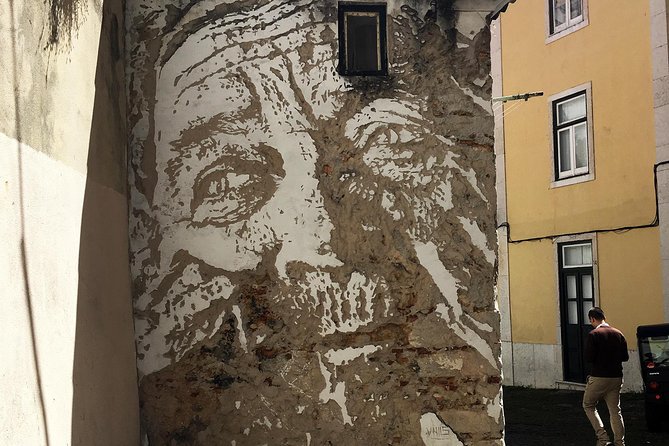
You’ll meet at R. Luz Soriano 67, 1200-246 Lisboa. The tour ends at Miradouro da Graça, Calçada da Graça, 1100-265 Lisboa.
That end point is practical. Miradouro da Graça is a viewpoint area, so it’s a natural finish if you want to keep exploring, grab a drink, or just catch the light over the city. If your Lisbon day already includes photo stops, this ending spot plays nicely with that.
Stop-by-stop: what each neighborhood teaches you

Stop 1: Bairro Alto and the nightlife-linked murals
Bairro Alto kicks things off at 30 minutes, and the focus is on street art connected to the quarter’s nightlife traditions. This is a smart first stop because it sets your expectations: street art here isn’t abstract art-club stuff. It’s part of a living neighborhood rhythm.
What to do here: slow down and scan. In nightlife districts, the art often follows movement—around entrances, near hangout corridors, and on walls that catch evening foot traffic. Look for tags versus bigger statements. The guide can help you read the difference.
A small caution: if you’re arriving hungry for action, this is still a learning stop. So give yourself a minute to adjust from travel brain to looking-for-details brain.






Stop 2: Elevador da Gloria and Calçada da Gloria’s urban art gallery feel
Next is Elevador Da Gloria, with Calçada da Gloria framed as one of Lisbon’s outdoor Urban Art Galleries. Here you see street artists from all over creating projects that make the slope feel like a living exhibition.
This stop is great for photos because Lisbon street art often rewards angles. A guide can steer you toward spots where the art is framed well by the street lines, not just by luck.
Drawback to consider: because you’re walking on inclines and uneven pavement, don’t plan to stop and rest endlessly. Let the guide do the route math so you don’t lose momentum for the rest of the tour.
Stop 3: Baixa de Lisboa and why azulejos matter more than you think
In Baixa, you’ll spend 30 minutes focused on azulejos—Lisbon’s iconic ceramic tiles—and how symbols and design show up in the stories of streets.
This is where you start seeing the city differently. Tiles aren’t only decoration. They can be coded storytelling: messages embedded in imagery, traditional motifs that repeat, and design choices that reflect Lisbon’s worldview.
One reason I love this kind of stop: it expands the definition of street art. You’ll likely come out understanding why someone might call tiles and tile-walled facades part of the street art conversation, even if they’re not graffiti.
Stop 4: Miradouro da Graça (Sophia de Mello Breyner Andresen) and the workers-rights layer
Miradouro da Graça is another 30-minute stop. Bairro da Graça is described as a residential district with an important connection to Portugal’s workers unions and workers rights. The street art here reflects that legacy.
This is a key moment in the tour because it shifts street art from “cool visuals” to “social record.” When art grows out of labor history, it tends to carry sharper themes—identity, fairness, power, and memory.
What you’ll want to do: pair what you see on walls with what you feel in the neighborhood. Graça’s residential texture helps you understand why certain messages would stick here longer than in places that only exist for tourism.
If you’re short on time elsewhere, this is still a good stop not to rush through. The viewpoints make it easier to catch your breath between visuals.
Stop 5: Alfama’s Chão do Loureiro, a car park turned street-art gallery
The final neighborhood is Alfama, and you’ll visit Chão do Loureiro, a car-park transformed into a street-art gallery. It’s described as a five-floor building, and that verticality is a big deal: street art doesn’t have to stay at eye level.
This stop is often where the tour gets extra “wow.” When you’re dealing with multiple floors, the art can vary in style and scale. Some pieces may feel like quick tags, while others read like murals with a clear narrative.
Practical photo tip: don’t just aim your camera at the closest wall. If the building rises up, use your body position to include lines and angles that make the art look like it belongs in architecture, not just pasted onto it.
What makes the guide’s approach stand out (and why names matter)
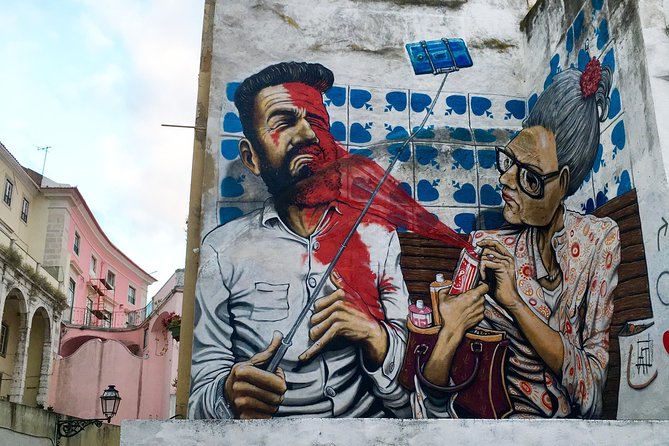
If you’ve done tours in Lisbon before, you’ve probably felt the difference between a guide who recites facts and a guide who teaches you how to look. This tour leans hard into teaching your eyes.
Guides such as Erika, Maria, Laith, Leigh, and Lait are repeatedly praised for connecting street art to social, cultural, and historical context. That can include how murals and graffiti work as dialogue, why tiles can carry meaning, and what international street art scenes have in common.
Some guides even go further into art-world language. One guide, Lait, is described as explaining methods and style and bringing a spray can for participants to try. That kind of hands-on moment is optional-feeling and not guaranteed for everyone, but it gives you a better respect for the craft behind the work.
Small group size: the underrated reason this tour works
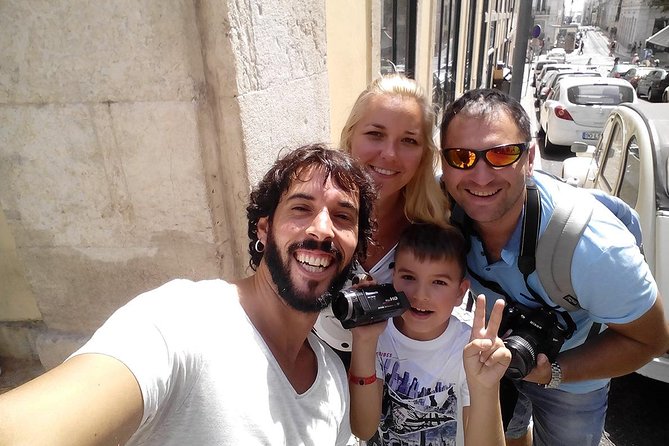
Max group size is listed as 12 pax, with a maximum of 15 travelers for the activity. Either way, you’re not getting shoved into a crowd.
That size keeps three things from going wrong:
- You can hear your guide without craning your neck.
- You can ask questions without time pressure.
- Your group stays close enough that the guide can adjust pacing.
This is especially important in Lisbon because the route involves hills and uneven ground. When you have a tight group, the walk becomes a conversation. When you don’t, it becomes a moving stampede.
The walking reality: what comfort gear you actually need
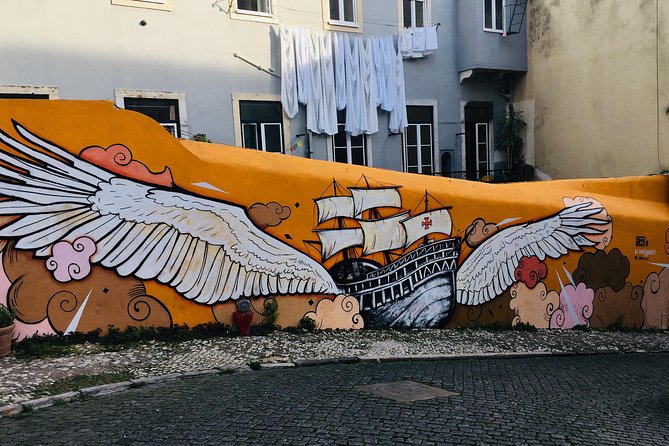
This is a walking tour. You’ll want comfortable clothes and shoes, and you must be able to walk on unpaved or uneven terrain.
A lot of people underestimate this part because Lisbon looks charming from postcard distance. Up close, you’re dealing with cobbles, slopes, and stairs or rough sections that can wear you out if your shoes are wrong.
My advice:
- Wear grippy shoes. Sneakers that are “fine for city sidewalks” may still slip on some pavement.
- Bring water. Food and drinks aren’t included, so plan for it.
- If you’re prone to sore knees, pace yourself on the hills and trust the guide’s stopping rhythm.
One more note: a couple of people felt the walk was a bit long. That doesn’t mean it’s brutal, but it does mean you should be honest about your stamina.
Photo and street art spotting tips that pay off fast
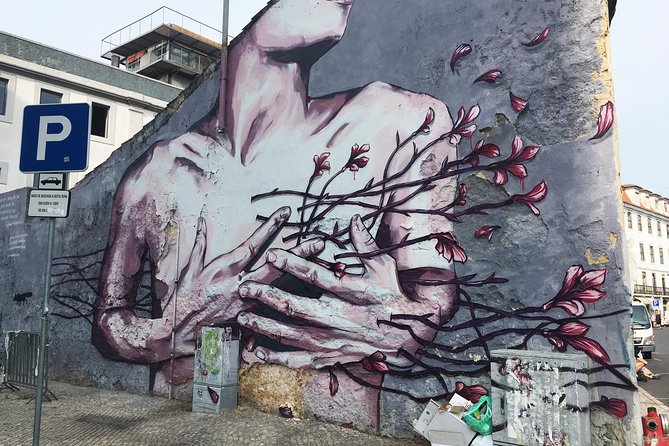
Street art isn’t always obvious on first glance. Here are habits you’ll use on this route:
- Look for layers: fresh paint over older tags, tile patterns around newer murals, and symbols that repeat.
- Scan above eye level. Lisbon street art often lives on high walls, behind doorways, or along edges where your eyes don’t go by default.
- Use context clues: a piece’s placement near nightlife spots, residential streets, or tile-heavy avenues can hint at purpose.
If you go in expecting only huge murals, you’ll miss the smaller conversation pieces. This tour’s pace encourages attention to both big statements and small marks.
Who should book this tour (and who might want a different plan)
Book it if you:
- Like street art but want meaning, not just photos
- Want a route that connects neighborhoods to culture and history
- Enjoy walking tours and can handle Lisbon’s uneven streets
- Want small-group attention and a guide to keep you on track
Skip or rethink if you:
- Have mobility issues and need a more accessible route
- Hate hills and long stretches of uneven pavement
- Want a low-effort sit-and-stroll day
Should you book this Lisbon street art walking tour?
I think it’s a strong choice for anyone who wants Lisbon street art explained in human terms. The route covers multiple “Lisbon styles” in a short window: nightlife-linked walls in Bairro Alto, slope-side projects around Calçada da Gloria, tile storytelling in Baixa, political legacy themes in Graça, and the vertical gallery feeling in Alfama’s Chão do Loureiro.
The biggest trade-off is physical. You need solid walking comfort for uneven terrain. If you’re good with that, you’ll get a lot out of three hours—especially if your priority is understanding what you’re seeing.
FAQ
FAQ
How long is the 3-hour guided street art walking tour?
The tour lasts about 3 hours.
How much does the tour cost?
The price is $42.27 per person.
Is the tour offered in English?
Yes, it is offered in English.
What’s included in the price?
You get a local guide, a rest break at the half-way point, and a small group tour.
What’s not included?
Hotel pickup/drop-off and food or drinks are not included.
Where do I meet, and where does it end?
The meeting point is R. Luz Soriano 67, 1200-246 Lisboa. The tour ends at Miradouro da Graça, Calçada da Graça, 1100-265 Lisboa.
Do I need to be able to walk on uneven terrain?
Yes. This is a walking tour and you must be able to walk on unpaved or uneven terrain. It is not recommended for travelers with mobility issues.
What if the weather is bad?
This experience requires good weather. If it’s canceled due to poor weather, you’ll be offered a different date or a full refund.