REVIEW · LISBON
Authentic Lisbon: 4h Tuk Tuk Tour of Lisbon and Belém Secret Gems
Book on Viator →Run by Local 100% Electric Tuk Tuk Tours · Bookable on Viator
Lisbon at tuk-tuk speed feels like a cheat code. You get fast access to classic neighborhoods plus Belém monuments, without turning your day into a full-on stair workout. The route is built around viewpoints and short strolls, so you see a lot while still getting real street-level Lisbon.
Two things I like a lot are Rui’s local guidance and the way he gets you to the best photo angles. In particular, his DSLR and drone-style photo thinking shows up at the right moments, like Belém viewpoints where the scenery needs a higher perspective.
One thing to plan for: some major sights aren’t included (so think Jerónimos Monastery and the Belém Tower budget). Also, each stop is about 30 minutes, which is great for seeing highlights, but not for deep museum time.
In This Review
- Key Highlights to Expect
- How This 4-Hour Lisbon Tuk-Tuk Hits the Best Sweet Spots
- Getting Oriented at Rossio and the Simple “No-Fuss” Flow
- Stop 1: Miradouro da Graça for Lisbon’s First Overlook
- Stop 2: Alfama Alleys and the Old-Lisbon Rhythm
- Stop 3: Padrão dos Descobrimentos and the “Caravel” Monument View
- Stop 4: Mosteiro dos Jerónimos—UNESCO for Manueline Details
- Stop 5: Escadinhas de São Cristóvão in Mouraria
- Stop 6: Torre de Belém and the River-Port Story
- Stop 7: Capela de Santo Amaro for Tilting Tile Beauty and River Views
- Stop 8: Ponte 25 de Abril—Icon Bridge Views with Real Engineering Context
- Price and Value: Is $144.49 Worth It?
- Who This Tour Fits Best
- Should You Book This Lisbon Tuk-Tuk Tour?
- FAQ
- How long is the Lisbon and Belém electric tuk-tuk tour?
- Where is the meeting point?
- Is this a private tour?
- Is the tour offered in English?
- Do I need tickets for the stops?
- Is there a mobile ticket?
- What happens if the weather is bad?
- Can I cancel for a full refund?
Key Highlights to Expect
- Electric tuk-tuk convenience that keeps you moving through steep and tight areas
- Rui and his hands-on viewpoint approach, including getting out to show corners cars can’t reach
- Graça + Alfama for traditional Lisbon streets, not just photo stops
- Belém’s monument cluster in one compact day: Padrão dos Descobrimentos, Jerónimos, Torre de Belém
- Photo-friendly pacing, with the kind of shot ideas that fit DSLR and drone angles
- Free vs. paid admissions mixed into the route, so you can budget without guessing
How This 4-Hour Lisbon Tuk-Tuk Hits the Best Sweet Spots
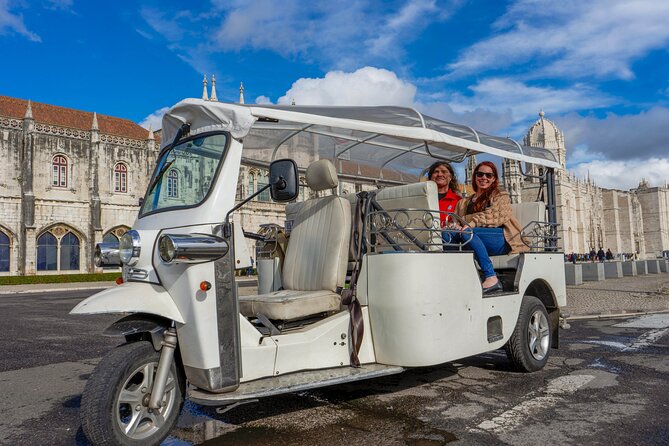
This tour is basically about saving your energy while still getting that Lisbon feeling: narrow lanes, big views, and the river showing up at just the right times. Instead of commuting from one far-apart spot to another, the day is arranged like a smooth loop that groups neighborhoods together.
You’ll start at Rossio Square and spend about four hours cruising and walking in short bursts. Because it’s a private tour (only your group), the pace can be less rushed than a big bus day, and you can ask questions while you’re rolling through areas you’d never think to navigate on your own.
And yes, it’s electric. That matters more than you’d think. It’s quieter in the streets, and it just makes the whole experience feel lighter, especially when you’re moving through places where cars don’t feel welcome.
You can also read our reviews of more tours and experiences in Lisbon.



Getting Oriented at Rossio and the Simple “No-Fuss” Flow
Rossio Square is a solid meetup point because it’s central. You’re close to public transportation, and the tour ends back at the same meeting spot, so you don’t lose time figuring out what to do next.
You’ll get a mobile ticket, and service animals are allowed. Most travelers can participate, which is great if you want the highlights without committing to hours of stairs back-to-back.
What to watch for: this is designed as a ride-with-walking day. If you want long sit-down breaks or full museum immersion, you’ll still get stops with short strolls, but you won’t stay long enough to treat every attraction like your personal private tour of the place.
Stop 1: Miradouro da Graça for Lisbon’s First Overlook
Miradouro da Graça is where Lisbon opens up in front of you. The viewpoint vibe is part practical and part emotional. First, it helps you understand the city’s shape—hills, rooftops, and where the neighborhoods sit. Second, it gives you that classic “I get it now” moment that makes everything after feel clearer.
This stop is about 30 minutes, and admission is free. That free access is a nice bonus early in the tour because it lowers your mental budget stress. Also, you can usually use this as your reset point if your legs feel a little tight from travel.
What I like about this kind of start is that it sets the tone. You’re not just collecting landmarks; you’re learning how Lisbon looks from above, then you drop back down into the lanes.
Stop 2: Alfama Alleys and the Old-Lisbon Rhythm

Alfama is Lisbon’s oldest-feeling neighborhood, and it shows. The streets are narrow, colorful, and easy to wander through—sometimes you’ll get lost in a way that feels charming instead of stressful.
Here’s the fun context: Alfama traces back to Arab influence, and the name connects to the idea of hot waters—Al-hama, often described as a source of good waters. Whether you read that as history or poetry, it helps you understand why the neighborhood carries a different mood than the more modern parts of town.
This stop is about 30 minutes and admission is free. The main value isn’t a ticket line—it’s walking. You’ll get glimpses of everyday life between buildings, and you’ll pass those staircases and corners that make Lisbon feel like a series of small discoveries.
Possible drawback: Alfama’s charm is also its challenge. If you hate getting turned around, go slowly and let the tuk-tuk guide you back. The point here is to feel the neighborhood, not to force a straight-line checklist.
Stop 3: Padrão dos Descobrimentos and the “Caravel” Monument View

Belém’s Padrão dos Descobrimentos is a bold reminder that Lisbon’s story is tied to the Age of Discovery. The monument is designed like a caravel, and it features historical figures connected to Portuguese exploration.
Your time here is about 30 minutes, and admission is not included. That’s normal for a major landmark, but it’s worth planning: bring your ticket strategy (purchase on the day if you want inside access, or treat it as a viewpoint-focused stop if you’re budget-conscious).
The best part, for me, is the panoramic reward from up top. You get a sweeping view over Lisbon and the river area, which makes the monument feel bigger than a photo.
Photo nerd tip (from real on-the-ground experience with Rui): he’s known for using drone-style angles to highlight sweeping compositions, including the compass rose at Padrão. If you’re the type who cares about getting the shot right, ask your guide how he likes to frame it when you arrive.






Stop 4: Mosteiro dos Jerónimos—UNESCO for Manueline Details

Jerónimos Monastery is one of Portugal’s big-name monuments, and it’s also very visually specific. The architecture is Manueline, and the carving details are the kind you only notice when you’re standing close, not scrolling past on a phone screen.
This stop is about 30 minutes and admission is not included. In that time, you’ll likely focus on the parts that give you the biggest impact: the church façade area and the cloister spaces, plus the general sense of scale.
Context that helps you appreciate what you’re seeing: it was commissioned by King Manuel I to honor Vasco da Gama’s return from India, and it’s tied to the Age of Discovery era. That connection turns the stones from decoration into narrative.
Possible drawback: 30 minutes isn’t “study mode.” It’s “get the feeling and see the key details.” If you want slow wandering with zero time pressure, consider this a sampler, then plan a longer return later.
Stop 5: Escadinhas de São Cristóvão in Mouraria

Mouraria is traditional, multicultural, and still feels like it belongs to locals rather than becoming a theme park. The Escadinhas de São Cristóvão area adds a staircase-and-alley energy that fits Lisbon’s rhythm.
This stop is about 30 minutes and admission is free. That matters because it lets you spend time observing without paying to enter anything. You get to watch how the streets work: how people move, where conversations happen, and how neighborhoods layer their identities.
This is also a good mental palate cleanser after Belém’s major monuments. You go from big stone symbols to street-level life, and the contrast makes the whole day feel more balanced.
Stop 6: Torre de Belém and the River-Port Story

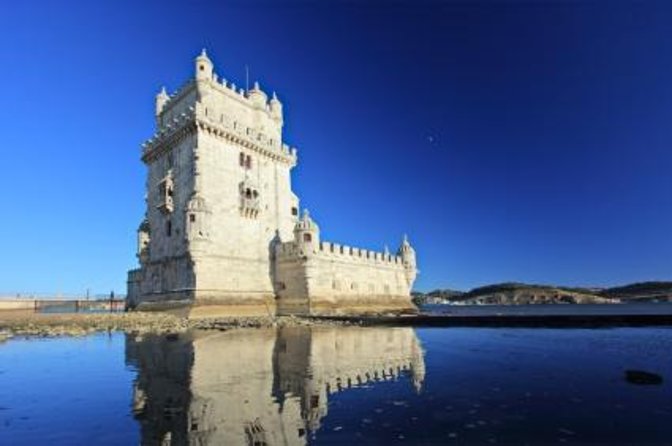
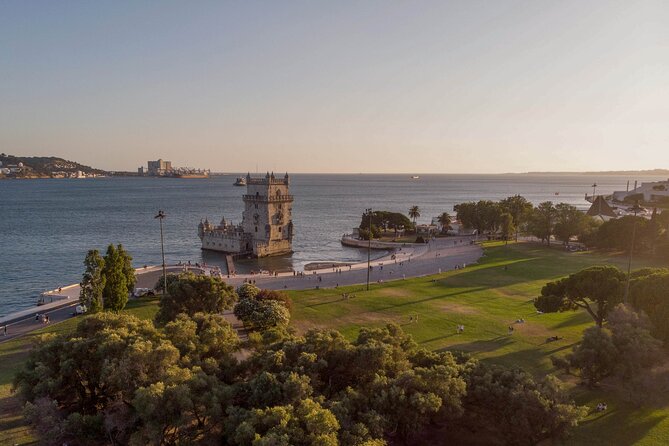
The Belém Tower (Torre de Belém) is one of Lisbon’s most emblematic sights, and it has a job to explain. Built at the start of the 16th century by the Tagus, it blends Manueline and Gothic elements, and it originally functioned as part of the defense system for the port area.
Your time here is about 30 minutes, and admission is not included. Since it’s such a recognizable monument, this is a stop where you’ll likely get the full effect just from the outside and the surrounding area.
I like this as a tour stop because you can connect it to everything you saw at Padrão. Both are tied to exploration and Portugal’s maritime era, but the tower feels more practical, more military, more grounded—like the story had a working schedule.
Stop 7: Capela de Santo Amaro for Tilting Tile Beauty and River Views
Capela de Santo Amaro is a small surprise that works well on a tuk-tuk route. The chapel is known for its interior azulejos—multicolored late-Mannerist tiles—with scenes linked to Saint Amaro.
This stop is about 30 minutes and admission is free. The big value here is that you get an art-and-architecture moment without spending more ticket money.
The location also helps: it sits on a hill in Alcântara, so you get a view that looks out toward the Tagus and the Ponte 25 de Abril. That means the chapel isn’t only about what’s inside—it’s also about where you stand while you look out.
If you’re someone who enjoys the details—tile patterns, textures, and small artistic stories—this is likely to be a standout stop.
Stop 8: Ponte 25 de Abril—Icon Bridge Views with Real Engineering Context
Finishing with Ponte 25 de Abril gives the day a big, cinematic ending. The bridge crosses the Tagus between Lisbon and Almada, and it’s about 2,277 meters long. It originally opened in 1966 as Ponte Salazar, then got renamed after the 1974 revolution.
Structurally, it’s a double-deck design: the upper level for cars and the lower level for trains (since 1999). That detail makes it more than an Instagram backdrop—it’s a functioning piece of infrastructure with its own story.
The bridge’s red-orange paint and elegant profile are often compared to the Golden Gate Bridge look. Whether you see that comparison or not, it’s still one of those Lisbon sights that makes you stop and look longer than you planned.
Admission is free, and this stop is about 30 minutes. It’s enough time to soak in the view, catch a few photos, and then roll back satisfied instead of exhausted.
Price and Value: Is $144.49 Worth It?
At $144.49 per person for about four hours, this isn’t the cheapest way to tour Lisbon. But it also isn’t trying to be. You’re paying for electric tuk-tuk transport plus a live guide who helps you move through parts of the city efficiently.
Here’s how I’d judge value for your money:
- Time saved vs. self-guided wandering: Lisbon can be slow when you’re constantly repositioning. This route clusters neighborhoods and viewpoints into a manageable day.
- Transport comfort in hilly areas: Electric tuk-tuks reduce friction when you’re dealing with steep streets and tight corners.
- Mix of free and ticketed sights: Several stops are free, while some major landmarks have admissions not included. That helps you control spending depending on what you actually want to enter.
- Guide quality signals from real experience: Rui is consistently described as friendly, local, and focused on photo spots, including drone-style viewpoints. That can add real value if photography is part of your trip style.
If you’re traveling with a group that wants easy logistics and better sight access, the price starts to feel more reasonable. If you’re mainly trying to tick off museums and you love slow independent wandering, you might prefer a different plan that leaves more time at paid sites.
Who This Tour Fits Best
This is a strong match for:
- First-time visitors who want a lot of Lisbon flavor without planning every hop
- People who like viewpoints and short walking stops instead of long museum marathons
- Travelers who want the neighborhood feel in Alfama and Mouraria, not just a checklist
It’s probably not perfect if you want:
- Long, quiet time inside Jerónimos or other major monuments
- A strict schedule with no walking at all (you will walk some)
- A budget-only day where you refuse to pay any extra admissions for big sights
One more practical note: the experience requires good weather. If weather turns, you’ll be offered a different date or a full refund, so it’s smart to build it earlier in your trip window.
Should You Book This Lisbon Tuk-Tuk Tour?
I’d book it if you want a smart first-or-second-day plan: viewpoints, old neighborhoods, and Belém in one compact 4-hour loop. It’s especially worth it if you care about photo angles and want a guide like Rui who’s used to turning the streets into shot locations.
I’d skip it if you already have a strict plan to spend long hours inside major monuments, or if you don’t want to think about separate admissions for Jerónimos Monastery, the Padrão dos Descobrimentos, and the Belém Tower.
If your schedule is flexible and you’re good with short stops, this tour is a fun, efficient way to feel Lisbon’s mix of hilltop views and river history.
FAQ
How long is the Lisbon and Belém electric tuk-tuk tour?
It runs for about 4 hours.
Where is the meeting point?
The tour starts at Rossio Square (Praça do Rossio, 1100-200 Lisboa, Portugal).
Is this a private tour?
Yes. Only your group will participate.
Is the tour offered in English?
Yes, it’s offered in English.
Do I need tickets for the stops?
Some stops are free and some are not included. Admission is not included for Padrão dos Descobrimentos, Mosteiro dos Jeronimos, and Torre de Belém. Other listed stops show admission as free.
Is there a mobile ticket?
Yes, it uses a mobile ticket.
What happens if the weather is bad?
This experience requires good weather. If it’s canceled due to poor weather, you’ll be offered a different date or a full refund.
Can I cancel for a full refund?
Yes. You can cancel up to 24 hours in advance for a full refund.