REVIEW · LONDON
Shoreditch Street Art and Graffiti Tour (Private Group Booking)
Book on Viator →Run by London With A Local · Bookable on Viator
Graffiti in London is smarter than it looks. This private Shoreditch street art and graffiti tour takes you through Brick Lane, the market lanes nearby, and King John Court’s famous mural, with a guide focused on how the area changed and why different walls look the way they do. I especially like the story lens on the hipster-era transformation, and I like the mix of styles, from commercial pieces to protest work.
The one thing to consider is cost math: it’s $347.23 per group (up to 15). If you’re traveling as a small party, the per-person price can jump, and the tour is only about two hours.
In This Review
- Key Highlights to Look For
- Street Art in Shoreditch: What a 2-Hour Private Tour Really Delivers
- Brick Lane: Where Street Style, Markets, and Wall Art Share the Same Block
- The Market Stop: Spitalfields Area Energy and Street-Culture Foot Traffic
- King John Court: The Largest Mural in London (and Why That Matters)
- Commercial vs Protest Pieces: How Your Guide Helps You Read the Walls
- Private Group Booking: Value, Pacing, and Who This Fits Best
- Where You Meet and How the Route Finishes Near Food and Shops
- Cost and What’s Included: Avoid Surprises on Tour Day
- Should You Book This Shoreditch Street Art and Graffiti Tour?
- FAQ
- Where does the tour start?
- Where does the tour end?
- How long is the Shoreditch street art and graffiti tour?
- What does the price include?
- How much does the tour cost and how many people can book?
- What language is the tour offered in?
- Are there admissions or tickets needed for stops like Brick Lane and King John Court?
- Is transportation included?
- Can I cancel for a full refund?
- Is the tour private?
Key Highlights to Look For
- A private, question-friendly guide: you control the pace and can ask lots of questions
- Shoreditch transformation in plain English: how the area’s street culture shifted over the last century
- King John Court’s largest mural in London: a specific, impressive stop you can point to on a map
- A mix of graffiti styles: commercial work beside protest pieces, not just one “look”
- Built-in free time blocks: short, focused stops around Brick Lane and the mural area
Street Art in Shoreditch: What a 2-Hour Private Tour Really Delivers
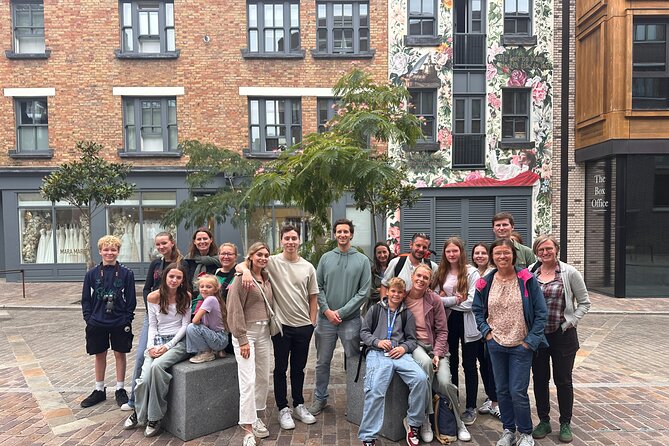
Shoreditch is where London’s street art scene went from edge-of-the-map to everyone knows it. The best part of this tour is that it doesn’t treat graffiti like a scavenger hunt. You walk, you look, and your guide gives context—why the walls changed, what kinds of work show up, and how local culture shaped the look.
You’ll be moving at a walking pace for about two hours, and it’s designed for a compact route: Brick Lane first, then the big market area nearby, then King John Court. That structure matters. When you only have a short window in London, it’s easy to waste time hopping randomly between murals. Here, you’re guided to a few high-impact spots and given enough explanation to understand what you’re seeing.
As a private booking, it’s also more flexible than a fixed group tour. The format is built for conversation. You can steer the questions toward fashion-adjacent street culture, the commercial side of murals, or the protest side—then let the guide connect those themes back to what you’re standing in front of.
You can also read our reviews of more tours and experiences in London.



Brick Lane: Where Street Style, Markets, and Wall Art Share the Same Block
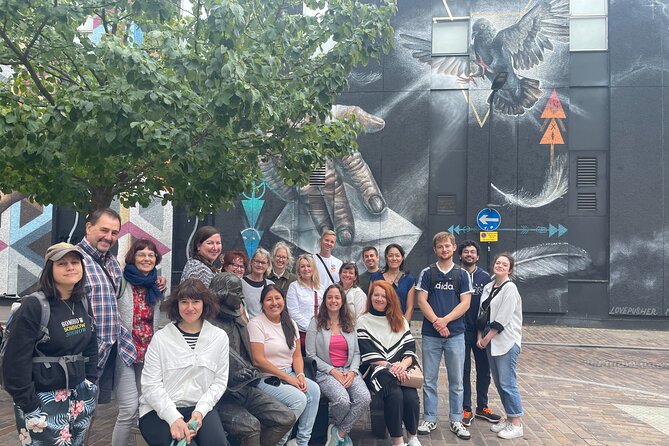
Your first real stop is Brick Lane, one of the area’s most famous streets. It’s known for vintage shopping, markets, bars, and curry houses—so it has that “London in a single lane” feel. This tour gives you a reason to care about it beyond the shopping.
Even if you’re not hunting for the exact piece of street art you saw online, Brick Lane helps you set the baseline. Street art doesn’t hang in a vacuum. It shows up where people live, work, and gather—and Brick Lane has long been a magnet for crowds, tastes, and subcultures. On this walk, you’re not just looking at walls. You’re learning how Shoreditch got its reputation and how that reputation ties into the hipster movement story.
That “hipster end of London” framing can be fun, but it’s not meant to be a shallow stereotype. The guide’s angle is that the area went from rougher conditions to something cooler over time—and the street art became one of the visual signals of that shift. For me, that’s the difference between seeing street art as decoration and seeing it as local commentary.
Practical detail: the Brick Lane portion is set for about 10 minutes and the admission is free. It’s short on purpose, so you can stay focused on the art and the story rather than getting lost in the lane’s endless distractions.
The Market Stop: Spitalfields Area Energy and Street-Culture Foot Traffic
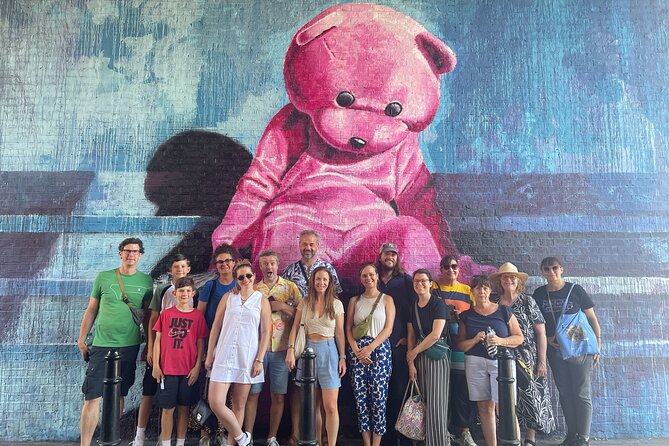
After Brick Lane, you head toward the East London market area. The tour description frames it as one of the most famous markets in East London—packed with clothes, food, and basically anything you’d want to browse.
This is a smart inclusion even if you don’t plan to buy anything. Markets are where you watch culture happen in real time. You’ll see the kinds of people street art tends to attract: fashion-minded locals, tourists who want “real London,” and anyone curious about street style. That matters because street art often responds to its audience. When the crowd changes, the walls change, too.
Also, you’ll be in the right zone geographically. The tour route is described as running between Brick Lane and Spitalfields Market, with the ending point nearby. That means you’re not spending your tour time crisscrossing London. You’ll finish close to places you can keep exploring if you want.
One more practical note: the market stop is part of the guided flow, not a free-for-all museum detour. You’ll get enough time to take in the vibe and connect it back to the street art themes your guide is explaining.
King John Court: The Largest Mural in London (and Why That Matters)
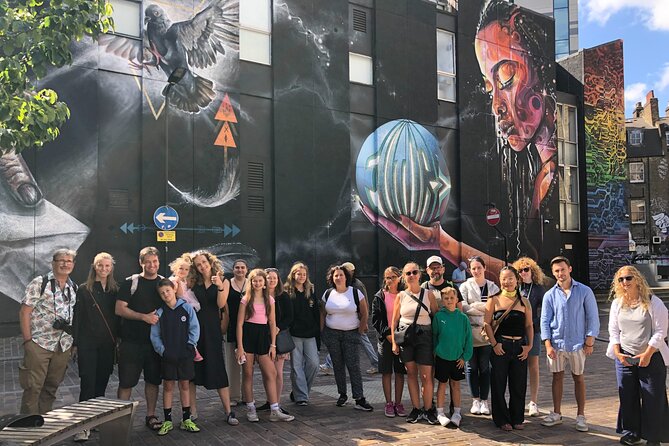
Then comes King John Court, and yes—the tour calls out that it’s home to the largest mural in London. If you like street art, this is the moment you’ll want to slow down and actually look.
Big murals can be impressive in a purely visual way, but the real value here is how the guide ties the mural to the broader street art mix you’ve already started learning about. Instead of treating it as a one-off photo spot, you’re being taught what makes murals succeed: visibility, message, community relevance, and the blend of styles that can live side by side.
King John Court is also a classic example of why Shoreditch works as an art district. It’s not just “artists painting.” It’s a network of spaces—courtyards, walls, retail edges, and pedestrian routes—where art gets seen day after day. That everyday visibility is part of what keeps street art alive, not just a seasonal event.
Timing is simple: this stop is about 10 minutes and listed as free. It’s enough to take it in with your guide and then keep moving while the rest of your London day is still intact.
Commercial vs Protest Pieces: How Your Guide Helps You Read the Walls
The tour’s big promise is variety: you’ll see street art that ranges from commercial work to protest pieces. That sounds broad, but on the ground it’s exactly the point.
Commercial street art often uses the same visual tools as graffiti—color, typography, scale—but it’s tied to branding and public-facing messaging. Protest pieces, on the other hand, tend to carry urgency. They’re about pressure: on politics, on inequality, on social debate. When you’re walking in one district, you can spot how the tone shifts from wall to wall—and that helps you understand the street art scene as a living conversation.
The guide’s job here is to give you a framework so you don’t have to guess. You’ll learn how Shoreditch changed through the lens of the hipster movement and, more importantly, how that change interacted with street art’s role. Is it entertainment? Is it commentary? Is it both? The tour pushes you toward that answer by showing you multiple types of work and connecting them to what’s happening around them.
One practical benefit: because it’s private, you can ask follow-up questions without feeling rushed. If you want to know why a particular piece uses certain colors or why protest art often appears in specific places, you can keep the thread going.
In one of the standout pieces of feedback, a guide named Hannah is praised for knowing the area well and helping the group spot incredible smaller details and off-the-path culture. Even if you don’t get the same guide, the point is that the tour isn’t run by someone reading a script. It’s built for local insight.





Private Group Booking: Value, Pacing, and Who This Fits Best
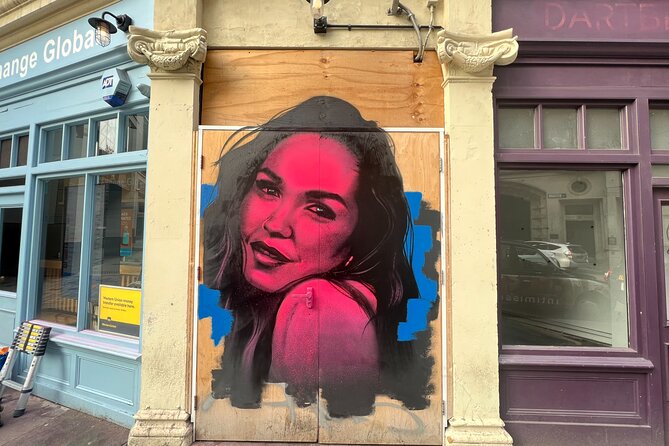
This is priced at $347.23 per group and supports up to 15 people. That is the key to value on this tour. Think of it as paying for a local guide plus a route plan for your exact group, not per seat.
If you book as a full group near the top end, the per-person cost drops a lot. If you book as two or four people, the cost is still fair if you care more about personalization and learning than about spending as little as possible. What you’re buying is time with a guide who can explain what you’re seeing while you walk to specific stops.
The duration helps too: about two hours. For families and teens, it can be long enough to feel like a real activity but short enough to stay energetic. For adults, it’s a good “street culture break” that isn’t a huge commitment.
Who it suits best:
- You want street art with context, not just photos.
- You’re traveling with teens or friends into streetwear, street culture, or design-minded visuals.
- You’d rather ask questions than follow a strict script.
- Your group wants a smaller, more flexible experience than a large join-in tour.
Where You Meet and How the Route Finishes Near Food and Shops
Start is at Shoreditch High Street, at Braithwaite St, London E1 6GJ. The tour ends at Tibet Kitchen London, 7 Dray Walk, London E1 6QR.
That end point isn’t random. It’s in the same general orbit as the Brick Lane / Spitalfields area, so you can keep going without needing to take transport right away. The route is described as being in between Brick Lane and Spitalfields Market, with options for additional self-exploration nearby.
The timing window is also practical: the tour operates Monday through Sunday, 10:00 AM to 3:00 PM, across the listed service dates. Average booking lead time is about 27 days, which is a hint to grab your time slot early if your trip dates are fixed.
One more detail that helps on travel days: the tour uses a mobile ticket and is listed as near public transportation. So if your London day is already scheduled with trains, buses, or walking between neighborhoods, this one should slot in without drama.
Cost and What’s Included: Avoid Surprises on Tour Day
Here’s what’s included: a tour guide.
Not included: private transportation. So plan to walk the route and use public transit to get to the meeting point.
Also, some stops are specifically marked as free admission (including Brick Lane and the King John Court mural stop). That means you’re mainly paying for the guide and the curated route, not entry fees.
If you’re budget planning, do the math per person based on your group size. The best deal happens when you can fill out the group capacity. If you can’t, consider whether you still value the private, Q-and-A style format more than a cheaper shared tour.
Should You Book This Shoreditch Street Art and Graffiti Tour?
Book it if you want a focused, two-hour way to understand Shoreditch street art as culture, not just decoration. You’ll get a guided look at major stops like Brick Lane and King John Court, plus the broader theme of how the district changed—especially through the hipster-era transformation—and how that shows up in both commercial pieces and protest work.
Skip it if you’re expecting a long, expansive “see every mural in Shoreditch” day. The route is compact by design. This tour is built to help you read the walls and connect the dots fast. If you want a slow, all-day crawl with lots of extra stops, you might need additional self-exploration time after you finish near Tibet Kitchen.
Overall, with a 5/5 rating and 108 reviews with 100% recommendation, this is the kind of experience that works when your goal is learning plus a good walk, delivered in a private, question-friendly format.
FAQ
Where does the tour start?
The tour starts at Shoreditch High Street, Braithwaite St, London E1 6GJ, UK.
Where does the tour end?
The tour ends at Tibet Kitchen London, 7 Dray Walk, London E1 6QR, UK.
How long is the Shoreditch street art and graffiti tour?
The tour lasts about 2 hours.
What does the price include?
The price includes the tour guide.
How much does the tour cost and how many people can book?
It costs $347.23 per group and is for up to 15 people.
What language is the tour offered in?
The tour is offered in English.
Are there admissions or tickets needed for stops like Brick Lane and King John Court?
Brick Lane and King John Court are listed with free admission.
Is transportation included?
No. Private transportation is not included.
Can I cancel for a full refund?
Yes. Free cancellation is available. You can cancel up to 24 hours in advance for a full refund.
Is the tour private?
Yes. It’s a private tour/activity, meaning only your group will participate. Service animals are allowed, and it’s marked as suitable for most travelers.