REVIEW · LONDON
East End London Instagrammable Street Art and Graffiti Tour
Book on Viator →Run by Tours by Foot London · Bookable on Viator
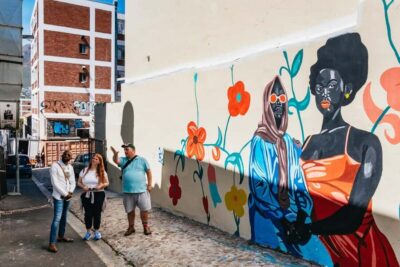
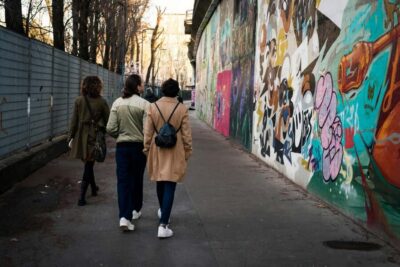
Street art here feels like a scavenger hunt. On this East End London walk, you follow named artists and photo angles through neighborhoods most visitors rush past.
I love the way the guide connects what you’re seeing to the real stories on the walls, from graffiti wars to community meaning like Stik’s work on Princelet Street. I also like that it’s not just sightseeing: you get an opportunity to make your own street art and take the creativity home.
One consideration: the route includes narrow yards and back-street turns, so wear shoes you trust and expect some standing and looking up at walls.
In This Review
- Key things you’ll notice on the walk
- East End Street Art in 2 Hours: What You Really Get
- Heneage Street: Phlegm’s Stilts and FanakaPan’s Silver Balloons
- Brick Lane Photo Angles for Dan Kitchener and Perspicere
- The Seven Stars Yard: Stickers, Narrow Space, and Leaving Your Mark
- Princelet Street and Stik: A Community Message That Keeps Getting Repainted
- Hanbury Street: The ROA Bird and Martin Ron’s Handstand
- Dray Walk and Broccoli Lane: Adrian Boswell’s Wall-Borne Tradition
- Allen’s Gardens Graffiti Park: When Letters Become Color
- Buxton Street and Ebor Street: Collabs, Advert Mural Style, and Neon Portraits
- Ben Eine’s Bold Letters on Ebor Street
- Rivington Street: Banksy Under Glass and Otto Schade’s Ribbon Soldier
- Thierry Noir Heads and the Art’otel London Hoxton Banksy Reinstallation
- Hewett Street Bench Time: Shakespeare at the Curtain Theatre and Romeo and Juliet Graffiti
- New Inn Broadway Wallpaper and the Final Graffiti Wars Story by Shoreditch High Street
- Who Should Book This Tour (and Who Might Not Love It)
- Should You Book This East End Street Art Tour?
- FAQ
- How long is the East End London street art and graffiti tour?
- Where does the tour start and end?
- What time does the tour begin?
- How much does it cost?
- Is there a group limit?
- What will I do besides looking at street art?
Key things you’ll notice on the walk
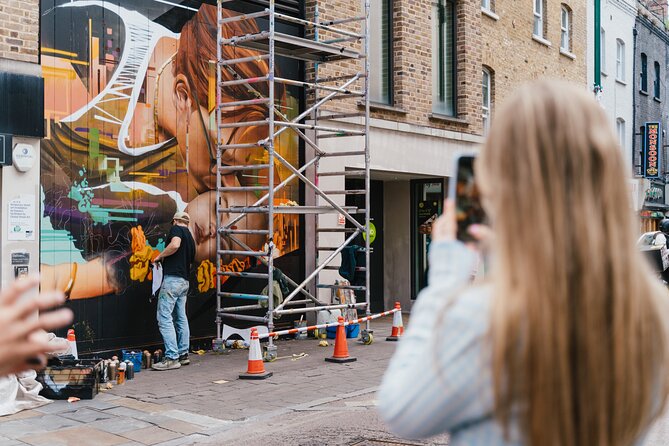
- Banksy plus other specific, recognizable artists (including pieces shown under glass)
- Built-in vantage points where the art changes when you move a few steps
- Sticker culture and letter-based graffiti where the fun is reading what you can
- Community context in the middle of the street-corner chaos, especially on Princelet Street
- Photo stops with big “find it” moments, like the ROA bird and Martin Ron’s handstand figure
- A small group size (max 20) that helps you get time to look closely and ask questions
East End Street Art in 2 Hours: What You Really Get
This is a focused 2-hour street art walk in London’s East End, priced at $49 per person. That price may feel steep until you remember two things: you’re paying for a local guide who knows where to take you, and the route is packed with major works that you’d likely miss if you just wander.
The tour starts at 80 Whitechapel High St, London E1 7QX (11:00 am) and ends near Liverpool Street Station. You’re on your feet a lot, and the art changes as you move—so the pacing matters. You also get a mobile ticket, which is handy on the go.
Best value here isn’t a long lecture. It’s short stops with enough time to look up, step sideways for angles, and actually enjoy how the work fits the buildings around it.
You can also read our reviews of more tours and experiences in London.

Heneage Street: Phlegm’s Stilts and FanakaPan’s Silver Balloons
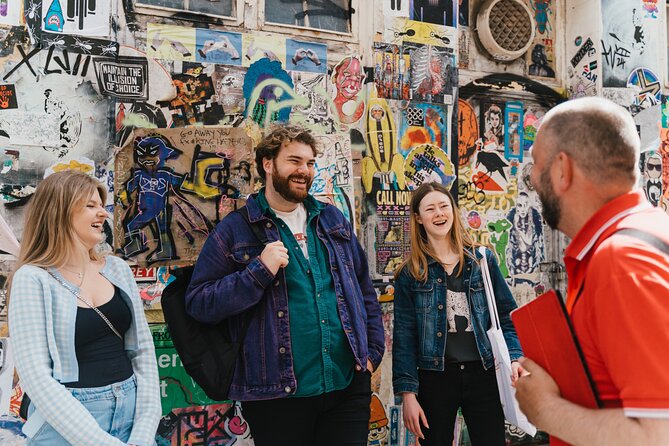
The walk opens in a place that feels deliberately tucked away: small backyards where two huge works take over an entire wall. The first big stop is with Phlegm, whose long, thin creatures walk on stilts above a layer of other tags. The effect is scale plus contrast: one style dominates the skyline while the rest of the wall hums underneath.
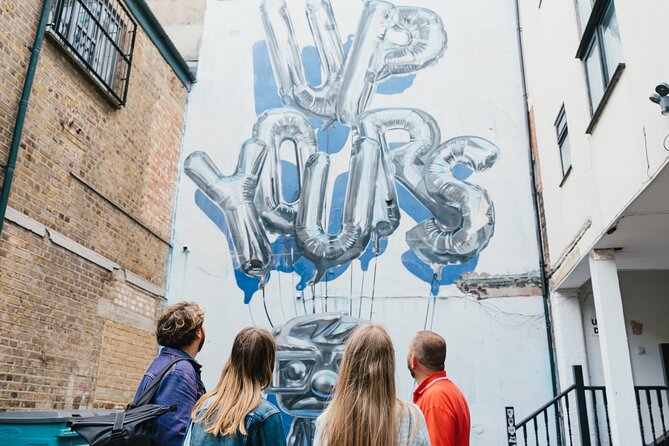
Across the street, you’ll find FanakaPan, known for silver helium balloons. Here, the guide’s emphasis is on how the classic imagery gets twisted—like the artist is playing with expectations while keeping the piece recognizable. This is a stop where you’ll want to look at the details near the edges, not just the main shape.
If you’re the type who likes street art because it rewards slow looking, this is a strong opener.
Brick Lane Photo Angles for Dan Kitchener and Perspicere
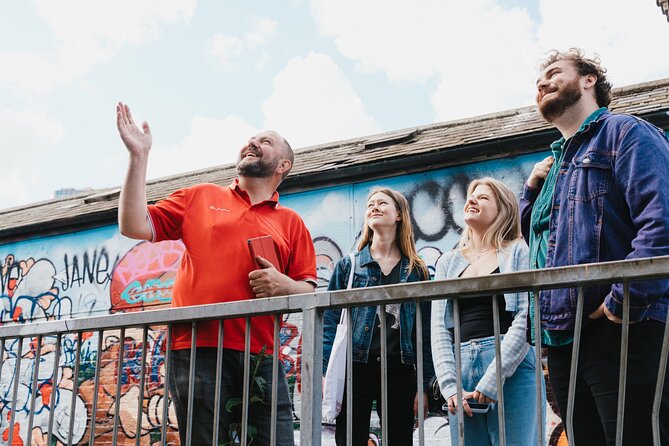
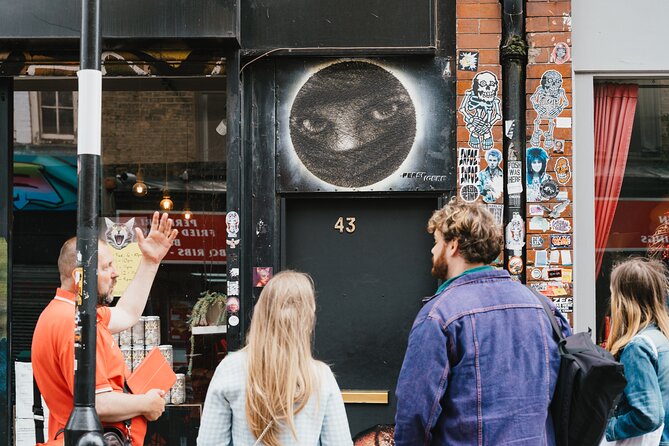
Next up is Brick Lane, where the tour leans hard into a simple idea: sometimes you need distance and closeness. You start from farther away to appreciate works by Dan Kitchener and Perspicere. Their pieces are on doors, and the point is that the format is smaller than the massive murals elsewhere—so the art pulls you in when you step forward.
This stop is built for photographers. You’ll get a feel for how the same wall can look different depending on your position, especially when the art is tied to architectural features like doors and corners.
Practical tip: don’t rush past doors even if they look ordinary at street level. On this route, those “ordinary” surfaces are often where the best details live.
The Seven Stars Yard: Stickers, Narrow Space, and Leaving Your Mark
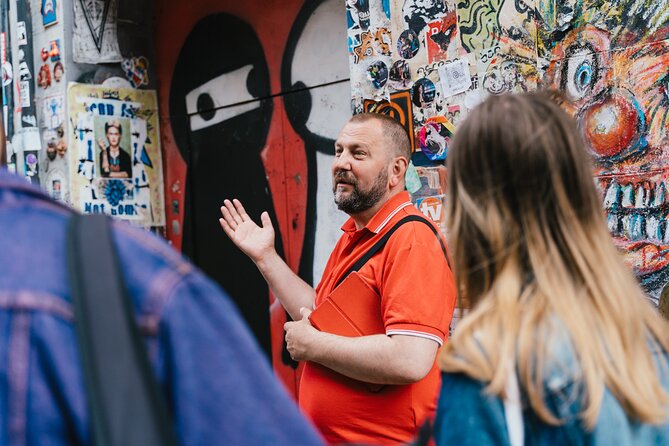
Turning into a yard that feels a little rough around the edges can sound intimidating, but the guide keeps it fun and purposeful. Stickers are the star here. Instead of big spray pieces, the art is small, layered, and everywhere—like a collage that only makes sense up close.
You’re encouraged to treat it like a game: become the eighth star and leave a little art of your own. That fits the tour’s bigger theme: graffiti isn’t only about watching from the sidewalk; it’s also about participation.
The drawback is also the yard: if tight spaces stress you out, take your time and keep close to the group while you look.
Princelet Street and Stik: A Community Message That Keeps Getting Repainted
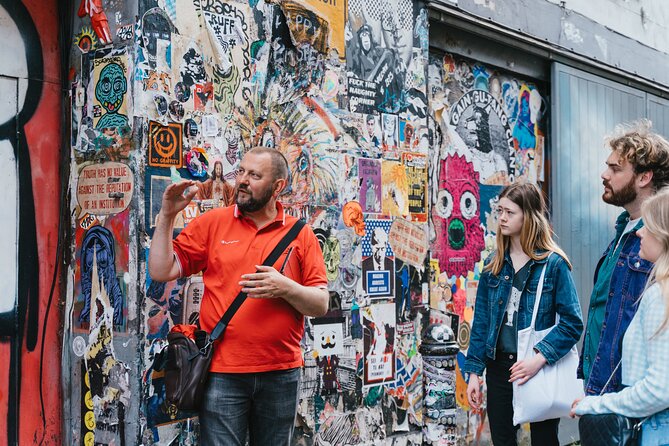
On Princelet Street, the art has a different tone. A piece by Stik is dedicated to the Muslim community and connects to Shoreditch’s longer story of refugees and immigrants making the area home. The guide also explains the reality of street art life: it can get defaced, then repainted again.
What’s striking is the resilience. Even with interruptions, the artwork stays visible in some form. It’s not just a visual style; it’s a message that the community keeps restoring.
This stop adds value if you want more than aesthetics. You’ll come away thinking about how walls can act like public memory.




Hanbury Street: The ROA Bird and Martin Ron’s Handstand
Hanbury Street starts with a big cue: you’ll spot a huge bird on a side street, then you’re invited closer. The first thing you notice is variety. There are stickers, black and white slogans by Wrdsmth, and smaller colorful graffiti that can change fairly often.
Then come the two longtime classics: the ROA bird and Martin Ron’s man upside down. They’ve been around for about 20 years, which in graffiti time feels ancient. The tour’s focus here is technique and integration. The upside-down figure uses the building’s existing features, so it doesn’t look pasted on. It looks engineered into the wall.
If you like art that rewards attention to craftsmanship, this is one of the most satisfying stops on the route.
Dray Walk and Broccoli Lane: Adrian Boswell’s Wall-Borne Tradition
Somewhere around Brick Lane, you start noticing broccoli. Most of the time, you’ll see broccoli art in different colors, but here it’s attached to a wall as a long-running street tradition. The guide talks about how these broccoli pieces have been popping up for years, and how the street name even shifted to Broccoli Lane.
The story ties back to Adrian Boswell, who started the trend. He even has a gallery and sells broccoli in frames—an amusing twist that shows how street iconography can become a collectible theme without losing its humor.
This stop is a good reminder that street art isn’t always grim or political. Sometimes it’s just local wit made visible.
Allen’s Gardens Graffiti Park: When Letters Become Color
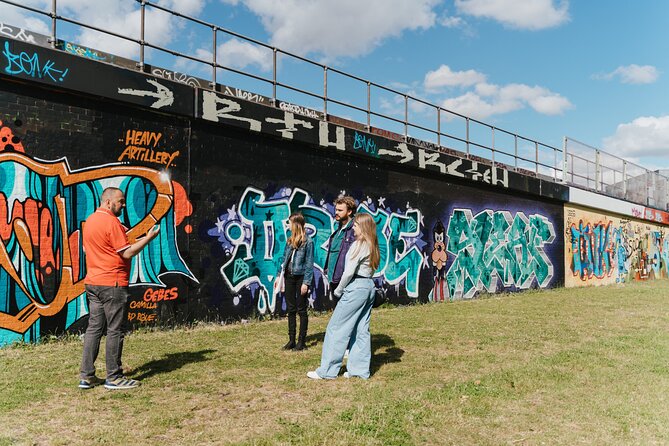
Allen’s Gardens takes you away from the main street and into a graffiti park surrounded by walls full of work. A key detail here: some pieces change very often, even every few days. So the advice is simple—take photos while you’re there, because you might be seeing a version that won’t last.
Most of what you’ll see is letter-based graffiti. The guide points out the challenge: it’s almost impossible to read in the usual sense, because the writers are working to create styles that resist legibility. The satisfaction comes from the colors, the shapes, and the pure talent it takes to make words unreadable while still looking intentional.
This stop is ideal if you love typography, spray patterns, and visual rhythm more than literal text.
Buxton Street and Ebor Street: Collabs, Advert Mural Style, and Neon Portraits
After the park, the tour shifts to walls that show collaboration. On Buxton Street, look up for a number 5 and you’ll learn about the artist responsible for that section. The idea is that some walls are built from multiple artists working together, so the composition feels like a shared project rather than one author’s statement.
Then you move to Ebor Street, where the mood changes from older, rougher textures to something more modern. You’ll see large-format adverts painted by graffiti artists, plus smaller pieces like pink portraits by Neon. The portraits can feel like a mist of spray paint that drops exactly where the face needs to be—soft edges, sharp character.
This is a strong part of the tour if you want street art that blurs into commercial aesthetics without losing personality.
Ben Eine’s Bold Letters on Ebor Street
Ebor Street also gives you contrast with a different kind of street identity: Ben Eine. His style uses big, bold letters that are easy to read from far away. The letters share the same basic approach, but different fonts show up across works—sometimes more old-fashioned curves, sometimes sharp and modern, sometimes blocky and simple.
This stop is valuable because it shows the spectrum of graffiti styles: some pieces fight to be unreadable, and some pieces are built to be read instantly.
If you’re trying to understand why graffiti culture has so many forms, you’ll feel the range clearly right here.
Rivington Street: Banksy Under Glass and Otto Schade’s Ribbon Soldier
No East End street art walk feels complete without Banksy. On Rivington Street, the guide takes you to a secret place to see some of his older works alongside other standout pieces.
You’ll recognize the Banksy pieces by how they’re presented: they’re covered in a glass panel. The tour treats that as a real discussion point—whether the glass matters, whether it changes the art-market question, and whether your own opinion shifts depending on how something is displayed.
Then you’ll move to another style entirely with Otto Schade. You’ll spot half of a soldier, then later see how to admire the full effect by standing in the right corner. The guide also points out how Otto Schade’s other works often look like they’re made out of ribbons. They might seem empty inside, but they’re described as full of energy, helped by a stencil technique taken to a new level.
This part is excellent for anyone who likes the debate side of street art—how presentation, authenticity, and context shape what you feel.
Thierry Noir Heads and the Art’otel London Hoxton Banksy Reinstallation
Still on Rivington, the route includes bright characters by French artist Thierry Noir. His colorful heads have been around for over 40 years. The guide also connects him to his best-known work on the Berlin Wall in the 1980s, and you’ll see how that signature style translated into London streets.
After that, you’ll reach art’otel London Hoxton, Powered by Radisson Hotels. This stop is a special kind of street art irony: an older Banksy wall piece was taken away from its original location and later reinstated so people can admire it.
You can see it from the street. No hotel room required. It’s a fascinating mix of street attitude meeting a polished venue, and it gives you something to think about: when street art gets treated like an exhibit, does it change?
Hewett Street Bench Time: Shakespeare at the Curtain Theatre and Romeo and Juliet Graffiti
The tour takes a sharp left from modern art into something you can almost miss if you’re not watching. On Hewett Street, you’ll find William Shakespeare quietly sitting on a bench marking the grounds of the Curtain Theatre.
And then comes the graffiti connection: sitting next to Shakespeare is an invitation to notice a graffiti of Romeo and Juliet. The guide ties it to the place where the story was first heard in that setting.
It’s a neat pivot from stencil and spray to literature-in-the-streets. Even if Shakespeare is not your usual subject, it works because it’s tied to the physical location you’re standing in.
New Inn Broadway Wallpaper and the Final Graffiti Wars Story by Shoreditch High Street
From the Shakespeare moment, you move back to a big building covered by many artists on New Inn Broadway. The guide describes it as graffiti wallpaper: different color palettes, different styles, different inspirations, and even a small policeman tucked into the overall composition.
Then the walk finishes on Shoreditch High Street, shifting you toward the glass and metal skyscrapers of the City. It’s a deliberate transition: you go from older street-corner texture to a more polished skyline.
Before the end, the guide tells one last story about the Graffiti Wars—framed as serious-sounding, but with real creative output coming out of it. You’ll leave with a sense that this art isn’t only decoration. It’s also conflict, identity, and community responses turned into visuals.
Who Should Book This Tour (and Who Might Not Love It)
I think this tour fits best if you’re:
- into street art styles and want to see specific named artists, not just generic murals
- the type who loves photo stops and learning which angles matter
- curious about the human stories behind the walls, like community resilience on Princelet Street
You might not love it as much if:
- you dislike tight yards and standing around while looking up
- you want long museum-style explanations rather than fast, pointed street-level context
On the practical side, the tour is small, max 20. Most people can participate, and service animals are allowed.
Should You Book This East End Street Art Tour?
If you want a 2-hour hit of East End street art with real names, real locations, and plenty of photo moments, this one is an easy recommendation. The value sits in the mix: major artists like Banksy, plus variety across stickers, letter graffiti, collaborations, and community-driven pieces.
Book it if you’re traveling with someone who likes street culture but you’re not sure where to start. It gives you structure without feeling forced, and it ends at a convenient spot near Liverpool Street Station.
If you’re short on time, this is one of the better ways to see a lot of art without turning the day into pure wandering.
FAQ
How long is the East End London street art and graffiti tour?
The tour lasts about 2 hours.
Where does the tour start and end?
It starts at 80 Whitechapel High St, London E1 7QX, and it ends near Liverpool Street Station (the exact end point can change depending on the art).
What time does the tour begin?
The start time is 11:00 am.
How much does it cost?
The price is $49.00 per person.
Is there a group limit?
Yes. The tour has a maximum of 20 travelers.
What will I do besides looking at street art?
You’ll have an opportunity to make your own street art during the experience, and you’ll also have mobile ticket access for the tour.