REVIEW · LISBON
Lisbon Street Art – Private Guided Tour in a Electric Tuk Tuk
Book on Viator →Run by The Portuguese Buddy - Tuk Tuk & Van Tours Lisbon · Bookable on Viator
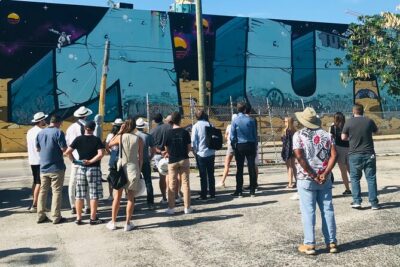
Lisbon street art hits different. This private electric tuk-tuk tour strings together key murals in and around Graça, with clear commentary that helps you read what you’re seeing. I like that you get artist context instead of just snapshots, and I love the electric tuk-tuk format for Lisbon’s hills and tight streets.
One thing to consider: you’ll be hopping between multiple outdoor spots, so rain and wind can make the stops feel faster than you’d like. Still, the route is built for short stays at each wall, with a couple of viewpoints to slow down and look.
In This Review
- Key things I think you’ll remember
- Lisbon’s street art, made practical by tuk-tuk
- Price and what you’re actually paying for
- Where the tour starts in Chiado—and why that helps
- The route: Miradouro da Graça to Portas do Sol
- Stop 1: Miradouro da Graça and Sophia de Mello Breyner Andresen
- Stop 2: Shepard Fairey x Vhils and the iconic Peace Guard mural
- Stop 3: Graça & São Vicente blocks—Oze Arv and Andre Saraiva
- Stop 4: R. São Tomé 76—Bordalo II’s panda and Vhils’ Amalia
- Stop 5: Miradouro Das Portas do Sol and a painted history arch
- The artists you’ll hear about (and why they matter)
- What a private guide does for the experience
- Photography and timing: how to get the best mural shots
- Should you book? My honest take
- FAQ
- How long is the Lisbon street art private tour in an electric tuk-tuk?
- Is hotel pickup available?
- What language is the tour offered in?
- Is this a private tour?
- What are the main stops you’ll visit?
- Are there any rules for children?
Key things I think you’ll remember
- Electric tuk-tuk transport that saves you from grinding uphill over cobblestones
- Stop-by-stop artist stories that connect murals to politics, place, and Portuguese culture
- Icon murals within an efficient loop around Graça, São Vicente, and nearby streets
- A built-in photo strategy: you pause long enough to frame the big walls, then move on
- Guides with local street-art depth, including names like David, Andre, Susana, and Tiago
- A viewpoint finish at Miradouro Das Portas do Sol for the city-wide payoff
Lisbon’s street art, made practical by tuk-tuk
Lisbon is one of Europe’s great graffiti and mural cities, but the “best stuff” is not always where you’d naturally walk. This tour fixes that. You’re in an electric tuk-tuk, so you can cover ground quickly without battering your legs on uneven streets. The route focuses on neighborhoods where street art is part of the daily visual culture, not a one-off attraction.
What makes it feel worth it is the mix of street art with place. You’re not just seeing names like Vhils or Bordalo II on a wall—you’re also hearing why these works exist there, and what they say about the city and its politics. That turns the tour from a photo hunt into something more like a guided conversation with the streets.
And because it’s private, you’re not stuck with a slow group pace or forced to “wait for everybody.” You can shape the stop order around what you care about—more murals, more viewpoints, more explanation. If you’re the type who likes to ask questions, this format plays nicely.
You can also read our reviews of more tours and experiences in Lisbon.


Price and what you’re actually paying for
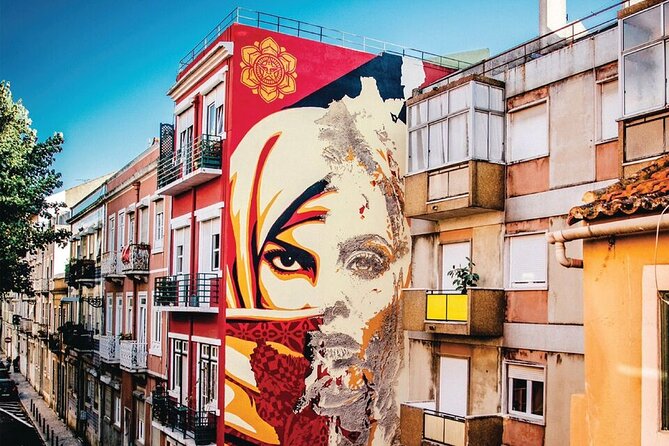
At $101.97 per person for about 2 hours, you’re paying for three things: time, transport, and a guide who can connect dots between artworks and local context.
In plain terms, you’re not paying for “a driver.” You’re paying for a guide experience that changes how you look at each mural. That matters in Lisbon because street art can be subtle, symbolic, or loaded with references. A good narration cuts through the noise fast.
You also get extras that can improve value depending on your group:
- Pickup is offered (you can be picked up at your hotel)
- Group discounts may apply if you’re traveling with more people
- A mobile ticket is provided
- It’s run in English
Two practical points: since it’s private, it’s easiest to justify if you’re willing to spend time listening, not just scrolling on your phone. And because it’s outdoors, you’ll want a light rain layer if the forecast looks iffy.
Where the tour starts in Chiado—and why that helps
You begin in Chiado, with the meeting point at Rua Garret area (Chiado, 1200-445 Lisboa). The tour ends back at the meeting point, so you’re not chasing logistics across town.
If pickup is available for you, it’s a big help. Chiado is a good hub because you can reach it easily with public transport, and it keeps the start simple even if you’re coming from another neighborhood.
From there, the tuk-tuk format lets you jump into the hills around Graça and São Vicente without spending the whole time on steep walking. That’s a real difference in Lisbon. Cobblestones + elevation can turn a great day into a sore-feet day. This tour keeps the focus on art and views.
The route: Miradouro da Graça to Portas do Sol
This tour is built around short, efficient stops—think 10 to 30 minutes per mural cluster—so you see multiple works without burning your day. Most stops are free to access, and you’re moving in a way that feels like “art + atmosphere,” not “checklist tourism.”
Here’s what you can expect, in the order you’ll likely experience it:
Stop 1: Miradouro da Graça and Sophia de Mello Breyner Andresen
You start at Miradouro da Graça with a portrait mural dedicated to poet Sophia de Mello Breyner Andresen (1919–2004). The work is by Portuguese street artist Daniel Eime and links to the Graça area, where she had strong ties.
What I like about this opening is the tone it sets. Instead of starting with shock value graffiti, you begin with a portrait that treats the neighborhood like an actual cultural stage. It also pairs street art with a viewpoint setting, so you see the city while you learn the name behind the mural.
You’ll spend about 10 minutes here, and admission is free.
Practical tip: stand back for the full face-and-background effect before you zoom in. From a miradouro, angles matter.





Stop 2: Shepard Fairey x Vhils and the iconic Peace Guard mural
Then you hit one of the tour’s headline pieces: Shepard Fairey (also known as Obey Giant) working alongside Vhils.
The mural you’re aiming for is described as the iconic Peace Guard. The tour also references Fairey’s other related themes you may see along the way—Carnation Revolution, Fuel-adapt, and Universal person hood—so even if you’re new to his style, you get a clean entry point.
You’ll pause for around 30 minutes. That’s long enough to actually do what the best mural viewing needs: step back, rotate your position, and find the view that makes the whole composition read correctly. One guide tip you’ll hear is to turn around briefly to get a better look at the mural from the right angle.
This stop is a good example of why the tuk-tuk matters. The art is close enough to get to, but the viewing angles still aren’t always obvious if you’re trying to figure it out on foot.
Stop 3: Graça & São Vicente blocks—Oze Arv and Andre Saraiva
Next you move through Graça & São Vicente with additional wall stops, including:
- Oze Arv — alegria de um caos constante
- Andre Saraiva — Mural azuleijo
This is where the tour broadens your sense of what “street art” can look like. It’s not only portraits and large icon murals. You also see the playful, graphic side, including work that connects with Portuguese tile tradition through the azulejo reference.
Each of these brief stops is around 10 minutes, with free access. The pace is intentional: you’ll get enough time to notice details, then you’ll move before you get mural fatigue.
Stop 4: R. São Tomé 76—Bordalo II’s panda and Vhils’ Amalia
At R. São Tomé 76, the tour zeroes in on two strong pieces:
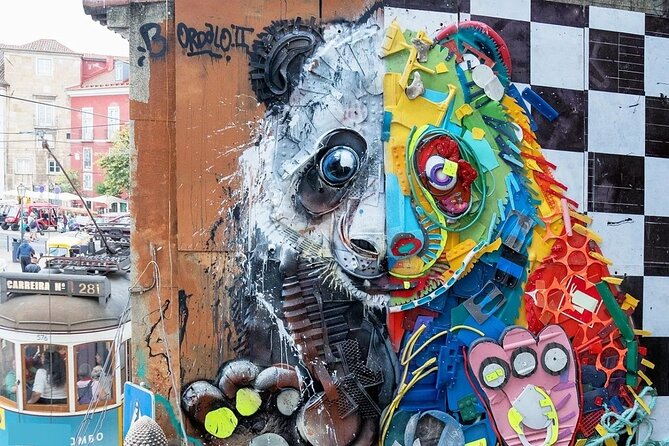
1) The panda by Bordalo II
This is made in the context of an exhibition called Evilution, explained as a neologism tied to ongoing commitment to the environment and sustainability.
2) Vhils – Amalia
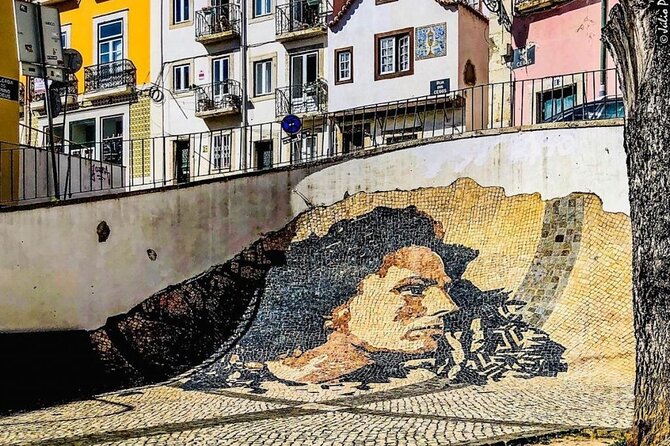
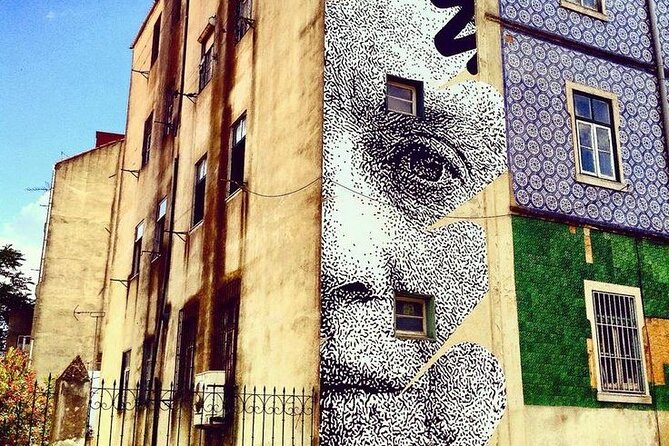
A tribute to Amália Rodrigues (1920–1999), created using Portuguese traditional-style pavement.
This stop is worth slowing down for, because it connects street art to real Portuguese identity: sustainability themes on one side, and fado legend on the other. You’re not just seeing street art as decoration; you’re seeing it as commentary and cultural memory.
You’ll spend about 15 minutes here.
If you’re a person who likes to spot materials and technique, this is your moment. Pavement-based art often changes how you look at a street corner once you understand how it’s made.
Stop 5: Miradouro Das Portas do Sol and a painted history arch
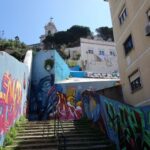
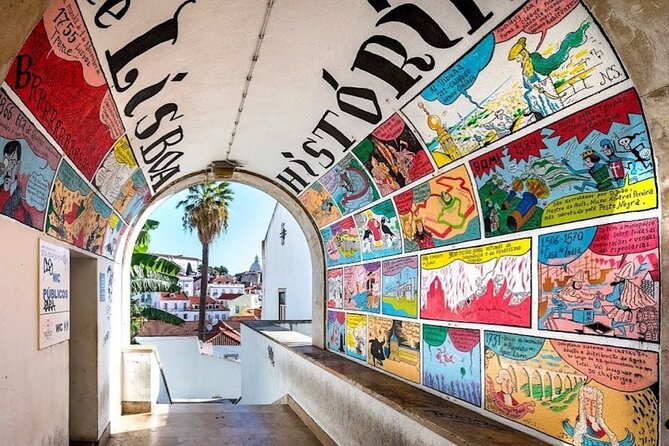
You finish at Miradouro Das Portas do Sol. Right below it is a small archway where the history of Lisboa is painted.
You’ll get around 10 minutes at this stop, also with free admission. It’s not just a last photo stop—it’s the payoff. You’ve spent the tour reading the city through murals. Now you get the city as a whole view.
Practical tip: if wind is strong, keep your phone protected. Miradouro spots can be breezy, especially later in the day.
The artists you’ll hear about (and why they matter)
Lisbon street art is powerful because so many artists build connections between the wall and the world. This tour highlights names that are easy to recognize later, but also easy to understand once you hear the story.
You’ll especially see references and commentary involving:
- Vhils: seen across multiple pieces, including collaboration themes and tributes like Amália
- Bordalo II: the panda as sustainability-minded public art
- Shepard Fairey (Obey Giant): used here as an anchor point for an “icon mural” experience
- Andre Saraiva and Oze Arv: works that add styles beyond the big headline murals
What I appreciate is that the guide work tends to connect art to politics and cultural influence—and not in an academic way. It’s more like “here’s what this symbol means in this place,” which helps you stop guessing.
Also, the named guides from past tours—David, Andre, Susana, and Tiago—are consistently described as friendly and willing to tailor things. That matters because street art comprehension depends on how the explanation lands for you.
What a private guide does for the experience
A private tour changes your pacing. You don’t have to accept a generic script or sit through a rigid timetable.
In the feedback you provided, guides like Andre and David are described as taking people to more areas than a person could see on foot, while still keeping the stops focused. Others like Susana and Tiago are noted for adjusting to interests and adding both street-art and city history.
So when you book, the best move is simple: show your guide what kind of viewer you are.
- If you love politics in art, say so early.
- If you care about Portuguese culture and fado references, lean that way.
- If your priority is photos, ask for a bit more time at the big murals.
You’ll still get the main structure of the route, but you’ll get your version of it.
Photography and timing: how to get the best mural shots
This is a photo-friendly tour, but only if you use the time well. Since each stop is relatively short, don’t spend your whole time fiddling with camera settings.
Here’s how to get more keepers:
- At major murals (especially the icon piece), step back first. Then move in for details after you see the full shape.
- For viewpoint stops like Portas do Sol, time your photos for when you can actually see the city rather than only the sky.
- Wear shoes you can stand in comfortably. Even with a tuk-tuk, you’ll be walking a bit at each art location.
If rain hits, you’ll still likely have a good time, but you may want to keep your pace brisk and accept that some fine details are harder to see when surfaces are wet.
Should you book? My honest take
Book this tour if you want street art with context and you like moving efficiently through Lisbon’s neighborhoods. It’s a strong choice for first-timers who don’t know where the big murals are, and it’s also a smart way for repeat visitors to see street art from angles and spots they may have missed.
Skip it (or consider a different style) if you prefer slow walking tours where you linger for long stretches at each wall. The whole point here is short, well-chosen stops, so if your ideal day is 90 minutes in one square, this route might feel a bit quick.
FAQ
How long is the Lisbon street art private tour in an electric tuk-tuk?
It runs for about 2 hours.
Is hotel pickup available?
Yes. Pickup is offered, and you can be picked up at your hotel.
What language is the tour offered in?
The tour is offered in English.
Is this a private tour?
Yes. It’s a private tour/activity, so only your group participates.
What are the main stops you’ll visit?
You’ll visit Miradouro da Graça, areas around Graça and São Vicente, R. São Tomé 76, and Miradouro Das Portas do Sol.
Are there any rules for children?
Children must be accompanied by an adult.
If you want, tell me your travel dates and whether you’re traveling solo or with a group, and I’ll suggest the best time of day to do this route based on what’s listed for operating hours.