REVIEW · LISBON
Lisbon Street Art Tour
Book on Viator →Run by Lisbon Destination Tours · Bookable on Viator
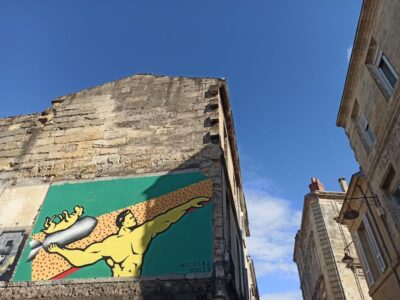
Street art in Lisbon hits different when locals show you where. This 3-hour Lisbon Street Art Tour sends you through neighborhoods most visitors skip, with Crono Project work spread across the route. The big payoff is time savings and focus: no train stress, no wandering, just guided stops built for seeing murals you would miss on your own. One thing to consider: it covers hilly streets and viewpoints, so comfortable walking shoes matter.
I also like that you get the street-art version of Lisbon’s bigger story—history and politics come up alongside the paint on the walls. Guides such as Fernando, Manuel, and Rita are known for turning the art into something you can actually understand, not just photograph.
In This Review
- Key highlights before you go
- What this tour delivers beyond the murals
- Price and value: why $41.82 makes sense for most people
- How the 3-hour route stays efficient (and still feels human)
- Stop 1: Lumiar and the 2019 Lisbon Street Art Festival wall
- Stop 2: Panorâmico de Monsanto, Lisbon’s highest viewpoint
- Stop 3: Alvalade’s Blue Wall moment
- Stop 4: Carnide and Bairro Padre Cruz community walls
- Stop 5: Estrada de Chelas for a last burst of wall power
- The guides are the difference: Fernando, Manuel, and Rita’s approach
- What to look for during your 30-minute stops
- Getting comfortable: weather, walking, and what to bring
- Is it worth it for you? Who should book
- Should you book the Lisbon Street Art Tour?
- FAQ
- Where does the Lisbon Street Art Tour start and end?
- How long is the tour?
- How much does it cost?
- What language is the tour offered in?
- How many people are in the group?
- What is included in the price?
- Is hotel pickup included?
- Do the stops require admission tickets?
- Do I need a child seat if traveling with a child?
Key highlights before you go
- Five structured neighborhood stops that keep you moving and reduce backtracking
- Crono Project pieces you can connect across different parts of the city
- Panorâmico de Monsanto for street art with Lisbon’s highest viewpoint energy
- Free admission at each scheduled stop, so you pay for the tour, not entry fees
- Max 8 travelers for a more personal pace and easier questions
- Mobile ticket + English guide for a straightforward, low-hassle experience
What this tour delivers beyond the murals
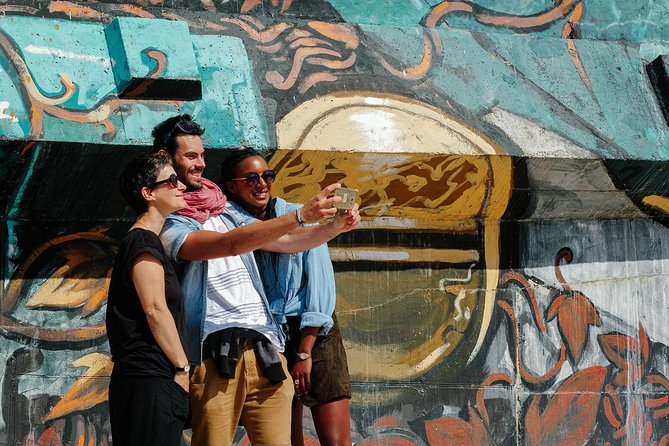
This isn’t a grab-bag graffiti walk. It is a guided route designed to show you street art as part of everyday Lisbon—how walls change, how communities react, and how artists turn public space into a conversation. I like that the tour doesn’t treat murals as random decorations. It connects the work to the city you are actually standing in.
You’ll also get the practical win that matters when you only have a few days: the route avoids the classic Lisbon problem of spending half your time planning transit or walking between far-apart spots. Instead, you ride in an air-conditioned minivan between areas, then you focus your energy on the walls themselves.
The tour’s small group format (up to 8 people) keeps the experience from feeling like an assembly line. You can ask questions, slow down for details, and get the context that turns a photo into a memory.
One more point: the tour is built around local artists and projects. Based on guide-led experiences you may encounter, you can expect to hear names like Tamara Alves, Ozearv, and Vhils as part of the street-art story you are following.
You can also read our reviews of more tours and experiences in Lisbon.


Price and value: why $41.82 makes sense for most people
At $41.82 per person for about 3 hours, the value comes from what’s bundled in. You’re not just paying for someone to point out pretty walls. You’re paying for:
- A driver/guide and local guide
- Pickup and drop-off from designated meeting points
- Transport by air-conditioned minivan
- A guided route with five scheduled stops, each marked as free admission
If you try to DIY this, your biggest costs are usually your time and your effort: transit planning, deciding which neighborhood to start in, and then backtracking when a mural is slightly off the path you expected. This tour does the hard part—sequencing the route and getting you to the right areas quickly—then hands you the walls.
It also helps that the stops are chosen for variety. You move from festival-related street art to viewpoints, to specific mural structures, to community areas. That variety is what makes the price feel fair. You’re not buying one scene; you’re buying a whole mini-world of Lisbon street art.
How the 3-hour route stays efficient (and still feels human)
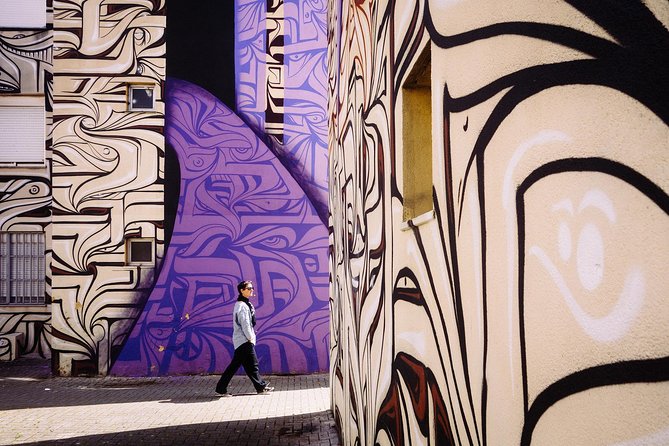
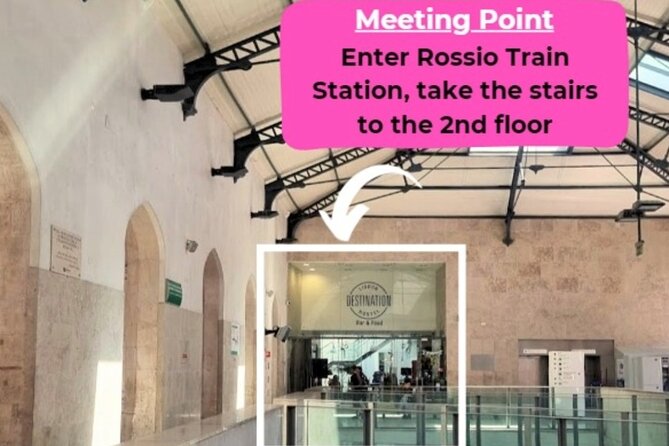
The tour starts at 9:30 am at Lisbon Destination Hostel, at Estação do Rossio (Largo do Duque de Cadaval, 2º andar). You end back at the same meeting point. That round-trip setup is one of the easiest things about it. You’re not stuck figuring out your way back after a long walk.
Duration is about 3 hours, and each main stop is timed around 30 minutes. That means you’ll have enough time to actually look, but you won’t feel like you’re standing around while the van fills up or the group regroups for an hour. The small-group cap also helps: fewer people means less waiting for everyone to get their photos and regroup.
Also, you’re operating with a moderate physical fitness level expectation. The tour includes hills and walking between spots. It is manageable for most active travelers, but if you prefer flat, easy pacing, you’ll want to think about your comfort on slopes before booking.
Stop 1: Lumiar and the 2019 Lisbon Street Art Festival wall

You kick off in Lumiar, tied to the 2019 Lisbon Street Art Festival. The value of starting here is that it frames the rest of the day. Festival street art often feels more like an event—intentional, coordinated, and designed to be seen. Even with a short 30-minute stop, you can get a sense of how Lisbon uses street art as a public cultural moment, not only a background for the neighborhood.
A drawback: festival art can be visually busy. If you rush, it can blur together. The guide’s job here is key. With context, you’ll understand what you are looking at and why it matters more than the style alone.
If you love street art for its storytelling, Lumiar is a strong opening. It gives you the mental framework to notice details later on, especially when the route shifts from festival energy to community-facing projects.
Stop 2: Panorâmico de Monsanto, Lisbon’s highest viewpoint
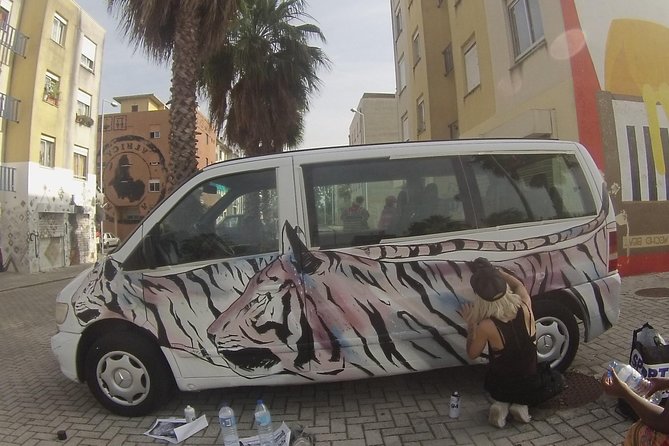
Then you head to Panorâmico de Monsanto, described as the highest viewpoint in Lisbon with street art. This stop is about two things at once: murals and the city spread out below you.
Why this works: viewpoints naturally slow people down. You can step back, take in the composition, and then return to the wall details. Even a 30-minute slot can feel longer because you’re doing more than just staring at paint.
The possible consideration here is weather and comfort. Viewpoints are open and can feel windy. The tour runs in all weather conditions and asks you to dress appropriately, but you’ll feel the difference if it’s cold or wet. Bring a layer, and plan for steps and uneven ground if you want to move around for the best angles.
This is also one of those moments where photos don’t capture the full effect. Seeing street art from up high helps you understand how the city’s layout shapes what artists can do and what communities see every day.






Stop 3: Alvalade’s Blue Wall moment

In Alvalade, your route includes The Blue Wall. A named mural or wall like this usually means one thing: you’re going to a standout feature, not a random scatter of tags.
The upside of a clear focal point is that you can go deep quickly. You know what you are searching for when you arrive, and you can spend your time on composition, symbolism, and technique. This stop is also a nice pacing reset. After the viewpoint energy, you return to something more concentrated and tactile.
One consideration: if you’re traveling with people who prefer quick photo stops and don’t want background information, they might find a guided focus here a bit slower. But if you like learning what you’re looking at, Alvalade is where the context can really pay off.
Stop 4: Carnide and Bairro Padre Cruz community walls

Next up: Carnide, specifically Bairro Padre Cruz. This is the kind of stop that changes how you view the rest of the tour. Community areas often bring street art closer to daily life—more directly tied to the people who live around it.
From what guides share during routes like this, you may hear how projects land in neighborhoods and how residents interact with the art, not just visitors viewing it from a distance. That is the real reason this stop matters. Street art becomes less like an attraction and more like a mirror of local identity.
A practical consideration: community areas can mean tighter streets and more foot traffic. That’s why the group size matters. With a maximum of 8 people, it’s easier to move without getting in each other’s way.
If you want Lisbon that feels human—not polished—you’re in the right zone here.
Stop 5: Estrada de Chelas for a last burst of wall power
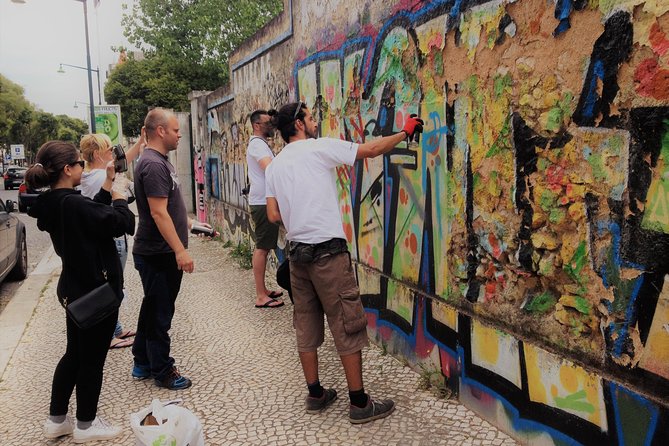
The tour ends with Estrada de Chelas, another street-art focused stretch. This final stop matters because it ties the day together. You’ll have seen festival-linked art, viewpoint murals, a named mural wall, and community projects. Then Chelas acts like a closing chapter—proof that street art isn’t confined to one style or one type of neighborhood.
A drawback to keep in mind: by the end of the day, your eyes may start to blur details if you’ve been photographing nonstop. The fix is simple—take fewer photos, and ask one good question instead. The guide context is often what makes the last stop click.
The guides are the difference: Fernando, Manuel, and Rita’s approach
This tour’s strongest ingredient is the guide. In the experiences I’m seeing reflected from past runs, guides like Fernando, Manuel, and Rita don’t just describe murals. They connect street art to Lisbon’s history and political climate.
Manuel, for example, stands out for how personal the subject can get. He is described as committed enough that he has a local mural tattooed on his forearm. That kind of dedication tends to show up in how he explains the art: as something he genuinely cares about, not as a script.
Rita’s style is also described as passionate, with a clear point that this is not graffiti as vandalism, but street art as a real artistic expression. And Fernando’s role, as described in other tour experiences, leans into knowledge of city history and political context, which helps you see why these walls exist where they do.
What you should take from this: if you care about meaning, go. If you only want pictures, you’ll still get the visuals, but you’ll get more value when you let the guide do their job.
What to look for during your 30-minute stops
You won’t have time to analyze every brushstroke like an art museum. So I recommend you focus on three things each stop:
- The subject and message: Who or what is shown? Is there symbolism the guide highlights?
- Where the mural sits: Does the wall face a street, a neighborhood entrance, or a viewpoint? Placement changes impact.
- The style differences: Festivals, viewpoints, and community walls often feel different on purpose.
Also, this tour is designed around the Crono Project. When the guide references pieces tied to that project, try to keep a mental thread. Seeing related ideas across different stops is part of what makes this route feel cohesive.
And yes—expect interesting side stories. One guide-led account points to conversation that can range from local oddities (like hints at offbeat food spots) to broader city observations, including talk that touches on Lisbon’s surveillance reputation. That kind of talk isn’t random. It helps you understand why certain public expressions exist.
Getting comfortable: weather, walking, and what to bring
This experience is outdoors, and it runs in all weather conditions with a dress-for-it approach. At the same time, it can be rescheduled or refunded if weather turns poor enough to cancel. Translation: plan like it’s a street walk. Bring a layer, and wear shoes that handle uneven surfaces.
You should also plan for a bit of exertion. The tour calls for moderate physical fitness, which usually means hills and steady walking between stops. If you’re used to city strolling, you’re likely fine. If you prefer fully flat routes, you might feel the slopes more than you expect.
For families: if you are traveling with children, you need a child seat. If you don’t have one, you’re asked to contact the provider to confirm availability.
Is it worth it for you? Who should book
This is a great choice if you:
- Want street art plus context, not just photos
- Like small groups and a guide you can actually talk to
- Prefer saving time versus piecing together transit on your own
- Are curious about how art connects to Lisbon’s neighborhoods and social climate
It may be less ideal if you:
- Hate walking on hills or uneven ground
- Want a self-guided schedule where you can stay at one wall for as long as you want
- Are only interested in the single biggest famous mural spots and nothing else
Should you book the Lisbon Street Art Tour?
If you want modern Lisbon street art with a route that makes sense, this is an easy yes. The small group size, the minivan transport between neighborhoods, and the fact that each scheduled stop is marked as free admission all add up to good value for time. You’ll also get the kind of guidance that helps you read murals as stories, not just colors on a wall.
If you’re the type who loves learning while you walk—and you’re comfortable with some hills—book it. It’s one of the best ways to see Lisbon’s walls in a way that feels thoughtful, not random.
FAQ
Where does the Lisbon Street Art Tour start and end?
It starts at Lisbon Destination Hostel at Estação do Rossio (Largo do Duque de Cadaval 2º andar, 1200-160 Lisboa, Portugal) and ends back at the same meeting point.
How long is the tour?
The tour lasts about 3 hours.
How much does it cost?
The price is $41.82 per person.
What language is the tour offered in?
The tour is offered in English.
How many people are in the group?
The tour has a maximum of 8 travelers.
What is included in the price?
Included are the driver/guide, a local guide, pickup and drop-off from designated meeting points, and transport by air-conditioned minivan.
Is hotel pickup included?
No. Hotel pickup and drop-off are not included; pickup is from designated meeting points.
Do the stops require admission tickets?
The listed stops are marked as admission ticket free.
Do I need a child seat if traveling with a child?
Yes, customers need to bring a child seat for their children. If you do not have one, you should contact the provider to confirm availability.